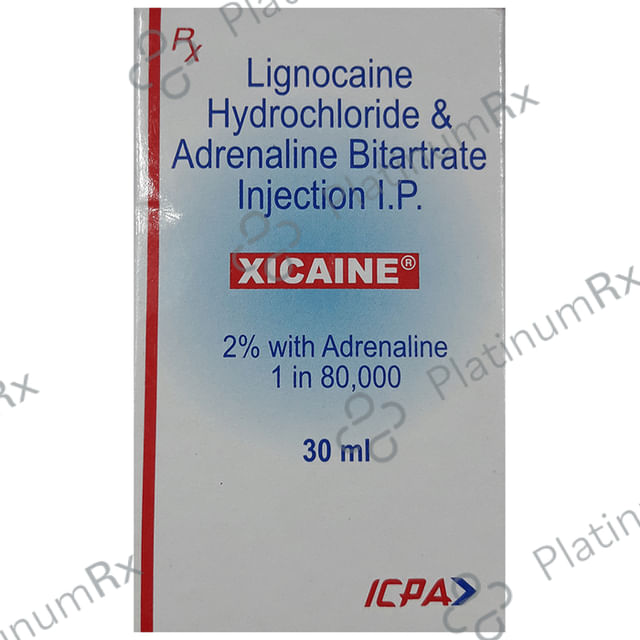
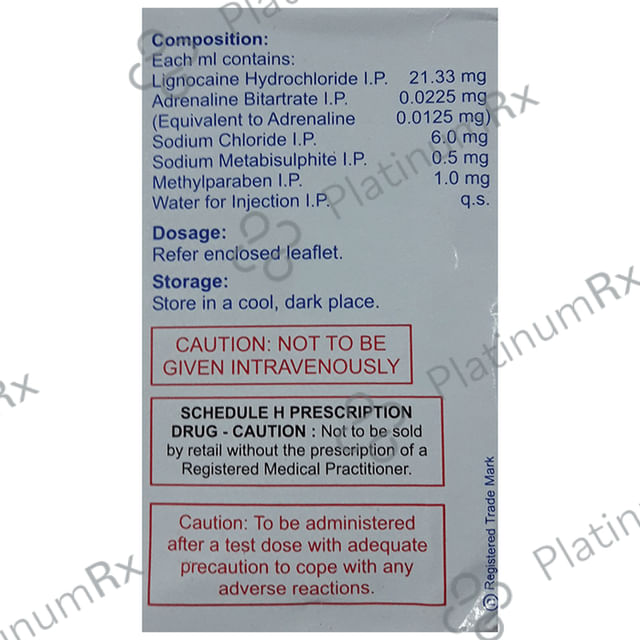
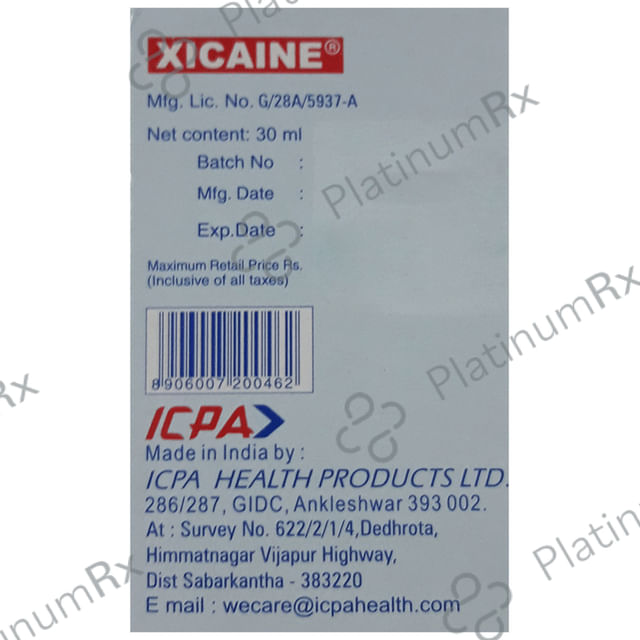
Xicaine Injection 30 ml

Xicaine Injection 30 ml is a local anesthetic injection that contains lidocaine and adrenaline. Lidocaine works by numbing the area by blocking pain signals from the nerves, while adrenaline helps reduce blood flow at the site, keeping the area numb longer and reducing bleeding during procedures. It is commonly used in dental procedures, minor surgical procedures, and certain diagnostic procedures. The injection is administered only by a trained doctor in a clinical setting.
Written by: Srishti Bhukta, B. Pharma
Reviewed by: Dr. Varinderjeet Kaur, MBBS
Last updated on: 03-06-2026
FDA & GMP Certified
Long Expiry (>8 Months)
15 Days Easy Returns
General Information
Have a question?

Genuine Medicine
Pay On Delivery
Secure Payment

LegitScript Certified Online Pharmacy


More About Xicaine Injection 30 ml
Quick Summary
Xicaine Injection 30 ml is a local anesthetic injection that contains lidocaine and adrenaline. Lidocaine works by numbing the area by blocking pain signals from the nerves, while adrenaline helps reduce blood flow at the site, keeping the area numb longer and reducing bleeding during procedures. It is commonly used in dental procedures, minor surgical procedures, and certain diagnostic procedures. The injection is administered only by a trained doctor in a clinical setting.
Detailed Description
Xicaine Injection 30 ml is an injectable local anaesthetic that contains lidocaine (lignocaine) with adrenaline (epinephrine). It is used to numb a specific area of the body for dental procedures, minor surgery, and other medical procedures requiring short-term loss of sensation.
Lidocaine works by blocking nerve signals at the site of injection. This stops pain signals from travelling to the brain, so the area becomes numb for a short period. Adrenaline is added in a small amount to reduce blood flow in the area. This helps the numbing effect last longer and also reduces bleeding during the procedure.
The injection is given by a doctor or trained healthcare professional. The dose and exact site depend on the procedure and the patient’s condition. Extra care is taken in people with heart disease or high blood pressure, as adrenaline can affect heart rate and blood pressure.
Most people experience only temporary numbness and mild local swelling or discomfort. Some may feel dizzy or notice a fast heartbeat shortly after the injection. Allergic reactions are rare but can occur. The medicine is always used in a controlled clinical setting to ensure safe and appropriate use.
Uses of Xicaine Injection 30 ml
Xicaine Injection 30 ml is a local anesthetic used under medical supervision for:
Local Infiltration Anesthesia
Numbing specific, targeted areas of the skin or mucous membranes before minor surgical incisions or tissue repairs.
Dental and Oral Procedures
Blocking nerve pathways in the gums and jaw during tooth extractions, root canals, and other invasive dental interventions.
Peripheral Nerve Blocks
Safely anesthetizing specific nerve bundles to numb an entire localized region (such as a finger, toe, or limb segment) before a procedure.
Minor Surgical and Diagnostic Support
Reducing pain and discomfort during invasive needle punctures, biopsy collections, or the placement of medical catheters and breathing tubes.
Benefits of Xicaine Injection 30 ml
Xicaine Injection 30 ml provides distinct clinical advantages, including:
- Quick pain relief: Starts working within a few minutes and numbs the area where the procedure will be performed.
- Longer-lasting effect: Adrenaline helps the numbness last longer during dental and minor surgical procedures.
- Less bleeding at the site: Reduces blood flow in the area, which helps the doctor work more clearly during the procedure.
- Localized action: The effect remains mainly at the injection site, helping limit spread to the rest of the body when used in appropriate doses.
Side Effects of Xicaine Injection 30 ml
Xicaine Injection 30 ml is administered directly by doctors who monitor the patient's reaction. However, side effects can occur as the numbing wears off or with systemic absorption.
Common side effects of Xicaine Injection 30 ml are localized and mild, including
- Injection Site Reactions: Temporary pale skin, mild redness (erythema), bruising, stinging, or a burning sensation where the needle was inserted.
- Local Numbness or Tingling: A prolonged pins-and-needles sensation in the immediate area as the medication gradually dissipates.
- Mild Dizziness: Brief lightheadedness immediately following the injection, often resolving with rest.
Uncommon side effects of Xicaine Injection 30 ml may include
- Mild Tremors or Shaking: A transient feeling of nervousness, trembling in the hands, or mild anxiety, typically caused by the systemic uptake of dilute adrenaline.
- Nausea or Vomiting: Occasional stomach queasiness or a brief upset stomach shortly after administration.
- Blurred Vision: Temporary changes in focus or minor visual blurriness that fade as the local anesthetic wears off.
Rare but serious side effects that require immediate medical attention
- Cardiovascular Dysregulation: Sudden irregular heartbeat (arrhythmias), palpitations, a rapid rise in blood pressure, or a sudden severe drop in blood pressure with fainting.
- Central Nervous System Toxicity: Signs such as muscle twitching, severe slurred speech, ringing in the ears (tinnitus), disorientation, seizures (fits), or unexpected drowsiness.
- Severe Hypersensitivity/Anaphylaxis: Acute development of widespread hives, severe skin itching, swelling of the face, lips, tongue, or throat, or immediate respiratory distress.
Note: Inform your doctor or nurse immediately if you notice any unusual systemic symptoms, heart palpitations, or breathing changes during or after the administration of Xicaine Injection 30 ml.
Directions for Use
- Xicaine Injection 30 ml is given strictly by a qualified doctor, such as a doctor or dentist. It is not intended for self‑administration.
- The exact dose, injection site, and method of administration are chosen by the clinician based on the procedure, the area being treated, and the patient’s overall health condition.
- During administration, the patient’s response, heart rate, and blood pressure may be observed, especially in those with cardiovascular conditions, to ensure safe use.
How it works
Xicaine Injection 30 ml works to produce effective local anesthesia during medical and dental procedures.
Lidocaine (lignocaine) in Xicaine Injection 30 ml works by temporarily blocking the nerves that carry pain signals. After the injection is given, it acts on sodium channels in the nerve fibers around the treated area. Once these channels are blocked, the nerves cannot transmit pain signals normally, causing temporary numbness during the procedure.
Adrenaline (epinephrine) helps prolong the anesthetic effect. It narrows the nearby blood vessels by stimulating alpha-1 receptors in the vessel walls. Because blood flow becomes slower in that area, lidocaine is absorbed into the bloodstream more gradually.
This helps the numbing effect last longer and also reduces bleeding at the injection site. Slower absorption may additionally help lower the chance of systemic side effects from lidocaine.
Safety Advice for Xicaine Injection 30 ml

Allergy
Unsafe
Xicaine Injection 30 ml should not be used in patients with known allergy to lidocaine, adrenaline, amide-type local anesthetics, sulfite-containing preparations, or any ingredient in the injection. Seek immediate medical attention if signs of an allergic reaction occur.

Breastfeeding
Safe
Lidocaine is generally considered compatible with breastfeeding when used in usual local anesthetic doses. Significant effects in breastfed infants are unlikely.

Pregnancy
Caution
Xicaine Injection 30 ml should be used during pregnancy only if clearly needed and administered by a qualified doctor. Careful dosing is recommended.

Driving
Caution
Temporary numbness, dizziness, or reduced alertness may occur after administration. Avoid driving or operating machinery until the effects of anesthesia have completely worn off.

Alcohol
Caution
Alcohol may increase dizziness or cardiovascular side effects after administration of Xicaine Injection 30 ml. Avoid excessive alcohol intake around the time of treatment.

Liver
Caution
Lidocaine is metabolized in the liver. Patients with severe liver disease may require dose adjustment and careful monitoring to reduce the risk of toxicity.

Kidney
Caution
Patients with severe kidney impairment should use Xicaine Injection 30 ml cautiously, particularly during repeated or high-dose administration.

Children
Caution
Xicaine Injection 30 ml should only be administered in children by trained doctors using carefully adjusted doses based on age and body weight.

Elderly patients
Caution
Older adults may be more sensitive to the cardiovascular and central nervous system effects of Xicaine Injection 30 ml, especially if an underlying heart condition is present.
Quick Tips for Xicaine Injection 30 ml
- This injection is given only by a trained doctor or a nurse. It should never be self‑administered.
- If you are taking blood thinners (like warfarin), let your doctor know. Extra monitoring or dose adjustments may be needed.
- Mild pain, redness, or swelling at the injection site can happen but usually settles quickly.
- Report any severe or worsening reaction at the injection site to your healthcare provider immediately.
- Extra care is taken when using this medicine in infants or in patients with liver disease or bleeding disorders.
Storage Advice
- Store injection vials or ampoules at controlled room temperature and keep them away from heat, freezing, and moisture.
- Protect from light by keeping the medicine in its original carton until it is prepared for use.
- Inspect the solution before administration and discard immediately if it appears cloudy, discolored, or contains particles.
- Keep all supplies out of reach of children and pets.
Drug-Food Interaction
- Mouth/Throat Application (Caution): If the medication is injected inside the oral cavity, do not consume hot foods or hot beverages for at least 1 hour, as the lack of temperature sensation can result in accidental thermal burns to the tongue or palate.
Interactions with Other Drugs
- Beta-Blockers (e.g., Propranolol) (Caution): Beta-blockers can slow the liver's metabolism of lidocaine, leading to increased anesthetic levels in the blood and a higher risk of toxicity. They can also interact with adrenaline, causing a sharp rise in blood pressure.
- Cimetidine (Caution): This acid-reducing medication can inhibit hepatic enzymes, increasing lidocaine levels in your system and necessitating careful dose monitoring.
- Other Antiarrhythmic Drugs (e.g., Phenytoin, Amiodarone) (Caution): Combining these with lidocaine can cause additive depressive effects on the heart muscle. Your doctor will monitor your cardiac rhythm closely if these are combined.
Drug-Disease Interactions
- Heart Disease & Severe Hypertension (High Caution): Adrenaline can increase heart rate and elevate blood pressure. It must be used with extreme caution if you suffer from severe coronary artery disease, heart failure, arrhythmias, or uncontrolled hypertension.
- Seizure Disorders / Epilepsy (Caution): High systemic concentrations of lidocaine can lower the seizure threshold. Inform your doctor if you have a history of epilepsy, as careful dosing is required.
What If You Forget to take Xicaine Injection 30 ml?
Because Xicaine Injection 30 ml is given as a one-time treatment by a medical professional right before a surgical or dental procedure, there is no risk of a missed or forgotten dose.
FAQ
Fact Box
Therapeutic Class
Local anesthetics / dental and minor surgical anesthetic agents
Action Class
Sodium channel blocker (local anesthetic) + alpha-adrenergic agonist (vasoconstrictor)
Chemical Class
Amide-type local anesthetic + adrenergic vasoconstrictor
Habit Forming
No
Disclaimer
PlatinumRx is committed to providing reliable and accurate information to support informed customer decisions. However, all information made available on the Platform, including product descriptions, comparisons, and other content, is provided solely for general informational purposes. Such information is not intended to diagnose, prevent, treat, or cure any medical condition, nor should it be relied upon as a substitute for professional medical advice, diagnosis, or treatment.

Customers also bought


More Medicines By Icpa Health Products Ltd.
More Medicines With Adrenaline 22.5mcg + Lidocaine (Lignocaine) 21.3mg
Top Selling Medicines
Top Selling Devices
Top Selling Health Products


