Omeprazole vs Esomeprazole: Differences, Uses & FAQs
Last Updated: October 29, 2026

Summary
Omeprazole and esomeprazole are two closely related medicines that lower acid in the stomach. Doctors use them for acidity, heartburn, acid reflux and stomach ulcers. Both are prescription-only medicines in India. By cutting acid, they ease the burning and help a damaged lining heal.
Key Takeaways
- What it is: Two acid-lowering medicines from the same family, called proton pump inhibitors (PPIs).
- Active ingredients: Omeprazole; esomeprazole (one half of the omeprazole molecule pair).
- Used for: Acid reflux, heartburn, stomach ulcers, and H. pylori stomach infection with antibiotics.
- Not meant for: Instant heartburn relief, people allergic to any PPI, or children without a doctor's advice.
- Prescription: Needed in India. Do not switch between them without your doctor.
- How to take: Usually once a day in the morning, swallowed whole with water.
- Common side effects: Headache, stomach pain, nausea, diarrhoea or constipation; these are usually mild.
What Are Omeprazole and Esomeprazole?
Both are acid-lowering medicines that come as capsules, tablets and granules you mix with water. Omeprazole is made of two forms of the same molecule that are mirror images of each other, like your left and right hand. Esomeprazole is the "left hand" only, which is where the "es" in its name comes from.
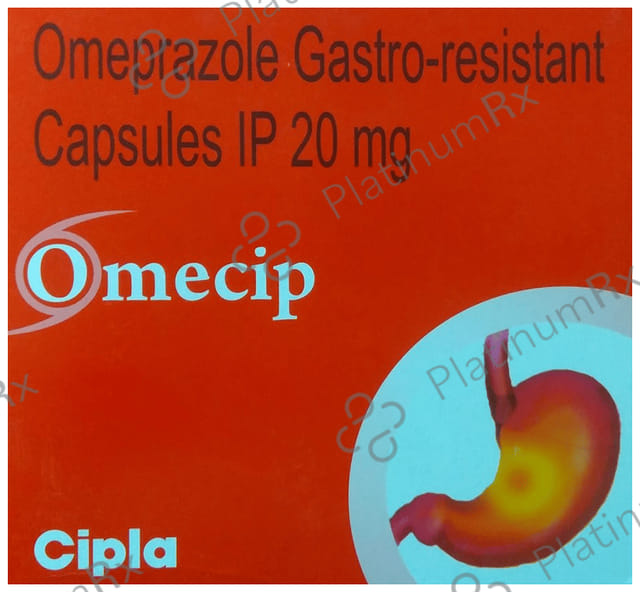
Medicines Containing Omeprazole


Omeprazole vs Esomeprazole: Key Differences
| Omeprazole | Esomeprazole | |
|---|---|---|
| What is in it | Both mirror-image forms | One form only |
| Drug type | Proton pump inhibitor | Proton pump inhibitor |
| Medicine reaching the blood | Less, per milligram | More, per milligram |
| Price | Varies by brand | Varies by brand; ask your pharmacist about generic options |
Check the exact strength printed on your pack; it may vary between brands and forms.
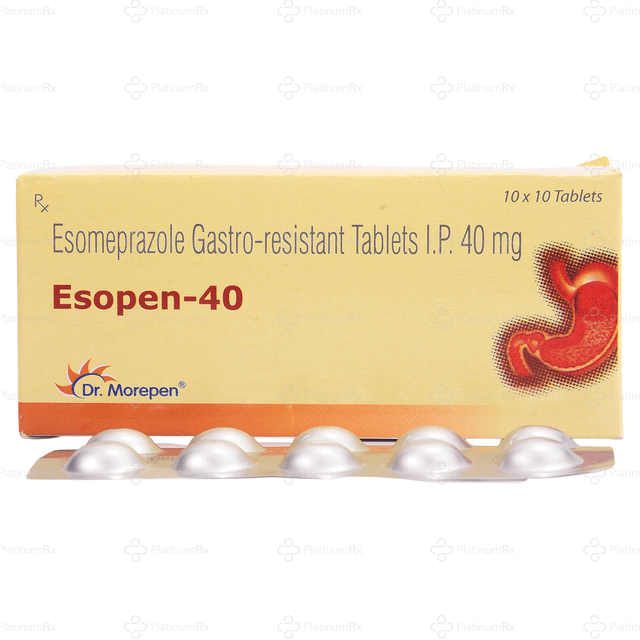
Medicines Containing Esomeprazole


How Do Omeprazole and Esomeprazole Work?
Your stomach lining has tiny pumps, called proton pumps, that push acid into the stomach to digest food. Both medicines switch off these pumps, so the stomach makes less acid. Esomeprazole is broken down more slowly by the liver, so more of each milligram stays in the blood.
Uses of Omeprazole and Esomeprazole
Doctors usually prescribe omeprazole or esomeprazole for:
- Gastro-oesophageal reflux disease (GERD), where stomach acid keeps flowing back up into the food pipe
- Heartburn and acidity, a burning feeling in the chest or upper stomach
- Stomach and gut ulcers, sores in the lining of the stomach or small intestine
- Ulcer prevention, in people who take painkillers like ibuprofen or diclofenac regularly (esomeprazole)
- H. pylori infection, a germ that causes ulcers, together with antibiotics
- Zollinger-Ellison syndrome, a rare condition where the stomach makes far too much acid
These medicines do not kill germs on their own. They are also not meant for quick relief of a sudden bout of heartburn, because they take a few days to work fully.
Omeprazole or Esomeprazole: Which Is Right for You?
| Omeprazole | Esomeprazole | |
|---|---|---|
| Erosive reflux (damaged food pipe) | Works well | Small extra benefit |
| H. pylori with antibiotics | Works well | Works about the same |
| Pregnancy | Often chosen first | Usually not recommended |
| Breastfeeding | Usually possible | Usually possible |
| If the first PPI does not suit you | Doctor may switch | Doctor may switch |
The milligram strengths are not equal, so the same number on two packs does not mean the same effect. Switching on your own can leave you with too little or too much medicine.
How to Take Omeprazole and Esomeprazole
- Take it at the same time each morning, or morning and evening if prescribed twice a day.
- Swallow capsules and tablets whole with water.
- Do not chew or crush capsules or tablets labelled "enteric coated" or "gastro resistant".
- You can usually take it with or without food; your doctor may advise taking it before a meal.
- If you cannot swallow capsules, ask your pharmacist; some can be opened and mixed with water or soft food.
- Keep taking a prescribed course even when you feel better.
How Much to Take
Your doctor decides how much and how often based on your age, weight, symptoms and other health conditions. Some people need only a few days or weeks, while others need it for months or longer.
Never increase the dose on your own. A higher dose of either medicine does not always add more benefit, and long-term high doses raise the risk of weak bones and other side effects.
Children should get these medicines only on a paediatrician's advice, usually as granules made for children. If someone takes too much, go to the nearest hospital emergency department or call 112 (ambulance 108), and carry the medicine strip or pack.
What If You Miss a Dose?
Take the missed dose as soon as you remember. If it is nearly time for the next dose, skip the missed one. Never take two doses together to make up for it.
How Long Does It Take to Work?
Most people feel better within 2 to 3 days, but full benefit can take up to 4 weeks. If your symptoms are no better after 2 weeks, or they get worse, tell your doctor.
Storage
Store at room temperature in the original container, tightly closed, away from heat, light and moisture. Do not keep it in the bathroom, and keep it out of reach of children.
Side Effects of Omeprazole and Esomeprazole
Most people take these medicines without any trouble. When side effects happen, they are usually mild and often go away. The side effect list is almost the same for both.
Common and mild:
- Headache
- Stomach pain
- Feeling sick or being sick
- Diarrhoea or constipation
- Gas
- Dry mouth or feeling sleepy
Rare but serious (stop the medicine and see a doctor right away):
- Swollen lips, face or tongue, trouble breathing, or a widespread itchy rash
- Blistering, peeling skin or sores in the mouth
- Severe or watery diarrhoea that does not go away
- Joint pain with a rash on sun-exposed skin like the cheeks or arms
- Yellow skin or eyes, dark urine or pale stools
- Muscle twitching, shakiness, a racing or irregular heartbeat, or fits
Most serious problems are linked to long-term use. Taking them for more than 3 months can lower blood magnesium, and more than a year can raise the risk of bone fractures, gut infections and low vitamin B12.
Who Should Not Take Omeprazole or Esomeprazole
- Anyone allergic to omeprazole, esomeprazole or another PPI
- People who had a serious side effect from a PPI before
- People taking the HIV medicine nelfinavir
- People taking the HIV medicine rilpivirine with esomeprazole
Precautions
Tell your doctor before taking omeprazole or esomeprazole if you have:
- Liver disease (doses are usually lower)
- Kidney disease (less is known about use in severe kidney disease)
- Weak bones or osteoporosis (long-term use can raise fracture risk)
- Low magnesium, calcium, potassium or vitamin B12 in the past
- Lupus or another autoimmune condition (PPIs can rarely trigger a lupus-type skin rash)
- An Asian family background (some people clear omeprazole more slowly, so more stays in the body)
- Pregnancy, plans to get pregnant, or breastfeeding
- An endoscopy or other test coming up (these medicines can hide problems or change results)
- Age 65 or above (ask about the risks of long-term use)
Drug Interactions
| Medicine | What can happen |
|---|---|
| Clopidogrel (blood thinner) | May protect the heart less; usually avoided together |
| Warfarin (blood thinner) | Bleeding risk may rise; blood clotting (INR) tests may be needed |
| Heart medicine (digoxin) | May raise side effects; needs checking |
| Fits medicine (phenytoin) | Levels may change; doctor may monitor |
| Anxiety and low mood medicines (diazepam, citalopram) | Side effects may become more likely |
| Nelfinavir (HIV); rilpivirine (HIV) with esomeprazole | Must not be taken together; HIV medicine may work less well |
| Atazanavir (HIV) | Usually not recommended together; HIV medicine levels drop |
| Antifungals (itraconazole, ketoconazole, voriconazole) | Either medicine may be affected |
| Methotrexate | May not mix well; tell your doctor |
| St John's wort | Avoid; may stop the PPI working properly |
| Iron supplements | May interact; tell your doctor before taking both |
Always tell your doctor about every medicine, supplement or home remedy you are using. Alcohol does not stop these medicines working, but it makes the stomach produce more acid and can make your symptoms worse.
Frequently Asked Questions About Omeprazole and Esomeprazole
When to See a Doctor
An acid-lowering medicine can hide the signs of a more serious stomach problem. Call 112 or 108, or go to the nearest emergency department now, if you:
- Vomit blood, or vomit that looks like coffee grounds
- Pass black, tar-like or bloody stools
- Have chest pain spreading to the arm, jaw or neck, or with sweating and breathlessness
See a doctor soon if you have:
- Trouble swallowing or pain when swallowing
- Weight loss without trying, or feeling full very quickly
- Heartburn that is no better after 2 weeks, or that keeps coming back
The Bottom Line
Omeprazole and esomeprazole lower stomach acid in nearly the same way. Esomeprazole puts more medicine into the blood per milligram, but at equal doses its extra benefit is small. Take whichever one your doctor prescribes at the same time each day, and do not swap between them on your own. Common side effects like headache and stomach upset are usually mild.
References