Ketorol DT Tablet: Uses, Composition, Side Effects & FAQs
Last Updated: October 30, 2026

Summary
Ketorol DT is a tablet of ketorolac tromethamine, a strong NSAID painkiller that eases pain and swelling. Doctors prescribe it for moderately severe acute pain, usually after an operation, for no more than 5 days. It usually continues treatment that was started with a ketorolac injection in hospital; it is not a tablet you start on your own. In India it is a prescription-only medicine, so you cannot buy it without a valid doctor's prescription.
Key Takeaways
- What it is: A strong NSAID painkiller in tablet form.
- Active ingredients: Ketorolac tromethamine.
- Used for: Short-term relief of moderately severe acute pain, usually after surgery and a hospital injection.
- Not meant for: Mild or long-term pain, children, people with ulcers or kidney disease, or starting on your own.
- Prescription: Needed in India; take it only as your doctor prescribes.
- How to take: Swallow it with water, and take it with food if it upsets your stomach.
- Common side effects: Nausea, indigestion, stomach pain, dizziness and drowsiness; these usually pass.
What Is Ketorol DT?
Ketorol DT is a prescription painkiller in tablet form. It contains 10 mg of ketorolac tromethamine, an NSAID (non-steroidal anti-inflammatory drug). NSAIDs are a group of medicines that ease pain and swelling without being steroids.
Buy Ketorol DT Tablet and Its Substitute
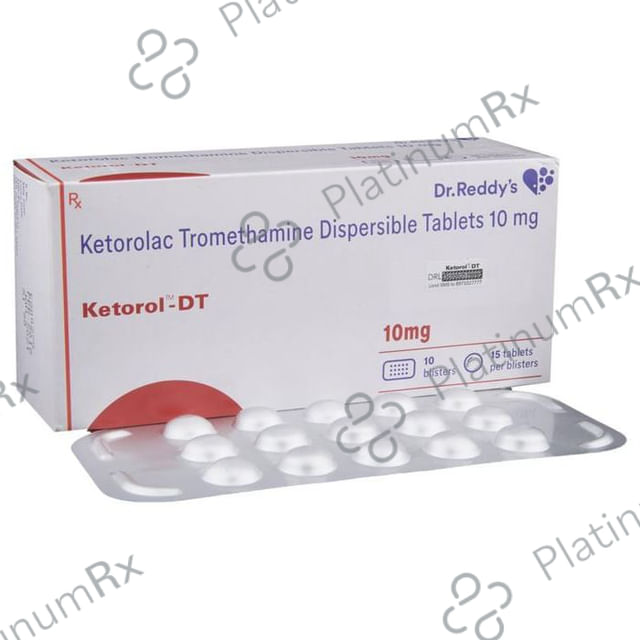
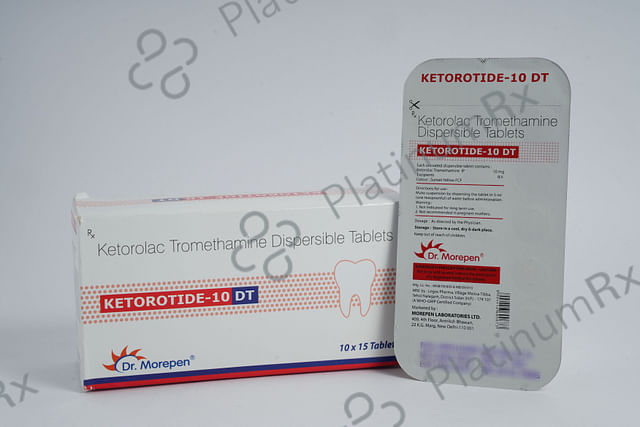
Ketorol DT Composition (Per Tablet)
| Ingredient | Amount | Type | What it does (in simple words) |
|---|---|---|---|
| Ketorolac tromethamine | 10 mg | NSAID painkiller | Lowers the chemicals that cause pain and swelling |
Check the exact strength printed on your pack; it may vary between variants.
How Does Ketorol DT Work?
Ketorolac blocks an enzyme your body uses to make prostaglandins. These chemicals make pain nerve endings more sensitive and cause swelling around an injury. With less of them, the pain signal becomes quieter and swelling eases, though the cause of the pain is still there.
Uses of Ketorol DT
Doctors usually prescribe Ketorol DT for:
- Pain after an operation, including surgery on your teeth or gums, when the pain is strong enough to need a strong painkiller.
- Moderately severe acute pain that has just started, when your doctor judges that the pain needs relief at a level only a strong painkiller gives.
- Continuing treatment after a ketorolac injection, when your doctor moves you from the hospital injection to tablets for a few days.
It does not treat the cause of your pain. It will not help mild pain such as an ordinary headache, and it is not meant for long-term pain such as arthritis. It is also not an antibiotic.
Acute Pain vs Chronic Pain: Is Ketorol DT Right for You?
| Acute pain | Chronic pain | |
|---|---|---|
| What it feels like | Starts suddenly, usually after an operation; often sharp | Lasts weeks or months; often a dull ache |
| Sign or pattern | Worst in the first few days, then settles | Comes and goes over a long period, as in arthritis |
| Is Ketorol DT suitable? | Yes, if prescribed | No |
| What usually helps | Rest, an ice pack, a simple painkiller and the prescribed tablet | A doctor's long-term plan, including physiotherapy |
Using a strong NSAID for chronic pain raises the risk of stomach bleeding and kidney problems without giving lasting relief.
How to Take Ketorol DT Tablet
- Take it exactly as your doctor or pharmacist tells you.
- This tablet continues a course that began with a ketorolac injection in hospital. Do not start it on your own for a new pain.
- Swallow it with a glass of water, and take it with food or milk if it upsets your stomach.
- Leave at least 4 hours between doses; most people take it every 4 to 6 hours.
- Do not take it for more than 5 days in total, including any ketorolac injection you were given.
- Stop when the pain settles, and do not keep taking it just in case.
Dosage of Ketorol DT
Your doctor decides the dose, based on your age, weight, kidney function and the type of pain. For adults aged 17 to 64, the first tablet is usually 20 mg, followed by 10 mg every 4 to 6 hours if needed, up to a maximum of 40 mg in 24 hours.
People aged 65 or older, those who weigh under 50 kg, and anyone with kidney problems usually take 10 mg as the first tablet, then 10 mg every 4 to 6 hours, with the same 40 mg limit in 24 hours.
Never increase the dose on your own. A higher dose does not ease pain better, but it does raise the risk of stomach bleeding and kidney damage.
Ketorol DT is not for children or teenagers under 17. If someone takes too many tablets, go to the nearest hospital emergency department straight away, or call 112 for an ambulance, and carry the strip or box with you.
What If You Miss a Dose?
Take it as soon as you remember. If the next dose is close, skip the missed one. Never take two doses together to make up for a missed one.
How Long Does It Take to Work?
The pain-relieving effect builds over 2 to 3 hours and is strongest then. If the pain is not settling, or is still there after 5 days, see your doctor rather than continue the tablets.
Storage
Keep the strip cool and dry, away from sunlight and moisture. Store it out of reach of children, and check the expiry date.
Side Effects of Ketorol DT
Most people take Ketorol DT for a few days without any trouble. Side effects, when they happen, are usually mild and pass.
Common and mild:
- Nausea or vomiting
- Indigestion, heartburn or stomach pain
- Diarrhoea or constipation
- Headache
- Dizziness or drowsiness
- Sweating
Like all NSAIDs, it can raise the risk of a heart attack or stroke, especially in people who already have heart disease.
Rare but serious (stop the medicine and see a doctor right away):
- Black, tarry stools or vomiting blood
- Chest pain, shortness of breath, weakness on one side or slurred speech
- Swelling of the face, lips or throat, trouble breathing, or a rash with blisters or fever
- Yellow skin or eyes, or dark urine
- Passing much less urine than usual, or swelling of the feet, ankles or hands
Most of these problems come from how NSAIDs work, and the risk rises with higher doses, longer use, older age and a past history of ulcers.
Who Should Not Take Ketorol DT
Do not take Ketorol DT if you:
- Are allergic to ketorolac, or had asthma or hives with an NSAID
- Have an active ulcer, recent stomach bleeding or a bleeding disorder
- Have advanced kidney disease or are dehydrated
- Have had a recent heart attack, stroke or heart bypass surgery
- Are due for major surgery
- Are in late pregnancy, in labour or breastfeeding
Precautions
Tell your doctor before taking Ketorol DT if you have:
- A history of stomach ulcers or heartburn — NSAIDs can make these worse.
- Kidney or liver disease — the dose may need to change.
- Heart failure or high blood pressure — NSAIDs can strain the heart.
- Asthma — some people with asthma react badly to NSAIDs.
- Age 65 or above, or a body weight under 50 kg — side effects are more likely.
- Planned surgery or dental work — tell the surgeon or dentist first.
- Pregnancy — avoid it, especially after 20 weeks.
- Diabetes, or dehydration from vomiting or diarrhoea — these raise the risk of kidney problems.
Drug Interactions
| Medicine | What can happen |
|---|---|
| Other NSAIDs (ibuprofen, diclofenac, naproxen) | Do not combine; much higher risk of stomach bleeding |
| Aspirin | More stomach and bleeding problems; avoid together |
| Blood thinners (warfarin, clopidogrel, heparin) | Extra bleeding risk; needs monitoring |
| ACE inhibitors, ARBs and water pills | Kidney strain; blood pressure may rise |
| Steroids such as prednisolone | Higher chance of ulcers and bleeding |
| SSRIs and SNRIs (sertraline, fluoxetine, duloxetine) | Higher chance of stomach bleeding |
| Lithium and methotrexate | Levels can rise; doses need checking |
| Probenecid and pentoxifylline | Not to be taken with ketorolac |
Always tell your doctor about every medicine, supplement or home remedy you use. Avoid alcohol while you take Ketorol DT, as it raises the risk of stomach bleeding.
Frequently Asked Questions About Ketorol DT
When to See a Doctor
Ketorol DT only eases pain briefly. Get medical help quickly if you have:
- Black, tarry or bloody stools, or vomit that looks like coffee grounds
- Chest pain, shortness of breath, or weakness or numbness on one side
- Swelling of the face, lips or throat, or trouble breathing
- A rash, blisters or fever
- Yellow skin or eyes, much less urine than usual, or swelling of the feet and ankles
- Pain that is still bad after 5 days, or keeps coming back
The Bottom Line
Ketorol DT is a strong short-term painkiller for moderately severe acute pain, usually after surgery. Take it exactly as prescribed, and never alongside another NSAID. Common side effects such as nausea and indigestion usually settle. The serious risks are rare but real, so report stomach pain, black stools or an allergic reaction at once.