Montelukast Tablet: Uses, Dosage, Side Effects & FAQs
Last Updated: October 30, 2026

Summary
Montelukast is a once-a-day tablet that helps prevent asthma symptoms and the sneezing, itching and blocked nose of allergic rhinitis. It is a prescription-only medicine in India, so you cannot buy it without a valid doctor's prescription. Its single active ingredient, montelukast, is a leukotriene blocker that calms the swelling and tightening that allergy chemicals cause in the airways.
Key Takeaways
- What it is: A once-daily preventer tablet for asthma and allergy symptoms, not a quick reliever.
- Active ingredients: Montelukast, as montelukast sodium.
- Used for: Asthma, exercise-related breathing trouble, and seasonal or year-round allergic rhinitis.
- Not meant for: A sudden asthma attack, a common cold, or young children without a doctor's advice.
- Prescription: Needed in India. Take it only on your doctor's advice.
- How to take: Swallow whole with water, once a day in the evening, with or without food.
- Common side effects: Headache, stomach pain, loose motions, feeling sick — usually mild and short-lived.
What Is Montelukast Tablet?
Montelukast is a leukotriene receptor antagonist, which is the long name for a daily preventer tablet. It does not relieve symptoms within minutes. It comes as plain tablets, chewable tablets and granules; this article covers the plain 10 mg tablet that adults and teenagers usually take.
Medicines Containing Montelukast

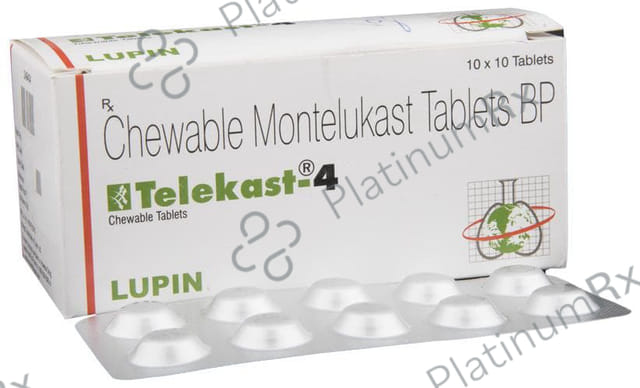
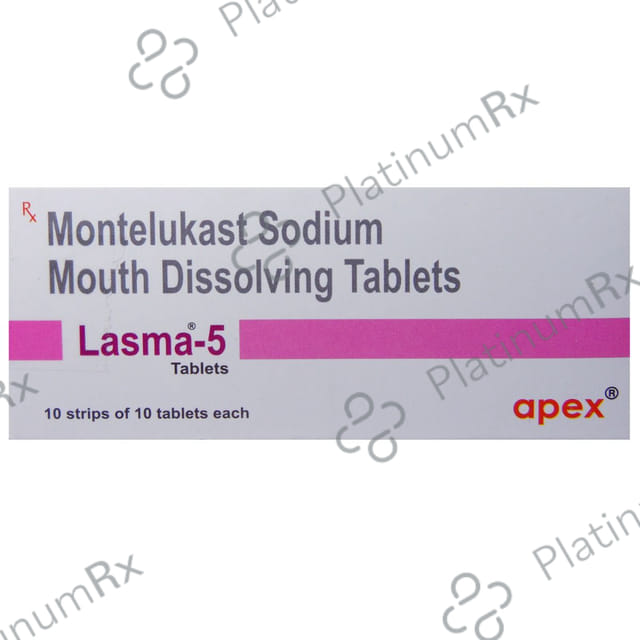
Montelukast Tablet Composition (Per Tablet)
| Ingredient | Amount | Type | What it does (in simple words) |
|---|---|---|---|
| Montelukast (as montelukast sodium) | 10 mg | Leukotriene blocker | Calms the swelling and tightening in the airways |
Check the label on your pack; montelukast also comes as 5 mg and 4 mg chewable tablets and 4 mg granules for children.
How Does Montelukast Tablet Work?
Your body releases chemicals called leukotrienes when you meet dust, pollen or cold air, and when you exercise. These chemicals attach to receptors in the airways and cause swelling and tightening, which makes breathing hard. Montelukast blocks those receptors, so the leukotrienes cannot cause that swelling and tightening.
Uses of Montelukast Tablet
Doctors usually prescribe montelukast for:
- Asthma, where the airways swell and tighten, causing wheeze, cough and breathlessness - as a daily preventer alongside your inhalers
- Exercise-induced bronchoconstriction, breathing trouble that starts during or soon after exercise
- Seasonal allergic rhinitis, sneezing and a runny or blocked nose at a particular time of year
- Perennial allergic rhinitis, the same symptoms all year round
It does not open your airways within minutes, so it cannot stop an asthma attack that has already begun. For allergic rhinitis, the US Food and Drug Administration limits it to people who have not improved with other allergy medicines.
Allergic Rhinitis vs Common Cold: Is Montelukast Tablet Right for You?
| Allergic rhinitis | Common cold | |
|---|---|---|
| What it feels like | Itchy nose, sneezing fits, clear watery discharge | Sore throat, blocked or runny nose, cough, feeling tired |
| Sign / sound / pattern | Starts within minutes of dust or pollen; lasts for weeks | Comes on over 2 to 3 days; eases in about 1 to 2 weeks |
| Is Montelukast suitable? | Yes, if it is prescribed and other allergy medicines have not worked | No |
| What usually helps | Staying away from the trigger and taking allergy medicines as advised | Rest, fluids and steam; see a doctor if it lasts more than 10 days |
Using it for a cold does not shorten the illness and delays the care that would actually help.
How to Take Montelukast Tablet
- Swallow the tablet whole with a glass of water. Do not chew or crush it.
- Take it once a day, at the same time each day.
- If you take it for asthma, take it in the evening.
- You can take it with or without food.
- For exercise-related breathing trouble, take it at least 2 hours before you exercise.
Dosage of Montelukast Tablet
Your doctor sets the dose from your age, your symptoms and the other medicines you take. For adults and teenagers aged 15 and older, the usual dose is one 10 mg tablet once a day, in the evening if you are taking it for asthma. If you have both asthma and allergic rhinitis, that single daily dose covers both.
Never take more than one dose in 24 hours. A second dose does not control asthma better.
Children use different products. Ages 6 to 14 take a 5 mg chewable tablet once a day. Ages 6 months to 5 years take 4 mg once a day, as granules; a 4 mg chewable tablet is an option once your child is over 2. A doctor or paediatrician decides that dose. Never give a child the adult 10 mg tablet.
Montelukast is not used for asthma under 12 months, or for exercise-related breathing trouble under 6 years.
If someone takes too much, go to the nearest hospital emergency department straight away and carry the strip or pack with you. You can call 108 for an ambulance.
What If You Miss a Dose?
Skip the missed dose and take your next dose at the usual time. Do not take two doses together to make up for it.
How Long Does It Take to Work?
Montelukast starts to work within about a day, and the full benefit builds over the first few weeks — so give it time. If nothing has changed after 4 to 8 weeks, see your doctor to review your treatment.
Storage
Store the tablets in their original strip, below 30 degrees Celsius, away from light and moisture — not in the bathroom or a parked car. Keep them out of children's reach, and throw away tablets that are past the expiry date.
Side Effects of Montelukast Tablet
Most people take montelukast without any trouble, and the usual side effects are mild.
Common and mild:
- Headache
- Stomach pain or heartburn
- Diarrhoea
- Feeling sick or vomiting
- A mild rash
- Feeling tired, or a fever
Rare but serious (stop the medicine and see a doctor right away):
- Mood changes such as agitation, aggression, anxiety or depression
- Thoughts of harming yourself, or behaviour that is unusual for you
- Nightmares, sleepwalking, hallucinations or confusion
- Swelling of the face, lips or throat, or a rash with blisters and fever
- Yellowing of the eyes or skin, or dark urine
Who Should Not Take Montelukast Tablet
Do not take montelukast if any of these apply to you:
- You are allergic to montelukast or any other ingredient in the tablet
- You have had a reaction to this tablet before
- You cannot digest lactose or have galactose intolerance (the tablet contains lactose)
Precautions
Tell your doctor before taking montelukast if you:
- Have ever had a mental health problem (your doctor will watch more closely)
- Have liver disease (rare liver injury has been reported with this medicine)
- Have kidney problems or are over 65 (no dose change is usually needed, but your doctor will want to know)
- Have asthma that is getting worse (this tablet is not a reliever, so keep your inhaler with you)
- Have asthma triggered by aspirin or painkillers
- Are pregnant or planning a pregnancy (do not stop on your own; poorly controlled asthma is the bigger risk)
- Are breastfeeding (it passes into breast milk in tiny amounts, which is usually not a problem)
- Have been on steroid tablets for asthma (never stop them suddenly)
Drug Interactions
| Medicine | What can happen |
|---|---|
| Epilepsy medicines (phenobarbital, phenytoin) | Can lower the level of montelukast in your body, so it may work less well |
| Rifampicin, for tuberculosis | Lowers montelukast levels too, so it may work less well |
| Gemfibrozil, for high cholesterol | Can raise the level of montelukast in your body |
| Aspirin and other NSAIDs (ibuprofen, diclofenac) | Keep avoiding them if they have ever triggered your asthma |
| Steroid tablets (prednisolone) | Do not stop or lower them suddenly when starting montelukast |
| Your inhalers and other asthma medicines | Keep taking them; montelukast adds to them and does not replace them |
Always tell your doctor about every medicine, supplement or home remedy you are using. Alcohol is not a problem with this tablet.
Frequently Asked Questions About Montelukast Tablet
When to See a Doctor
Montelukast prevents symptoms but does not treat an attack. Get medical help quickly if you have:
- Breathing that gets worse, or a reliever inhaler that is not helping
- Blue lips, or swelling of the tongue or throat that makes breathing hard
- A child with asthma who is breathing fast, or pulling in the skin between the ribs
- A cough or wheeze that keeps waking you at night
- A fever with ear pain in a child
The Bottom Line
Montelukast is a daily preventer for asthma and allergic rhinitis, not a medicine for a sudden attack. Take it at the same time every day, even when you feel well, and keep your reliever inhaler with you. The most common side effects are headache, stomach upset and loose motions, and they usually settle. Mood changes are rare but serious, so stop and call your doctor if they start.
References