

Extra ₹100 off on medicines

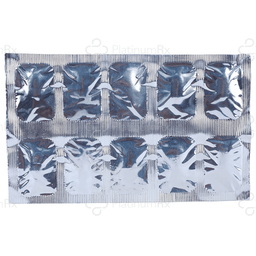
Glycebose M 500/0.3mg Tablet 10s

Glycebose M 500/0.3mg Tablet 10s is a prescription tablet for adults with type 2 diabetes. It combines two diabetes medicines. Metformin is a biguanide. Voglibose is an alpha-glucosidase inhibitor. The metformin in this tablet is in the form of metformin hydrochloride. Together they help control blood sugar in two ways. Metformin lowers the amount of sugar your liver makes and helps your body respond better to insulin. Voglibose slows down how fast your gut breaks down starchy food, so your blood sugar rises less after meals. Glycebose M 500/0.3mg Tablet 10s works best with a healthy diet and regular exercise.

Read more

Written by: Syed Jommy Abbas, B. Pharma

Reviewed by: Dr. Devika Rani, MBBS

Last updated on: 31-10-2026

Same Composition
Same Strength
FDA Approved
Same Composition
Currently Viewing
Glycebose M 500/0.3mg Tablet 10s

Cognitive Life Sciences Ltd.

Strip of 10 tablets

See affordable match

Top Substitute
6.1K Bought this instead

Delivery by

...

FDA & GMP Certified

Long Expiry (>8 Months)

15 Days Easy Returns

Medicine Comparison

100% Exact Salt Match
Glycebose M 500/0.3mg Tablet 10s
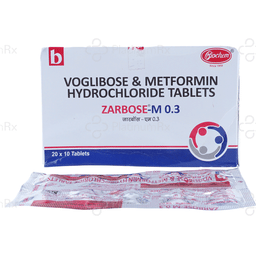
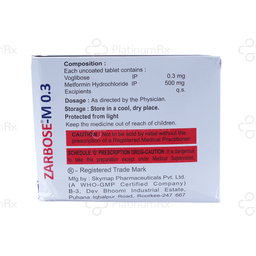
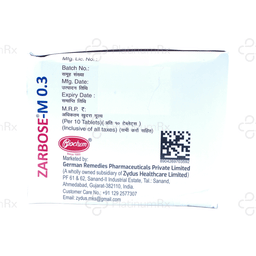
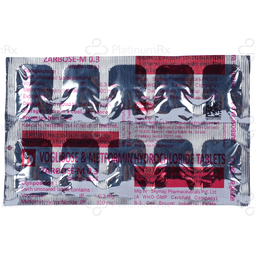
Zarbose M 500/0.3mg Tablet 10s
FDA Approved
FDA Approved
₹10.3 / Unit
₹4.8 / Unit

Have a question?

Doctor Approved & Trusted
thumbnail

Genuine Medicine

Pay On Delivery

Secure Payment

LegitScript Certified

LegitScript Certified Online Pharmacy

More About Glycebose M 500/0.3mg Tablet 10s

Detailed Description

Type 2 diabetes causes two main blood sugar problems. Your sugar stays too high through the day, and it jumps up after you eat. Glycebose M 500/0.3mg Tablet 10s deals with both, because each ingredient works in a different place.

Metformin works mostly in the liver. It cuts down how much glucose (sugar) the liver releases into the blood, mainly overnight and between meals. It also helps your muscles take in and use sugar more easily. On its own, metformin rarely pushes blood sugar too low, and it does not usually cause weight gain.

Voglibose works inside your gut. Starches and table sugar have to be broken down into simple sugars before your body can absorb them. Voglibose slows down the gut enzymes that do this, so sugar from a meal enters the blood more slowly. This helps flatten the sugar spike after meals. Very little voglibose passes into the bloodstream, which is why most of its side effects show up in the stomach and bowel.

Doctors often prescribe Glycebose M 500/0.3mg Tablet 10s when metformin alone is not controlling sugar levels well enough, especially after meals. Getting both medicines in one tablet means fewer pills to keep track of.

Glycebose M 500/0.3mg Tablet 10s needs regular medical supervision. Metformin carries a warning about a rare but serious condition called lactic acidosis (a dangerous build-up of acid in the blood). The risk is higher if you have kidney disease, liver disease, heavy alcohol use, severe infection, dehydration, or an upcoming scan that uses contrast dye. Your doctor will check your kidney function before you start and at intervals during treatment. Using metformin for a long time can also lower vitamin B12 levels, so your doctor may test this from time to time. Tell your doctor if you have bowel diseases such as inflammatory bowel disease (long-term swelling and soreness of the gut, such as ulcerative colitis or Crohn's disease) or a past bowel blockage, because voglibose may not suit you. Glycebose M 500/0.3mg Tablet 10s does not make diabetes go away. It helps keep your blood sugar in a safer range while you keep up a balanced diet and stay active.

Benefits of Glycebose M 500/0.3mg Tablet 10s

  1. Two ways of lowering sugar - Metformin reduces the sugar your liver makes, and voglibose slows down sugar absorption from food. Together they help both your fasting sugar and your after-meal sugar.
  2. Better control of after-meal spikes - Voglibose blunts the quick rise in blood sugar after starchy meals, which is common in diets rich in rice and wheat.
  3. Low risk of low blood sugar on its own - Neither ingredient usually causes low blood sugar (hypoglycemia) when taken without insulin or sulfonylureas (a group of diabetes tablets such as glimepiride or gliclazide).
  4. Weight-friendly - Metformin does not usually cause weight gain, and some people lose a little weight.
  5. Fewer pills - Two medicines in one tablet makes your daily routine simpler and may help you remember your doses.
  6. Long track record - Metformin has been used for decades and is often the first medicine doctors choose for type 2 diabetes.

Side Effects of Glycebose M 500/0.3mg Tablet 10s

Common Side Effects (Usually Mild and may lessen with continued use)

  • Gas, bloating, and a full feeling in the stomach
  • Loose stools or diarrhoea
  • Nausea or an upset stomach
  • Stomach pain or cramps
  • Loss of appetite
  • A metallic taste in the mouth
  • Rumbling or gurgling sounds from the belly

Stomach side effects are usually worst in the first few weeks and tend to settle as your body adjusts. Eating less table sugar can reduce gas from voglibose.

Serious Side Effects (Seek Urgent Medical Attention)

  • Lactic acidosis: This is a rare but dangerous build-up of lactic acid in the blood, linked to metformin. Signs include unusual tiredness or weakness, muscle pain, trouble breathing, stomach pain with nausea or vomiting, feeling cold, dizziness, or a slow or uneven heartbeat. It is more likely with kidney problems, liver problems, heavy drinking, dehydration, or serious illness. It is a medical emergency.
  • Low blood sugar (hypoglycemia): This is more likely if you also take insulin or a sulfonylurea. Signs include shaking, sweating, a fast heartbeat, hunger, confusion, or blurred vision. Because voglibose slows the breakdown of table sugar, use glucose tablets or glucose powder to treat a low, not regular sugar.
  • Vitamin B12 deficiency: Long-term metformin use can lower B12 levels. This can cause tiredness, pale skin, or numbness and tingling in the hands and feet.
  • Signs of bowel blockage: Severe or worsening belly pain, a swollen belly, ongoing vomiting, or being unable to pass stool or gas.
  • Liver problems: Yellowing of the skin or eyes, dark urine, or ongoing pain in the upper right side of the belly.
  • Serious allergic reaction: Rash, itching, swelling of the face, lips, or throat, or difficulty breathing.

Directions for Use

  • Take Glycebose M 500/0.3mg Tablet 10s just before your main meals, or as your doctor tells you. Voglibose works on the food you are about to eat, so the timing matters.
  • Swallow the tablet whole with a glass of plain water. Do not crush, chew, or break it unless your doctor or pharmacist says you can.
  • Take your doses at the same times each day, linked to your regular meals.
  • If you skip a meal, ask your doctor ahead of time whether you should skip that dose too, because the voglibose part has nothing to act on without food.
  • Keep your meal pattern and diet steady. Large swings in how many carbohydrates you eat make sugar control harder and can make stomach side effects worse.
  • Keep taking Glycebose M 500/0.3mg Tablet 10s for as long as it is prescribed, even when you feel well. Diabetes often causes no symptoms while still harming the body.
  • Check your blood sugar at home if your doctor has asked you to, and bring the readings to your appointments.

How it works

Metformin (a biguanide)

  • Metformin's main effect is in the liver. Normally the liver makes new glucose and releases it into the blood, a process called gluconeogenesis. Metformin slows this down, so less sugar enters your blood, especially overnight.
  • Metformin switches on an energy-sensing enzyme inside cells called AMP-activated protein kinase (AMPK). Think of AMPK as the cell's fuel gauge. When it is switched on, cells use more sugar and the liver makes less.
  • It makes muscle and fat tissue more sensitive to insulin, so sugar moves out of the blood and into cells more easily. In other words, it lowers insulin resistance.
  • It slightly reduces how much sugar the gut absorbs.
  • Metformin does not make the pancreas release more insulin. This is why it rarely causes low blood sugar on its own.

Voglibose (an alpha-glucosidase inhibitor)

  • Starches and sugars like table sugar are made of sugar units linked together. Enzymes called alpha-glucosidases sit on the lining of the small intestine and cut these links, so the simple sugars can be absorbed.
  • Voglibose blocks these enzymes in a reversible way. Carbohydrates get broken down more slowly and are absorbed further along the gut, so blood sugar rises gently after a meal instead of shooting up.
  • Some carbohydrate reaches the large bowel undigested. Bacteria there ferment it, and that is what causes gas and bloating.
  • Voglibose acts mainly inside the gut, and very little is absorbed into the blood.

Working together Metformin brings down your baseline and fasting sugar levels, and voglibose limits the rise after meals. Between them they cover more of the day than either medicine would alone.

Safety Advice for Glycebose M 500/0.3mg Tablet 10s

icon

Pregnancy

Limited information

High blood sugar in pregnancy needs close control, and doctors usually prefer insulin. Voglibose is generally not advised in pregnancy. If you are pregnant or planning a pregnancy, tell your doctor before you start or continue Glycebose M 500/0.3mg Tablet 10s.

icon

Breastfeeding

Limited information

Small amounts of metformin pass into breast milk. Less is known about voglibose in breastfeeding. Talk to your doctor before using Glycebose M 500/0.3mg Tablet 10s while breastfeeding.

icon

Driving

Limited information

Glycebose M 500/0.3mg Tablet 10s does not usually affect driving. If you also take insulin or a sulfonylurea, low blood sugar can cause dizziness or blurred vision. Check your sugar before driving, and do not drive if you feel unwell.

icon

Kidney

Limited information

The kidneys clear metformin from the body. Glycebose M 500/0.3mg Tablet 10s must not be used in severe kidney disease, and your doctor may lower the dose or stop it as kidney function falls. Kidney tests are needed before and during treatment.

icon

Liver

Limited information

Liver disease raises the risk of lactic acidosis with metformin. Glycebose M 500/0.3mg Tablet 10s is usually avoided in significant liver disease, including cirrhosis (long-term scarring of the liver).

icon

Alcohol

Limited information

Avoid alcohol or keep it to a minimum. Alcohol raises the risk of lactic acidosis with metformin and can cause low blood sugar. Binge drinking is especially risky.

icon

Children

Limited information

Glycebose M 500/0.3mg Tablet 10s is not recommended for children and teenagers. Its safety in this age group has not been confirmed.

icon

Elderly patients

Limited information

Older adults are more likely to have reduced kidney function, so they need more frequent kidney checks and closer monitoring for lactic acidosis and low blood sugar.

Quick Tips for Glycebose M 500/0.3mg Tablet 10s

  • Take each dose just before you start eating, so voglibose is in your gut when the food arrives.
  • Follow a diabetes-friendly diet that is low in refined sugar and sweets. Cutting back on sweets and sugary drinks can also ease gas and bloating.
  • Keep glucose tablets or glucose powder with you if you also take insulin or a sulfonylurea. Table sugar or sweets will not raise your sugar quickly with voglibose on board.
  • Stay physically active, keep your weight in check, and avoid smoking, as these all help your sugar control.
  • Drink enough fluids, especially in hot weather. Pause and call your doctor if you have severe vomiting, diarrhoea, or cannot eat or drink, as dehydration raises the risk of lactic acidosis.
  • Tell every doctor, dentist, and radiology centre that you take Glycebose M 500/0.3mg Tablet 10s, especially before surgery or a scan that uses contrast dye.
  • Ask your doctor about checking your vitamin B12 level if you develop numbness, tingling, or unusual tiredness.
  • Keep your regular kidney function and HbA1c (a blood test that shows your average blood sugar over the past 2 to 3 months) test appointments.

Storage Advice

  • Store at room temperature, below 30°C (86°F), unless the pack says otherwise.
  • Keep the tablets in their original strip or container to protect them from moisture and direct sunlight. Do not store them in the bathroom.
  • Keep out of reach and sight of children and pets. Accidentally swallowing this medicine can be harmful to a child. If a child swallows any tablets, get emergency medical help straight away.
  • Do not use tablets after the expiry date. Ask your pharmacist how to dispose of unused medicine safely.

Drug-Food Interaction

  • Table sugar and sweets: Voglibose slows the breakdown of table sugar (sucrose). Sugary foods can then ferment in the bowel and cause more gas, bloating, and diarrhoea. This is also why glucose, not table sugar, is used to treat a low.
  • High-carbohydrate meals: Large starchy meals can increase stomach discomfort. Spreading carbohydrates evenly across meals helps.
  • Alcohol: Alcohol raises the risk of lactic acidosis with metformin and can trigger low blood sugar, especially on an empty stomach.
  • Skipping meals: Taking a dose without a meal gives voglibose nothing to act on and can add to the risk of low blood sugar if you take other diabetes medicines.

Interactions with Other Drugs

  • Iodinated contrast dye (used in CT scans and angiography): This can affect kidney function and raise the risk of lactic acidosis. Your doctor may stop Glycebose M 500/0.3mg Tablet 10s before the scan and restart it only after checking your kidneys.
  • Insulin and sulfonylureas (such as glimepiride, gliclazide): These increase the risk of low blood sugar when taken with Glycebose M 500/0.3mg Tablet 10s. Their doses may need adjusting. Treat any low with glucose.
  • Carbonic anhydrase inhibitors (such as topiramate, acetazolamide): These may raise the risk of lactic acidosis with metformin.
  • Medicines that raise metformin levels (such as cimetidine, dolutegravir, ranolazine): These can reduce how quickly the body clears metformin, which may increase side effects.
  • Medicines that raise blood sugar (such as corticosteroids like prednisolone, thiazide diuretics, thyroid medicines, oral contraceptives): These may weaken sugar control, so your doctor may need to adjust your diabetes treatment.
  • Digestive enzyme supplements (such as amylase or pancreatin) and intestinal adsorbents (such as activated charcoal): These may reduce how well voglibose works.
  • Alcohol-containing medicines: Some syrups contain alcohol, which can add to the lactic acidosis risk.

Always give your doctor and pharmacist a full list of your medicines, including herbal and over-the-counter products.

Drug-Disease Interactions

  • Kidney disease: Metformin can build up in the body when the kidneys are weak, which raises the risk of lactic acidosis. Glycebose M 500/0.3mg Tablet 10s is not used in severe kidney disease.
  • Liver disease: This raises the risk of lactic acidosis. Glycebose M 500/0.3mg Tablet 10s is usually avoided.
  • Heart failure, recent heart attack, or shock: Low oxygen in the body's tissues raises the risk of lactic acidosis.
  • Serious infection, dehydration, or major surgery: These can trigger lactic acidosis, so treatment may need to be paused.
  • Diabetic ketoacidosis (a dangerous build-up of acids called ketones when the body lacks insulin) or type 1 diabetes: Glycebose M 500/0.3mg Tablet 10s is not a treatment for these. They need insulin.
  • Inflammatory bowel disease, colon ulcers, or bowel blockage (or a tendency to it): Voglibose can make these worse because of increased gas and bloating in the bowel.
  • Long-term digestive or absorption disorders: Voglibose is generally avoided in these conditions.
  • Hernia or past major abdominal surgery: Increased gas may cause problems, so tell your doctor if this applies to you.
  • Low vitamin B12 or nerve damage (neuropathy): Metformin can lower B12 further, so monitoring is advised.
  • Heavy alcohol use: This raises the risk of both lactic acidosis and low blood sugar.

Daily Dose

  • Glycebose M 500/0.3mg Tablet 10s comes in different strengths of each ingredient. Your doctor chooses the strength based on your blood sugar, kidney function, and other medicines.
  • Common strengths contain metformin 500 mg with voglibose 0.2 mg or 0.3 mg.
  • Usual adult dose: one tablet just before each main meal, two or three times a day, as your doctor prescribes.
  • Your total daily dose should not go over the maximum your doctor sets. For voglibose, this is usually no more than 0.3 mg per meal (0.9 mg a day).
  • Your doctor will lower the dose or stop the medicine if your kidney function falls.
  • Doctors often start with a low dose and increase it slowly. This helps reduce stomach upset.
  • Do not take more doses in 24 hours than prescribed, and do not change your dose yourself. Follow your doctor's prescription exactly.

Overdose

Taking too much Glycebose M 500/0.3mg Tablet 10s can be dangerous, mainly because of metformin. Possible signs include:

  • Severe nausea, vomiting, diarrhoea, or stomach pain
  • Severe gas and bloating (from voglibose)
  • Extreme weakness, drowsiness, or confusion
  • Fast or difficult breathing
  • Muscle pain, feeling very cold, or a slow or uneven heartbeat
  • Signs of low blood sugar, such as sweating, shaking, or fainting

If you suspect an overdose, go to the nearest emergency department straight away, even if you feel fine. Take the medicine pack with you. Lactic acidosis from metformin overdose is treated in hospital and may need dialysis to remove the drug from the blood.

What If You Forget to take Glycebose M 500/0.3mg Tablet 10s?

  • Because Glycebose M 500/0.3mg Tablet 10s works on the meal you are eating, take a missed dose only if you remember while you are still eating that meal.
  • If the meal has already finished, skip the missed dose and take your next dose before your next meal as usual.
  • Never take two doses together to make up for a missed one.
  • If you miss doses often, try linking your tablet to laying the table, or set a meal-time reminder on your phone.

When to contact doctor

Get urgent medical help if you notice:

  • Unusual tiredness, muscle pain, trouble breathing, stomach pain with vomiting, feeling cold, or a slow or uneven heartbeat (possible lactic acidosis)
  • Severe or worsening belly pain, a swollen belly, ongoing vomiting, or being unable to pass stool or gas
  • Signs of low blood sugar that do not improve after taking glucose, or fainting or a seizure
  • Yellow skin or eyes, or dark urine
  • Swelling of the face, lips, or throat, or difficulty breathing
  • Severe vomiting or diarrhoea, or being unable to eat or drink

Also contact your doctor if:

  • Your blood sugar readings stay high despite taking your medicine
  • You develop numbness or tingling in your hands or feet
  • Stomach side effects do not settle after a few weeks
  • You are planning surgery, a contrast scan, or a pregnancy

FAQ

Fact Box

Therapeutic Class

Antidiabetic

Action Class

Biguanide + Alpha-glucosidase inhibitor

Chemical Class

Biguanide (Metformin) + Valiolamine derivative / aminocyclitol (Voglibose)

Habit Forming

No

Disclaimer

PlatinumRx is committed to providing reliable and accurate information to support informed customer decisions. However, all information made available on the Platform, including product descriptions, comparisons, and other content, is provided solely for general informational purposes. Such information is not intended to diagnose, prevent, treat, or cure any medical condition, nor should it be relied upon as a substitute for professional medical advice, diagnosis, or treatment.
View More
editorial-png
Authentic & trustworthy information
Having issues with the content?
Report Error

Customers also bought

More Medicines By Cognitive Life Sciences Ltd.

More Medicines With Metformin 500mg + Voglibose 0.3mg

Top Selling Medicines

Top Selling Devices

Top Selling Health Products