

Extra ₹100 off on medicines

K Less 15g Sachet 1s

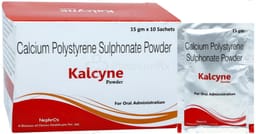
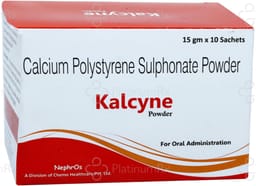
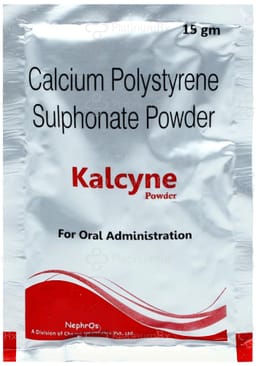
K Less 15g Sachet 1s is a medicine that lowers high levels of potassium in the blood. This condition is called hyperkalaemia. The medicine is also known as Calcium Polystyrene Sulfonate. It is a resin, which is a powder that the body does not absorb. It works inside the gut. There it takes up extra potassium and releases calcium in its place, and the bound potassium leaves the body in the stool. Doctors mainly use K Less 15g Sachet 1s for people whose kidneys make very little or no urine, and for people on dialysis. It is usually taken by mouth as a powder mixed with water. It can also be given as an enema, which is a liquid put into the back passage.

Read more

Written by: Syed Jommy Abbas, B. Pharma

Reviewed by: Dr. Devika Rani, MBBS

Last updated on: 28-10-2026

Same Composition
Same Strength
FDA Approved
Same Composition
Currently Viewing
K Less 15g Sachet 1s

Radmex Healthcare Pvt. Ltd.

Sachet of 1 Unit

See affordable match

Top Substitute
1.8K Bought this instead

Delivery by

...

FDA & GMP Certified

Long Expiry (>8 Months)

15 Days Easy Returns

Medicine Comparison

100% Exact Salt Match
K Less 15g Sachet 1s
Kalcyne Powder 15gm
Radmex Healthcare Pvt. Ltd.
FDA Approved
FDA Approved
₹112.5 / Unit
₹4.6 / Unit

Have a question?

Doctor Approved & Trusted
thumbnail

Genuine Medicine

Pay On Delivery

Secure Payment

LegitScript Certified

LegitScript Certified Online Pharmacy

More About K Less 15g Sachet 1s

Detailed Description

Potassium is a mineral the body needs for healthy nerves, muscles, and heartbeat. Normally the kidneys remove extra potassium in the urine. When the kidneys fail, potassium can build up in the blood. High potassium can upset the heart's rhythm, so it needs to be brought down carefully.

K Less 15g Sachet 1s belongs to a group of medicines called cation-exchange resins, also known as potassium binders. "Cation exchange" means the resin swaps one charged mineral for another. The resin stays in the gut and does not pass into the blood. As it moves through the bowel, it picks up potassium and gives out calcium. The potassium stays stuck to the resin and leaves the body in the stool.

Doctors use K Less 15g Sachet 1s for:

  • High potassium in kidney failure: for people who pass very little urine (severe oliguria) or no urine at all (anuria)
  • High potassium in people on dialysis: including people on regular haemodialysis and people on long-term peritoneal dialysis
  • High potassium linked to medicines: in practice, doctors sometimes use it when a medicine that raises potassium cannot be stopped

K Less 15g Sachet 1s works over hours, not minutes. A dangerously high potassium level needs faster hospital treatment first.

This form of the resin uses calcium instead of sodium and is essentially sodium-free. That can suit people who need to limit salt. Because it releases calcium, some people develop high blood calcium. This can happen suddenly, even in people whose calcium was low before. Doctors usually check calcium once a week.

K Less 15g Sachet 1s should only be used under medical supervision. Regular blood tests check potassium, calcium, and magnesium, because too much resin can push potassium too low. The resin can also cause constipation and, rarely, serious bowel damage. Report any new belly pain or change in your bowel habits straight away.

Benefits of K Less 15g Sachet 1s

  1. Lowers high potassium: K Less 15g Sachet 1s removes extra potassium through the gut. This helps protect the heart from rhythm problems caused by high potassium.
  2. Works without entering the blood: The resin is not absorbed, so it acts only inside the bowel.
  3. Essentially sodium-free: It releases calcium instead of sodium. That can help people who need to limit salt.
  4. Supports people with kidney failure and on dialysis: It helps control potassium when the kidneys cannot remove enough of it.
  5. Can be given two ways: It can be taken by mouth, or given as an enema when someone is vomiting or cannot take it by mouth.

Side Effects of K Less 15g Sachet 1s

Common Side Effects (Usually Mild)

  • Constipation
  • Stomach irritation or discomfort
  • Feeling sick (nausea)
  • Vomiting
  • Loss of appetite
  • Diarrhoea (occasionally)

Serious Side Effects (Seek Urgent Medical Attention)

  • Intestinal necrosis (bowel damage): Rarely, the resin can harm the bowel. Parts of the bowel can lose their blood supply, form ulcers, die, or tear open, and this can be life-threatening. Warning signs include sudden severe belly pain, nausea and vomiting, a swollen belly, or bleeding from the back passage.
  • Blocked bowel or hard lumps of resin (faecal impaction and bezoars): The resin can harden in the gut, especially after an enema in children. Signs include no bowel movement, belly swelling, or pain.
  • Hypokalaemia (potassium dropping too low): Signs include muscle weakness, irritability, confusion, or an uneven heartbeat.
  • Hypercalcaemia (high calcium): Because the resin releases calcium, calcium levels can rise, sometimes suddenly. This can cause thirst, confusion, constipation, or tiredness.
  • Low magnesium: This may cause muscle twitching or cramps.
  • Breathing in the powder (aspiration): Powder that gets into the lungs can cause chest infections such as bronchitis or pneumonia. Signs include coughing, wheezing, or trouble breathing.
  • Allergic reaction: Rash, itching, or swelling of the face, lips, or throat.

Directions for Use

  • Take K Less 15g Sachet 1s exactly as your doctor has prescribed. Do not change the amount or how often you take it.
  • For the powder taken by mouth: Measure the dose with the scoop or method your pharmacist gives you. Mix it well with a small amount of plain water, or a sweetened drink your doctor approves (not one containing sorbitol), just before you take it. Drink it straight away. Mixing it with enough liquid helps stop the resin from clumping in the gut.
  • Do not mix the powder with fruit juice or fruit squash. These contain potassium, which works against the medicine.
  • Do not mix it with sorbitol, a sugar alcohol sometimes used as a laxative. This combination has been linked to serious bowel damage.
  • Sit upright while taking the dose so you do not breathe in any powder.
  • Keep other medicines apart. The resin can bind other medicines taken by mouth and stop them from working properly. Take K Less 15g Sachet 1s at least 3 hours before or 3 hours after your other medicines. If your stomach empties slowly (gastroparesis), a gap of 6 hours may be needed. Follow your doctor's advice.
  • Try to take your doses at the same times each day so your potassium level stays steady.
  • For the enema form: This is usually given by a nurse or doctor. It is usually kept in the bowel for several hours (at least 9 hours, if possible). The bowel is then washed out to remove the resin.
  • Keep taking K Less 15g Sachet 1s for as long as your doctor advises, and go to all your blood test appointments.

How it works

K Less 15g Sachet 1s is an ion-exchange resin. An "ion" is a mineral that carries a tiny electrical charge, like potassium or calcium. The resin is made of long chains of a plastic-like material (polystyrene) with sulphonate groups attached. These groups hold calcium loosely.

After you swallow K Less 15g Sachet 1s, it is not digested or absorbed. It travels through the gut, mainly the large bowel (colon), where the gut fluid contains a lot of potassium. There the resin lets go of its calcium and grabs potassium in its place. This swap is called cation exchange.

The potassium stays trapped on the resin and leaves the body in your stool. Over time, this lowers the amount of potassium in your blood. The resin does not pick up only potassium. It can also take up other minerals, such as magnesium, and the calcium it releases can raise blood calcium. This is why your doctor checks several blood levels.

Because this process depends on the resin moving through the bowel, K Less 15g Sachet 1s takes hours to work.

Safety Advice for K Less 15g Sachet 1s

icon

Pregnancy

Limited information

There is no information on using polystyrene sulphonate resins in pregnancy. K Less 15g Sachet 1s is not advised in pregnancy unless your doctor feels the benefit outweighs any risk. Tell your doctor if you are pregnant or planning a pregnancy.

icon

Breastfeeding

Limited information

There is no information on use during breastfeeding. It is not advised unless your doctor feels the benefit outweighs any risk.

icon

Driving

Limited information

No specific warnings are given for driving. Do not drive if you feel weak or confused, or notice an uneven heartbeat.

icon

Kidney

Limited information

K Less 15g Sachet 1s is mainly used for people with kidney failure or on dialysis. These patients can develop high calcium, so potassium, calcium, and magnesium are checked regularly.

icon

Liver

Limited information

The resin is not absorbed into the body. Tell your doctor about any liver condition so your overall care can be planned.

icon

Alcohol

Limited information

No direct interaction is known. Alcohol can make stomach upset worse, so ask your doctor about drinking.

icon

Children

Limited information

Used in children only under specialist care, with the dose based on body weight. It must **not** be given by mouth to newborn babies. It should not be used in newborns whose bowel is moving slowly after surgery or because of medicines. In newborns, only the rectal (enema) route is used, under hospital supervision, and the resin is carefully washed out afterwards. Premature and low birth weight babies need particular care because of the risk of bowel bleeding or bowel damage.

icon

Elderly patients

Limited information

Older adults usually take the same dose as younger adults. Their blood levels and bowel habits should be watched closely.

Quick Tips for K Less 15g Sachet 1s

  • Mix the powder fresh in plain water each time, and drink it straight away.
  • Do not mix K Less 15g Sachet 1s with fruit juice, fruit squash, or anything containing sorbitol.
  • Take K Less 15g Sachet 1s at least 3 hours before or after your other medicines.
  • Tell your doctor early if you get constipation. Do not take sorbitol-based or magnesium-containing laxatives with this medicine. Your doctor will advise on safe treatment.
  • Report muscle weakness, confusion, or an uneven heartbeat promptly. These may mean your potassium has dropped too low.
  • Go to every blood test appointment so your dose can be checked.
  • Sit upright while taking the dose so you do not breathe in the powder.

Storage Advice

  • Store K Less 15g Sachet 1s in a dry place, following the storage instructions printed on the pack.
  • Keep the container tightly closed to protect the powder from moisture.
  • Keep it away from direct sunlight and heat.
  • Mix each dose fresh. Do not store mixed liquid for later use.
  • Keep it out of the reach and sight of children and pets.
  • Do not use it after the expiry date. Ask your pharmacist how to throw away unused medicine.

Drug-Food Interaction

  • Fruit juices and fruit squash: Do not mix the powder with these. The potassium they contain uses up the resin's binding power.
  • Sorbitol: Do not mix this sweetener and laxative with K Less 15g Sachet 1s or take it at the same time, whether by mouth or rectally. The combination has been linked to serious, sometimes fatal, bowel damage.
  • High-potassium foods: Foods such as bananas, oranges, potatoes, tomatoes, and dried fruits add potassium to your body. Your doctor or dietitian may ask you to limit them.
  • Salt substitutes: Many salt substitutes contain potassium. Check with your doctor before using them.

Interactions with Other Drugs

  • Other medicines taken by mouth: The resin can bind other oral medicines in the gut and make them work less well. Keep a gap of at least 3 hours between them, or 6 hours if your stomach empties slowly, unless your doctor or pharmacist advises otherwise.
  • Antacids and laxatives containing magnesium or aluminium: Taking these with the resin can upset the body's acid balance (alkalosis). Medicines that release minerals, such as calcium carbonate antacids, may also reduce how much potassium the resin removes. Aluminium hydroxide taken with the resin has been linked to bowel blockage. Do not use magnesium-containing laxatives to treat constipation while on this medicine.
  • Sorbitol: Avoid taking it with K Less 15g Sachet 1s because of the risk of bowel damage.
  • Digoxin and similar heart medicines: If potassium falls too low or calcium rises too high, the heart side effects of digoxin, such as dangerous rhythm problems, can get worse. Your doctor will check your levels closely.
  • Lithium: The resin may reduce how much lithium the body absorbs.
  • Levothyroxine (a thyroid medicine): The resin may reduce how much levothyroxine the body absorbs, so keep the doses apart.

Drug-Disease Interactions

  • Allergy to the resin: Do not use K Less 15g Sachet 1s if you have ever had an allergic reaction to polystyrene sulphonate resins (calcium or sodium form) or to any ingredient in the product.
  • Blocked bowel: K Less 15g Sachet 1s must not be used if you have a bowel blockage (obstructive bowel disease).
  • Slow bowel movement: It is not recommended when the gut is moving slowly, for example just after surgery or because of certain medicines. Slow movement raises the risk of a blocked, damaged, or torn bowel.
  • Low potassium: It should not be used if your potassium level is already low. Generally, it is not used when blood potassium is below 5 mmol/L.
  • High calcium or conditions that raise calcium: K Less 15g Sachet 1s should not be used if you have high blood calcium or a condition linked to it. Examples are an overactive parathyroid gland (hyperparathyroidism), multiple myeloma (a blood cancer), sarcoidosis (an inflammatory disease), or cancer that has spread to other parts of the body.
  • Newborn babies: It must not be given by mouth to newborns. It should not be used in newborns whose bowel is moving slowly after surgery or because of medicines.
  • Constipation: If constipation becomes significant, your doctor may pause treatment until your bowel movements return to normal.
  • Heart rhythm problems: Changes in potassium and calcium can affect the heart, especially in people taking digoxin, so levels need careful monitoring.

Daily Dose

  • Your doctor decides the dose of K Less 15g Sachet 1s based on regular blood tests, your age, and your body weight.
  • As a general guide, adults (including older adults) usually take 15 g by mouth three or four times a day, or 30 g as a daily enema.
  • Children usually receive a dose based on body weight. This is about 1 g per kg per day in divided doses at first, which may be lowered to 0.5 g per kg per day to keep potassium controlled.
  • Newborns must not take it by mouth. In hospital, they may be given the lowest effective dose rectally.
  • Treatment is usually stopped once your blood potassium falls to around 5 mmol/L.
  • Always follow your doctor's exact prescription. Never take more than prescribed or change your dose on your own, because too much can push potassium dangerously low.

Overdose

Taking too much K Less 15g Sachet 1s can push potassium too low or raise calcium too high. Possible signs include:

  • Irritability or confusion
  • Slowed thinking
  • Muscle weakness and weak reflexes, which can progress to paralysis
  • Breathing that slows or stops in severe cases
  • An uneven heartbeat

If you suspect an overdose, get emergency medical help straight away. Take the medicine pack with you. In hospital, doctors correct the blood mineral levels and use laxatives or enemas to remove the resin from the gut.

What If You Forget to take K Less 15g Sachet 1s?

  • Take the missed dose as soon as you remember.
  • If it is nearly time for your next dose, skip the missed one and carry on as usual.
  • Never take two doses at once to make up for a missed dose.
  • Keep the 3-hour gap between K Less 15g Sachet 1s and your other medicines, even when you take a dose late.
  • If you miss doses often, tell your doctor, as your potassium level may rise.

When to contact doctor

Get medical help straight away if you notice:

  • New, severe stomach pain, a swollen belly, or bleeding from the back passage
  • Nausea and vomiting together with belly pain
  • No bowel movement, or constipation that is getting worse
  • Muscle weakness, confusion, or slowed thinking
  • An uneven, racing, or very slow heartbeat
  • Extreme thirst or unusual tiredness
  • Coughing, wheezing, or trouble breathing after taking the powder
  • Rash, swelling of the face or throat, or difficulty breathing

FAQ

Fact Box

Therapeutic Class

Medicine for high potassium (potassium binder)

Action Class

Cation-exchange resin

Chemical Class

Polystyrene sulphonate resin (calcium form)

Habit Forming

No

Disclaimer

PlatinumRx is committed to providing reliable and accurate information to support informed customer decisions. However, all information made available on the Platform, including product descriptions, comparisons, and other content, is provided solely for general informational purposes. Such information is not intended to diagnose, prevent, treat, or cure any medical condition, nor should it be relied upon as a substitute for professional medical advice, diagnosis, or treatment.

View More
editorial-png
Authentic & trustworthy information
Having issues with the content?
Report Error

Customers also bought