Tixil 2mg Tablet 10s

Trihexyphenidyl is an anticholinergic medicine commonly prescribed to manage Parkinson’s disease and drug-induced extrapyramidal symptoms caused by antipsychotic medications. It helps relax muscles, reduce stiffness, and improve movement. Regular use supports smoother motor control and reduces involuntary muscle spasms such as tremors and rigidity.
Written by: Radhika B Shiraguppi, B. Pharma
Reviewed by: Dr. Jay Faldu, MBBS
Last updated on: 28-01-2026
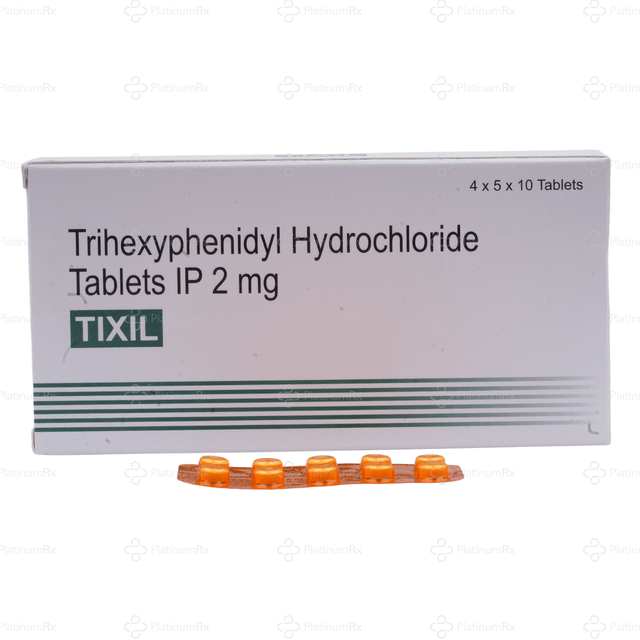
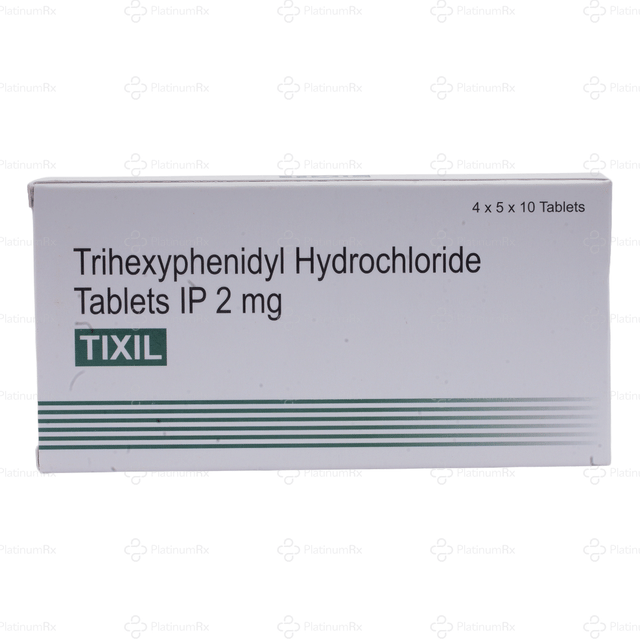


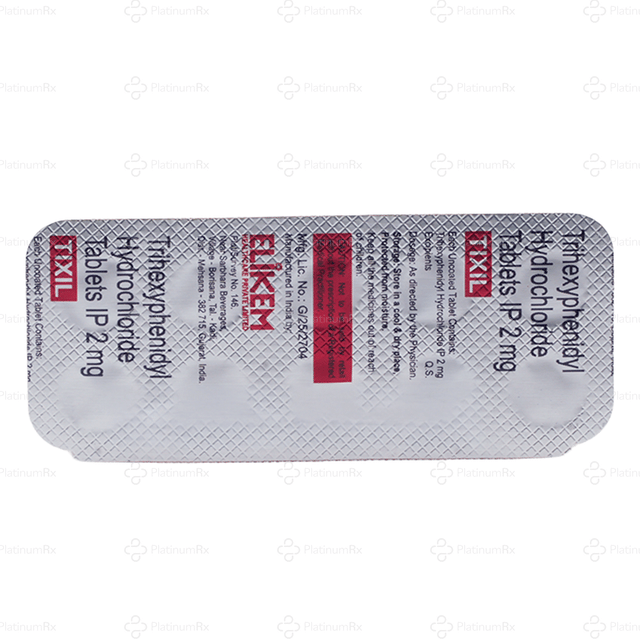
Elikem Pharmaceuticals Pvt. Ltd.
Delivery by
...
FDA & GMP Certified
Long Expiry (>8 Months)
15 Days Easy Returns
General Information
Have a question?

Genuine Medicine
Pay On Delivery
Secure Payment

LegitScript Certified Online Pharmacy


View content in
 English
Quick Summary
Trihexyphenidyl is an anticholinergic medicine commonly prescribed to manage Parkinson’s disease and drug-induced extrapyramidal symptoms caused by antipsychotic medications. It helps relax muscles, reduce stiffness, and improve movement. Regular use supports smoother motor control and reduces involuntary muscle spasms such as tremors and rigidity.
Detailed Description
Trihexyphenidyl is a prescription anticholinergic medicine used to treat symptoms of Parkinson’s disease and movement disorders caused by certain psychiatric medicines. It works by blocking the action of acetylcholine, a neurotransmitter that contributes to muscle rigidity, tremors, and abnormal movements. By restoring the balance between dopamine and acetylcholine in the brain, Trihexyphenidyl helps improve mobility, reduce muscle stiffness, and control involuntary movements.
Trihexyphenidyl is particularly useful for managing drug-induced side effects such as dystonia, restlessness, and Parkinson-like symptoms that may occur with antipsychotic use. It may be used alone in early Parkinson’s disease or in combination with other medicines such as Levodopa for enhanced symptom control. Consistent use helps improve daily functioning, motor coordination, and quality of life.
As its effects influence the central nervous system, Trihexyphenidyl should always be taken under medical supervision. Follow your doctor’s prescribed dosage and duration closely to experience the best therapeutic benefits while minimising side effects.
Uses of Tixil 2mg Tablet 10s
- Treatment of Parkinson’s disease symptoms (tremor, stiffness, rigidity)
- Management of drug-induced extrapyramidal symptoms (EPS)
- Control of dystonia (muscle spasms and abnormal postures)
- Reduction of involuntary movements caused by antipsychotic therapy
- May be used as part of combination therapy in Parkinson’s disease
Benefits of Tixil 2mg Tablet 10s
1. Relieves Parkinsonian Symptoms
Trihexyphenidyl reduces muscle stiffness, tremors, and rigidity in patients with Parkinson’s disease by rebalance of neurotransmitters in the brain. This helps improve mobility and movement control.
2. Reduces Drug-Induced Side Effects
Many antipsychotic medicines can cause extrapyramidal symptoms such as tremors, restlessness, and muscle spasms. Trihexyphenidyl effectively manages these symptoms and improves overall comfort.
3. Improves Muscle Control
By reducing excessive muscle contractions, the medicine allows smoother, more coordinated muscle movements, helping patients perform daily activities more easily.
4. Helps Manage Dystonia
Trihexyphenidyl is commonly used to control dystonia, where muscles contract uncontrollably. It eases abnormal postures and repetitive movements.
5. Enhances Quality of Life
By improving motor function and reducing involuntary movements, Trihexyphenidyl helps patients regain independence and participate in daily activities with greater confidence.
6. Can Be Used Alone or in Combination
Trihexyphenidyl may be used on its own in early or mild Parkinsonism, or along with other medicines like Levodopa for enhanced symptom control.
7. Beneficial in Younger Patients
Younger individuals with predominant tremor or rigidity often respond well to Trihexyphenidyl, benefiting from improved motor function.
8. Fast Onset of Action
The medicine often shows noticeable improvement in muscle stiffness and tremors within a short period, helping patients achieve quick relief.
9. Helps Reduce Excessive Salivation
Patients with Parkinson’s often struggle with drooling; Trihexyphenidyl helps reduce saliva production and provides symptomatic relief.
10. Suitable for Long-Term Symptom Management
When used under medical supervision, Trihexyphenidyl can be safely incorporated into long-term Parkinson’s and EPS treatment plans.
Side Effects of Tixil 2mg Tablet 10s
- Dry mouth
- Blurred vision
- Constipation
- Dizziness or drowsiness
- Nausea
- Nervousness or restlessness
- Difficulty passing urine
- Memory issues or confusion (more common in elderly patients)
- Increased sensitivity to heat (reduced sweating)
- Rarely, hallucinations or mood changes
Directions for Use
- Take Trihexyphenidyl exactly as prescribed by your doctor.
- Swallow the tablet with water; it is usually taken 2–3 times daily.
- To reduce stomach upset, take the medicine after meals.
- Do not crush or chew the tablet unless advised.
- Continue taking the medicine regularly for the best results.
How it works
Trihexyphenidyl works by blocking acetylcholine, a neurotransmitter responsible for muscle contractions and involuntary movements. In Parkinson’s disease, dopamine levels are reduced, causing an imbalance between acetylcholine and dopamine. This imbalance leads to tremors, rigidity, and stiffness.
By selectively inhibiting muscarinic cholinergic receptors in the central nervous system, Trihexyphenidyl restores this balance, allowing smoother muscle function, reduced tremors, and improved coordination. Additionally, its antispasmodic effects help reduce muscle cramps and dystonia. The medicine may also exert mild sedative and calming effects that help reduce restlessness caused by certain psychiatric medicines.
Safety Advice for Tixil 2mg Tablet 10s

1. Pregnancy
Moderate to Severe
Trihexyphenidyl should be used during pregnancy only if clearly needed. Consult your doctor for alternative options if you become pregnant while taking it.

2. Breastfeeding
Moderate
The medicine may pass into breast milk. Avoid use during breastfeeding unless your doctor recommends it.

3. Driving
Moderate
Trihexyphenidyl can cause blurred vision, dizziness, or drowsiness. Avoid driving or operating machinery until you know how the medicine affects you.

4. Alcohol
Moderate to Severe
Avoid alcohol, as it may worsen dizziness, drowsiness, impaired coordination, and confusion.

5. Food & Lifestyle
Mild to Moderate
- Stay hydrated to reduce dry mouth and constipation.
- Avoid hot weather exposure, as the medicine reduces sweating and increases the risk of overheating.
- Eat a fibre-rich diet to prevent constipation.
- Regular physiotherapy or exercise improves mobility and reduces rigidity.
Quick Tips for Tixil 2mg Tablet 10s
- Take after meals to minimise stomach upset.
- Avoid driving until you understand the medicine’s effects.
- Stay well-hydrated and avoid overheating.
- Do not stop the medication suddenly; symptoms may worsen.
- Monitor elderly patients for confusion or memory changes.
Storage Advice
- Store in a cool, dry place away from direct sunlight.
- Keep out of reach of children.
- Use within the expiry date.
- Keep the blister strip sealed until use.
Drug-Food Interaction
Trihexyphenidyl can be taken with or without food, but taking it after meals reduces nausea or stomach discomfort.
Avoid or limit:
- Alcohol (worsens drowsiness and dizziness)
- High-fat meals (may increase drowsiness)
- Excessive caffeine (may worsen restlessness)
- Hot weather/live cooking environments (risk of overheating due to reduced sweating)
Interactions with Other Drugs
Always inform your doctor about all medicines you take.
Possible interactions with:
- Anticholinergics (e.g., atropine, certain antihistamines): Increased risk of severe dry mouth, constipation, blurred vision, and confusion.
- Antipsychotics (e.g., chlorpromazine, haloperidol): Dose adjustment may be needed; used to manage drug-induced EPS.
- CNS depressants (alcohol, benzodiazepines, sedatives): Worsened drowsiness, confusion, and poor coordination.
- Levodopa: May increase side effects such as confusion or hallucinations.
- MAO inhibitors: May intensify anticholinergic effects; caution advised.
Drug-Disease Interactions
Trihexyphenidyl should be used cautiously if you have the following conditions:
Caution in:
- Glaucoma (especially narrow-angle glaucoma)
- Enlarged prostate (BPH)
- Urinary retention
- Gastrointestinal obstruction
- Cardiovascular disease
- Kidney or liver impairment
- Elderly patients (higher risk of confusion)
Daily Dose
The usual recommended dose is taken 2 to 3 times daily, depending on age and condition severity. Your doctor may adjust the dose gradually to achieve optimal symptom control. Do not change the dose without consultation.
Overdose
Taking too much Trihexyphenidyl may cause:
- Severe dry mouth
- Fever
- Fast heartbeat
- Hallucinations
- Confusion
- Breathing difficulty
Seek immediate medical attention if overdose is suspected.
What If You Forget to take Tixil 2mg Tablet 10s?
If you miss a dose, take it as soon as you remember. If it is nearly time for your next dose, skip the missed dose and continue your regular schedule. Do not take a double dose to compensate. Regularity helps maintain steady symptom control.
FAQ
Fact Box
Therapeutic Class
Neurological / Movement Disorder Medicine
Action Class
Central anticholinergic / antiparkinsonian
Chemical Class
Anticholinergic/Antimuscarinic agents
Habit Forming
No
Disclaimer
PlatinumRx is committed to providing reliable and accurate information to support informed customer decisions. However, all information made available on the Platform, including product descriptions, comparisons, and other content, is provided solely for general informational purposes. Such information is not intended to diagnose, prevent, treat, or cure any medical condition, nor should it be relied upon as a substitute for professional medical advice, diagnosis, or treatment.

Customers also bought












More Medicines By Elikem Pharmaceuticals Pvt. Ltd.
More Medicines With Trihexyphenidyl 2mg
Top Selling Medicines
Top Selling Devices
Top Selling Health Products


