Nucoxia Tablet: Uses, Composition, Side Effects & FAQs
Last Updated: October 7, 2026
Summary
Nucoxia is a prescription painkiller tablet for painful joints. It covers arthritis, ankylosing spondylitis, gout attacks and short-term pain after dental surgery. It is a prescription-only medicine in India. Its single active ingredient, etoricoxib, is a COX-2 selective painkiller.
Key Takeaways
- What it is: A prescription painkiller (NSAID) tablet that acts for about a full day.
- Active ingredients: Etoricoxib.
- Used for: Arthritis pain, gout attacks and short-term pain after dental surgery.
- Not meant for: Fever, plain headaches, people with serious heart, stomach, liver or kidney problems.
- Prescription: Needed in India; never buy or start it without a doctor's advice.
- How to take: One tablet daily, swallow whole with water, with or without food.
- Common side effects: Stomach pain, heartburn, headache, dizziness; usually mild and short-lived.
What Is Nucoxia?
Nucoxia is a tablet medicine for pain and inflammation. Its active ingredient, etoricoxib, belongs to the NSAID family of painkillers, of the COX-2 selective type.
Buy Nucoxia Painkiller and its Substitute
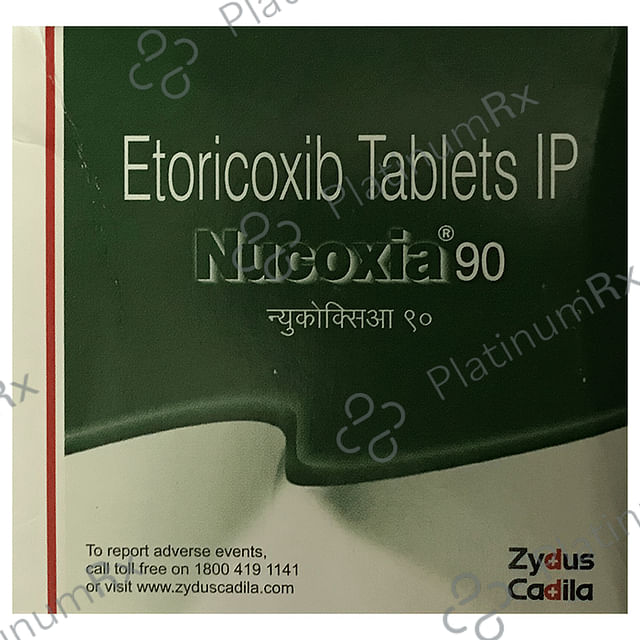
Nucoxia Composition (Per Tablet)
| Ingredient | Amount | Type | What it does (in simple words) |
|---|---|---|---|
| Etoricoxib | 60 mg | COX-2 inhibitor (NSAID) | Blocks the enzyme that causes pain and swelling at inflamed joints |
How Does Nucoxia Work?
When a joint is injured or inflamed, the body makes chemicals called prostaglandins using an enzyme called COX-2, and these chemicals cause pain, swelling and warmth. Etoricoxib blocks the COX-2 enzyme, so fewer prostaglandins are made and the joint hurts and swells less. One tablet keeps working for about 22 hours, which is why it is taken just once a day.
Uses of Nucoxia
Doctors usually prescribe Nucoxia for:
- Osteoarthritis, the wear-and-tear joint pain seen in knees, hips and hands
- Rheumatoid arthritis, where the immune system wrongly attacks the joints
- Ankylosing spondylitis, long-term stiffness and pain in the spine and lower back
- Acute gout, sudden severe joint pain, often in the big toe
- Pain after dental surgery, for the first few days only
Nucoxia eases pain and swelling, but it does not rid you of any of these conditions or stop them from coming back. It does not kill bacteria or viruses, and it is not for fever, everyday headaches or routine body ache. New to arthritis? Our arthritis guide explains it in plain words. If you cannot tell a gout attack from plain overwork ache, let a doctor judge before starting it.
How to Take Nucoxia Tablet
- Swallow the tablet whole with a glass of water; do not crush, split or chew it.
- Take it with or without food; on an empty stomach it may start working a little faster.
- Take it at roughly the same time each day; its effect lasts about a full day.
- Stick to the strength on your prescription and drink water through the day.
Dosage of Nucoxia
Your doctor sets your dose by condition, usually along these lines for etoricoxib: osteoarthritis 30 mg once a day, raised to a maximum of 60 mg if needed; rheumatoid arthritis or ankylosing spondylitis 60 mg once a day, raised to at most 90 mg; a gout attack 120 mg once a day for a maximum of 8 days; and dental-surgery pain 90 mg once a day for a maximum of 3 days. A 30 mg tablet may not be available in this brand; your doctor may prescribe another etoricoxib brand for that strength. Older people usually need no dose change, while liver disease caps the daily dose at 60 mg for mild disease and 30 mg for moderate disease.
Never increase the dose on your own. A higher dose does not relieve pain faster, and the risk of heart attack, stroke and raised blood pressure goes up with higher doses and longer use.
Nucoxia is not meant for children; a paediatrician will choose a different pain plan.
If you have taken more tablets than prescribed, go to the nearest hospital emergency department at once and carry the pack with you.
What If You Miss a Dose?
If you miss a tablet, simply continue your usual schedule the next day. Never take a double dose to make up for a missed one.
How Long Does It Take to Work?
Most people feel relief within a day of the first tablet, though the full benefit in arthritis builds over a few days. If a week of daily tablets has not helped, check back with your doctor.
Storage
Keep the tablets in their original strip at room temperature, away from heat and moisture. Keep them out of children's reach and do not use tablets past expiry.
Side Effects of Nucoxia
Most people take Nucoxia without any trouble, and when side effects happen they are usually mild and settle as the body adjusts.
Common and mild:
- Stomach pain, which is the most frequently reported effect
- Heartburn, indigestion, nausea, wind, constipation or loose motions
- Headache, dizziness, tiredness or a flu-like feeling
- Swelling of the legs or feet from fluid retention
- Palpitations, or a rise in blood pressure
- Mouth ulcers
Rare but serious (stop the medicine and see a doctor right away):
- Severe or continuing stomach pain, black stools or vomiting of blood
- Chest pain or breathlessness that appears or worsens
- Yellowing of the skin or eyes, a sign of liver trouble
- Swelling of the face, lips, tongue or throat, or any blistering skin rash
- A sudden, severe rise in blood pressure with severe headache
The stomach effects come from gut-lining irritation, and the swelling and blood-pressure effects from salt and water retention. Both grow with longer use and higher doses.
Who Should Not Take Nucoxia
- Anyone allergic to etoricoxib, other NSAIDs or aspirin
- People with an active stomach ulcer or bleeding, or bowel disease like Crohn's or ulcerative colitis
- People whose blood pressure is persistently above 140/90 despite treatment
- People with heart or blood vessel disease, or a past stroke
- People with serious liver or kidney disease
- Anyone under 16 years of age
- Women who are pregnant or breastfeeding
Precautions
Tell your doctor before taking Nucoxia if you have:
- A past history of stomach ulcers or bleeding (injured stomach lining is more vulnerable)
- High blood pressure (Nucoxia can push it up, so doctors check it before starting and for the first two weeks)
- Mild or moderate liver or kidney disease (the dose may need to be capped)
- A past heart attack, angina, heart failure or blocked leg arteries (a doctor must clear any NSAID first), or heart risk factors like diabetes, high cholesterol or smoking
- An ongoing infection (Nucoxia can hide a fever)
- Dehydration from vomiting or loose motions (kidneys need good blood flow on painkillers)
- A plan to become pregnant (doctors advise stopping this medicine while trying to conceive)
- An age over 65 (the doctor will monitor you more closely)
Drug Interactions
| Medicine | What can happen |
|---|---|
| Blood thinners (warfarin, acenocoumarol) | Bleeding risk rises; the doctor checks your blood test (INR) regularly |
| Aspirin | Stomach ulcer risk rises; do not stop prescribed low-dose aspirin without your doctor's advice |
| Other painkillers (diclofenac, ibuprofen, naproxen) | No extra relief, but more stomach, kidney and heart side effects; avoid combining |
| Blood pressure pills and water tablets (enalapril, ramipril, losartan, hydrochlorothiazide) | Blood pressure control may weaken; the kidneys need watching |
| Rifampicin | Blood levels of etoricoxib fall, so pain relief may weaken |
| Methotrexate | Its side effects can increase; regular blood checks are advised |
| Lithium | Lithium levels can rise in the blood |
| Ciclosporin or tacrolimus | Extra strain on the kidneys; kidney tests are monitored |
Frequently Asked Questions About Nucoxia
When to See a Doctor
This tablet controls pain but cannot fix the underlying problem. See a doctor quickly if you have:
- Chest pain, breathlessness, or weakness on one side of the face or body (call 112 or an ambulance on 108 immediately)
- Black or bloody stools, or vomiting of blood
- Swelling of the face, lips, tongue or throat, or skin blistering
- Yellowing of the skin or eyes, or unusually dark urine
- Leg or ankle swelling that worsens day by day
- A gout or arthritis flare that does not settle within the prescribed course
The Bottom Line
Nucoxia is a prescription painkiller for painful joint conditions, gout attacks and short-term pain after dental surgery. Take it once a day, at the lowest dose and shortest course your doctor sets, because heart and blood-pressure risks grow with higher doses and longer use. Stomach pain, heartburn, headache and mild swelling are the effects people notice most, and they usually settle.