Ascoril LS Syrup: Uses, Side Effects & Dosage Guide
Last Updated: October 26, 2026


Written by:
Pankaj Kumar, B. Pharma
Reviewed by:
Dr. Sekh Addil, MBBSPublished date: 26-Oct-2026
Summary
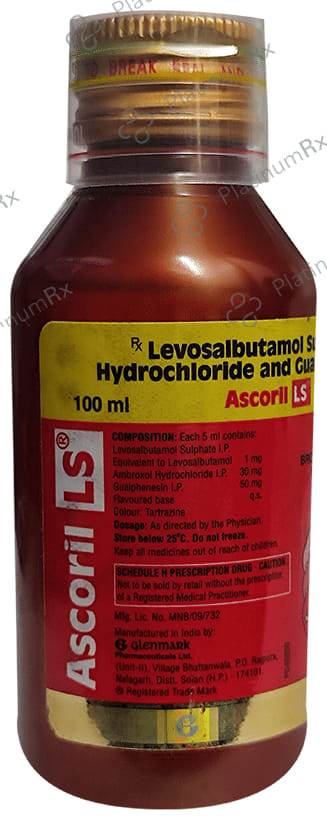
Ascoril LS Syrup is a medicine used to relieve wet cough with mucus. It contains three medicines: Levosalbutamol, Ambroxol, and Guaiphenesin. It helps loosen and thin mucus, making it easier to cough out, while also helping to open the airways and make breathing easier.
Ascoril LS may be used for cough associated with conditions such as bronchitis, asthma, COPD, and other breathing problems where mucus and narrowed airways are present.
- Levosalbutamol: helps relax and open the airways.
- Ambroxol: thins mucus and makes it easier to remove.
- Guaiphenesin: helps loosen mucus so it can be coughed out more easily.
Key Takeaways
- Helps relieve wet cough by loosening mucus and opening the airways.
- Contains levosalbutamol, ambroxol and guaifenesin.
- Use only with a doctor's prescription and follow the recommended dose.
- Not suitable for children under 6 years or for dry cough without mucus.
- Common side effects include tremors, fast heartbeat, headache and nausea.
- Stop taking it and seek medical help if you develop a skin rash, severe allergic reaction or worsening breathing difficulties.
What is Ascoril LS Syrup and What is it Used For?
Ascoril LS Syrup is used to treat wet cough with mucus (phlegm). It helps make the mucus thinner and easier to cough out. It also relaxes the muscles in the airways, making breathing easier.
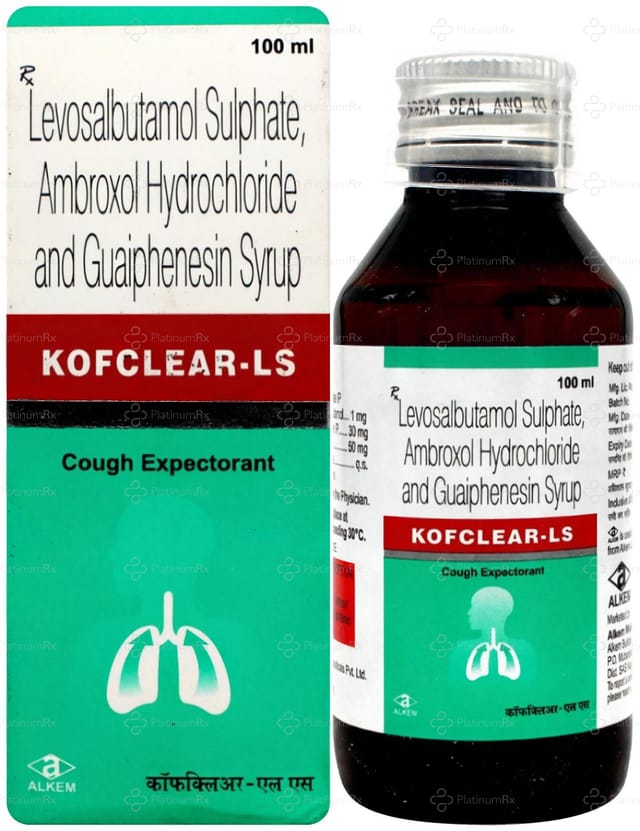
It contains three ingredients: Ambroxol, which thins the mucus; Guaifenesin, which helps loosen mucus and clear it from the airways; and Levosalbutamol, which relaxes the airway muscles to help improve breathing.
Ascoril LS Syrup is mainly used for wet cough and is generally not suitable for dry cough, where there is little or no mucus. Use it as advised by your doctor.
How does Ascoril LS Syrup work?
- Levosalbutamol attaches to beta-2 receptors on the muscle cells in the walls of your airways. This makes that muscle relax, so the airways open wider and breathing feels easier.
- Ambroxol is a mucolytic. It makes mucus in your airways thinner and less sticky and helps the tiny hair-like cilia move it up, so you can cough it out.
- Guaifenesin is an expectorant. It adds fluid to thick, sticky mucus so it loosens and is easier to cough up. It does not help a dry cough.
How to take Ascoril LS Syrup
Take exactly the dose your doctor prescribes. Do not exceed the stated dose, and do not give or take more than four doses in 24 hours. For children aged 6 to 12 years, use only the dose your doctor prescribes.
- Shake the bottle well before each dose.
- Measure the dose with the cup or spoon that came with the bottle, not a kitchen spoon.
- Take it with or without food.
- If you miss a dose, take it when you remember. If the next dose is almost due, skip it. Never take two doses together.
Taking too much can cause a fast heartbeat, shaky hands and other serious problems. If you or your child has taken too much, contact your doctor or the nearest hospital straight away.
Do not stop any other asthma medicine on your own. This syrup is not a substitute for a preventer inhaler and is meant for short-term relief only.
Who should not take Ascoril LS Syrup?
Do not take it if any of these apply to you:
- Allergy to levosalbutamol, ambroxol, guaifenesin or any other ingredient.
- Existing ischaemic heart disease (heart disease from narrowed arteries), or major risk factors for it.
- An active stomach (gastric or peptic) ulcer.
- Threatened miscarriage in the first or second trimester of pregnancy.
- Age under 6 years.
Who needs to be careful with Ascoril LS Syrup?
Tell your doctor before taking it if you have any of these:
- Heart problems, high blood pressure or an irregular heartbeat → your doctor may want to check you first.
- Diabetes → this medicine can change blood sugar levels.
- An overactive thyroid, or fits (convulsions) → use it only under medical advice.
- A tendency to stomach ulcers → ambroxol may irritate the stomach.
- Kidney or liver problems → the dose may need adjusting.
Pregnancy. There are no good studies of this combination in pregnant women, so it should be used only if your doctor decides it is clearly needed. It must not be used for threatened miscarriage in the first or second trimester.
Breastfeeding. It is not known whether these ingredients pass into breast milk. Ask your doctor before using it while breastfeeding.
Older adults. There is not enough information on how people over 65 respond to this combination. Your doctor will adjust the dose based on how well it works for you.
Children aged 6 to 12. Use only the dose your doctor prescribes.
Side effects of Ascoril LS Syrup
Most side effects are mild and settle on their own. The common ones are:
- Fine tremors of the hands
- Palpitations or a faster heartbeat
- Muscle cramps
- Headache, dizziness or nervousness
- Nausea, vomiting, stomach discomfort or loose motions
- Changed taste or a dry mouth
- Difficulty sleeping
Stop the syrup and get medical help straight away if you notice:
- Wheezing or tightness that gets worse soon after a dose. This can be life-threatening.
- Swelling of the face, lips or throat, or any severe allergic reaction.
- A spreading skin rash, blisters or peeling skin. European regulators added a warning in 2015-2016 that ambroxol-containing medicines carry a small risk of serious skin reactions, and that treatment should be stopped at once if a new rash appears. The Indian labelling for this combination carries the same caution.
- A very fast or irregular heartbeat, chest pain, or fainting.
- Unusual muscle weakness, which can be a sign of low potassium.
If any of these happen, call 112 for emergency help, or 108 for an ambulance in most states, and stop the syrup.
Tremor and palpitations can affect your driving. Do not drive until you know how this syrup affects you.
Interactions
- Other salbutamol-like inhalers or adrenaline-type medicines → extra fast heartbeat and tremor.
- Beta-blockers such as propranolol, atenolol or metoprolol → these can block the airway-opening effect and cause severe bronchospasm in asthma.
- Water tablets (diuretics), theophylline-type medicines and steroids → they can add to potassium loss.
- Digoxin → this syrup may lower digoxin levels, so your doctor may check them.
- MAO inhibitors and tricyclic antidepressants → stronger effects on the heart and blood pressure.
- Antibiotics such as amoxicillin, cefuroxime, erythromycin and doxycycline → ambroxol raises the antibiotic level in lung tissue.
- General anaesthetics (halogenated) → this syrup should normally be stopped at least 6 hours before surgery with these anaesthetics. Tell your surgeon and anaesthetist that you take it.
- Cough suppressants such as codeine or dextromethorphan → do not combine them with this syrup. They stop the cough that clears the mucus this syrup is loosening, so secretions can build up in the airways.
- Other cough and cold medicines → you may double-dose on the same ingredient.
Tell your doctor about every other medicine you take.
Storage and handling
- Store below 30°C, protected from light.
- Keep it out of the reach of children.
- Do not use it after the expiry date on the label.
This article gives general information only. How this prescription medicine suits you depends on your own condition. Always follow your doctor's advice, and ask your doctor or pharmacist if anything is unclear.
FAQs
References

Add PlatinumRx as a preferred source on Google