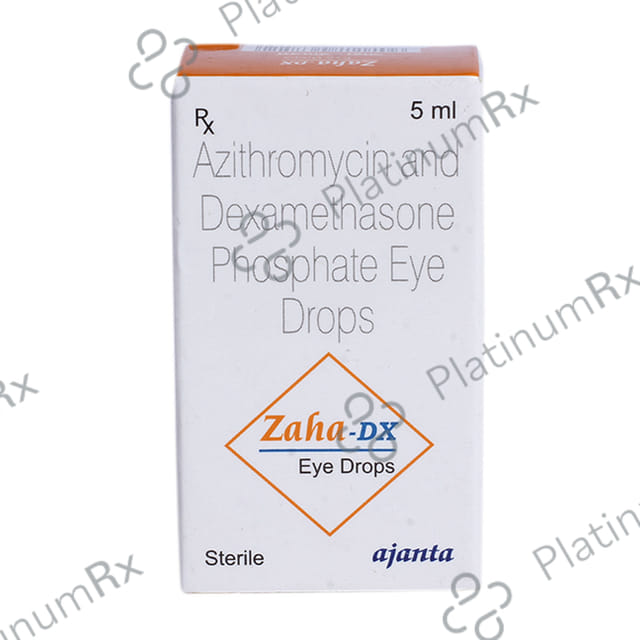
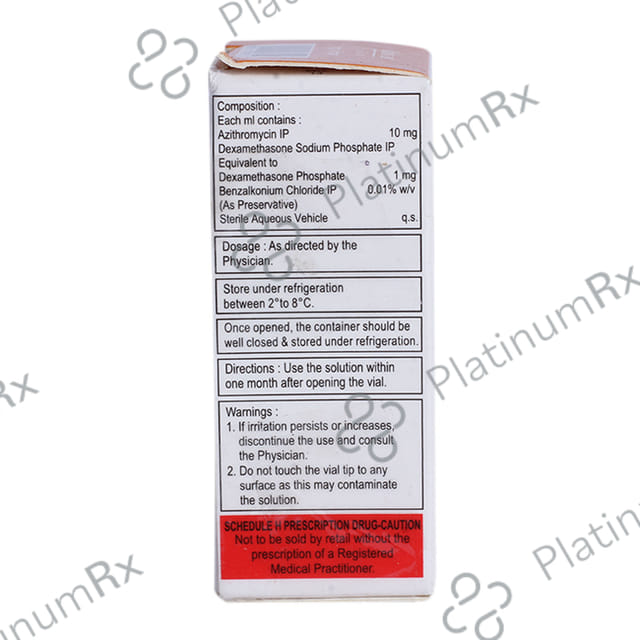
Zaha-DX Eye Drop

Zaha-DX Eye Drop is used in the treatment of conjunctivitis. It prevents the growth of the bacteria that cause infection in the eyes. It also relieves the symptoms such as redness, swollen, and itching in the eye. Zaha-DX Eye Drop is to be used as per the label instructions or as suggested by your doctor. Do not use it more than the recommended dose. Use it only on the affected eye. Use it regularly to get the maximum benefit from the medicine. Wash your hands thoroughly before and after administering the medicine. Generally, this is a safe medicine. However, it may cause some mild and temporary side effects like eye discomfort, eye irritation, and burning sensation in the eye after instilling. Consult your doctor if any of these persist or worry you. If you experience any allergic reaction (rashes, itching, swelling, shortness of breath, etc.), you must seek immediate medical help. Before using it, tell your doctor if you have an underlying disease or are taking medicines for any health condition. The medicines that are used externally usually do not get affected by other medicines, however, you should let your doctor know if you are taking any medicines to ensure safety. Avoid touching or rubbing your eyes as this may aggravate the infection. Reducing screen time and using goggles when you are out in the sun or in crowded or public areas can also help.
FDA & GMP Certified
Long Expiry (>8 Months)
15 Days Easy Returns
General Information
Have a question?

Genuine Medicine
Pay On Delivery
Secure Payment

LegitScript Certified Online Pharmacy


More About Zaha-DX Eye Drop
Quick Summary
Zaha-DX Eye Drop is used in the treatment of conjunctivitis. It prevents the growth of the bacteria that cause infection in the eyes. It also relieves the symptoms such as redness, swollen, and itching in the eye. Zaha-DX Eye Drop is to be used as per the label instructions or as suggested by your doctor. Do not use it more than the recommended dose. Use it only on the affected eye. Use it regularly to get the maximum benefit from the medicine. Wash your hands thoroughly before and after administering the medicine. Generally, this is a safe medicine. However, it may cause some mild and temporary side effects like eye discomfort, eye irritation, and burning sensation in the eye after instilling. Consult your doctor if any of these persist or worry you. If you experience any allergic reaction (rashes, itching, swelling, shortness of breath, etc.), you must seek immediate medical help. Before using it, tell your doctor if you have an underlying disease or are taking medicines for any health condition. The medicines that are used externally usually do not get affected by other medicines, however, you should let your doctor know if you are taking any medicines to ensure safety. Avoid touching or rubbing your eyes as this may aggravate the infection. Reducing screen time and using goggles when you are out in the sun or in crowded or public areas can also help.
Benefits of Zaha-DX Eye Drop
Treatment of Conjunctivitis
In Treatment of Conjunctivitis Zaha-DX Eye Drop is used to treat bacterial infections of the eyes such as conjunctivitis or pink eye. It stops the growth of bacteria causing infection and helps relieve pain, swelling, redness, itching, or irritation in the eyes. Use it 2-3 times a day for at least a week or as prescribed by the doctor. Your symptoms might improve after using Zaha-DX Eye Drop. However, make sure to complete the full course of treatment. This will ensure that the infection is completely cured and prevent it from returning.
Side Effects of Zaha-DX Eye Drop
The majority of side effects typically do not necessitate medical intervention. and disappear as your body adjusts to the medicine. Doctor consultation is advised if they persist or if you're worried about them. ['Eye discomfort, Burning sensation in eye']
Directions for Use
This medication is designated for external application solely. Utilize it according to the dosage and duration instructed by your doctor. Check the label for directions before use. Hold the dropper close to the eye without touching it. Gently squeeze the dropper and place the medicine inside the lower eyelid. Wipe off the extra liquid.
How it works
Zaha-DX Eye Drop is a combination of two medicines. Azithromycin is an antibiotic that works by preventing the synthesis of essential proteins required by bacteria to carry out vital functions. Thus, it stops the bacteria from growing and prevents the infection from spreading. Dexamethasone is an anti-inflammatory medicine that inhibits certain chemical messengers such as prostaglandins and leukotrienes to reduce inflammation (redness and swelling) of the eyes. In this way, Zaha-DX Eye Drop treats conjunctivitis.

Pregnancy
Seek medical advice from your doctor: Information regarding the use of Zaha-DX Eye Drop during pregnancy is not available. Doctor consultation is advised.

Breast feeding
Seek medical advice from your doctor: Information regarding the use of Zaha-DX Eye Drop during breastfeeding is not available. Doctor consultation is advised.

Driving
Not Safe: Zaha-DX Eye Drop may cause blurring of your vision for a short time just after its use. Do not drive until your vision is clear.
What If You Forget to take Zaha-DX Eye Drop?
If you forget a dose of Zaha-DX Eye Drop , simply continue with your regular schedule and do not take a double dose.
Storage Advice
Store in a refrigerator (2 - 8�C). Do not freeze.
Manufacturer Address
Ajanta House, Charkop, Kandivli West, Mumbai 400 067, India
Disclaimer
PlatinumRx is committed to providing reliable and accurate information to support informed customer decisions. However, all information made available on the Platform, including product descriptions, comparisons, and other content, is provided solely for general informational purposes. Such information is not intended to diagnose, prevent, treat, or cure any medical condition, nor should it be relied upon as a substitute for professional medical advice, diagnosis, or treatment.

Customers also bought







More Medicines By Ajanta Pharma Ltd.
More Medicines With Azithromycin 10mg + Dexamethasone 1mg
Top Selling Medicines
Top Selling Devices
Top Selling Health Products