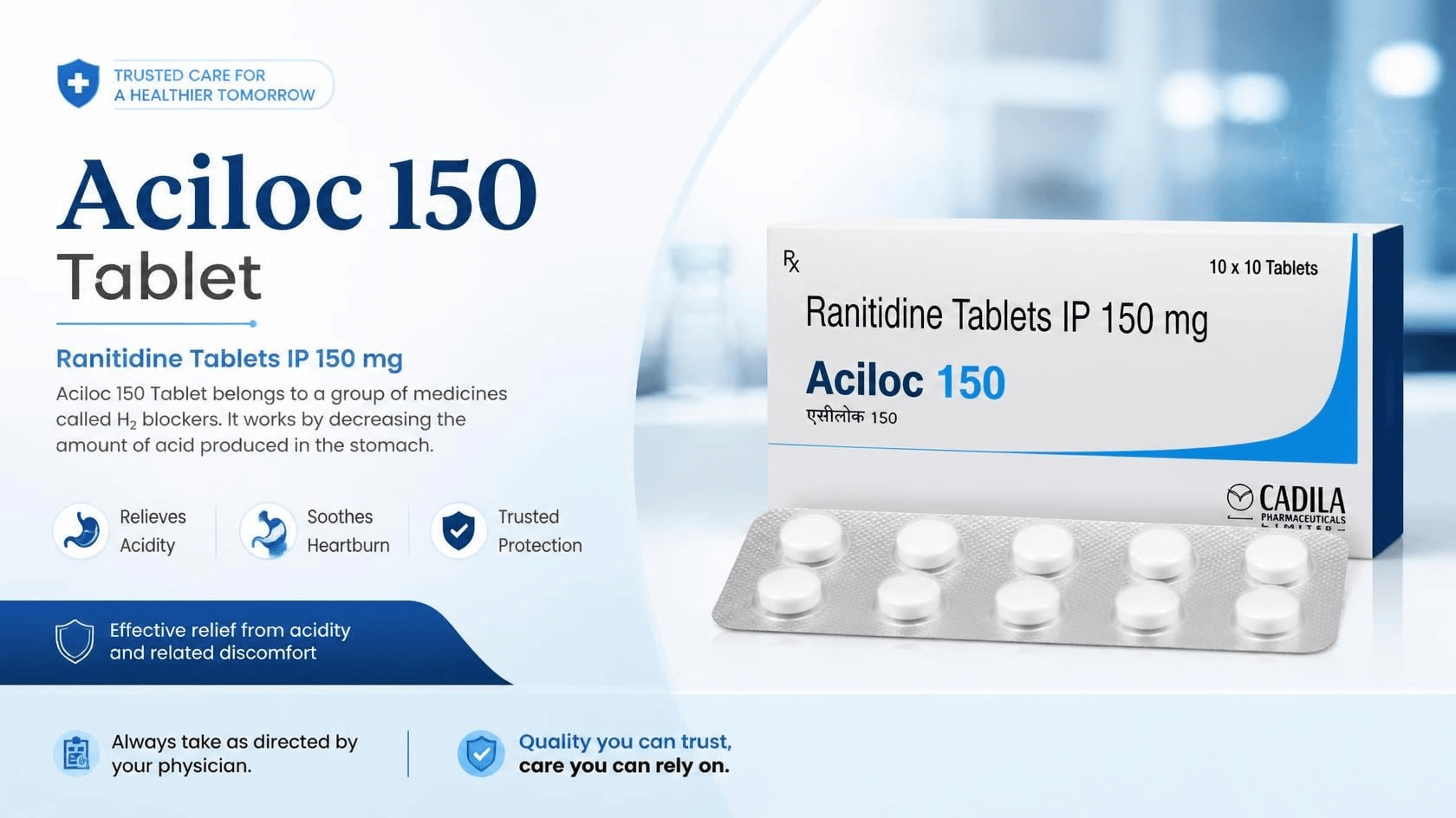
Aciloc 150 Tablet is an acid-reducing medicine containing ranitidine 150 mg. Ranitidine belongs to a class of medicines called H2-receptor blockers (H2 blockers). It works by reducing the amount of acid produced by the stomach and has traditionally been used for acid-related conditions such as heartburn, hyperacidity, indigestion, acid reflux, and certain stomach and intestinal ulcers.
However, ranitidine has been subject to regulatory review because of concerns about the possible presence and formation of N-nitrosodimethylamine (NDMA), an impurity classified as a probable human carcinogen. Regulatory decisions and availability can differ by country and product. For this reason, Aciloc 150 should be used only when recommended by a qualified healthcare professional, particularly if you are considering repeated or long-term use.
This guide explains Aciloc 150 uses, composition, how it works, dosage, side effects, precautions, drug interactions, and commonly asked questions in simple language.
What Is Aciloc 150 Tablet?
Aciloc 150 Tablet is an acid-reducing medicine that contains ranitidine 150 mg as its active ingredient.
Ranitidine is an H2-receptor antagonist. It reduces stomach acid by blocking the action of histamine on H2 receptors present in the stomach lining. This can lower acid production and help relieve symptoms associated with excess stomach acid.
Aciloc 150 has been used for conditions including:
- Acidity and hyperacidity
- Heartburn
- Acid reflux
- Gastroesophageal reflux disease (GERD)
- Acid-related indigestion
- Stomach ulcers
- Intestinal or duodenal ulcers
- Other conditions associated with excessive stomach acid
The exact use, dose and duration depend on the condition being treated and the individual’s medical history.
Aciloc 150 Composition
The active ingredient in Aciloc 150 is ranitidine 150 mg.
| Ingredient | Details |
| Brand name | Aciloc 150 |
| Active ingredient | Ranitidine |
| Strength | 150 mg |
| Drug class | H2-receptor blocker |
| Main action | Reduces stomach acid production |
| Common therapeutic use | Acid-related stomach conditions |
Always check the medicine strip or pack for the current formulation and manufacturer information before taking a medicine.
How Does Aciloc 150 Work?
Your stomach naturally produces hydrochloric acid to help digest food. Acid production is controlled by several signals, including histamine.
When histamine binds to H2 receptors in the stomach, it signals the acid-producing cells to release more acid.
Aciloc 150 works by blocking these H2 receptors. As a result, the stomach produces less acid.
Lowering stomach acid can help reduce irritation caused by acid and may relieve symptoms such as:
- Burning in the chest or upper abdomen
- Heartburn
- Sour taste or acid coming back into the mouth
- Acid-related indigestion
- Stomach discomfort caused by excess acid
In people with acid-related ulcers, reducing acid can also help create conditions that support healing when used as part of an appropriate treatment plan.
Aciloc 150 Uses
The most common Aciloc 150 uses are related to conditions caused or worsened by excess stomach acid.
1. Acidity and Hyperacidity
Aciloc 150 may be prescribed when excessive stomach acid causes burning, discomfort or other acid-related symptoms.
2. Heartburn
Heartburn occurs when stomach contents, including acid, move back towards the food pipe. Reducing stomach acid can help decrease the burning sensation associated with acid reflux.
3. Acid Reflux and GERD
Aciloc 150 has traditionally been used for acid reflux and gastroesophageal reflux disease (GERD). GERD involves repeated reflux of stomach contents into the oesophagus and may cause heartburn, sour taste and throat irritation.
4. Stomach Ulcers
Ranitidine has been used to reduce acid production in people with stomach ulcers. Lower acid levels can help reduce irritation and support ulcer healing when prescribed appropriately.
5. Duodenal or Intestinal Ulcers
It may also be used for ulcers affecting the duodenum, the first part of the small intestine, where reducing stomach acid can support treatment.
6. Acid-Related Indigestion
Some cases of indigestion are associated with excessive acid. An H2 blocker may be prescribed when acid is contributing to the symptoms.
7. Other Acid-Related Conditions
Doctors may prescribe acid-reducing medicines for certain less common conditions involving excessive stomach acid. The treatment and dose in such cases are determined according to the underlying condition.
Do not use the list of Aciloc 150 uses as a reason to self-medicate. Similar symptoms can have different causes, and persistent acidity or heartburn may require medical evaluation.
Aciloc 150 Dosage
The appropriate Aciloc 150 dosage depends on why the medicine has been prescribed, your age, kidney function, other medicines, and the severity of your symptoms.
Follow the dose given by your doctor or pharmacist rather than choosing the dose yourself.
General instructions include:
- Take Aciloc 150 exactly as prescribed.
- Swallow the tablet with water.
- Do not take more than the recommended dose.
- If it has been prescribed regularly, try to take it at the same time each day.
- Do not extend the treatment period without medical advice.
- People with kidney problems may require special dosing instructions.
Because ranitidine products have been subject to regulatory safety concerns, it is particularly important not to start or continue treatment without appropriate medical guidance.
How To Take Aciloc 150 Tablet?
Take Aciloc 150 according to your doctor’s instructions.
Depending on the condition, your doctor may recommend a particular time of day or relation to meals. Do not change the timing or frequency simply because your symptoms are better or worse on a particular day.
Swallow the tablet with water. Unless your healthcare professional tells you otherwise, do not crush or chew the tablet.
What If You Miss a Dose?
If you forget a scheduled dose, take it when you remember.
However, if it is almost time for your next dose, skip the missed dose and continue with your normal schedule.
Do not take two doses together to make up for a missed dose.
How Long Does Aciloc 150 Take To Work?
Aciloc 150 reduces stomach acid after it is taken, although the time needed to notice symptom relief can vary from person to person.
Some people may experience improvement in acid-related symptoms within a few hours, while conditions such as GERD or ulcers may require a longer treatment period.
If your symptoms continue, become more frequent, or return repeatedly despite treatment, consult a doctor rather than increasing the dose yourself.
Benefits of Aciloc 150
The potential benefits of Aciloc 150 are related to its ability to reduce stomach acid.
It may:
- Reduce excess stomach acid
- Relieve acid-related heartburn
- Reduce symptoms associated with acid reflux
- Help manage acid-related indigestion
- Reduce irritation caused by excessive acid
- Support treatment of certain acid-related ulcers when prescribed
The benefit depends on whether excess stomach acid is actually responsible for the symptoms. Not every case of stomach pain, gas or indigestion is caused by excess acid.
Aciloc 150 Side Effects
Like other medicines, Aciloc 150 may cause side effects in some people.
Possible Aciloc 150 side effects include:
- Headache
- Nausea
- Diarrhoea
- Constipation
- Stomach discomfort
- Fatigue
- Drowsiness
- Skin rash or itching
Most mild side effects may improve after the medicine is stopped or the body adjusts to treatment. However, unexpected or severe symptoms should not be ignored.
When Should You Seek Medical Help?
Contact a healthcare professional promptly if you experience symptoms such as:
- Severe or persistent rash
- Swelling of the face, lips or throat
- Difficulty breathing
- Severe dizziness
- Yellowing of the skin or eyes
- Unusual bleeding or bruising
- Severe abdominal pain
- Confusion or significant changes in mental status
Seek emergency medical attention for severe chest pain, difficulty breathing, vomiting blood or black, tarry stools.
Who Should Not Take Aciloc 150 Without Medical Advice?
Aciloc 150 may not be appropriate for everyone.
Tell your doctor before taking it if you:
- Have kidney disease
- Have liver disease
- Have had an allergy to ranitidine or similar medicines
- Are pregnant or planning pregnancy
- Are breastfeeding
- Have unexplained weight loss
- Have difficulty swallowing
- Have persistent vomiting
- Have recurrent or severe abdominal pain
- Have blood in vomit or black stools
- Have a history of porphyria
- Take several prescription or over-the-counter medicines
Children should not be given Aciloc 150 unless it has been specifically prescribed by a qualified healthcare professional.
Aciloc 150 and Kidney Disease
People with reduced kidney function may need special consideration when using ranitidine.
If you have kidney disease, do not choose the dose yourself. Tell your doctor about your kidney condition and any other medicines you take. Your healthcare professional can determine whether the medicine is appropriate and whether the dose needs to be changed.
Aciloc 150 During Pregnancy and Breastfeeding
If you are pregnant, planning to become pregnant or breastfeeding, speak with your doctor before taking Aciloc 150.
Do not assume that a medicine is safe during pregnancy simply because it is commonly used for acidity. Your doctor can consider your symptoms, medical history and available treatment options before recommending a medicine.
Aciloc 150 Drug Interactions
Medicines can interact with one another, and reducing stomach acid can affect the absorption or action of certain drugs.
Before taking Aciloc 150, tell your doctor or pharmacist about:
- Prescription medicines
- Over-the-counter medicines
- Antacids
- Vitamins and supplements
- Medicines for blood thinning
- Medicines for epilepsy
- Medicines for diabetes
- Medicines for heart conditions
- Medicines for infections
- Medicines used for HIV treatment
- Other medicines for acidity or reflux
Do not start, stop or change another medicine simply because you are taking Aciloc 150.
Aciloc 150 and Alcohol
Alcohol may worsen symptoms such as heartburn and acid reflux in some people. It can also irritate the stomach.
If alcohol triggers your acidity or reflux symptoms, avoiding or limiting it may help. If you are taking Aciloc 150 for a diagnosed stomach condition, discuss alcohol use with your doctor.
Aciloc 150 With Food
Whether Aciloc 150 should be taken before or after food depends on the treatment plan prescribed for you.
Do not change the timing of the medicine based only on when you experience acidity. Follow the instructions provided by your healthcare professional.
Lifestyle Tips for Managing Acidity and Acid Reflux
Medicine is only one part of managing recurring acidity.
Depending on your triggers, the following habits may help:
- Avoid very large meals.
- Identify and limit foods that trigger your symptoms.
- Avoid lying down immediately after eating.
- Avoid eating very late at night if it worsens reflux.
- Maintain a healthy body weight.
- Avoid smoking.
- Limit alcohol if it triggers symptoms.
- Keep a gap between dinner and bedtime.
- Stay physically active according to your health condition.
If lifestyle changes do not control recurring heartburn, speak with a doctor instead of repeatedly taking acidity medicines on your own.
Ranitidine and NDMA: What You Should Know
One of the most important points about ranitidine-containing medicines is the regulatory concern surrounding NDMA (N-nitrosodimethylamine).
NDMA is classified as a probable human carcinogen. Regulatory authorities have investigated ranitidine because NDMA was detected in some ranitidine medicines, and there have been concerns that levels could increase over time under certain conditions. The European Medicines Agency recommended suspension of ranitidine medicines in the EU as a precaution and advised patients to discuss alternative treatments with healthcare professionals.
This does not mean that every person who has ever taken ranitidine will develop cancer. The available evidence reviewed by the EMA did not establish that ranitidine itself increases cancer risk, but the impurity concern led to precautionary regulatory action.
Because regulatory status can differ between countries and individual products, patients should check the current status of their medicine and consult a doctor or pharmacist before using ranitidine-containing products.
Aciloc 150 vs Other Acidity Medicines
Aciloc 150 belongs to the H2 blocker class. It works differently from antacids, which neutralise acid already present in the stomach, and from proton pump inhibitors (PPIs), which suppress acid production through a different mechanism.
The best treatment depends on the cause and frequency of your symptoms.
For occasional heartburn, recurrent GERD, ulcers and other acid-related conditions, your doctor may recommend different medicines depending on your medical history and current treatment guidelines.
Do not switch between Aciloc 150 and another acidity medicine without professional advice, particularly because of the regulatory history of ranitidine.
When Should You See a Doctor for Acidity?
Occasional acidity can happen after certain foods or large meals. However, frequent or persistent symptoms should not simply be treated repeatedly with self-medication.
Consult a doctor if:
- Heartburn occurs frequently.
- Symptoms keep returning.
- Acidity interferes with sleep.
- You have persistent stomach pain.
- You have difficulty swallowing.
- You have unexplained weight loss.
- You experience repeated vomiting.
- Your symptoms do not improve with treatment.
Get Urgent Medical Attention If You Have
- Severe or unexplained chest pain
- Breathlessness
- Sweating with chest discomfort
- Pain spreading to the arm, shoulder, back or jaw
- Vomiting blood
- Black or tarry stools
- Severe abdominal pain
- Difficulty swallowing
Not every episode of chest burning is caused by acidity. Chest pain with other concerning symptoms should be evaluated urgently.
Frequently Asked Questions About Aciloc 150
What is Aciloc 150 used for?
Aciloc 150 contains ranitidine 150 mg and has traditionally been used to reduce stomach acid in conditions such as acidity, heartburn, acid reflux, GERD, acid-related indigestion and certain stomach or intestinal ulcers.
Is Aciloc 150 an antacid?
No. Aciloc 150 is an H2-receptor blocker, not a conventional antacid. It works by reducing the production of stomach acid rather than simply neutralising acid already present in the stomach.
Can Aciloc 150 be used for gas?
Aciloc 150 is not primarily a gas or bloating medicine. It reduces stomach acid, so it may help only when symptoms such as discomfort are related to acid reflux or excess acid. Persistent gas or bloating may have other causes and should be evaluated if it continues.
Can Aciloc 150 be taken on an empty stomach?
The timing of Aciloc 150 depends on the condition being treated and your doctor’s instructions. It may be prescribed at a particular time in relation to meals. Follow your prescription rather than changing the timing yourself.
How long does Aciloc 150 take to work?
Aciloc 150 starts reducing stomach acid after it is taken, and some people may notice symptom relief within a few hours. The response can vary depending on the condition and individual factors.
Can I take Aciloc 150 every day?
Do not take Aciloc 150 every day for an extended period unless a healthcare professional has specifically recommended it. Repeated acidity can sometimes indicate GERD or another underlying condition that needs evaluation.
Is Aciloc 150 safe for kidney patients?
People with kidney disease should take ranitidine only after discussing it with their doctor. Kidney function can affect how medicines are handled by the body, and the treatment plan may need adjustment.
Can Aciloc 150 be taken during pregnancy?
If you are pregnant or planning pregnancy, consult your doctor before taking Aciloc 150. Do not self-medicate for recurring acidity during pregnancy.
Does Aciloc 150 cause sleepiness?
Drowsiness has been reported as a possible side effect, although it does not occur in everyone. If you feel unusually sleepy or dizzy after taking the medicine, avoid driving or operating machinery until you know how it affects you.
What should I do if I miss an Aciloc 150 dose?
Take the missed dose when you remember unless it is almost time for the next scheduled dose. In that case, skip the missed dose and continue with your regular schedule. Do not double the dose.
Is Aciloc 150 still available?
The availability and regulatory status of ranitidine products can vary by country and individual product. Current official product information lists Aciloc 150 in some markets, while ranitidine has also been subject to regulatory restrictions because of NDMA concerns. Check the current product status in your location and consult a healthcare professional before use.
Key Takeaways
- Aciloc 150 contains ranitidine 150 mg.
- Ranitidine belongs to the H2-receptor blocker class.
- It reduces stomach acid rather than directly neutralising existing acid.
- Aciloc 150 has traditionally been used for acidity, heartburn, acid reflux, GERD, indigestion and certain ulcers.
- The appropriate dose and duration depend on the condition and individual health factors.
- Kidney disease, pregnancy, breastfeeding and other medicines should be discussed with a healthcare professional before use.
- Ranitidine has been subject to NDMA-related regulatory concerns, so it should not be used casually or for prolonged periods without professional guidance.
- Frequent acidity, difficulty swallowing, unexplained weight loss, bleeding or severe chest/abdominal pain requires medical evaluation.
Medical Disclaimer: This information is intended for general educational purposes and should not replace a doctor’s diagnosis or prescription. Medicine availability, indications and regulatory status may change. Always check the current product information and consult a qualified healthcare professional before starting, stopping or changing any medicine.