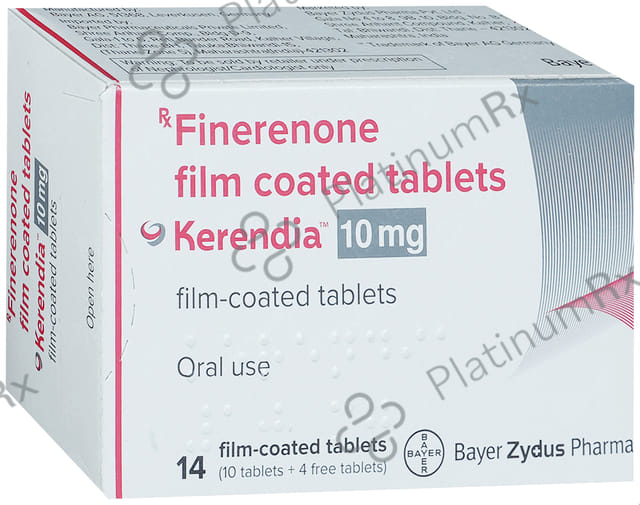
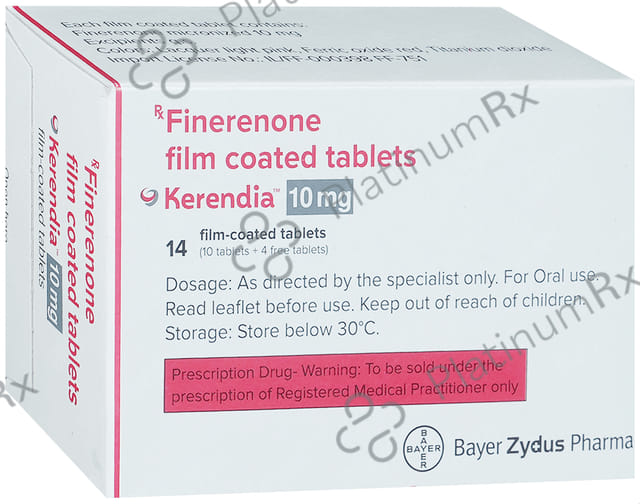
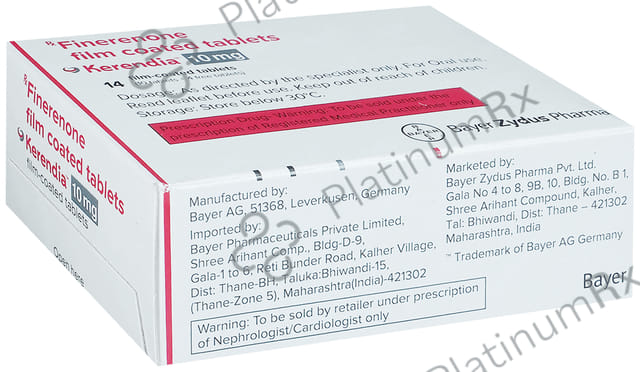
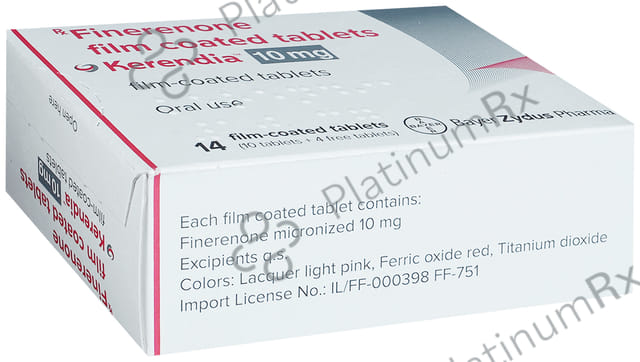
Kerendia 10mg Tablet 14s

Kerendia 10mg Tablet 14s (Finerenone) is a pioneering pharmacological agent classified as a non-steroidal mineralocorticoid receptor antagonist (MRA). It is specifically engineered to address the complex pathological challenges of Chronic Kidney Disease (CKD) in adult patients who are also living with Type 2 Diabetes (T2D). Unlike older generations of mineralocorticoid antagonists, which were steroidal, Finerenone offers a more selective and potent binding profile. Its primary clinical objective is to mitigate the progression of kidney damage and reduce the associated risks of cardiovascular complications, such as heart failure and myocardial infarction. By targeting the mineralocorticoid receptor, a key driver of inflammation and tissue scarring, this medication helps to preserve the structural integrity of the kidneys and the heart.
Delivery by
...
FDA & GMP Certified
Long Expiry (>8 Months)
15 Days Easy Returns
General Information
Have a question?

Genuine Medicine
Pay On Delivery
Secure Payment

LegitScript Certified Online Pharmacy


View content in
 English
Quick Summary
Kerendia 10mg Tablet 14s (Finerenone) is a pioneering pharmacological agent classified as a non-steroidal mineralocorticoid receptor antagonist (MRA). It is specifically engineered to address the complex pathological challenges of Chronic Kidney Disease (CKD) in adult patients who are also living with Type 2 Diabetes (T2D). Unlike older generations of mineralocorticoid antagonists, which were steroidal, Finerenone offers a more selective and potent binding profile. Its primary clinical objective is to mitigate the progression of kidney damage and reduce the associated risks of cardiovascular complications, such as heart failure and myocardial infarction. By targeting the mineralocorticoid receptor, a key driver of inflammation and tissue scarring, this medication helps to preserve the structural integrity of the kidneys and the heart.
Detailed Description
Kerendia 10mg Tablet 14s represents a significant milestone in the evolution of nephrology and cardiology. For decades, the management of diabetic kidney disease was primarily limited to blood pressure and blood sugar control. However, the discovery of the mineralocorticoid receptor (MR) as a major contributor to organ damage opened the door for Finerenone.
The Role of the Mineralocorticoid Receptor
The mineralocorticoid receptor is a protein found in various tissues, including the kidneys, heart, and blood vessels. Normally, it responds to the hormone aldosterone to help regulate the body's salt and water balance. However, in patients with chronic conditions like diabetes, these receptors often become overactivated. This overactivation does not just affect fluid balance; it triggers a cascade of negative biological responses. It stimulates the production of pro-inflammatory cytokines and promotes fibrosis (the formation of excessive connective tissue or scarring). Over time, this scarring replaces healthy kidney filters (nephrons) and stiffens the heart muscle, leading to a steady decline in organ function.
Steroidal vs. Non-Steroidal MRAs
The "non-steroidal" nature of Finerenone is what distinguishes it from earlier medications like spironolactone or eplerenone. Older steroidal MRAs often cross-react with other hormone receptors, such as those for testosterone and progesterone, leading to unwanted side effects like breast tenderness or enlargement in men (gynecomastia). Finerenone is highly selective, meaning it binds almost exclusively to the mineralocorticoid receptor, significantly reducing the risk of hormonal disturbances. Furthermore, Finerenone distributes more evenly between the heart and kidneys, whereas older MRAs tend to accumulate more heavily in the kidneys. This balanced distribution allows Finerenone to provide robust cardiovascular protection alongside its renal benefits, making it a "dual-action" protector for diabetic patients.
Impact on Clinical Outcomes
In large-scale clinical observations, patients taking Finerenone 10mg demonstrated a slowed decline in the Estimated Glomerular Filtration Rate (eGFR), which is the standard measure of how well the kidneys are filtering waste. Additionally, the medication has shown a remarkable ability to reduce albuminuria (the presence of protein in the urine), which is an early and critical sign of kidney stress. By calming the inflammatory storm within the renal and cardiac tissues, Finerenone helps patients stay away from end-stage renal disease and the need for dialysis or transplantation.
Uses of Kerendia 10mg Tablet 14s
Kerendia 10mg Tablet 14s (Finerenone 10mg) is utilised for a specific range of chronic therapeutic goals:
Chronic Kidney Disease (CKD) Management:
To slow the progression of kidney failure in adults with CKD associated with Type 2 Diabetes.
Cardiovascular Risk Reduction:
To reduce the risk of sustained decline in eGFR, end-stage kidney disease, and cardiovascular death.
Heart Failure Prevention:
Specifically used to lower the risk of hospitalisation for heart failure in the diabetic patient population.
Myocardial Infarction Protection:
Indicated to reduce the risk of non-fatal heart attacks in high-risk patients with renal impairment.
Benefits of Kerendia 10mg Tablet 14s
Targeted Renal Protection:
It directly inhibits the pathways that lead to kidney scarring, offering a level of protection that blood sugar control alone cannot provide.
Heart-Specific Safety:
Relaxing the MR activity in cardiac tissues helps prevent the stiffening of the heart chambers, reducing the likelihood of heart failure.
Minimal Hormonal Impact:
Due to its non-steroidal structure, it avoids the feminising side effects in men and menstrual irregularities in women associated with older MRAs.
Potassium Management:
While it can raise potassium levels, Finerenone has shown a lower incidence of severe hyperkalemia compared to older steroidal antagonists when monitored correctly.
Complementary Therapy:
It works effectively alongside standard treatments like ACE inhibitors, ARBs, and SGLT2 inhibitors, providing an additional layer of defence for the organs.
Side Effects of Kerendia 10mg Tablet 14s
While Finerenone is generally well-tolerated, its influence on electrolyte balance and blood pressure necessitates careful observation.
Common Side Effects:
- Hyperkalemia: An increase in blood potassium levels (K+) is the most frequent side effect, which may require dietary adjustments or dose changes.
- Hypotension: Some patients may experience a drop in blood pressure, leading to mild light headedness or fatigue.
- Hyponatremia: A decrease in blood sodium levels (Na+) can occasionally occur.
- Anaemia: A slight reduction in haemoglobin levels has been observed in some clinical cohorts.
Serious Side Effects (Seek medical attention immediately):
- Severe Hyperkalemia: Symptoms include muscle weakness, an irregular heartbeat (arrhythmia), or a feeling of "fluttering" in the chest.
- Acute Kidney Injury: Although rare, a sudden change in kidney function may occur, marked by a significant decrease in urine output or swelling in the legs.
- Anaphylaxis: Rare allergic reactions involving swelling of the lips, tongue, or difficulty breathing.
- Severe Hypotension: Significant dizziness or fainting, particularly when standing up quickly.
Directions for Use
- Dosing Routine: Take one 10mg tablet once daily at approximately the same time each day to maintain consistent blood levels.
- Food Intake: The tablet can be taken with or without food, as its absorption is not significantly affected by meal contents.
- Swallowing: Swallow the tablet whole with a glass of water; do not crush, split, or chew it, as this may interfere with the controlled release of the medication.
- Monitoring: Regular blood tests to monitor potassium levels and eGFR are mandatory, especially in the first few weeks of treatment and after any dose increase.
- Grapefruit Warning: Avoid consuming grapefruit or grapefruit juice while taking this medication, as it can significantly increase the concentration of the drug in your system.
How it works
Finerenone functions through a highly specific molecular blockade of the Mineralocorticoid Receptor (MR).
- Receptor Binding: Finerenone enters the cell and binds to the MR with high affinity. Because it is non-steroidal, it assumes a unique "bulky" shape that completely blocks the receptor from being activated by ligands like aldosterone or cortisol.
- Genomic Inhibition: Once the receptor is blocked, it cannot move into the cell's nucleus to turn on genes that promote inflammation and the production of collagen.
- Fibrosis Prevention: By silencing these genes, the drug prevents the deposition of scar tissue in the delicate filters of the kidney and the muscle fibres of the heart.
- Electrolyte Regulation: By modulating MR activity in the distal tubules of the kidney, it promotes a mild excretion of sodium while causing the body to retain more potassium.
- Vascular Health: It improves the health of the endothelium (the inner lining of blood vessels), reducing oxidative stress and helping the vessels remain flexible.
Safety Advice for Kerendia 10mg Tablet 14s

PREGNANCY
CAUTION.
CONSULT YOUR DOCTOR. Animal studies suggest potential harm; use is generally avoided unless the benefits to the mother significantly outweigh the risks to the fetus.

BREASTFEEDING
CAUTION.
It is unknown if the drug passes into breast milk. Breastfeeding is typically not recommended during treatment to ensure infant safety.

DRIVING
NO INTERACTION
The medication does not usually affect the ability to drive, though caution is advised if you experience dizziness from low blood pressure.

LIVER
CAUTION
Use with caution in patients with moderate hepatic impairment; avoid entirely in those with severe liver failure (Child-Pugh C).

KIDNEY
MODERATE
CONSULT YOUR DOCTOR. While it treats kidney disease, it cannot be started if eGFR is too low (< 25 mL/min) or if potassium is already high.

ALCOHOL
NO INTERACTION
There is no direct drug-alcohol interaction, but alcohol can contribute to dehydration, which may complicate kidney function and blood pressure.
FOOD
NO INTERACTION
Can be taken with or without food, but GRAPEFRUIT must be strictly avoided as it interferes with drug metabolism.

LIFESTYLE
CAUTION
Patients must follow a low-potassium diet if instructed by their doctor and avoid using salt substitutes containing potassium chloride.
Quick Tips for Kerendia 10mg Tablet 14s
- Monitor Potassium: Be aware of high-potassium foods like bananas, oranges, and spinach; you may need to limit these to keep your blood levels safe.
- Avoid Salt Substitutes: Many "low sodium" salts use potassium instead of sodium, which can cause dangerously high potassium levels when combined with Finerenone.
- Stay Hydrated: Dehydration can cause your potassium levels to spike and your kidney function to dip; aim for consistent water intake throughout the day.
- Blood Pressure Check: Keep a log of your blood pressure at home, especially when first starting the 10mg dose, to ensure it doesn't drop too low.
- Notify Surgeons: If you are scheduled for any surgery, inform your surgical team that you are taking Finerenone, as it may affect electrolyte management during the procedure.
Storage Advice
- Store the tablets at room temperature, ideally between 20°C and 25°C.
- Keep the medication in its original blister pack or bottle to protect it from environmental moisture.
- Store the medication in a secure location, well away from the reach of children and household pets.
Drug-Food Interaction
- Grapefruit Juice: This is a "severe" interaction. Grapefruit inhibits the enzymes needed to break down Finerenone, leading to toxic levels in the blood.
- High-Potassium Foods: Consuming excessive amounts of potassium-rich foods can synergise with the drug's effect, leading to hyperkalemia.
- St. John's Wort: This herbal supplement can speed up the removal of Finerenone from your body, making the 10mg dose less effective.
Interactions with Other Drugs
- Strong CYP3A4 Inhibitors: Drugs like Ketoconazole, Itraconazole, and Ritonavir must be avoided as they drastically increase Finerenone levels.
- Potassium-Sparing Diuretics: Combining Finerenone with drugs like Amiloride or Triamterene is generally avoided due to the extreme risk of hyperkalemia.
- Potassium Supplements: Taking Potassium supplements while on Finerenone should only be done under strict medical supervision and frequent testing.
- NSAIDs: Pain relievers like Ibuprofen or Naproxen can worsen kidney function and increase potassium levels when taken with Finerenone.
- Strong CYP3A4 Inducers: Medications like Rifampin or Phenytoin can lower Finerenone levels, rendering the 10mg dose ineffective
Drug-Disease Interactions
- Adrenal Insufficiency: Patients with Addison’s disease or other forms of adrenal failure should not take this medication.
- Severe Hepatic Impairment: The liver is the primary site of metabolism; severe disease can lead to drug accumulation.
- Severe Renal Impairment: If the kidneys are already at end-stage failure (eGFR < 15), the risks of hyperkalemia usually outweigh the benefits.
- Hyperkalemia: Do not start this medication if your baseline blood potassium is already above 5.0 mEq/L.
Daily Dose
The standard starting dose for most patients is 10mg or 20mg once daily, depending on the patient's current eGFR and potassium levels. For many, the 10mg dose is used initially and may be increased to 20mg after 4 weeks if blood tests remain within a safe range.
Overdose
An overdose of Finerenone 10mg is most likely to result in Hyperkalemia.
- Symptoms: Weakness, paralysis, chest pain, and cardiac arrest in extreme cases.
- Immediate Action: Seek emergency medical care immediately. Treatment often involves medications to drive potassium back into the cells or the use of potassium binders.
What If You Forget to take Kerendia 10mg Tablet 14s?
- Take it as soon as possible: If you realise you missed a dose on the same day, take it immediately with a glass of water.
- Skip if next day: If you do not remember until the following day, skip the missed dose entirely and return to your regular schedule.
- Avoid Double Dosing: Never take two 10mg tablets at the same time to compensate for a missed one, as this poses a high risk of hyperkalemia.
- Consistency: Try to link your dose to a daily habit (like brushing your teeth) to ensure you do not miss doses, as consistent blockade of the MR is vital for organ protection.
FAQ
References
- https://www.mayoclinic.org/drugs-supplements/finerenone-oral-route/description/drg-20518736
- https://reference.medscape.com/drug/kerendia-finerenone-4000168
- https://www.webmd.com/drugs/2/drug-181913/kerendia-oral/details
- https://www.ncbi.nlm.nih.gov/books/NBK596313/
- https://www.drugs.com/kerendia.html
Fact Box
Therapeutic Class
Nephroprotective / Cardiovascular
Action Class
Non-steroidal Mineralocorticoid Receptor Antagonist
Chemical Class
Dihydropyridine derivative
Habit Forming
No
Disclaimer
PlatinumRx is committed to providing reliable and accurate information to support informed customer decisions. However, all information made available on the Platform, including product descriptions, comparisons, and other content, is provided solely for general informational purposes. Such information is not intended to diagnose, prevent, treat, or cure any medical condition, nor should it be relied upon as a substitute for professional medical advice, diagnosis, or treatment.

Customers also bought


More Medicines By Bayer Zydus Pharma Pvt. Ltd.
More Medicines With Finerenone 10mg
Top Selling Medicines
Top Selling Devices
Top Selling Health Products