


Extra ₹100 off on medicines

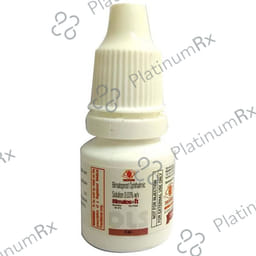
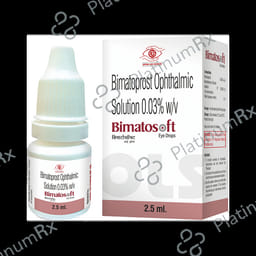
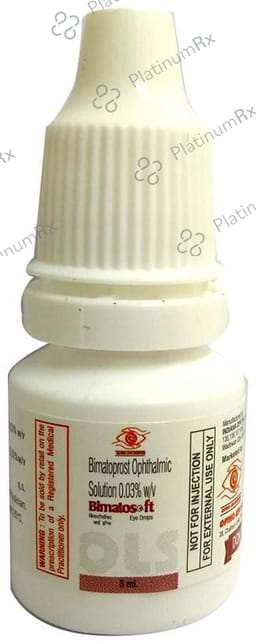
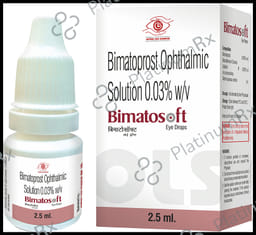
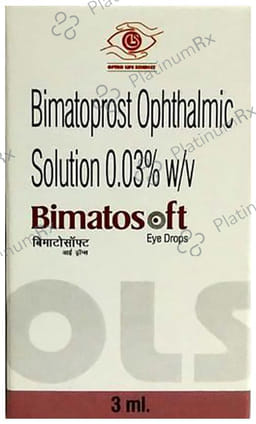
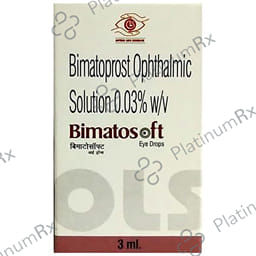
Bimatosoft 0.03% Eye Drop 3ml

atom-spiralsSalt Composition:Bimatoprost 0.03% w/v

Bimatosoft Eye Drop is a prescription eye drop that lowers high pressure inside the eye. Doctors use it for open-angle glaucoma and for ocular hypertension. Open-angle glaucoma is the most common type of glaucoma, where the eye's drainage channels slowly stop working as well. Ocular hypertension means raised eye pressure without any nerve damage yet. Over time, high pressure can damage the optic nerve (the nerve that carries signals from the eye to the brain) and cause loss of sight. Bimatosoft Eye Drop belongs to a group of medicines called prostaglandin analogues, also known as prostamides. It helps fluid drain out of the eye. It keeps eye pressure under control only while you keep using it, so most people need it long term.

Read more

Written by: Syed Jommy Abbas, B. Pharma

Reviewed by: Dr. Devika Rani, MBBS

Last updated on: 24-11-2026
Same Composition
Same Strength
FDA Approved
Same Composition
Currently Viewing
Bimatosoft 0.03% Eye Drop 3ml

See affordable match

Top Substitute
3.4K Bought this instead

Delivery by

...

FDA & GMP Certified

Long Expiry (>8 Months)

Non-Returnable

Medicine Comparison

100% Exact Salt Match
Bimatosoft 0.03% Eye Drop 3ml
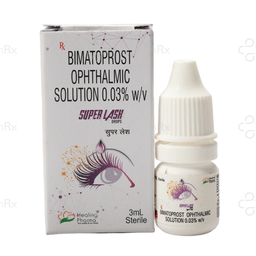
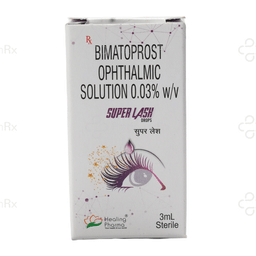
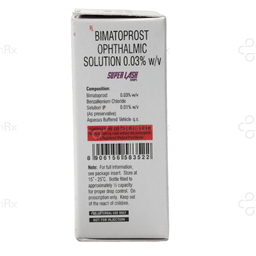
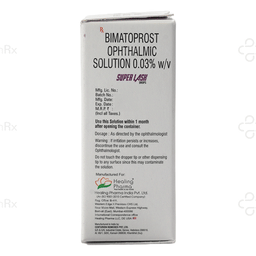
Super Lash 0.03% Ophthalmic Eye Drop 3ml
FDA Approved
FDA Approved
₹87.5 / Unit
₹65.3 / Unit

Have a question?

Doctor Approved & Trusted
thumbnail

Genuine Medicine

Pay On Delivery

Secure Payment

LegitScript Certified

LegitScript Certified Online Pharmacy

More About Bimatosoft Eye Drop

Detailed Description

Your eye is always making a clear fluid called aqueous humour. This fluid normally drains out through tiny channels at the front of the eye. In glaucoma and ocular hypertension, the fluid builds up faster than it can drain, so pressure inside the eye goes up. The higher the pressure, the greater the chance of damage to the optic nerve and loss of side vision.

Bimatosoft Eye Drop is used for:

  • Open-angle glaucoma - It lowers raised pressure inside the eye to help protect the optic nerve and slow further loss of vision.
  • Ocular hypertension - It lowers raised eye pressure in people who do not yet have optic nerve damage, to reduce the risk of developing glaucoma.
  • Add-on or combination treatment - It can be used with other glaucoma eye drops, such as timolol, when one medicine alone does not lower the pressure enough.

Bimatosoft Eye Drop copies the action of natural substances in the body called prostamides. It opens up two drainage routes in the eye, so more fluid can flow out. As the fluid drains, the pressure inside the eye goes down. The pressure starts to fall about 4 hours after a drop. The strongest effect comes after about 8 to 12 hours, and it lasts for at least 24 hours. This is why one drop a day in the evening is usually enough.

Bimatosoft Eye Drop comes as eye drops in two strengths, 0.1 mg/ml and 0.3 mg/ml. Your doctor will choose the right one for you. Some bottles contain a preservative called benzalkonium chloride. Other bottles and single-dose droppers are preservative-free. Combined drops containing both Bimatosoft Eye Drop and timolol are also available.

Only a very small amount reaches the blood, so most side effects affect the eye itself. The most common is red eyes. Over months or years, the coloured part of the eye (the iris) may slowly turn browner, and this change is likely to be permanent. Eyelashes may also grow longer and darker.

You should use Bimatosoft Eye Drop under regular care from an eye doctor. Glaucoma often causes no symptoms until vision is already lost, so you need check-ups to confirm the drops are working. Stopping the drops without medical advice can let eye pressure rise again and may lead to sight loss.

Benefits of Bimatosoft Eye Drop

  1. Lowers eye pressure to protect sight - Bimatosoft Eye Drop reduces pressure inside the eye. This helps protect the optic nerve and lowers the risk of losing more vision from glaucoma.
  2. Once-daily use - One drop in the evening is usually enough, which makes the routine easier to keep.
  3. Long-lasting effect - The pressure-lowering effect lasts for at least 24 hours after each drop.
  4. Improves natural drainage - Instead of reducing how much fluid the eye makes, it helps more fluid flow out through two drainage routes.
  5. Can be combined with other eye drops - It can be used with other glaucoma drops, such as timolol, when extra pressure control is needed.
  6. Preservative-free options - Some bottles and single-dose droppers do not contain a preservative, which may help people whose eyes are sensitive to preservatives.

Side Effects of Bimatosoft Eye Drop

Common Side Effects (Usually Mild)

  • Red eyes. Doctors call this conjunctival hyperaemia, and it is the most common side effect.
  • Itchy, dry, burning or watery eyes
  • Eye pain, irritation or a feeling that something is in the eye
  • Short-lived blurred vision after putting in the drops
  • Red or itchy eyelids
  • Headache
  • Longer, thicker, darker and more eyelashes in the treated eye. This usually goes back to normal if the drops are stopped.
  • Darker skin on the eyelid and more hair growth around the eye. This may fade after stopping.
  • Browning of the coloured part of the eye (iris hyperpigmentation). It develops slowly over months or years and is likely to be permanent. It may be more noticeable if only one eye is treated.
  • Changes around the eye from loss of fat under the skin (periorbital fat atrophy). This can cause a deeper eyelid crease, a sunken-looking eye, a drooping eyelid or tighter skin around the eye.

Serious Side Effects (Seek Urgent Medical Attention)

  • Macular oedema (cystoid macular oedema) - Fluid builds up in the macula, the central part of the retina that you use to see fine detail. Watch for blurred or wavy central vision. The risk is higher in people who have had cataract surgery with certain complications.
  • Inflammation inside the eye, such as uveitis - Look out for eye pain, redness, light sensitivity or blurred vision.
  • Eye infection (bacterial keratitis) - This is an infection of the clear front surface of the eye. It can happen if the bottle tip gets contaminated.
  • Sensitivity to light
  • Pink eye, or redness and swelling of the eyelid
  • Breathing problems or wheezing, or breathing that gets worse if you have asthma or COPD (chronic obstructive pulmonary disease, a long-term lung condition such as emphysema or chronic bronchitis)
  • Changes in blood pressure (rare). Blood pressure may go up or down, or the heartbeat may become slow.
  • Feeling faint or passing out
  • Serious allergic reaction (anaphylaxis): swelling of the lips, mouth, throat or tongue, trouble breathing or swallowing, or a swollen, itchy or blistering rash

Directions for Use

Bimatosoft Eye Drop is used in the eye only. Never swallow it.

  1. Use it once a day in the evening, at around the same time each day. It works better when used in the evening.
  2. If you wear contact lenses, take them out first. Wait 15 minutes before putting them back in.
  3. Wash your hands well with soap and water.
  4. Check that the dropper tip is not chipped or cracked. If you use a bottle, shake it and remove the cap. If you use a single-dose dropper, twist off the tip.
  5. Tilt your head back and gently pull down your lower eyelid with one finger to make a small pocket.
  6. Hold the dropper close to the eye without touching it. Gently squeeze so that one drop falls into the pocket.
  7. Let go of the eyelid and close your eye for 2 to 3 minutes. Press gently with a finger on the inner corner of the eye, near the nose.
  8. Wipe away any extra liquid with a clean tissue. Try not to let the liquid stay on the skin around your eye.
  9. Repeat in the other eye only if your doctor has told you to.
  10. Put the cap back on. Do not wipe or rinse the dropper tip. Throw away a single-dose dropper after use.
  11. If you use other eye drops, wait at least 5 minutes between them. Use eye ointments last.

Keep using Bimatosoft Eye Drop every day, even when you feel well. Glaucoma usually has no symptoms, so feeling fine does not mean you can stop the drops. Talk to your doctor before stopping.

How it works

Bimatosoft Eye Drop is a man-made medicine with a structure similar to prostaglandins. Prostaglandins are natural chemical messengers made in the body. More exactly, Bimatosoft Eye Drop copies the action of a related group of natural substances called prostamides. It acts on prostamide receptors, which are closely related to the receptors for the natural prostaglandin F2-alpha (called FP receptors). Receptors are like locks on cells, and the medicine works like a key that switches them on. These receptors are found in the tissues that drain fluid from the eye. When they are switched on, fluid can pass through these tissues more easily.

Inside the eye, a clear fluid called aqueous humour is made all the time and drains away all the time. It leaves the eye in two ways:

  • The trabecular meshwork - This is a sponge-like drainage tissue at the angle where the iris meets the clear front of the eye.
  • The uveoscleral route - This is a second pathway, where fluid seeps out through the tissues at the back of the drainage angle.

Bimatosoft Eye Drop increases fluid flow through both of these routes. When more fluid drains out, the pressure inside the eye falls. Lower pressure puts less strain on the optic nerve, which helps slow down or prevent further loss of vision.

The same prostamide-like action also explains some of its side effects. It increases the brown pigment (melanin) in the iris and eyelid skin and makes eyelashes grow. The colour change comes from more pigment in existing pigment cells, not from new cells.

Safety Advice for Bimatosoft Eye Drop

icon

Pregnancy

Limited information

There is limited information on using Bimatosoft Eye Drop in pregnancy. Animal studies using high doses by mouth showed pregnancy loss. Only a very small amount reaches the blood from eye drops, but it should be used in pregnancy only if your doctor decides it is clearly needed. Tell your doctor if you are pregnant or planning a pregnancy.

icon

Breastfeeding

Limited information

It is not known whether Bimatosoft Eye Drop passes into human breast milk. Animal studies show it can pass into milk. Speak to your doctor before using it while breastfeeding. Tell them if your baby is not feeding well or if you have any other concerns about your baby.

icon

Alcohol

Limited information

Alcohol is not known to affect Bimatosoft Eye Drop. You can drink alcohol while using it.

icon

Driving

Limited information

Your vision may blur for a short time after the drops. Do not drive, cycle or use machines until you can see clearly.

icon

Kidney

Limited information

Bimatosoft Eye Drop has not been studied in people with kidney disease. Your doctor will use it with caution.

icon

Liver

Limited information

Bimatosoft Eye Drop has not been studied in people with moderate or severe liver disease. Your doctor will use it with caution.

icon

Children

Limited information

Bimatosoft Eye Drop is generally used only in adults. It is not recommended for children and teenagers because of concerns about long-term colour changes in the eye.

icon

Elderly patients

Limited information

It works about as well and is about as safe in older adults as in younger adults. Ask for help or a drop-aid device if putting in eye drops is hard.

Quick Tips for Bimatosoft Eye Drop

  • Use your drops in the evening, at the same time every day. A phone alarm can help you remember.
  • Keep all your eye check-ups so your doctor can measure your eye pressure and confirm that Bimatosoft Eye Drop is working.
  • Take out soft contact lenses before each dose and wait 15 minutes before putting them back in.
  • Food and drink do not affect Bimatosoft Eye Drop, so you do not need to change your diet.
  • Never let the dropper tip touch your eye, eyelashes, fingers or any other surface. A contaminated bottle can cause a serious eye infection.
  • Wipe away drops that run onto your cheek or eyelid. This lowers the chance of darker skin and extra hair growth around the eye.
  • Write the opening date on the bottle so you know when to replace it.
  • Wait at least 5 minutes between Bimatosoft Eye Drop and any other eye drop.
  • If you treat only one eye, the two eyes may start to look different in colour or eyelash length over time. Tell your doctor if this worries you.
  • Using Bimatosoft Eye Drop more often than once a day may make it work less well. Do not add extra drops.
  • If you have an eye injury, infection or eye surgery, ask your doctor whether to keep using the same bottle.

Storage Advice

  • Store the drops in the original container with the cap tightly closed.
  • Keep at room temperature, away from too much heat and moisture. Do not keep them in the bathroom. For the 0.01% strength (0.1 mg/ml), the label allows storage between 2°C and 25°C (36°F and 77°F). Check your own pack for its storage instructions.
  • Use bottled drops before the expiry date. Many bottles should be thrown away 4 weeks after opening, so follow the leaflet that comes with your product.
  • For single-dose droppers, check the sachet for how soon to use them after opening, and throw each dropper away after use.
  • Keep the medicine out of sight and reach of children and pets.
  • Do not flush unused medicine down the toilet. Ask your pharmacist how to dispose of it safely.

Drug-Food Interaction

Bimatosoft Eye Drop is used in the eye, and very little reaches the blood. No foods or drinks are known to interact with it, so you can keep your normal diet unless your doctor tells you otherwise. Alcohol is also not known to change how it works.

Interactions with Other Drugs

  • Other prostaglandin eye drops (latanoprost, travoprost, tafluprost) - These work in a similar way to Bimatosoft Eye Drop. Using two of them together can make both work less well, so eye pressure may go up. Tell your doctor if you use any of these.
  • Other glaucoma eye drops (such as timolol, brimonidine, brinzolamide or pilocarpine) - These may be used along with Bimatosoft Eye Drop. Leave at least 5 minutes between different eye drops, or the second drop may wash out the first.
  • Eye ointments - Use these last, after your eye drops.
  • Herbal remedies and supplements - There is not enough information to say these are safe with Bimatosoft Eye Drop. Tell your doctor or pharmacist about every medicine, vitamin and herbal product you take.

Drug-Disease Interactions

  • Allergy to bimatoprost or any ingredient (including the preservative benzalkonium chloride) - Do not use Bimatosoft Eye Drop.
  • Other types of glaucoma (angle-closure or narrow-angle, inflammatory, neovascular or congenital glaucoma) - Bimatosoft Eye Drop has not been studied in these conditions. Your doctor will decide whether it is suitable.
  • Inflammation inside the eye (such as uveitis) - Bimatosoft Eye Drop can cause inflammation inside the eye or make existing inflammation worse. Doctors use it with caution in people who have active inflammation.
  • Past or planned eye surgery, including cataract surgery - People without a natural lens, or with a torn lens capsule after cataract surgery, have a higher risk of macular oedema.
  • Known risk factors for macular oedema - Your doctor will weigh the risk of fluid building up in the retina.
  • Past viral infection or inflammation of the eye - Tell your doctor before starting.
  • Dry eyes or problems with the cornea - Tell your doctor. A damaged eye surface also raises the risk of infection from a contaminated bottle.
  • Asthma or COPD - Breathing problems have been reported. Tell your doctor if you have a lung condition.
  • Low blood pressure or a slow heartbeat (bradycardia) - Doctors use Bimatosoft Eye Drop with caution in people who tend to have a slow heartbeat or low blood pressure.
  • Kidney disease or moderate to severe liver disease - Bimatosoft Eye Drop has not been studied in these conditions, so your doctor will use it with caution.
  • Allergy to silver - Some brands of Bimatosoft Eye Drop eye drops contain very small amounts of silver. Check your pack leaflet and tell your pharmacist if you are allergic to silver.

Daily Dose

The usual dose is one drop in the affected eye or eyes once a day, in the evening. The drops come in two strengths, 0.1 mg/ml and 0.3 mg/ml, and your doctor will choose the one that suits you. Do not use Bimatosoft Eye Drop more than once a day. Using it more often may lower its effect on eye pressure. Always follow the exact dose your doctor prescribes, and do not change it or stop on your own.

Overdose

Putting too many drops in the eye can make it irritated, watery and red. If this happens, rinse the eye well with water. Do not use any more drops until your next normal dose. The irritation should settle. If it does not, or if you are worried, speak to your doctor or pharmacist.

If someone swallows Bimatosoft Eye Drop, especially a child, and feels unwell, get medical help right away. Take the pack or leaflet with you. There is no specific antidote, so doctors treat whatever symptoms appear.

What If You Forget to take Bimatosoft Eye Drop?

Put in a single drop as soon as you remember. If it is nearly time for your next dose, skip the missed dose and use the next one at your usual time. Never use two doses at once or add an extra drop to make up for a forgotten one. If you often forget, set a daily evening alarm.

When to contact doctor

Contact your doctor straight away, or get emergency help, if you notice:

  • Blurred, wavy or reduced central vision
  • Eye pain, strong redness or sensitivity to light
  • Pink eye, or redness and swelling of the eyelid
  • Eye discharge or signs of infection
  • Breathing problems, wheezing, or worsening asthma or COPD
  • Feeling faint or passing out
  • Swelling of the lips, mouth, tongue or throat, trouble breathing, or a rash that is swollen, itchy or blistering
  • Changes in eye colour or eyelashes that worry you
  • An eye injury or infection, or plans for eye surgery, while using Bimatosoft Eye Drop
  • Eye irritation or watering so bad that you feel like stopping the drops

FAQ

Fact Box

Therapeutic Class

Anti-glaucoma agent (eye drops)

Action Class

Prostaglandin analogue (prostamide); increases drainage of fluid from the eye

Chemical Class

Prostaglandin F2α analogue (synthetic prostamide; 17-phenyl-trinor PGF2α ethyl amide)

Habit Forming

No

Disclaimer

PlatinumRx is committed to providing reliable and accurate information to support informed customer decisions. However, all information made available on the Platform, including product descriptions, comparisons, and other content, is provided solely for general informational purposes. Such information is not intended to diagnose, prevent, treat, or cure any medical condition, nor should it be relied upon as a substitute for professional medical advice, diagnosis, or treatment.

View More
editorial-png
Authentic & trustworthy information
Having issues with the content?
Report Error

Customers also bought