6 Simple Ways to Use Rosemary Leaves for Hair Growth
Last Updated: November 25, 2026


Written by:
Mohammed Tasir Khan, D Pharmacy
Reviewed by:
Dr. Sekh Addil, MBBSPublished date: 25-Nov-2026
Summary
Rosemary is a kitchen herb. Its oil is used on the scalp, and one small trial suggests it may help early pattern hair loss. In that trial, it gave hair counts similar to 2% minoxidil over six months.
That trial had no placebo group and was single-blind, so it cannot prove rosemary oil beat doing nothing. Rosemary does not treat hair loss caused by thyroid disease, low iron, some medicines or poor diet.
Key Takeaways
- What it is: A kitchen herb; its oil goes on the scalp.
- Active ingredients: Rosmarinic acid, carnosic acid, camphor and 12-methoxycarnosic acid.
- Used for: Early pattern hair loss, as a possible add-on.
- Not meant for: Leaf tea or home-made oil as hair-growth treatments; children under 12 without medical advice.
- Regulation: In India, plain hair oil is sold as a cosmetic, not a medicine.
- How to take: Dilute it in a carrier oil, then massage it into the scalp.
- Common side effects: Scalp itching, redness and dryness.
What Is Rosemary Leaf?
Rosemary is an evergreen shrub with needle-like leaves. The dried leaves are used in cooking, and steam is used to draw out a strong-smelling essential oil. In hair care, people use the oil, a strong tea made from the leaves, or a carrier oil warmed with the leaves at home.
People use it on the scalp for early pattern hair loss and general scalp care. It is not for sudden or patchy hair loss, which needs a doctor.
What Is in Rosemary Leaf?
Rosemary leaf contains aromatic oils, plant acids and antioxidants. The mix varies with the plant, the season and how the oil is extracted.
Buy Rosemary Leaf Products For Hair Growth
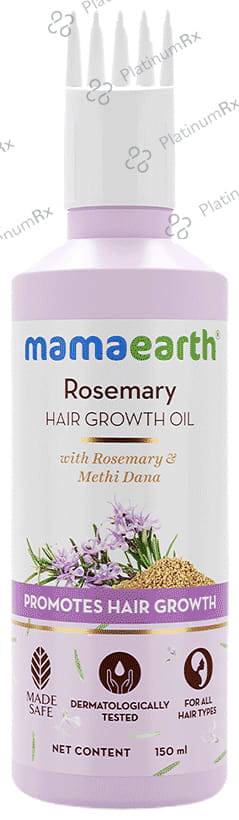
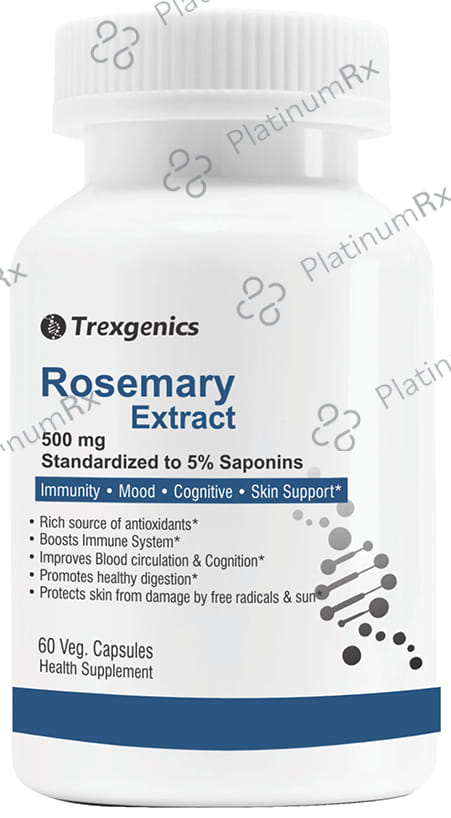
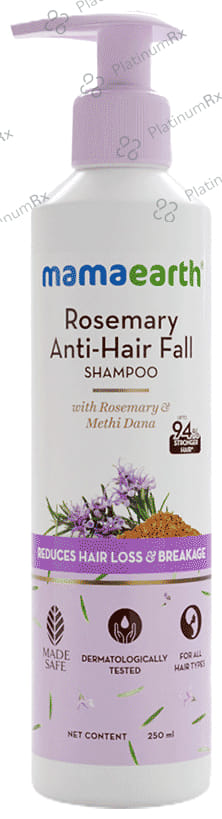
| Compound | Type | What it does in simple words |
|---|---|---|
| Camphor | Aromatic compound | Adds to the strong smell |
| Rosmarinic acid | Antioxidant | Helps protect plant tissue from damage |
| Carnosic acid | Antioxidant | Helps protect plant tissue from damage |
| 12-Methoxycarnosic acid | Plant compound (diterpene) | Linked to rosemary's hormone-blocking effect in lab studies |
The amounts change from batch to batch, so no strength can be printed on a home-made oil or tea. Check the label of a ready-made product.
How Does Rosemary Work on Hair?
Think of pattern hair loss as a hormone problem at the root of the hair. Testosterone is turned into a stronger hormone called DHT near the hair follicle. DHT makes the follicle shrink, so new hair is thinner and falls out sooner.
Rosemary may act in two ways.
- Slow the hormone step: In a mouse study, rosemary leaf extract blocked the enzyme that makes DHT by more than 80%, close to finasteride in the same experiment.
- Settle the scalp: Rosemary oil may improve blood flow and reduce mild inflammation around the follicle.
Most of this evidence comes from animals and lab studies. The one human trial compared hair counts, not how rosemary works in the scalp.
6 Simple Ways to Use Rosemary on Your Scalp
None of these works for everyone. Only the oil has been tested in people; the tea and home-made oil are traditional options, and no study shows they regrow hair. Pick one and use it regularly for six months.
1. Diluted rosemary oil on the scalp
This is the leave-on version, tested in people.
Mix about 6 drops of rosemary essential oil into 30 ml of coconut, jojoba or sesame oil. Part your hair and massage it into the scalp, not just the strands.
Neat essential oil can sting, burn or irritate skin, so always dilute it. This suits early thinning.
2. Home-made rosemary-infused oil
Put a handful of dried leaves in a glass jar and cover them with carrier oil. Warm the jar in a bowl of hot water for an hour, then cool, strain and bottle it.
Keep the oil in the fridge, because home-made oil can spoil. Use each batch within 2 to 3 weeks.
3. Rosemary tea as a final rinse
Steep a small handful of dried leaves in hot water for 10 to 15 minutes and let it cool. After shampoo, pour it over the scalp, massage gently, then rinse it out.
Tea does not clean hair or lather. Treat it as a rinse, not a shampoo.
4. Rosemary tea as a leave-in spray
Cool and strain the tea into a clean spray bottle. Spritz it on the scalp and leave it in.
Tea has no preservatives, so it can spoil when left out. Make a fresh batch every few days and keep the bottle in the fridge.
5. A pre-wash rosemary oil mask
Apply diluted or infused oil to the scalp. Massage for five minutes and leave it for 30 to 60 minutes, then wash it out with a mild shampoo.
Do not leave oil on overnight if you have dandruff or an itchy scalp; long contact can make both worse.
6. A few drops in your usual hair oil
Add rosemary essential oil to your usual hair oil in the palm of your hand and mix. Mixing in the palm, not the bottle, keeps the dilution in your control and avoids scenting a whole bottle.
This suits people who already oil their hair weekly and want no new routine.
Rosemary Oil vs Minoxidil: How Do They Compare?
Minoxidil is a medicine for pattern hair loss. Rosemary oil is a cosmetic. One small trial found similar hair counts.
| Rosemary oil | Minoxidil 2% | |
|---|---|---|
| What it is | A plant oil sold as a cosmetic | A medicine for pattern hair loss |
| Evidence | One small six-month trial in men | Studied in many trials; a standard treatment |
| In India | Sold without a prescription as hair oil | Ask your doctor or pharmacist |
| Best for | People who want a plant-based add-on | People whose doctor advises a proven treatment |
Minoxidil only works while you use it. Read more about minoxidil and how it is used before you decide.
Rosemary can sit alongside your doctor's treatment. It should not replace it.
How Much Rosemary Oil to Use
No regulator has set a hair dose, because plain hair oils are cosmetics, not medicines. The trial used a prepared product, not a home-made mix.
- Use a 1% mix: about 6 drops of rosemary essential oil in 30 ml of carrier oil.
- Patch test first: rub a little on your inner wrist or behind your ear and wait 24 hours.
- Never swallow rosemary essential oil. If someone does, get medical help at once and take the bottle.
- Stop at once if the scalp stings, burns or turns red.
More is not better. A stronger mix does not grow more hair, but it raises the chance of irritation.
How Long Does It Take to Work?
In the trial, hair counts had not changed significantly at three months. By six months, both groups had risen. Hair grows slowly, so give any routine at least six months.
If your hair is still falling after six months, or your scalp is itchy, sore or scaly, see a doctor.
Side Effects and Risks
Most people who use rosemary oil on the scalp have no trouble. The usual problem is mild irritation.
Common and mild:
- Itching where the oil was applied
- Redness or warmth on the scalp
- Dryness or flaking
- A strong smell that some people dislike
Serious (frequency not known - stop and see a doctor):
- Contact dermatitis, an allergic rash with swelling, blisters or spread beyond the scalp
- Severe irritation or a burn-like reaction from undiluted oil
The risk rises with neat oil, broken skin, eczema or a sensitive scalp.
In a 2026 survey of 1,200 people in southern India, 4 in 10 reported scalp problems after hair oil. The problems were dandruff, an itchy scalp or hair fall. The survey looked at hair oil in general, not rosemary oil.
Who Should Avoid Rosemary Oil
- Anyone allergic to rosemary
- Not recommended for children under 12
- Not recommended during pregnancy or breastfeeding, because safety data are lacking
- Anyone with a cut, burn or rash on the scalp
Precautions
Tell your doctor before using rosemary on the scalp if you:
- have eczema, psoriasis or a sensitive scalp
- have had a reaction to a herb, oil or cosmetic before
- use a medicated scalp treatment such as minoxidil or a steroid lotion
- have dandruff or seborrhoeic dermatitis, which oil can worsen
- plan to use it on a teenager
Rosemary and Other Medicines
Rosemary oil on the scalp in small amounts is unlikely to affect medicines you take by mouth. No studies have looked at rosemary scalp oil.
No interactions have been reported for rosemary tea or bath use, but tea is not a hair treatment. Ask your doctor or pharmacist before an oral rosemary supplement.
Frequently Asked Questions About Rosemary for Hair
When to See a Doctor
Rosemary oil is a cosmetic habit, not a diagnosis. See a doctor if you have:
- sudden hair loss in patches
- hair loss with scalp redness, scales, pus or pain
- hair loss with tiredness, weight change or heavy periods
- hair loss that started after a new medicine
- heavy shedding after delivery that has not improved
You can read more about the common causes of hair loss and what doctors look for.
The Bottom Line
Rosemary oil is a reasonable add-on for early pattern hair loss. The best evidence is for diluted oil massaged into the scalp, used regularly for months. Keep it diluted and stop if the scalp reacts. It is not a treatment for hair loss from illness, medicines or poor diet. See a doctor if the shedding is sudden or patchy.
References

Add PlatinumRx as a preferred source on Google