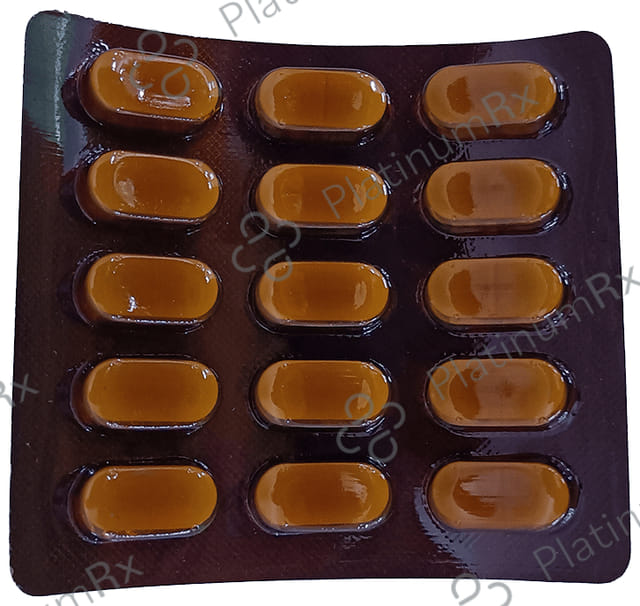
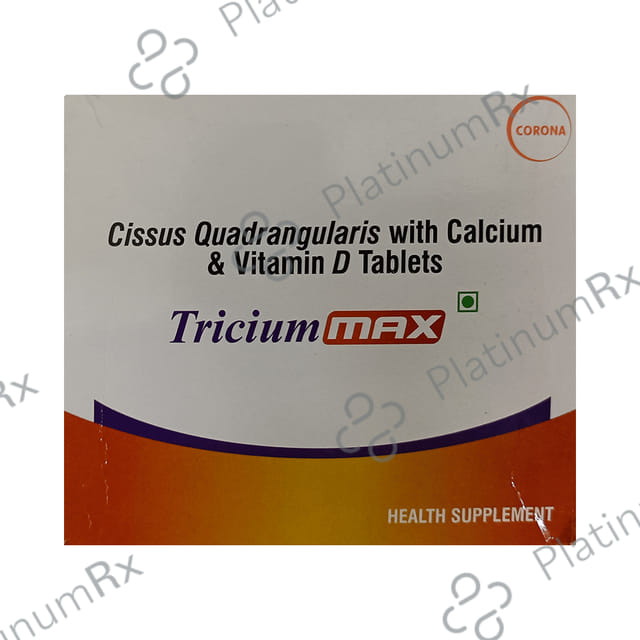
Tricium Max Tablet 15s
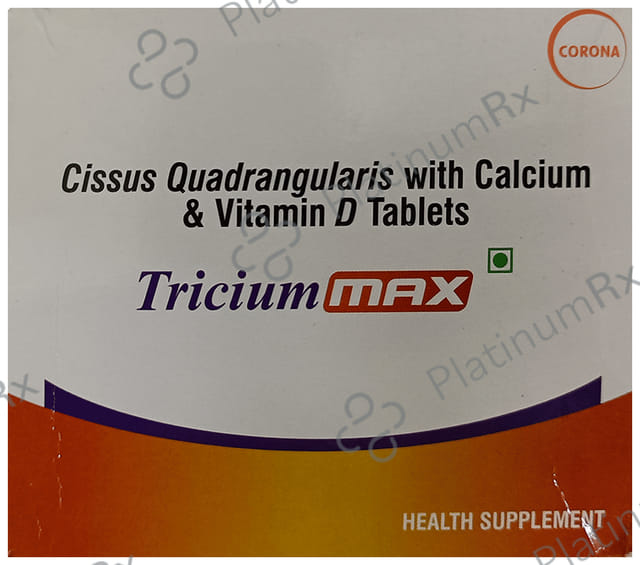
Tricium Max Tablet 15s is a bone support supplement combining elemental calcium (the structural mineral of bone), Vitamin D3 (cholecalciferol, which enables active calcium absorption from the gut), and Hadjod (Cissus quadrangularis), a climbing plant native to India used traditionally in Ayurveda for bone and joint health. It is used to support bone health, fracture recovery, and general musculoskeletal wellbeing under medical guidance.
Written by: Syed Jommy Abbas, B. Pharma
Reviewed by: Dr. Rohit Kolhe, MBBS
Last updated on: 27-05-2026
Delivery by
...
FDA & GMP Certified
Long Expiry (>8 Months)
15 Days Easy Returns
General Information
Have a question?
Genuine Medicine
Pay On Delivery
Secure Payment

LegitScript Certified Online Pharmacy

More About Tricium Max Tablet 15s
Quick Summary
Tricium Max Tablet 15s is a bone support supplement combining elemental calcium (the structural mineral of bone), Vitamin D3 (cholecalciferol, which enables active calcium absorption from the gut), and Hadjod (Cissus quadrangularis), a climbing plant native to India used traditionally in Ayurveda for bone and joint health. It is used to support bone health, fracture recovery, and general musculoskeletal wellbeing under medical guidance.
Detailed Description
Calcium and vitamin D are foundational to bone health. Calcium provides the structural mineral incorporated into hydroxyapatite, the crystalline component that gives bone its hardness. Vitamin D enables the gut to absorb calcium efficiently. Without adequate vitamin D, dietary or supplemental calcium is poorly absorbed, and skeletal stores can be depleted.
Elemental calcium refers to the actual calcium available from the supplement, regardless of which salt supplies it. Single calcium doses of 500 mg or less are absorbed more efficiently than larger boluses.
Vitamin D3 (cholecalciferol) is the form synthesised in skin upon sunlight exposure and obtained from animal foods. It is converted in the liver to 25-hydroxyvitamin D and then in the kidney to calcitriol, which drives intestinal calcium absorption and supports bone mineralisation.
Hadjod (Cissus quadrangularis) is a climbing plant native to India, used traditionally in Ayurveda for the support of bone health and fracture recovery.
Uses of Tricium Max Tablet 15s
- To prevent and manage calcium and vitamin D deficiency.
- To support recovery after orthopaedic procedures or fractures, under medical guidance.
- To support general bone and joint health in adults.
- As a nutritional supplement during periods of physical recovery or strain.
- Strictly as directed by a qualified healthcare professional.
Benefits of Tricium Max Tablet 15s
- Elemental calcium supplies the raw mineral for bone matrix.
- Vitamin D3 enables active intestinal calcium absorption.
- Combines mineral supplementation with a traditional Ayurvedic bone-support herb.
- Generally well tolerated at recommended doses.
- Convenient daily supplement format supporting adherence.
Side Effects of Tricium Max Tablet 15s
Common
- Constipation, bloating, or mild stomach upset
- Nausea if taken on an empty stomach
- Metallic taste
Uncommon
- Loss of appetite
- Headache
- Loose stools
Serious side effects requiring immediate attention
- Hypercalcaemia (high serum calcium) with prolonged high-dose use
- Vitamin D toxicity from chronic high-dose use
- Kidney stones in those predisposed
- Severe allergic reaction
Directions for Use
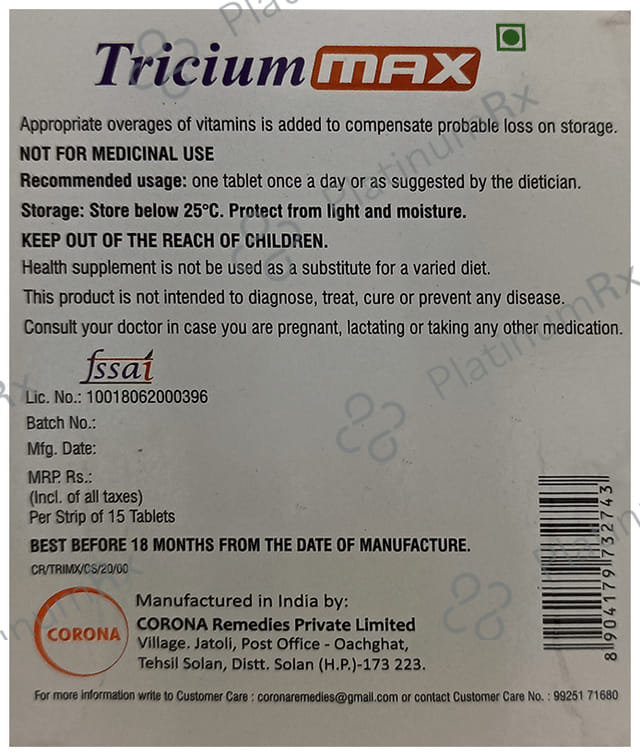
Take Tricium Max Tablet 15s orally once or twice daily, with or just after a meal — this improves absorption and reduces stomach upset. Vitamin D3 absorbs better with food containing some fat. Maintain adequate hydration during use, and combine with a balanced diet and regular weight-bearing activity. Do not exceed the prescribed dose.
How it works
Elemental calcium is absorbed in the small intestine through an active vitamin D-dependent pathway and a passive paracellular route. Absorbed calcium contributes to the body's calcium pool, supports bone mineralisation by osteoblasts, and is available for nerve transmission, muscle contraction, and blood clotting.
Vitamin D3 is converted in the liver to 25-hydroxyvitamin D and in the kidney to calcitriol. Calcitriol binds the vitamin D receptor in intestinal cells, switching on the calcium-binding proteins and channels that significantly enhance active calcium absorption. It also supports renal calcium reabsorption and modulates bone remodelling.
Research reveals that Cissus quadrangularis has been used in Ayurveda for bone setting and musculoskeletal support, with its active plant compounds concentrated more in the stem than in the leaves.
Safety Advice for Tricium Max Tablet 15s

Allergy
Unsafe
Avoid in known hypersensitivity to any component or excipient.

Breastfeeding
Caution
Calcium and D3 are generally safe; safety data for hadjod during breastfeeding are limited

Pregnancy
Caution
Calcium and D3 are commonly prescribed; consult your doctor about hadjod-containing products.

Driving
Safe
No known effect on alertness or driving

Alcohol
Caution
Heavy intake reduces calcium and vitamin D absorption.

Liver
Caution
Severe liver disease may impair vitamin D activation.

Kidney
Caution
Risk of hypercalcaemia and vascular calcification in CKD.

Children
Caution
Use only as prescribed; paediatric doses differ.

Elderly patients
Safe
Often beneficial due to reduced sun exposure and absorption.
Drug-Food Interaction
- Foods with healthy fats (BENEFICIAL): Improve vitamin D3 absorption. Vitamin D3 is fat-soluble, so taking the supplement with a meal containing some fat (such as nuts, ghee, or oily fish) significantly improves its uptake from the gut.
- High-oxalate foods (spinach, rhubarb) (CAUTION): Reduce calcium absorption. Oxalates bind calcium in the gut to form insoluble complexes that pass through unabsorbed. Separate the supplement from these foods by at least 1–2 hours.
- Bran and high-phytate foods (CAUTION): Reduce calcium absorption. Phytates in whole grains and bran bind calcium similarly, lowering the amount that reaches the bloodstream.
- Caffeine and alcohol (CAUTION): Heavy coffee, tea, or alcohol intake pulls more calcium out through the kidneys and can offset the benefit of supplementation over time.
Interactions with Other Drugs
- Levothyroxine (SEVERE): Taking both of them together can leave your thyroid medicine significantly underdosed, as calcium can reduce its absorption and worsen thyroid control. Separate the two by at least 4 hours.
- Tetracyclines and fluoroquinolones (SEVERE): Calcium forms a complex with these antibiotics in the gut, reducing the amount that reaches the bloodstream and potentially leading to treatment failure. Hence, separate the two by 2–4 hours.
- Bisphosphonates (SEVERE): Calcium reduces absorption; take bisphosphonate first thing in the morning and supplement at least 2 hours later. Bisphosphonates are poorly absorbed even on an empty stomach, and any calcium nearby will further reduce uptake.
- Iron supplements (CAUTION): Calcium competes with iron absorption. Separate the two by 2 hours. This is important, especially for those treating iron deficiency anaemia, where consistent iron absorption is essential.
- Thiazide diuretics (CAUTION): Reduce calcium excretion; risk of hypercalcaemia. The combination can push blood calcium above the normal range, so periodic monitoring is sensible.
- Digoxin (CAUTION): Hypercalcaemia (increased calcium levels in blood) increases the risk of digoxin toxicity. Increased calcium levels amplify digoxin's effect on the heart, thereby triggering dangerous rhythm disturbances.
Drug-Disease Interactions
- Hypercalcaemia and primary hyperparathyroidism (CONTRAINDICATED): In these conditions, since blood calcium is already elevated, supplementing with Tricium Max Tablet 15s further can cause nausea, confusion, kidney damage, and irregular heart rhythms.
- Sarcoidosis and other granulomatous diseases (CONTRAINDICATED): Risk of vitamin D-induced hypercalcaemia. These conditions cause the body to produce extra active vitamin D, so even normal supplement doses can push blood calcium dangerously high.
- History of calcium-based kidney stones (CAUTION): Use with adequate hydration. Adequate fluid intake and a balanced diet help reduce the risk of stone recurrence. Take supplements under medical supervision.
- Chronic kidney disease (CAUTION): Risk of hypercalcaemia and vascular calcification. Damaged kidneys can't excrete excess calcium efficiently, and the calcium can deposit in arteries instead of bone over time.
Overdose
Overdose of Tricium Max Tablet 15s can cause hypercalcaemia (high blood calcium levels), which may manifest as nausea, vomiting, abdominal pain, constipation, excessive thirst, increased urination, weakness, confusion, and even irregular heartbeat (arrhythmias). It can also cause vitamin D toxicity with chronic high-dose use. If you suspect an overdose, medical evaluation, including measurement of serum calcium, vitamin D, and kidney function.
What If You Forget to take Tricium Max Tablet 15s?
If you miss a dose, take it as soon as you remember on the same day with a meal. If it is close to the next dose, skip the missed dose and continue. Do not double the dose.
FAQ
References
- https://ods.od.nih.gov/factsheets/Calcium-HealthProfessional/
- https://ods.od.nih.gov/factsheets/VitaminD-HealthProfessional/
- https://www.ncbi.nlm.nih.gov/books/NBK548536/
- https://www.ncbi.nlm.nih.gov/books/NBK441909/
- https://www.nhs.uk/conditions/vitamins-and-minerals/vitamin-d/
- https://my.clevelandclinic.org/health/articles/15050-calcium--vitamin-d-supplements
Fact Box
Action Class
Bone health nutritional supplement with traditional herbal components
Chemical Class
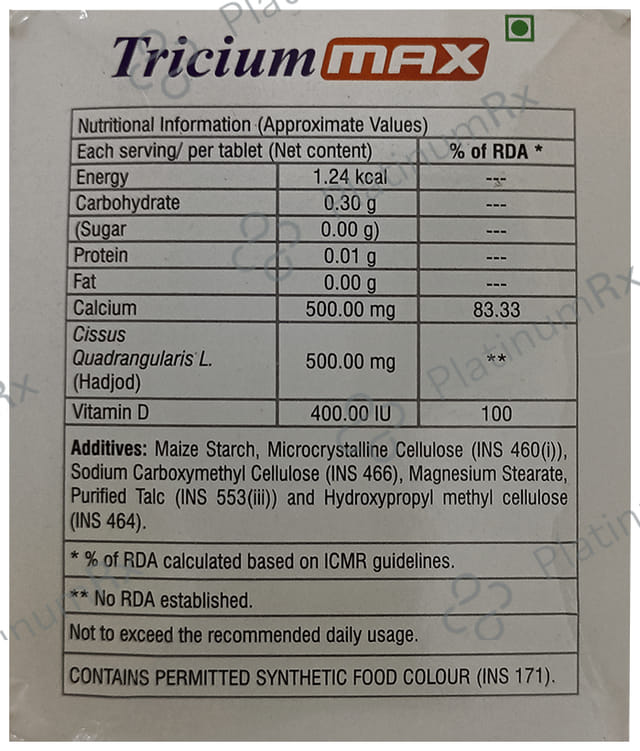
Calcium salt (elemental calcium); secosteroid (cholecalciferol); herbal extract (Cissus quadrangularis stem)
Habit Forming
No
Disclaimer
PlatinumRx is committed to providing reliable and accurate information to support informed customer decisions. However, all information made available on the Platform, including product descriptions, comparisons, and other content, is provided solely for general informational purposes. Such information is not intended to diagnose, prevent, treat, or cure any medical condition, nor should it be relied upon as a substitute for professional medical advice, diagnosis, or treatment.
Customers also bought

More Medicines By Corona Remedies Pvt. Ltd.
More Medicines With Elemental Calcium 500mg + Hadjod (Cissusuadrangularis) 500mg + Vitamin D3 (Cholecalciferol) 400IU
Top Selling Medicines
Top Selling Devices
Top Selling Health Products