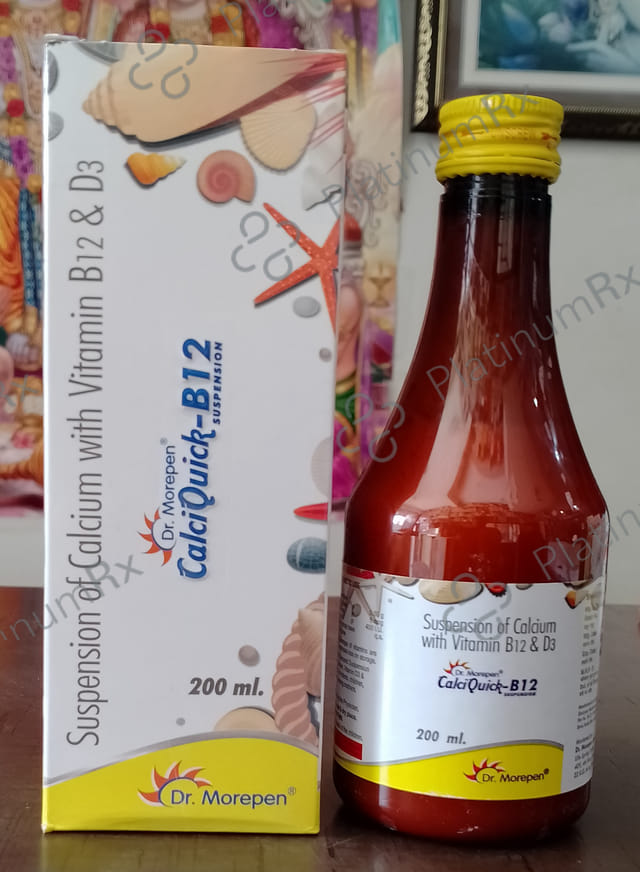
Torcal B12 Suspension 200ml

Torcal B12 Suspension 200ml is a nutritional supplement containing an essential calcium source (calcium carbonate), cholecalciferol (Vitamin D3), and cyanocobalamin or methylcobalamin (Vitamin B12). It helps support bone mineralisation, nerve function, and red blood cell formation. This combination is commonly prescribed for osteoporosis, osteomalacia, rickets, and nutritional anaemia with neuropathy. Postmenopausal women and pregnant or lactating women are often prescribed this supplement. Vitamin D3 improves the absorption of calcium in the intestines, while Vitamin B12 supports the functioning of the nervous system and haematopoiesis (blood cell production), making this the best option to tackle all three deficiencies if they coexist.
Delivery by
...
FDA & GMP Certified
Long Expiry (>8 Months)
15 Days Easy Returns
Medicine Comparison
Have a question?

Genuine Medicine
Pay On Delivery
Secure Payment

LegitScript Certified Online Pharmacy


More About Torcal B12 Suspension 200ml
Quick Summary
Torcal B12 Suspension 200ml is a nutritional supplement containing an essential calcium source (calcium carbonate), cholecalciferol (Vitamin D3), and cyanocobalamin or methylcobalamin (Vitamin B12). It helps support bone mineralisation, nerve function, and red blood cell formation. This combination is commonly prescribed for osteoporosis, osteomalacia, rickets, and nutritional anaemia with neuropathy. Postmenopausal women and pregnant or lactating women are often prescribed this supplement. Vitamin D3 improves the absorption of calcium in the intestines, while Vitamin B12 supports the functioning of the nervous system and haematopoiesis (blood cell production), making this the best option to tackle all three deficiencies if they coexist.
Detailed Description
Torcal B12 Suspension 200ml is a combination of three essential micronutrients which act on bone, nerve, and blood cell health. Calcium carbonate provides approximately 40% elemental calcium by weight and is required for bone mineralisation, muscle contraction, nerve signalling, hormone secretion, and blood clotting. It requires an acidic stomach environment for dissolution, which is why it is best taken with meals.
Cholecalciferol (Vitamin D3) is first hydroxylated in the liver to 25-hydroxyvitamin D [25(OH)D], then in the kidney to the active hormone calcitriol [1,25-dihydroxyvitamin D]. Calcitriol increases calcium and phosphate absorption in the gut, helps the kidneys retain calcium, and keeps parathyroid hormone in check. Without adequate Vitamin D, only about 10% to 15% of dietary calcium is absorbed, and with it, the absorption rises to roughly 30% to 40%.
Vitamin B12 (cyanocobalamin or methylcobalamin) is a cofactor for two key enzymes, methionine synthase and methylmalonyl-CoA mutase. Vitamin B12 deficiency causes megaloblastic anaemia and degeneration of the spinal cord, which may result in numbness, tingling, gait disturbance, and cognitive changes.
By combining these three nutrients, Torcal B12 Suspension 200ml addresses the frequently overlapping deficiencies seen in older adults and in people with malabsorption, where low calcium, low Vitamin D, and low B12 coexist.
Uses of Torcal B12 Suspension 200ml
Osteoporosis and osteopenia
As adjunct supplementation alongside primary osteoporosis therapy (bisphosphonates, denosumab, or other agents) for adequate bone mineralisation.
Vitamin D deficiency and insufficiency
Restores 25(OH)D levels and improves calcium absorption.
Vitamin B12 deficiency
Corrects megaloblastic anaemia and peripheral neuropathy in dietary, age-related, or drug-induced deficiency.
Osteomalacia and rickets
Corrects defective bone mineralisation caused by calcium and Vitamin D deficiency.
Hypoparathyroidism and latent tetany
Helps maintain serum calcium in people with low Parathyroid (PTH) activity.
Nutritional supplementation
For pregnant or lactating women, postmenopausal women, older adults, strict vegetarians, and those with limited sun exposure.
Benefits of Torcal B12 Suspension 200ml
- Supports bone mineral density and may reduce fracture risk
- Corrects the commonly coexistent triad of calcium, Vitamin D, and Vitamin B12 deficiency in a single tablet
- Reduces paraesthesia (pin & needle), cramps, and fall risk in older adults
- Supports the formation of red blood cells people with vitamin B12-deficient anaemia
- Vitamin D3 (cholecalciferol) raises serum 25(OH)D more effectively and for longer time
- Generally well tolerated when taken with meals
Side Effects of Torcal B12 Suspension 200ml
Common
- Constipation, bloating, gas, or abdominal discomfort
- Nausea or mild dyspepsia
- Belching (due to carbon dioxide released when calcium carbonate reacts with stomach acid)
- Dry mouth or metallic taste
Uncommon
- Hypercalcaemia (high blood calcium), particularly with excessive dosing or concurrent high-dose Vitamin D
- Hypercalciuria (high urinary calcium), which may raise the risk of kidney stones in susceptible people
- Headache, drowsiness, or fatigue
- Skin rash or itching (hypersensitivity)
Serious side effects requiring immediate attention
- Severe hypercalcaemia, which may present as persistent nausea, vomiting, severe constipation, confusion, excessive thirst, frequent urination, or muscle weakness
- Anaphylaxis or severe allergic reaction (rare)
- Milk-alkali syndrome with very high calcium and alkali intake, which manifests as hypercalcaemia, metabolic alkalosis, and/or renal impairment
- Signs of Vitamin D toxicity with prolonged high doses, which include weight loss, polyuria, & cardiac arrhythmias
Directions for Use
Take orally, preferably with or immediately after a meal to maximise calcium absorption. Swallow tablets whole with a glass of water. Chewable or dispersible forms should be taken exactly as described on the label. Do not exceed the prescribed dose. Maintain adequate hydration. Space this supplement at least 2 hours away from iron supplements and oral antibiotics (tetracyclines, fluoroquinolones), at least 2 hours away from oral bisphosphonates, and at least 4 hours away from levothyroxine.
How it works
In the acidic environment of the stomach, calcium carbonate dissolves, releasing ionised calcium (Ca2+). Ca2+ is absorbed in the small intestine by Vitamin D-dependent active transport (in the duodenum and jejunum) and by passive paracellular diffusion (throughout the small bowel). Once in the blood, calcium is deposited in bone (as hydroxyapatite). It helps in muscle contraction, nerve conduction, and clotting, and is regulated by PTH, calcitonin, and Vitamin D.
Cholecalciferol is hydroxylated in the liver by CYP2R1 to 25-hydroxyvitamin D, the major circulating form and the marker used to assess Vitamin D status. In the kidney, CYP27B1 converts it to 1,25-dihydroxyvitamin D (calcitriol), the active hormone. Calcitriol binds the Vitamin D receptor in the intestine, bone, and kidney to increase calcium absorption, mobilise stored calcium when needed, and reduce calcium loss in urine. It also suppresses PTH secretion, preventing secondary hyperparathyroidism and reducing bone resorption.
Vitamin B12 is needed for the functioning of two key enzymes: methionine synthase, which recycles homocysteine into methionine, and methylmalonyl-CoA mutase, which helps the body complete the metabolism of certain fats and amino acids. When a person is vitamin B12 deficient, both pathways fail, resulting in homocysteine and methylmalonic acid accumulation. This also causes DNA synthesis impairment (causing megaloblastic anaemia), and the myelin sheath around peripheral nerves and the spinal cord begins to break down.
Safety Advice for Torcal B12 Suspension 200ml

Pregnancy
Caution
Generally considered safe and recommended during pregnancy. Consult your doctor for the appropriate dosage.

Breastfeeding
Caution
All 3 nutrients pass into breast milk and are usually beneficial. Consult your doctor to avoid high dosages.

Driving
Safe
Does not usually impair driving.

Kidney
Caution
High risk of hypercalcaemia, hyperphosphataemia, and calcium-phosphate deposition in people with severe renal impairment.

Liver
Caution
Severe hepatic dysfunction may impair conversion of Vitamin D3 to 25(OH)D.

Alcohol
Caution
Chronic heavy alcohol use reduces calcium absorption & impairs bone mineralisation. Limit intake.
Drug-Food Interaction
- High-fibre or high-oxalate foods (CAUTION): Foods like bran, spinach, and wheat bran can get attached to calcium and reduce its absorption. Space these from the supplement by at least 2 hours.
- Caffeine (MODERATE): Heavy caffeine intake (>400 mg/day) modestly increases urinary calcium loss.
- Alcohol (MODERATE): Chronic heavy use reduces calcium absorption and impairs Vitamin D metabolism.
- Dairy and calcium-fortified foods (BENEFICIAL with caution): Help meet daily calcium needs, but total calcium (diet plus supplement) should not exceed 2,000–2,500 mg/day in adults.
- Grapefruit juice (CAUTION): May alter Vitamin D metabolism in some people. Take supplements after a few hours.
Interactions with Other Drugs
Levothyroxine
MODERATE–SEVERE
Calcium binds to levothyroxine in the gut, reducing absorption by up to one-third. Separate by at least 4 hours.
Bisphosphonates (alendronate, risedronate)
SEVERE
Calcium chelates bisphosphonates, lowering their absorption. Separate by at least 2 hours.
Tetracyclines and fluoroquinolones
MODERATE
Calcium forms insoluble complexes, reducing antibiotic absorption. Separate by at least 2–4 hours.
Iron supplements
MODERATE
Calcium reduces non-haem iron absorption. Separate by at least 2 hours.
Thiazide diuretics
CAUTION
Reduces urinary calcium excretion, raising serum calcium.
Proton pump inhibitors (omeprazole, pantoprazole)
MODERATE
Reduce gastric acidity and may reduce both calcium carbonate dissolution and dietary B12 absorption.
Metformin
CAUTION
Long-term use can reduce B12 absorption.
Digoxin
CAUTION
Hypercalcaemia from overuse may lead to digoxin toxicity and arrhythmias.
Anticonvulsants (phenytoin, phenobarbital, carbamazepine)
CAUTION
Speeds up Vitamin D metabolism, increasing the requirement.
Corticosteroids (prolonged use)
CAUTION
Reduce calcium absorption and increase bone loss.
Chloramphenicol
CAUTION
May interfere with the haematopoietic response to Vitamin B12.
Drug-Disease Interactions
- Chronic kidney disease (CAUTION): Calcium and Vitamin D intake must be monitored to avoid vascular and soft-tissue calcification.
- Sarcoidosis and other granulomatous diseases (AVOID): Macrophages in granulomas produce calcitriol without any regulation, increasing the risk of hypercalcaemia.
- Primary hyperparathyroidism (AVOID): Increased risk of hypercalcemia as serum calcium is already elevated.
- History of calcium-containing kidney stones (USE WITH CAUTION): Increased risk of stone formation.
- Achlorhydria or long-term PPI use (CAUTION): Reduced stomach acid impairs calcium carbonate absorption.
Overdose
Excess calcium intake may cause hypercalcaemia and present as persistent nausea, vomiting, severe constipation, abdominal pain, excessive thirst, frequent urination, muscle weakness, confusion, and cardiac arrhythmias (in severe cases). Prolonged high-dose vitamin D can cause hypercalcaemia, hypercalciuria, kidney stones and/or renal impairment. Milk-alkali syndrome may develop with very large daily intakes of calcium carbonate. Vitamin B12 has no well-defined toxicity at supplemental doses, though rare allergic reactions have been reported. If overdose is suspected, stop the supplement immediately, increase oral fluid intake, and seek emergency medical care.
What If You Forget to take Torcal B12 Suspension 200ml?
Take the missed dose as soon as you remember on the same day, with food if possible. If it is near the next dose, skip the missed one and resume your normal schedule. Do not take two doses at once to make up for a missed dose, as this can cause hypercalcaemia and gastrointestinal upset.
FAQ
References
- https://ods.od.nih.gov/factsheets/Calcium-HealthProfessional/
- https://ods.od.nih.gov/factsheets/VitaminD-HealthProfessional/
- https://ods.od.nih.gov/factsheets/VitaminB12-HealthProfessional/
- https://www.ncbi.nlm.nih.gov/books/NBK430912/
- https://www.ncbi.nlm.nih.gov/books/NBK430714/
- https://www.ncbi.nlm.nih.gov/pmc/articles/PMC2621390/
- https://www.ncbi.nlm.nih.gov/pmc/articles/PMC3257642/
- https://www.nejm.org/doi/full/10.1056/NEJMra070553
- https://www.ncbi.nlm.nih.gov/books/NBK562303/
- https://www.ncbi.nlm.nih.gov/books/NBK560915/
- https://www.ncbi.nlm.nih.gov/pmc/articles/PMC2293315/
Fact Box
Action Class
Mineral and vitamin supplement
Chemical Class
Calcium supplement + Cholecalciferol (Vitamin D3) + Cyanocobalamin (Vitamin B12)
Habit Forming
No
Disclaimer
PlatinumRx is committed to providing reliable and accurate information to support informed customer decisions. However, all information made available on the Platform, including product descriptions, comparisons, and other content, is provided solely for general informational purposes. Such information is not intended to diagnose, prevent, treat, or cure any medical condition, nor should it be relied upon as a substitute for professional medical advice, diagnosis, or treatment.

Customers also bought


More Medicines By Torque Pharmaceuticals Pvt. Ltd.
More Medicines With Elemental Calcium 82mg + Vitamin B12 (Methylcobalamin) 2.5mcg + Vitamin D3 (Cholecalciferol) 200IU
Top Selling Medicines
Top Selling Devices
Top Selling Health Products