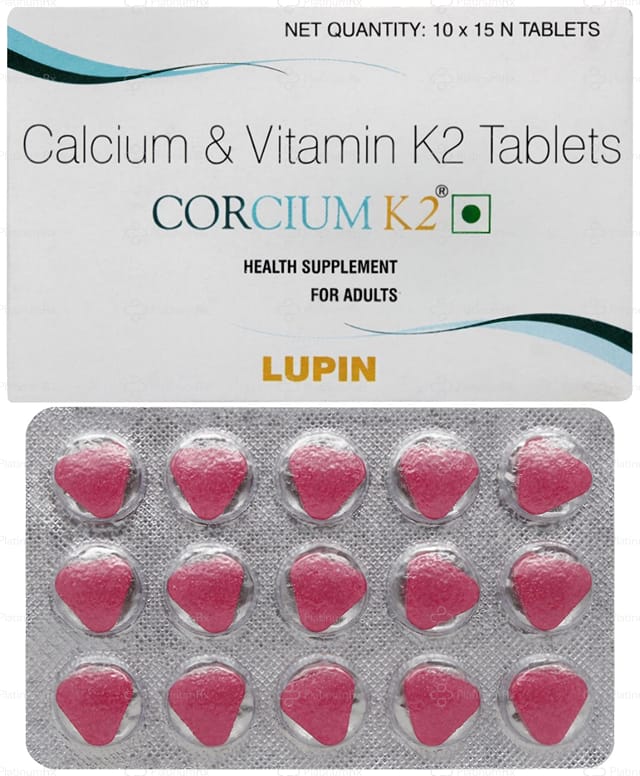
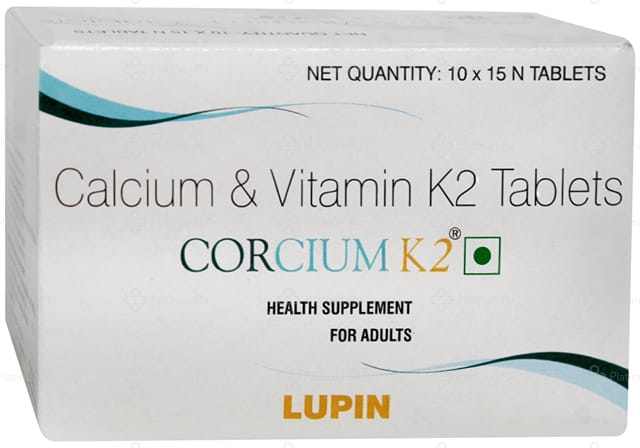
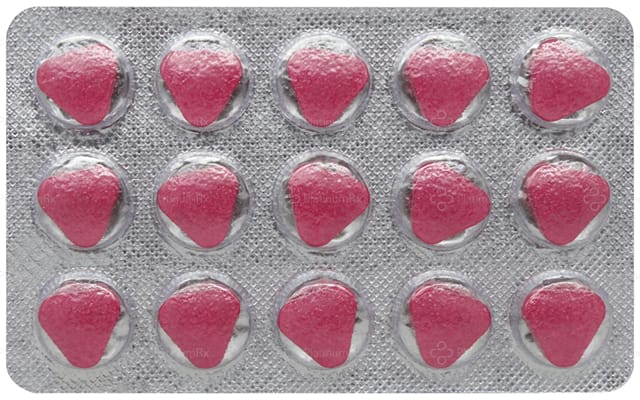
Corcium K2 225mg Tablet 15s

Corcium K2 225mg Tablet 15s is a nutritional supplement combination that supports bone and joint health. It combines elemental calcium, the principal mineral component of bone, with Vitamin K2 (Menaquinone), which activates the proteins that direct calcium into bone rather than soft tissue, and Turmeric (Curcuma longa) extract, an anti-inflammatory botanical with research evidence in bone turnover and joint health. It is generally aimed at adults with low bone density, postmenopausal bone loss, or age-related osteopenia.
Written by: Syed Jommy Abbas, B. Pharma
Reviewed by: Dr. Rohit Kolhe, MBBS
Last updated on: 02-06-2026
Delivery by
...
FDA & GMP Certified
Long Expiry (>8 Months)
15 Days Easy Returns
General Information
Have a question?
Genuine Medicine
Pay On Delivery
Secure Payment

LegitScript Certified Online Pharmacy

More About Corcium K2 225mg Tablet 15s
Quick Summary
Corcium K2 225mg Tablet 15s is a nutritional supplement combination that supports bone and joint health. It combines elemental calcium, the principal mineral component of bone, with Vitamin K2 (Menaquinone), which activates the proteins that direct calcium into bone rather than soft tissue, and Turmeric (Curcuma longa) extract, an anti-inflammatory botanical with research evidence in bone turnover and joint health. It is generally aimed at adults with low bone density, postmenopausal bone loss, or age-related osteopenia.
Detailed Description
About 99% of body calcium is stored in bones and teeth. Adequate dietary calcium is essential for bone formation, neuromuscular function, and clotting. Corcium K2 225mg Tablet 15s is intended for individuals whose dietary intake or absorption is insufficient. Without enough vitamin K2, some absorbed calcium can deposit in arteries and soft tissues rather than in bone. Vitamin K2 addresses this by activating osteocalcin (which binds calcium into the bone matrix) and matrix Gla protein (which inhibits arterial calcification).
Turmeric and its principal active compound, curcumin, have a long history in joint and inflammatory conditions. Preclinical work and small clinical trials have explored curcumin's effects on bone turnover markers, bone mineral density, and inflammation-driven bone loss; results are mixed, with some studies showing benefit and others not. Curcumin is best framed in this combination as a supportive anti-inflammatory ingredient rather than a primary anti-osteoporotic agent. The combination is used alongside diet, weight-bearing exercise, and prescribed osteoporosis therapy where indicated.
Uses of Corcium K2 225mg Tablet 15s
Supports bone health
Fulfils daily calcium needs and supports mineralisation.
Manages postmenopausal bone loss
Used as nutritional support alongside diet, exercise, and prescribed osteoporosis therapy in postmenopausal bone loss.
Osteopenia and low bone density
To supplement when dietary intake is inadequate.
Age-related bone health in older adults
To help maintain bone mineral density.
Joint comfort
Turmeric provides supportive anti-inflammatory action.
Benefits of Corcium K2 225mg Tablet 15s
- Supplies calcium for bone structure and neuromuscular function.
- Vitamin K2 activates osteocalcin and matrix Gla protein, supporting bone deposition and limiting arterial calcification.
- Turmeric provides antioxidant and anti-inflammatory support relevant to bone and joint health.
- Convenient single-dose delivery of three complementary nutrients.
- Generally well tolerated at recommended doses.
Side Effects of Corcium K2 225mg Tablet 15s
Common
- Constipation, bloating, and gas
- Mild stomach upset
- Nausea
Uncommon
- Loose stools (more often with higher turmeric doses)
- Mild headache, dry mouth, heartburn
Serious side effects requiring immediate attention
- Hypercalcaemia (high calcium levels in blood) with prolonged high-dose use resulting in nausea, confusion, excessive thirst, and increased urination
- Kidney stones in susceptible individuals
- Severe allergic reactions
- Signs of bleeding in patients taking anticoagulants
Directions for Use
Corcium K2 225mg Tablet 15s is taken orally once daily, preferably with a meal that contains some fat, as it helps support the absorption of vitamin K2 and curcumin. It has been observed that single calcium doses of 500 mg or less are absorbed best in the body. If a higher daily total of Corcium K2 225mg Tablet 15s is recommended, splitting it across two meals helps. Maintain hydration and combine with weight-bearing physical activity for optimal bone health.
How it works
Bone is constantly remodelled. Osteoblasts build new bone matrix and call calcium into it, while osteoclasts break old bone down. Calcium provides the raw mineral for hydroxyapatite (the crystalline structure that gives bone its strength) and is absorbed in the small intestine partly by an active vitamin D-dependent pathway and partly by passive diffusion.
Vitamin K2 acts as a helper (cofactor) for an enzyme called gamma-glutamyl carboxylase, which attaches carboxyl groups to certain proteins to activate them. Once activated, osteocalcin, made by bone-building cells (osteoblasts), binds calcium and locks it into the bone matrix, strengthening the bones. Matrix Gla protein, found in the smooth muscle of artery walls, binds free calcium in the arteries and prevents it from forming harmful deposits, protecting against arterial calcification.
Vitamin K2 also increases the production of osteoprotegerin, a decoy molecule that blocks RANKL signalling. This stops osteoclasts (bone-breaking cells) from breaking down bone, helping preserve bone density.
Curcumin, the active compound in turmeric, has antioxidant and anti-inflammatory effects. It works by calming a signalling pathway called NF-κB and lowering pro-inflammatory chemicals like TNF-α and IL-6, which normally drive bone-breaking cell (osteoclast) activity and bone loss in conditions such as postmenopausal osteoporosis. Together, the three components work as a team; one provides the raw mineral (calcium), another ensures that calcium reaches the bones instead of building up in blood vessel walls, and the third reduces the inflammation that drives bone breakdown.
Safety Advice for Corcium K2 225mg Tablet 15s

Allergy
Unsafe
Avoid in known hypersensitivity to any component, including turmeric or curcumin.

Breastfeeding
Caution
Calcium and K2 at recommended doses are generally compatible. High-dose turmeric extracts are best avoided due to limited data.

Pregnancy
Caution
High-dose curcumin extracts are not recommended due to limited safety data.

Driving
Safe
No known effect on alertness or driving.

Alcohol
Caution
Heavy alcohol impairs calcium and vitamin K absorption and worsens bone health.

Liver
Caution
High-dose curcumin has been linked rarely to hepatotoxicity; monitor in pre-existing liver disease.

Kidney
Caution
Avoid high-dose calcium in Chronic Kidney Disease (CKD) and a history of calcium-containing kidney stones.

Children
Limited information
Not generally recommended unless prescribed

Elderly patients
Caution
Beneficial when the intake is low. Monitor for constipation and avoid excess total calcium from multiple sources.
Drug-Food Interaction
- High-oxalate foods (spinach, rhubarb) (CAUTION): Reduce calcium absorption when taken together.
- Bran and high-phytate foods (CAUTION): Reduce calcium absorption.
- Caffeine and alcohol (CAUTION): Excess increases urinary calcium loss.
- Foods with healthy fats (BENEFICIAL): Improve absorption of K2 and curcumin.
- Black pepper (BENEFICIAL): Piperine enhances curcumin bioavailability.
Interactions with Other Drugs
- Warfarin and other vitamin K antagonists (SEVERE): Vitamin K2 directly antagonises warfarin's effect; turmeric may add bleeding risk in the opposite direction. Avoid unless supervised with INR monitoring.
- Levothyroxine (SEVERE): Calcium reduces absorption; separate by at least 4 hours.
- Tetracyclines and fluoroquinolones (SEVERE): Calcium binds these antibiotics; separate by 2 to 4 hours.
- Bisphosphonates (SEVERE): Calcium reduces bisphosphonate absorption; take the bisphosphonate first thing in the morning and the supplement at least 2 hours later.
- Iron supplements (CAUTION): Calcium competes with iron; separate by 2 hours.
- Antiplatelets and anticoagulants (CAUTION): Curcumin may increase bleeding risk with aspirin, clopidogrel, NSAIDs, or other anticoagulants.
- Thiazide diuretics (CAUTION): Reduce calcium excretion and may raise serum calcium.
Drug-Disease Interactions
- Hypercalcaemia and primary hyperparathyroidism (Contraindicated): Increases the risk of arrhythmias (irregular heart rhythm), nephrolithiasis (kidney stones), nephrocalcinosis (too much calcium in the kidneys), acute kidney injury, and soft-tissue calcification.
- History of calcium-based kidney stones (Caution): Use cautiously with adequate hydration due to risk of recurrence.
- Severe CKD (Caution): High risk of hypercalcaemia and vascular calcification.
- Active gallbladder or bile duct disease (Caution): Turmeric increases bile flow and may aggravate symptoms.
- Bleeding disorders (Caution): Turmeric may increase bleeding tendency.
Overdose
Excess calcium can cause hypercalcaemia, which may manifest as nausea, vomiting, abdominal pain, constipation, excessive thirst, frequent urination, fatigue, confusion, and irregular heartbeat. Long-term overuse of Corcium K2 225mg Tablet 15s may increase the risk of kidney stones, vascular calcification, and milk-alkali syndrome. Very high doses of curcumin can cause GI upset and, rarely, liver injury. Vitamin K2 has a wide safety margin but interferes with anticoagulants. Suspected overdose requires medical evaluation.
What If You Forget to take Corcium K2 225mg Tablet 15s?
If you miss a dose, take it as soon as you remember on the same day. But if it is close to the next dose, skip it and continue your regular schedule. Do not double up. Bone health benefits depend on long-term, consistent use rather than any single dose.
FAQ
References
- https://ods.od.nih.gov/factsheets/Calcium-HealthProfessional/
- https://ods.od.nih.gov/factsheets/VitaminK-HealthProfessional/
- https://pmc.ncbi.nlm.nih.gov/articles/PMC4566462/
- https://pmc.ncbi.nlm.nih.gov/articles/PMC11313760/
- https://pmc.ncbi.nlm.nih.gov/articles/PMC9237441/
- https://pmc.ncbi.nlm.nih.gov/articles/PMC10118732/
Fact Box
Action Class
Bone health and joint support nutritional supplement
Chemical Class
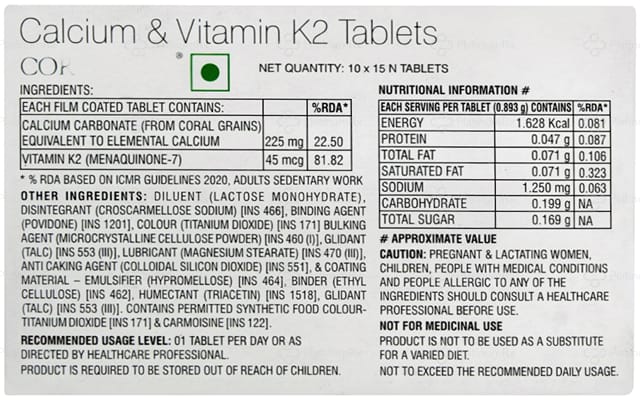
Inorganic/organic calcium salt; menaquinone (naphthoquinone derivative); curcuminoid (diarylheptanoid polyphenol)
Habit Forming
No
Disclaimer
PlatinumRx is committed to providing reliable and accurate information to support informed customer decisions. However, all information made available on the Platform, including product descriptions, comparisons, and other content, is provided solely for general informational purposes. Such information is not intended to diagnose, prevent, treat, or cure any medical condition, nor should it be relied upon as a substitute for professional medical advice, diagnosis, or treatment.

Customers also bought

More Medicines By Lupin Ltd.
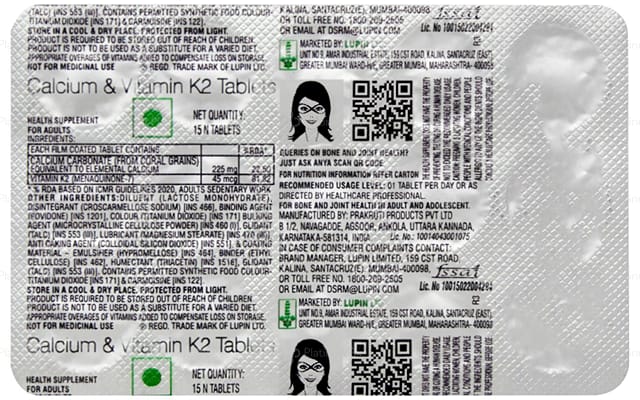
More Medicines With Elemental Calcium 225mg + Turmeric (Curcuma longa) 5mg + Vitamin K2 (Menaquinone) 45mcg
Top Selling Medicines
Top Selling Devices
Top Selling Health Products