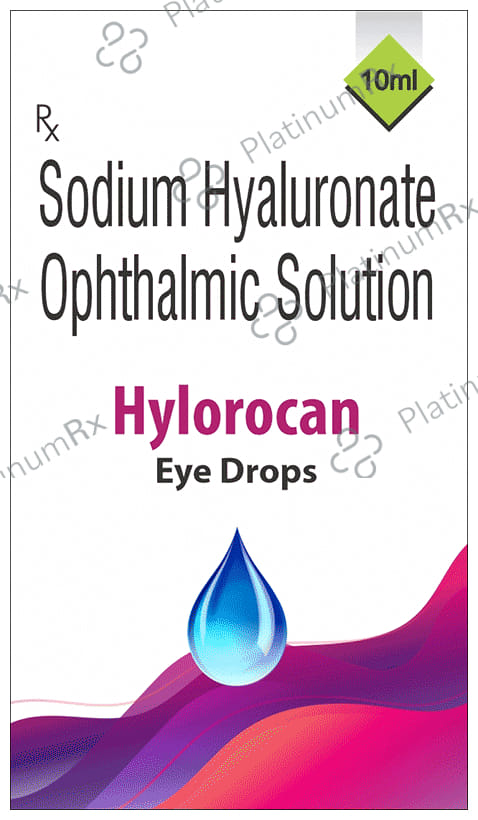
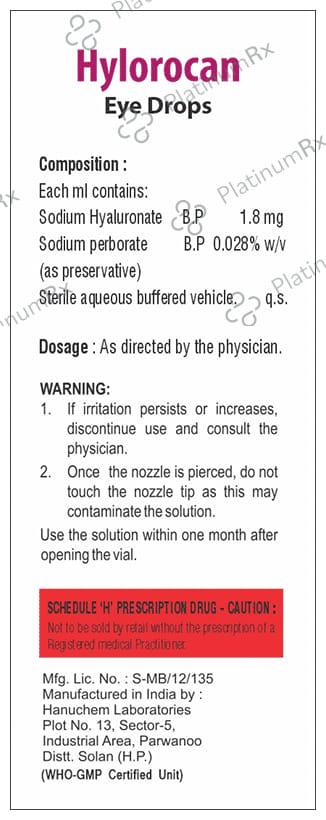
Hylorocan Eye Drop

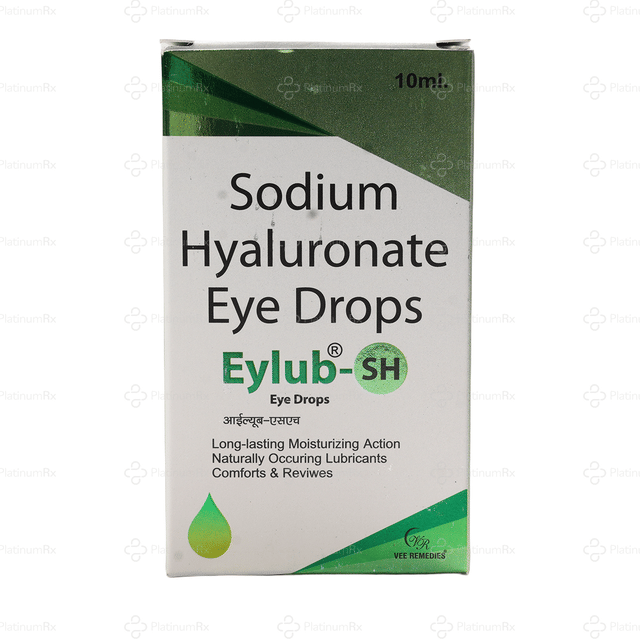
Hylorocan Eye Drop (Sodium Hyaluronate) is a high-viscosity ophthalmic lubricant used to manage moderate to severe dry eye conditions. As the sodium salt of hyaluronic acid (a naturally occurring polysaccharide found in the human eye), it possesses exceptional water-binding and viscoelastic properties. It acts as an artificial tear to stabilise the tear film, providing intensive hydration and relief from persistent ocular discomfort. By creating a long-lasting protective shield over the ocular surface, it helps alleviate sensations of burning, itching, and grittiness.
Last updated on: 16-05-2026
Delivery by
...
FDA & GMP Certified
Long Expiry (>8 Months)
15 Days Easy Returns
Medicine Comparison
Have a question?

Genuine Medicine
Pay On Delivery
Secure Payment

LegitScript Certified Online Pharmacy
More About Hylorocan Eye Drop
Quick Summary
Hylorocan Eye Drop (Sodium Hyaluronate) is a high-viscosity ophthalmic lubricant used to manage moderate to severe dry eye conditions. As the sodium salt of hyaluronic acid (a naturally occurring polysaccharide found in the human eye), it possesses exceptional water-binding and viscoelastic properties. It acts as an artificial tear to stabilise the tear film, providing intensive hydration and relief from persistent ocular discomfort. By creating a long-lasting protective shield over the ocular surface, it helps alleviate sensations of burning, itching, and grittiness.
Detailed Description
Hylorocan Eye Drop (Sodium Hyaluronate) is an ophthalmic lubricant used to help relieve symptoms of dry eye disease. It is the sodium salt of hyaluronic acid, a substance naturally present in the eye, and is known for its ability to hold water and maintain moisture.
It works by forming a protective, moist layer over the surface of the eye. This helps stabilise the tear film and reduces dryness-related discomfort such as burning, irritation, grittiness, and a feeling of dryness in the eyes. It also helps keep the eye surface hydrated and more comfortable during blinking.
Because of its viscoelastic (gel-like) and water-retaining properties, Hylorocan Eye Drop may stay on the eye surface longer than basic lubricating drops, which can provide longer-lasting relief in some people. It is used as an artificial tear substitute and may be applied several times a day, depending on symptoms and your doctor’s recommendation.
Hylorocan Eye Drop helps manage symptoms of dry eye but does not treat the underlying cause. It is generally used as part of long-term supportive care to improve eye comfort and protect the eye surface when used as directed.
Uses of Hylorocan Eye Drop
Hylorocan Eye Drop may be indicated by your doctor for:
Moderate to Severe Dry Eye
May provide relief from persistent dryness, burning, irritation, and a gritty feeling in the eyes.
Environmental Irritation
May help protect the eyes from discomfort caused by wind, air conditioning, pollution, or smoke exposure.
Digital Eye Strain
May help ease “tired eyes” and dryness associated with prolonged screen use or extended digital device exposure.
Contact Lens Wear
May help improve comfort for both hard and soft contact lens users and reduce irritation related to lens use.
Post-Surgical Care
May be used to help maintain eye moisture and support recovery after procedures such as LASIK or cataract surgery.
Corneal Protection
Forms a soothing protective layer over the cornea that may help shield it from minor mechanical stress or surface abrasions.
Benefits of Hylorocan Eye Drop
Hylorocan Eye Drop may provide benefits such as:
- Helps relieve symptoms of dry eyes such as burning, irritation, and grittiness
- Provides moisture and helps keep the eye surface hydrated
- Forms a protective layer over the eye to reduce dryness and discomfort
- May improve comfort during blinking and reduce the feeling of “dry or tired eyes”
- Helps maintain tear film stability for more consistent eye lubrication
- May provide longer-lasting relief compared to simple lubricating eye drops in some patients
- Can be used regularly for ongoing (chronic) dry eye management as advised by your doctor
- Supports overall eye surface comfort, especially with screen use, air conditioning, or environmental dryness
Side Effects of Hylorocan Eye Drop
Hylorocan Eye Drop (Sodium Hyaluronate) is generally well tolerated when used as directed. Side effects are usually mild and temporary.
Common side effects
- Mild eye irritation or discomfort after application
- Temporary stinging or burning sensation
- Blurred vision for a short time after using the drops
- Mild redness or watery eyes
Less common side effects
- Eye itching or sensitivity
- Feeling of stickiness or foreign body sensation in the eye
Serious side effects (uncommon) may include
- Signs of an allergic reaction: severe redness, persistent swelling of the eyelids, or rash.
- Persistent eye pain or vision changes that do not clear shortly after use.
- If any side effects persist, worsen, or feel unusual, you should stop using Hylorocan Eye Drop and consult your doctor for further advice.
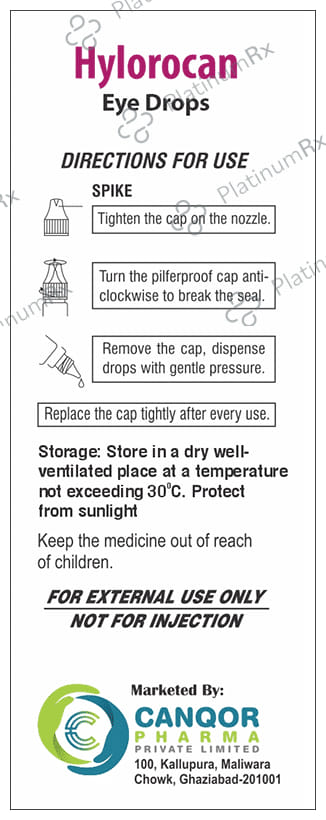
Directions for Use
Use Hylorocan Eye Drop exactly as directed by your doctor or ophthalmologist.
- Wash your hands before using the eye drops.
- Tilt your head slightly back and pull down the lower eyelid to form a small pocket.
- Instil the prescribed number of drops into the eye without touching the dropper tip to the eye or any surface.
- Close your eyes gently for a few seconds after instillation.
- Avoid rubbing your eyes immediately after use.
- If you use other eye drops, wait at least 5–10 minutes between products unless your doctor advises otherwise.
- Use as frequently as prescribed, usually several times a day depending on dryness severity.
- In many cases, it is recommended to remove contact lenses before using Hylorocan Eye Drop.
- Replace the cap tightly after use and store as instructed on the label.
- Do not use Hylorocan Eye Drop if the solution changes colour or becomes cloudy, unless advised by your doctor.
How it works
Hylorocan Eye Drop (Sodium Hyaluronate) works through its mucoadhesive and viscoelastic properties. It binds to the ocular surface and traps water molecules, creating a stable, long-lasting tear film. Its physical structure allows it to provide high lubrication when the eye is still, while thinning out during a blink to prevent friction. This physical moisture shield protects the cornea from drying out and provides a stable environment for the ocular surface to heal and remain hydrated.
Safety Advice for Hylorocan Eye Drop

Pregnancy
Safe
Generally considered safe as it acts locally on the eye and is not absorbed systemically in significant amounts.

Breastfeeding
Safe
Can be used safely by breastfeeding mothers.

Driving
Caution
High-viscosity drops may cause temporary blurred vision. Do not drive until your vision is completely clear.

Liver
Safe
No known interactions or dosage adjustments required for liver disease.

Kidney
Safe
No known interactions or dosage adjustments required for kidney disease.

Alcohol
Safe
No known interactions between alcohol and ophthalmic Sodium Hyaluronate.
Quick Tips for Hylorocan Eye Drop
- If your vision blurs after use, wait a few minutes before driving or operating machinery.
- Avoid using Hylorocan Eye Drop if the seal is broken or the solution appears cloudy.
- To prevent contamination, never touch the tip of the container to any surface, including your eye.
- If you experience persistent eye pain or changes in vision, stop use and consult an eye specialist.
Storage Advice
- Store at room temperature in a cool, dry place.
- Keep the container tightly closed when not in use.
- Protect from freezing and direct heat.
- Discard the container after the duration specified on the packaging (often 28 days to 6 months after opening).
- Keep out of the reach of children and pets.
Drug-Food Interaction
- General Diet (NO INTERACTION): There are no known interactions between food or beverages and ophthalmic Sodium Hyaluronate.
Interactions with Other Drugs
- Other Eye Medications: While generally safe, Hylorocan Eye Drop can interfere with the absorption of other drops due to its thick consistency. Always wait at least 10 minutes between different eye treatments.
Drug-Disease Interactions
- Eye Infection (CAUTION): Lubricating drops are not a treatment for eye infections. If you suspect an infection (e.g., discharge, severe pain), consult your doctor before use.
Overdose
An overdose of topical Hylorocan Eye Drop in the eye is unlikely to cause systemic harm. Excessive use may lead to temporary blurring or minor discomfort. In most cases, no specific treatment is needed.
What If You Forget to take Hylorocan Eye Drop?
If you miss an application, use it as soon as you remember. If it is almost time for your next scheduled dose, skip the missed one. Do not apply extra drops to compensate for a missed application.
FAQ
Fact Box
Therapeutic Class
Ophthalmic Agent
Action Class
Ocular Lubricant / Viscoelastic
Chemical Class
Polysaccharide (Glycosaminoglycan)
Habit Forming
No
Disclaimer
PlatinumRx is committed to providing reliable and accurate information to support informed customer decisions. However, all information made available on the Platform, including product descriptions, comparisons, and other content, is provided solely for general informational purposes. Such information is not intended to diagnose, prevent, treat, or cure any medical condition, nor should it be relied upon as a substitute for professional medical advice, diagnosis, or treatment.

Customers also bought


More Medicines By Canqor Pharma Pvt. Ltd.
More Medicines With Sodium Hyaluronate (Hyaluronic Acid) 0.18% w/v
Top Selling Medicines
Top Selling Devices
Top Selling Health Products