Dulcoflex Tablet: Uses, Composition, Side Effects & FAQs
Last Updated: November 9, 2026


Written by:
Rameesa Fathima M, B pharmacy
Reviewed by:
Dr. Sekh Addil, MBBSLast updated on:09-Nov-2026
Summary
Dulcoflex tablet is a 5 mg bisacodyl stimulant laxative for short-term constipation, the kind where stools are hard, dry and difficult to pass. Most people take it at bedtime and get relief the next morning, usually within 6 to 12 hours. Take it only for a short time, and only on your doctor's or pharmacist's advice.
Key Takeaways
- What it is: A short-term stimulant laxative tablet for constipation.
- Active ingredients: Bisacodyl 5 mg.
- Used for: Short-term constipation, and clearing the bowel before tests or surgery.
- Not meant for: A blocked bowel, severe belly pain with vomiting, or weight loss.
- Prescription: Take it only on a doctor's advice, especially beyond a week.
- How to take: Swallow whole with water at bedtime; keep milk and antacids 1 hour away.
- Common side effects: Stomach cramps, diarrhoea, nausea and dizziness; usually mild.
What Is Dulcoflex Tablet?
Dulcoflex tablet is a single-ingredient laxative that helps you pass a stool. It is an enteric-coated tablet, which means it has a protective coating so the medicine travels through the stomach without dissolving and works further down in the large intestine.
Dulcoflex is one of several brand names for bisacodyl. The same brand also comes as suppositories, a 5 mg one for children and a 10 mg one for adults. This article is about the 5 mg tablet.
Buy Dulcoflex Tablet and Its Substitute
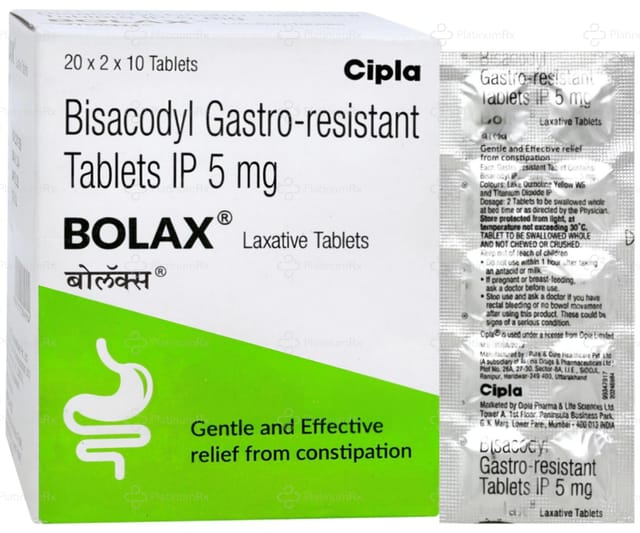
Dulcoflex Tablet Composition (Per Tablet)
| Ingredient | Amount | Type | What it does (in simple words) |
|---|---|---|---|
| Bisacodyl IP | 5 mg | Stimulant laxative | Makes the bowel muscles work and draws water into the bowel |
Each tablet also contains small amounts of lactose (34.9 mg) and sucrose (29.58 mg). Tell your doctor or pharmacist if you have been told to avoid these sugars.
Check the label on your pack, because the suppository forms come in different strengths.
How Does Dulcoflex Work?
The coating on the tablet keeps it intact until it reaches the large intestine. There, bisacodyl is converted into its active form, which makes the muscles of the bowel contract more often and helps water and salts collect inside the bowel. That softens the stool and shortens the time it takes to travel through, so you feel the urge to go.
Uses of Dulcoflex Tablet
Doctors usually prescribe Dulcoflex tablet for:
- Short-term constipation, where stools are hard, dry or painful to pass
- Bowel preparation before a test, such as a colonoscopy or an X-ray of the bowel
- Bowel preparation before surgery
- After surgery, when passing stool needs to be made easier
For tests and operations, the medicine is used in a different schedule and under medical supervision.
It does not treat the cause of your constipation. It also does not kill germs, and it does not help you lose weight, even though it makes you pass stool.
Constipation vs Diarrhoea: Is Dulcoflex Right for You?
| Constipation | Diarrhoea | |
|---|---|---|
| What it feels like | Hard, dry stools; straining; a feeling of not fully emptying | Loose or watery stools, often with an urgent need to go |
| Sign / pattern | Passing stool fewer than 3 times a week, or less often than usual | Loose or watery stool that keeps coming through the day |
| Is Dulcoflex suitable? | Yes, for short-term use | No |
| What usually helps | Fibre, fluids, daily movement, and a short course of a laxative | Oral rehydration salts, fluids, and a doctor's review |
Taking a laxative for diarrhoea makes the fluid loss worse and can leave you dehydrated. If you are losing water quickly, or you see blood, get medical help.
How to Take Dulcoflex Tablet
- Swallow the tablet whole with a full glass of water.
- Do not crush, chew or split it, or the protective coating will break.
- Take it at bedtime, so it works while you sleep and gives relief the next morning.
- Keep a gap of at least 1 hour between the tablet and milk, an antacid or an acid-reducing medicine.
- Start with the lowest dose your doctor suggests and only go higher if you are told to.
Dosage of Dulcoflex Tablet
Your doctor decides the dose. For adults and children over 10 years, the usual dose is 1 to 2 tablets (5 to 10 mg) at bedtime. Start with the lower dose.
Children aged 4 to 10 years are usually given 1 tablet (5 mg) a day. For children under 4 years, the 5 mg suppository is used instead, and only on a doctor's advice.
Never increase the dose on your own. A higher dose does not clear constipation faster, but it does make cramps and loose motions more likely.
If a child under 10 years has constipation that keeps coming back, a doctor should treat it. If someone takes too many tablets, they can lose a lot of fluid and body salts. Go to the nearest hospital emergency department and carry the strip or box with you. In India, call 112 for emergency help or 108 for an ambulance.
What If You Miss a Dose?
Take it when you remember, if you still need it. If your next dose is close, skip the missed one. Never take two doses together to make up for it.
How Long Does It Take to Work?
Most people get a bowel movement within 6 to 12 hours of taking a tablet, and often sooner, which is why it is taken at bedtime. If you still have not passed stool after using it, do not take another dose; speak to your doctor.
Storage
Store the strip below 25°C, away from light and moisture. Keep it out of reach of children, and do not use it after the expiry date printed on the pack.
Side Effects of Dulcoflex Tablet
Most people take Dulcoflex without any trouble. When side effects happen, they are usually mild and settle once the medicine has worked.
Common and mild:
- Stomach cramps
- Abdominal pain or discomfort
- Loose motions or diarrhoea
- Nausea
- Feeling dizzy or faint
Rare but serious (stop the medicine and see a doctor right away):
- Swelling of the face, lips or tongue, or trouble breathing
- Blood in your stool, or severe or bloody diarrhoea that does not stop
- Fainting
- Signs of dehydration, such as thirst, dark urine or passing very little urine
The cramps and loose motions come from the bowel contractions that bisacodyl triggers. They are more likely if you take more than the prescribed dose or use it for many days in a row.
Who Should Not Take Dulcoflex
- Anyone allergic to bisacodyl or any ingredient in the tablet
- People with a blocked or paralysed bowel
- Appendicitis, or severe belly pain with vomiting
- Acute inflammatory bowel disease
- Severe dehydration
- Rare inherited conditions where certain sugars cannot be digested (galactosaemia, fructose intolerance)
Precautions
Tell your doctor before taking Dulcoflex if you have:
- Pregnancy (take it only on medical advice)
- Breastfeeding (it is considered safe, but tell your doctor)
- Kidney problems or a lot of fluid loss (dehydration can worsen)
- Age over 65 years (dehydration is riskier)
- Constipation that keeps coming back, or a sudden change in bowel habit
- A child between 4 and 10 years with long-standing constipation
Do not take it every day for weeks without finding out why you are constipated.
Drug Interactions
| Medicine | What can happen |
|---|---|
| Water tablets (diuretics) | Higher chance of low body salts if you take large doses |
| Steroid tablets (corticosteroids) | Same risk of low body salts |
| Digoxin and similar heart medicines | Low potassium can make their side effects more likely |
| Other laxatives | More cramps and diarrhoea |
| Antacids, acid-reducing medicines and milk | Can break the tablet's coating too early; keep a 1-hour gap |
Always tell your doctor about every medicine, supplement or home remedy you are using. Alcohol can make dehydration worse, so it is better avoided while you are constipated.
Frequently Asked Questions About Dulcoflex Tablet
When to See a Doctor
A laxative only helps you pass stool; it does not treat the reason you are constipated. See a doctor quickly if you have:
- No bowel movement at all after taking the tablet
- Blood in your stool
- Severe belly pain, or a swollen, tender abdomen
- Vomiting that will not stop
- Constipation that lasts more than a week, or keeps coming back
- Weight loss you did not plan, or a sudden change in your bowel habit
The Bottom Line
Dulcoflex tablet is a simple, well-known laxative for short-term constipation, and it also has a place in clearing the bowel before tests and surgery. Take one or two tablets at bedtime with water, keep milk and antacids an hour away, and stop after a short course. Cramps and loose motions are the usual side effects, and they pass once the medicine has done its job. If you need a laxative again and again, that is the signal to see a doctor rather than buy another strip.
References

Add PlatinumRx as a preferred source on Google