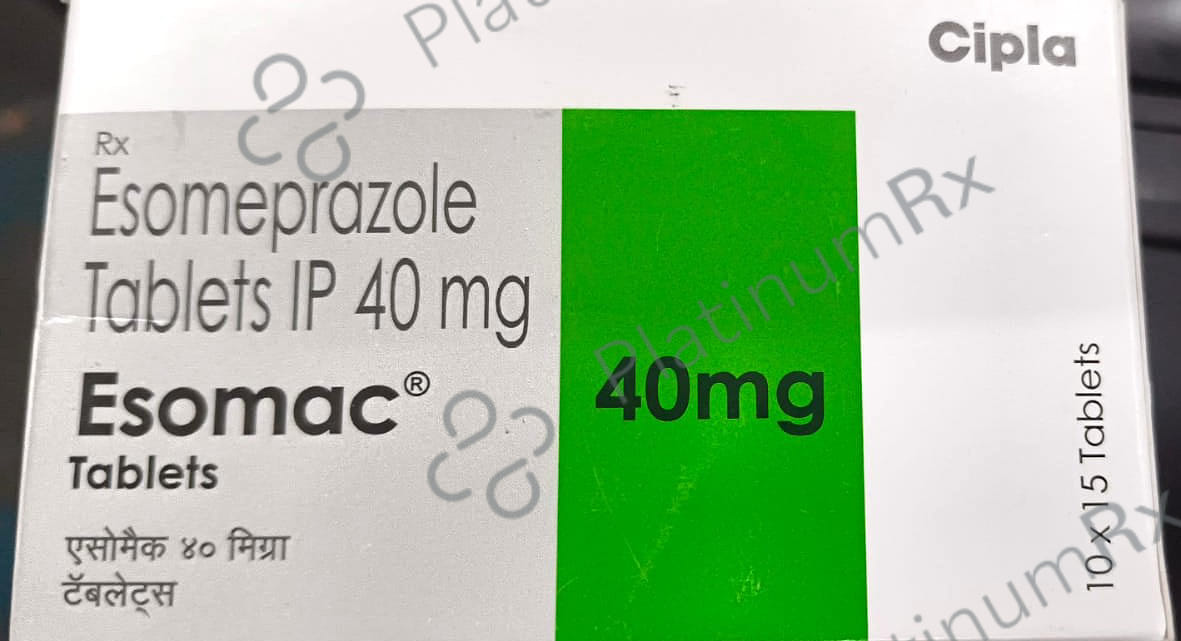
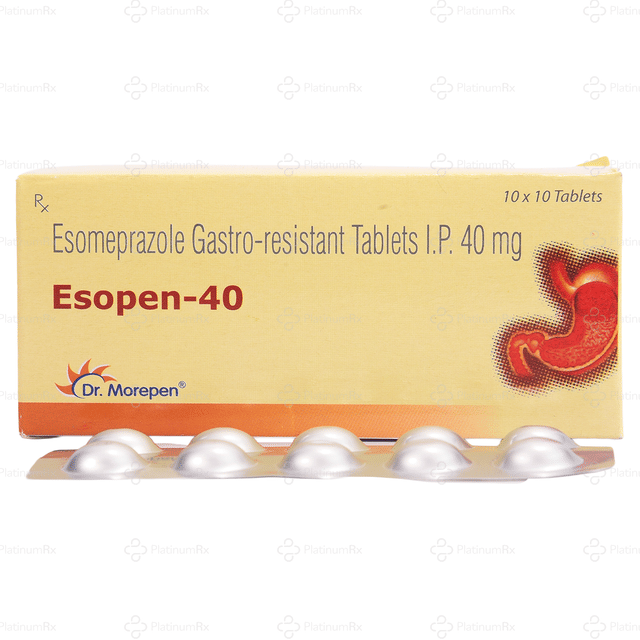
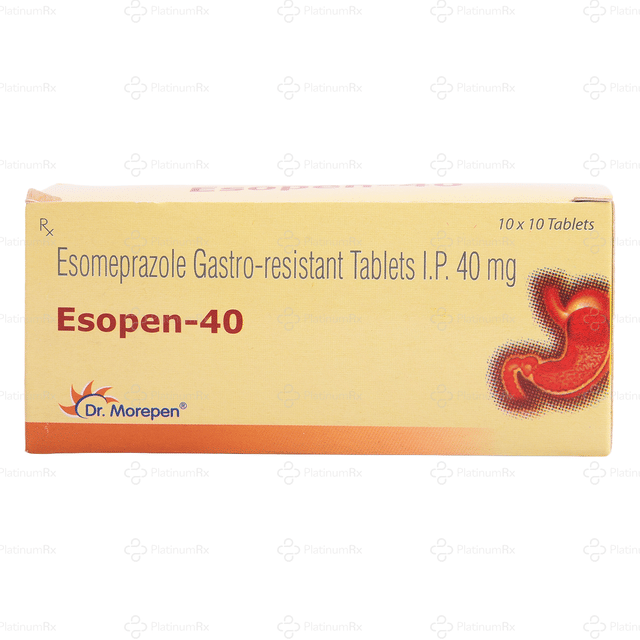
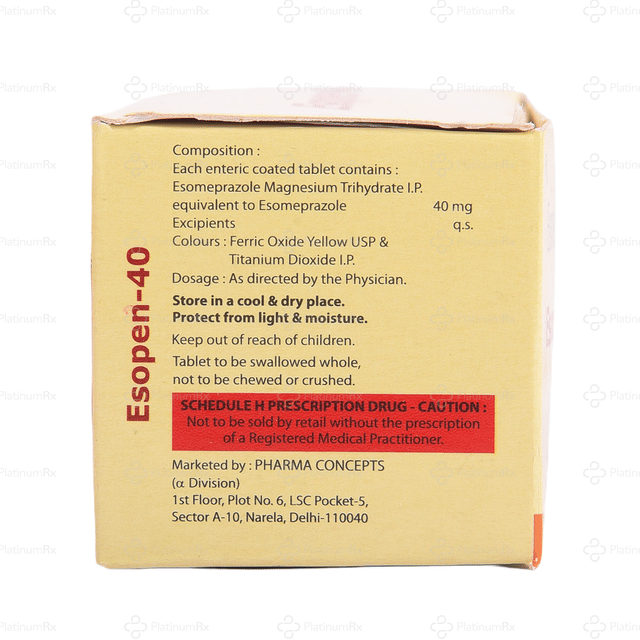
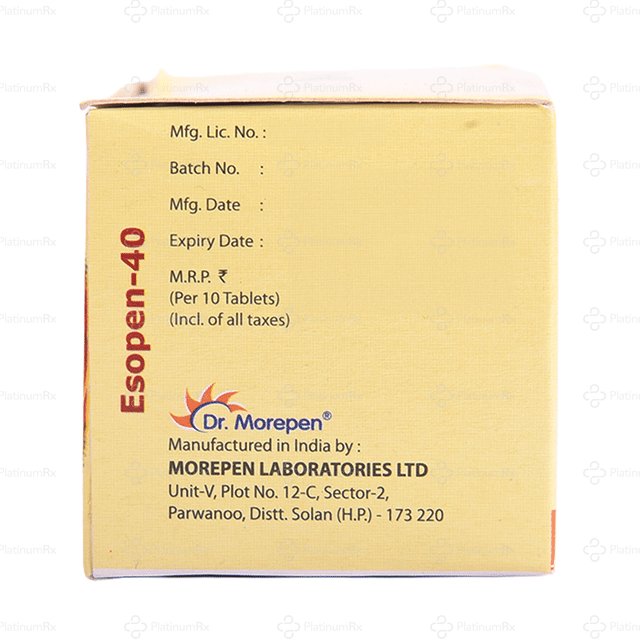
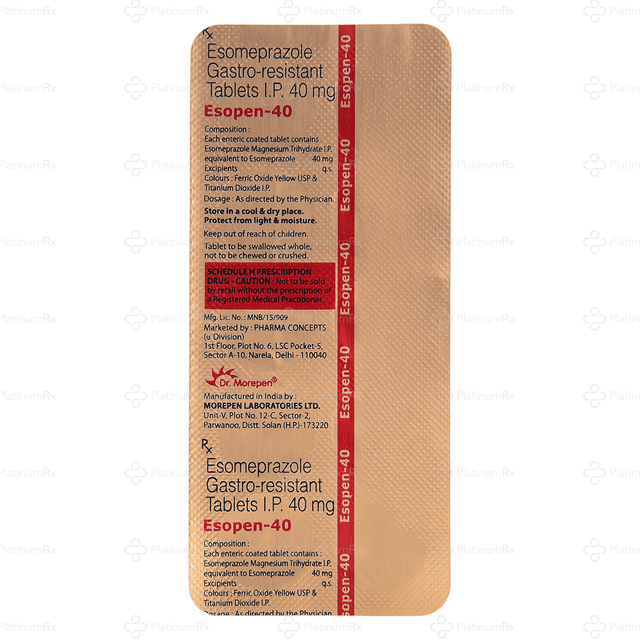
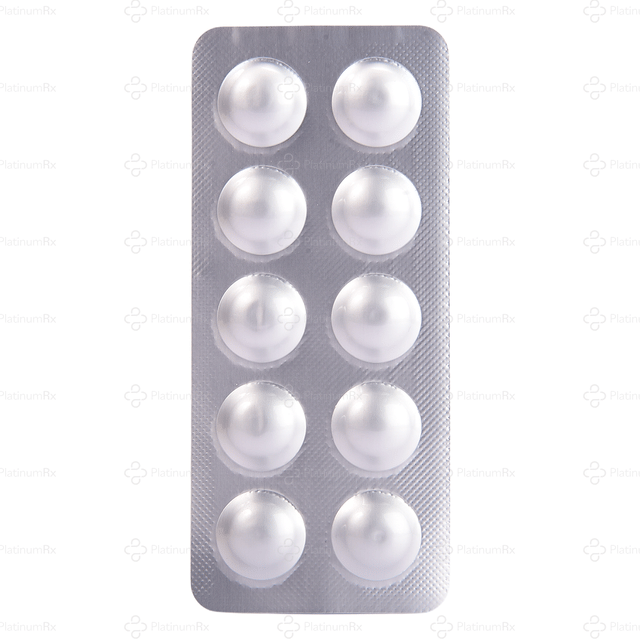


Esomac 40mg Tablet 15s
Cipla Ltd.
Strip of 15 tablets
₹170.85
₹208.35
18% Off
Esogic 40mg Tablet (Esomeprazole) is a potent inhibitor of gastric acid secretion belonging to the class of drugs known as Proton Pump Inhibitors (PPIs). Esomeprazole is the S-enantiomer of omeprazole and is widely recognised for providing rapid and sustained control of stomach acid production. Its mechanism involves irreversibly binding to and inhibiting the H+/K+ ATPase (the proton pump) located on the secretory surface of parietal cells in the stomach. By powerfully suppressing acid production, Esomeprazole effectively relieves symptoms such as heartburn, prevents ulcer recurrence, and allows acid-damaged tissues to heal.
Delivery by
...
FDA & GMP Certified
Long Expiry (>8 Months)
15 Days Easy Returns
Have a question?

Genuine Medicine
Pay On Delivery
Secure Payment

LegitScript Certified Online Pharmacy
View content in
 English
Esogic 40mg Tablet (Esomeprazole) is a potent inhibitor of gastric acid secretion belonging to the class of drugs known as Proton Pump Inhibitors (PPIs). Esomeprazole is the S-enantiomer of omeprazole and is widely recognised for providing rapid and sustained control of stomach acid production. Its mechanism involves irreversibly binding to and inhibiting the H+/K+ ATPase (the proton pump) located on the secretory surface of parietal cells in the stomach. By powerfully suppressing acid production, Esomeprazole effectively relieves symptoms such as heartburn, prevents ulcer recurrence, and allows acid-damaged tissues to heal.
Esogic 40mg Tablet is often referred to as the "purer" version of omeprazole (the first-generation PPI) because it is the isolated S-enantiomer. This distinction gives Esomeprazole a pharmacokinetic edge, including improved bioavailability and reduced metabolism by the liver's CYP2C19 enzyme system compared to the racemic mixture of omeprazole. This characteristic contributes to a more consistent and predictable acid-suppressing effect across a diverse patient population.
The core of Esomeprazole's action lies in its unique target: the proton pump. The proton pump is the final and most critical pathway for acid secretion into the stomach lumen. Esomeprazole is a pro-drug; it is chemically stable at the neutral pH of the bloodstream. However, after absorption, it concentrates in the highly acidic secretory canaliculi of the gastric parietal cells. In this low-pH environment, the pro-drug is rapidly converted into its active sulfonamide form.
The active sulfonamide then forms a stable, covalent bond with sulfhydryl groups on the exterior of the proton pump. This binding process is irreversible; it permanently deactivates the pump. Since the pump is the main source of stomach acid, its inactivation leads to:
The Esomeprazole 40mg dose provides maximum recommended acid suppression and is generally reserved for patients requiring intensive treatment, such as those with severe or refractory GERD (Gastroesophageal Reflux Disease), active erosive esophagitis, or serious complicated ulcers. Given its potent, sustained action, Esomeprazole is dosed once daily, typically 30 to 60 minutes before the first meal of the day, maximising the number of activated proton pumps it can permanently inhibit.
Esogic 40mg Tablet (Esomeprazole 40mg) is indicated for the following gastrointestinal conditions:
Used for the acute, intensive treatment (typically 4 to 8 weeks) required to heal damage to the lining of the oesophagus caused by severe acid reflux.
Used at a lower dose (often 20mg), but 40mg may be used if lower doses fail to maintain healing and prevent recurrence.
Treatment of heartburn and other symptoms associated with GERD, particularly when standard doses of other PPIs or H2 blockers are insufficient.
Used to reduce the risk of gastric and duodenal ulcers associated with continuous use of nonsteroidal anti-inflammatory drugs (NSAIDs) in high-risk patients.
Used in combination with two antibiotics (a triple-therapy regimen) to eradicate the bacteria that commonly cause peptic ulcers.
Management of this pathological condition, which involves extremely high levels of acid production due to gastrin-secreting tumours.
The use of Esogic 40mg Tablet offers several significant clinical benefits, making it a cornerstone of contemporary GERD and PUD therapy.
Esomeprazole is often cited for its ability to maintain gastric pH above 4 for longer periods than other PPIs. This sustained suppression is crucial for the healing of severe mucosal damage in the oesophagus (erosive oesophagitis).
Clinical trials consistently show that Esomeprazole achieves high healing rates, often superior to its predecessor, omeprazole, in patients with severe erosions, offering rapid symptomatic relief and reducing the risk of complications like strictures.
It offers rapid and effective relief from chronic symptoms such as heartburn, acid regurgitation, and difficulty swallowing (dysphagia), significantly improving the patient's quality of life.
Finally, due to its enhanced pharmacokinetic properties (less variability in metabolism via CYP2C19), Esomeprazole demonstrates Predictable Efficacy across most patient phenotypes, a crucial advantage in ensuring optimal therapeutic response.
While generally well-tolerated for short-term use, chronic use of Esomeprazole, like all PPIs, is associated with a range of side effects and safety concerns.
Esogic 40mg Tablet is a second-generation PPI that acts via the irreversible inhibition of the gastric proton pump.

While generally considered low risk, use only when clearly indicated. Current data suggest no significant congenital anomaly risk, but CONSULT YOUR DOCTOR.

Esomeprazole is secreted in breast milk. The risk to the infant is low, but alternative, shorter-acting treatments may be preferred. CONSULT YOUR DOCTOR.

Uncommon, but side effects like dizziness or somnolence may occur. Patients should avoid driving until they know how the medication affects them.

Esomeprazole is metabolised in the liver. Dose reduction (to 20mg daily) may be necessary in patients with severe hepatic impairment (Child-Pugh Class C).

Dosage adjustment is typically not required for patients with renal impairment.

Alcohol does not interact directly with the drug but can irritate the stomach lining, potentially counteracting the healing process. Limit consumption.
Use longer than one year increases the risk of bone fractures, C. diff infection, and hypomagnesemia. Use the lowest effective dose for the shortest duration necessary.
The most common daily dose for acute treatment of severe GERD symptoms, erosive esophagitis healing, and Zollinger-Ellison Syndrome is Esomeprazole 40mg once daily. For H. pylori eradication, the dose is typically 40mg twice daily for 10-14 days. The dosing schedule should be strictly adhered to: 30-60 minutes before the first meal of the day.
Experience with Esomeprazole overdose is limited, but symptoms are generally dose-dependent exaggerations of adverse effects, including lethargy, confusion, blurred vision, tachycardia, and severe nausea/vomiting. Because Esomeprazole is highly protein-bound, it is not readily removed by hemodialysis. Treatment is symptomatic and supportive. If an overdose is suspected, seek emergency medical help immediately.
Since optimal acid suppression relies on taking the drug before the first meal:
Therapeutic Class
Anti-ulcer Agent, Gastric Acid Suppressant
Action Class
Irreversible H+/K+ ATPase (Proton Pump) Inhibitor
Chemical Class
Proton Pump Inhibitor (PPI)
Habit Forming
Not addictive or habit-forming, but abrupt cessation can cause rebound hypersecretion.
PlatinumRx is committed to providing reliable and accurate information to support informed customer decisions. However, all information made available on the Platform, including product descriptions, comparisons, and other content, is provided solely for general informational purposes. Such information is not intended to diagnose, prevent, treat, or cure any medical condition, nor should it be relied upon as a substitute for professional medical advice, diagnosis, or treatment.

More Medicines By Neorangic Healthcare Pvt. Ltd.
More Medicines With Esomeprazole 40mg
Top Selling Medicines
Top Selling Devices
Top Selling Health Products