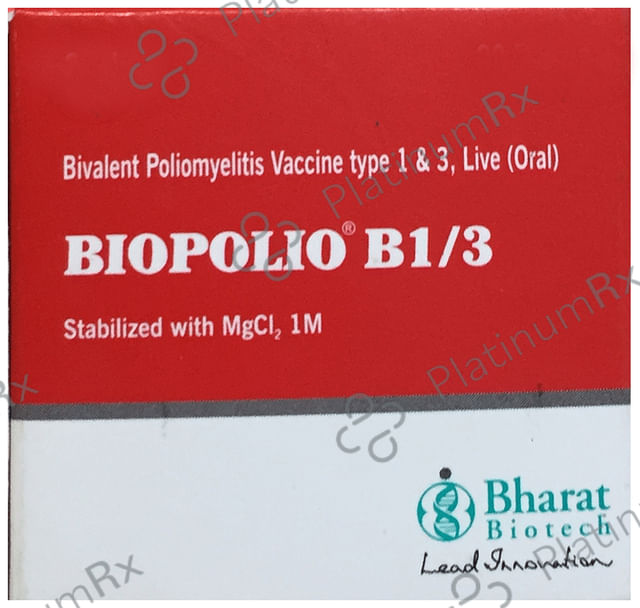
 Salt Composition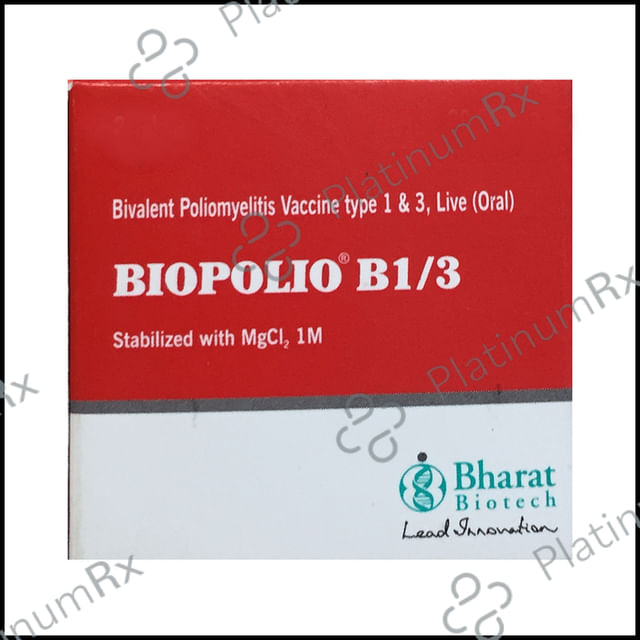


WHO GMP
Certified

Long Expiry
(>8 Months)

WHO GMP
Certified

Long Expiry
(>8 Months)
Uses of Biopolio B1/3 Oral Vaccine

Prevention of Polio
Customers also bought
More About Biopolio B1/3 Oral Vaccine
Quick Summary
Biopolio B1 3 Oral Vaccine is a highly effective immunising agent used to prevent poliomyelitis (polio), a debilitating and potentially fatal viral infection. The Inactivated Poliovirus Vaccine (IPV) contains inactivated strains of all three poliovirus types (Types 1, 2, and 3). By introducing these inactive viral particles into the body, the vaccine stimulates the immune system to produce specific antibodies without risking the disease itself. This formulation is the global standard for protecting children and adults against spinal and bulbar polio, effectively preventing the muscle paralysis and respiratory failure associated with the virus.
Detailed Description
Biopolio B1 3 Oral Vaccine belongs to the class of medications known as active immunising agents. It is designed to provide long-term systemic immunity against the poliovirus, which primarily attacks the nervous system.
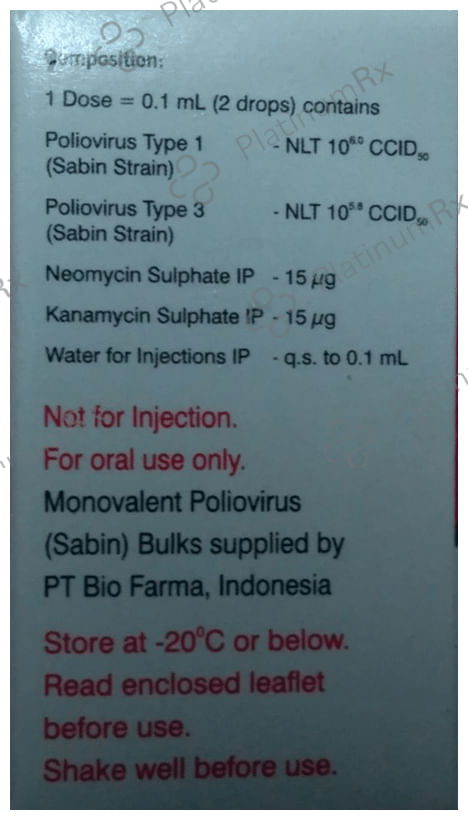
Composition and Mechanism: Each dose of Biopolio B1 3 Oral Vaccine (typically 0.5ml) contains inactivated (killed) poliovirus Types 1 (Mahoney), 2 (MEF-1), and 3 (Saukett). When injected, the body’s B-lymphocytes recognise the viral antigens and begin producing protective IgG antibodies. If the person is later exposed to the live poliovirus, these "memory" antibodies quickly neutralise the virus before it can enter the central nervous system. Because the virus is completely dead, it cannot mutate or spread to others, making it exceptionally safe for use in all populations, including those with weakened immune systems.
Major Therapeutic Uses: Biopolio B1 3 Oral Vaccine is primarily indicated for the active immunisation of infants, children, and adults to prevent Poliomyelitis. It is a cornerstone of routine childhood vaccination schedules worldwide. It is also highly recommended for adults travelling to regions where polio is still endemic or for healthcare workers who may be exposed to patients excreting the virus. While it does not treat an active polio infection, its role in primary prevention has led to the near-total eradication of the disease globally.
Benefits and Precautions: The primary benefit of Biopolio B1 3 Oral Vaccine is the near 100% protection it provides against paralytic polio after a full primary series. Unlike the older oral drops (OPV), the inactivated polio vaccine (IPV) carries zero risk of vaccine-associated paralytic polio (VAPP). However, significant precautions are necessary regarding allergic history. Some formulations contain trace amounts of antibiotics (like neomycin or polymyxin B) or streptomycin) used during the manufacturing process.
Medical Supervision and Risks: Use of Biopolio B1 3 Oral Vaccine must be administered by a qualified healthcare professional. Major risks are extremely rare but include severe allergic reactions (anaphylaxis). It is contraindicated in individuals who have had a life-threatening allergic reaction to a previous dose of the polio vaccine or any of its components. Patients should be observed for 15 minutes after the injection to monitor for immediate reactions. This vaccine is typically administered as a series of doses in early childhood, with booster doses provided according to national health guidelines.
Uses of Biopolio B1 3 Oral Vaccine
Biopolio B1 3 Oral Vaccine (Polio Vaccine) is indicated for:
Routine Childhood Immunisation
Preventing paralytic polio in infants and toddlers.
Travel Prophylaxis
Protecting travellers visiting high-risk or endemic areas.
Catch-up Vaccination
Ensuring immunity in adults or children who missed their early doses.
Outbreak Control
Providing rapid community immunity during local transmission events.
Occupational Protection
Safeguarding laboratory and healthcare workers.
Benefits of Biopolio B1 3 Oral Vaccine
Biopolio B1 3 Oral Vaccine offers a "life-long shield" approach to neurological health. Its primary medicinal benefit is the absolute prevention of the poliovirus’s entry into the spinal cord. Polio is a virus that can cause permanent paralysis within hours of infection; by priming the immune system with the 0.5ml dose, the body is ready to destroy the virus at the "gate" (the gut and bloodstream). For parents, this provides the certainty that their child will be safe from a disease that once caused thousands of cases of permanent disability every year.
One of the significant advantages of the Inactivated Poliovirus Vaccine (IPV) is its superior safety profile in modern healthcare. Because the vaccine contains no "live" components, it is the safest option for household members of individuals with suppressed immune systems. It provides "humoral" immunity (in the blood) that is incredibly stable over many years. This ensures that even if a vaccinated person is exposed to the virus decades later, their body will still remember how to fight it effectively.
Furthermore, Biopolio B1 3 Oral Vaccine is designed to be highly compatible with other routine vaccinations. It is often combined into a single "5-in-1" or "6-in-1" injection (hexavalent vaccines), which reduces the number of pricks a child needs. By participating in the global vaccination effort, each dose helps maintain "herd immunity," protecting those who cannot be vaccinated for medical reasons. For individuals and communities alike, this vaccine represents one of the most successful medical interventions in human history, ensuring a future in which "iron lungs" and paralytic limb deformities are a thing of the past.
Side Effects of Biopolio B1 3 Oral Vaccine
Common Side Effects (Generally manageable):
- Injection Site Pain: Redness, swelling, or soreness at the arm or thigh.
- Low-Grade Fever: A mild rise in temperature as the immune system responds.
- Irritability: Especially in infants and young children.
- Loss of Appetite: Temporary lack of interest in food for 24–48 hours.
- Sleepiness: Feeling unusually tired after the appointment.
Uncommon Side Effects:
- Vomiting: Mild stomach upset shortly after the dose.
- Crying: Persistent crying in infants (usually lasting less than 3 hours).
- Lump at Site: A small, hard knot where the vaccine was injected (granuloma).
Serious Side Effects (Requires immediate medical attention):
- Anaphylaxis: Sudden hives, swelling of the face, or difficulty breathing.
- High Fever: A temperature above 39°C (102.2°F).
- Shoulder Injury: Severe pain or limited motion in the shoulder after a high injection.
- Seizures: Very rare, usually associated with high fever (febrile seizures).
- Fainting: Syncopal episodes, particularly in adolescents.
Directions for Use
- Timing: Administered according to a strict schedule (usually at 2, 4, and 6–18 months, with a booster at 4–6 years).
- Method: Given as an intramuscular (IM) or subcutaneous (SC) injection.
- Location: Injected into the anterolateral thigh (infants) or the deltoid muscle of the upper arm (older children/adults).
- Records: Ensure the date and batch number are recorded in your personal vaccination card.
- Consistency: If a dose is missed, it should be given as soon as possible to complete the series.
Safety Advice for Biopolio B1 3 Oral Vaccine
ALLERGIES
CRITICAL
NOTIFY your doctor if you are allergic to Neomycin, Streptomycin, or Polymyxin B.
ILLNESS
CAUTION
Delay the vaccine if the patient has a moderate or severe acute illness with fever.

PREGNANCY
CAUTION
Usually avoided unless there is an immediate risk of exposure during travel.

DRIVING
SAFE
Generally safe. If a teenager feels faint after the shot, they should sit for 15 minutes.
LIFESTYLE
CAUTION
Stay Hydrated. Maintaining fluid intake can help manage mild post-vaccination fever.
Quick Tips for Biopolio B1 3 Oral Vaccine
- The "Comfort" Rule: For infants, breastfeeding or skin-to-skin contact during the injection can significantly reduce distress.
- Check the Arm: Moving the arm after the injection can help disperse the vaccine and reduce muscle soreness.
- Fever Management: Paracetamol can be used if a fever develops after the dose (check the correct dose for the child's weight).
- Keep the Card: Your vaccination record is a legal document often required for school entry or international travel.
Storage Advice
Biopolio B1 3 Oral Vaccine must be stored in a "Cold Chain" environment between 2°C and 8°C. Do not freeze, as this destroys the vaccine's effectiveness. Protect the vial from light. Once opened in a clinical setting, it must be used within the timeframe specified by the manufacturer.
Drug-Food Interaction
- No Known Interactions: Food and drink do not affect the effectiveness of the injectable polio vaccine.
- Breastfeeding: It is perfectly safe and encouraged to breastfeed before and after the vaccination.
Interactions with Other Drugs
Steroids (High Dose)
MODERATE
Long-term steroid use can dampen the immune response to the vaccine.
Chemotherapy
MODERATE
May reduce the vaccine's effectiveness; timing should be discussed with an oncologist.
Immunosuppressants
CAUTION
The body may not produce as many antibodies while on these medications.
Other Vaccines
SAFE
Can be given at the same time as other routine vaccines (in different sites).
Drug-Disease Interactions
- Immunodeficiency: Safe to use, but the immune response may be weaker than in healthy individuals.
- Bleeding Disorders: Use caution (and a smaller needle) for intramuscular injections to prevent bruising/haematoma.
- HIV/AIDS: IPV is the preferred polio vaccine for patients with HIV as it contains no live virus.
Daily Dose
Biopolio B1 3 Oral Vaccine is not a daily medication. It is administered as a 0.5ml dose according to a set schedule.
For most primary childhood series, this involves four doses: at 2 months, 4 months, 6–18 months, and a final booster at 4–6 years of age. For unimmunised adults travelling to high-risk areas, a three-dose series is usually recommended (two doses 4–8 weeks apart, followed by a third dose 6–12 months later). Always follow the specific schedule provided by your national immunisation program or travel clinic.
What If You Forget to take Biopolio B1 3 Oral Vaccine?
If a childhood or travel dose is missed, schedule it as soon as possible. There is no need to "restart" the entire series; the immune system will build upon previous doses. Do not take multiple doses at once; a single "catch-up" dose followed by the standard interval is the correct procedure.
References
Fact Box
Therapeutic Class
Immunising Agent / Vaccine
Action Class
Active Artificial Immunity
Chemical Class
Inactivated (Killed) Viral Vaccine
Habit Forming
No


Disclaimer
PlatinumRx is dedicated to delivering dependable and trustworthy information to empower our customers. However, the information presented here is solely for general informational purposes and should not be utilized for diagnosing, preventing, or treating health issues. It is not intended to establish a doctor-patient relationship or serve as a substitute for professional medical advice.
Health Articles






More Medicines By Manufacturer
More Medicines With Salt
Top Selling Medicines
Top Selling Devices
Flat ₹100 off on first app order | Use Code: APP100 |
Flat ₹100 off on first app order
USE CODE: APP100

Download Now


