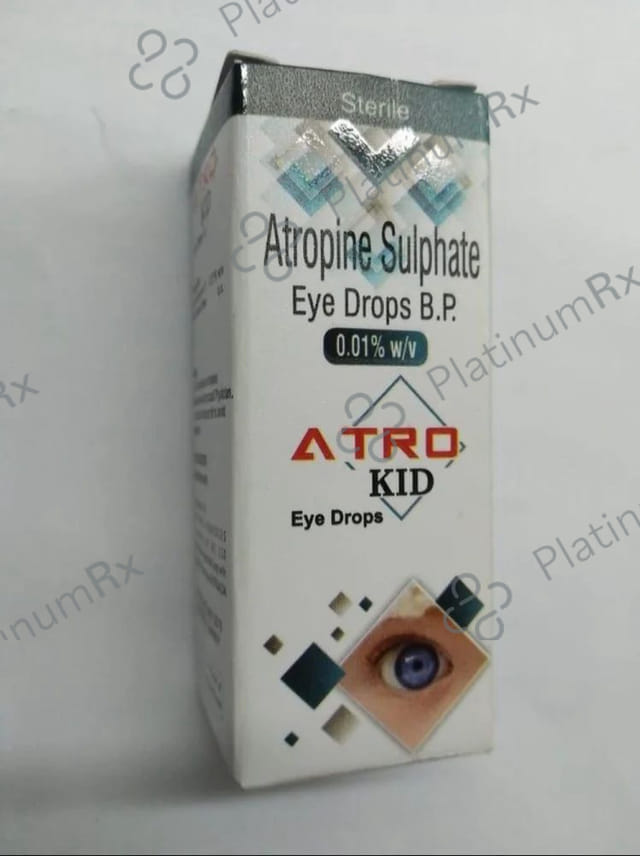







Myatro 0.01% Eye Drop 5ml
Entod Pharmaceuticals Ltd.
Bottle of 5 ml
₹232.47
₹283.50
18% Off
Paediatrin 0.1mg Eye Drop is a vital alkaloid and anticholinergic agent derived from the belladonna plant, containing the active salt Atropine. It serves as a cornerstone in emergency medicine, ophthalmology, and surgery due to its ability to inhibit the parasympathetic nervous system's "rest and digest" signals. Atropine is primarily used to increase heart rate during life-threatening bradycardia, reduce excessive secretions before surgery, and dilate the pupils for detailed eye examinations. Blocking acetylcholine receptors induces rapid physiological changes that are essential for stabilising cardiac rhythm and managing specific types of poisoning.
Delivery by
...
FDA & GMP Certified
Long Expiry (>8 Months)
15 Days Easy Returns
Have a question?

Genuine Medicine
Pay On Delivery
Secure Payment

LegitScript Certified Online Pharmacy
View content in
 English
Paediatrin 0.1mg Eye Drop is a vital alkaloid and anticholinergic agent derived from the belladonna plant, containing the active salt Atropine. It serves as a cornerstone in emergency medicine, ophthalmology, and surgery due to its ability to inhibit the parasympathetic nervous system's "rest and digest" signals. Atropine is primarily used to increase heart rate during life-threatening bradycardia, reduce excessive secretions before surgery, and dilate the pupils for detailed eye examinations. Blocking acetylcholine receptors induces rapid physiological changes that are essential for stabilising cardiac rhythm and managing specific types of poisoning.
Paediatrin 0.1mg Eye Drop belongs to the class of medications known as antimuscarinics or anticholinergics. It is a naturally occurring belladonna alkaloid that acts as a competitive antagonist at muscarinic acetylcholine receptors throughout the body.
Composition and Mechanism: The active ingredient is Atropine (often as Atropine sulfate). It works by blocking the action of acetylcholine, a neurotransmitter that sends signals to the parasympathetic nervous system. By binding to muscarinic receptors, Atropine inhibits parasympathetic activity in the heart, lungs, digestive tract, and eyes. This results in an increased heart rate, decreased production of saliva and mucus, relaxation of smooth muscles in the airways and gut, and a significant widening (dilation) of the pupils.
Major Therapeutic Uses: Paediatrin 0.1mg Eye Drop is a critical emergency treatment for Symptomatic Bradycardia (dangerously slow heart rate) and certain types of heart block. In surgical settings, it is used as a Pre-anaesthetic Medication to prevent excessive salivation and respiratory tract secretions. It is the primary life-saving Antidote for organophosphate poisoning (pesticides) and certain mushroom poisonings. In ophthalmology, it is used as a Mydriatic and Cycloplegic agent to dilate the pupil and temporarily paralyse the eye's focusing muscles for exams or inflammatory conditions like uveitis.
Benefits and Precautions: The primary benefit of Paediatrin 0.1mg Eye Drop is its rapid onset of action in acute medical crises. However, significant precautions are necessary regarding eye health. Because it increases intraocular pressure, it can trigger an acute attack of angle-closure glaucoma. Precautions are also vital for patients with heart disease, as the resulting increase in heart rate can cause chest pain (angina) or heart strain. It should be used with caution in elderly patients, who are more prone to Atropine-induced confusion or "anticholinergic syndrome."
Medical Supervision and Risks: Use of Paediatrin 0.1mg Eye Drop must be strictly supervised by a doctor, cardiologist, or ophthalmologist. Major risks include a sudden spike in heart rate (tachycardia), severe urinary retention, and central nervous system effects such as hallucinations or disorientation. It is contraindicated in patients with narrow-angle glaucoma, obstructive uropathy (bladder blockage), and severe ulcerative colitis. Patients must be monitored closely for signs of "Atropine toxicity," often described as "hot as a hare, blind as a bat, dry as a bone, red as a beet, and mad as a hen."
Paediatrin 0.1mg Eye Drop (Atropine) is indicated for:
Raising the heart rate during emergency cardiac events.
Reversing the effects of toxic pesticides and nerve agents.
Drying up saliva and mucus before general anaesthesia.
Dilating the pupils and relaxing eye muscles for diagnostic tests.
Reducing hypermotility and cramping in the digestive tract.
Paediatrin 0.1mg Eye Drop offers a "systemic-stabilisation" approach to critical care. Its primary medicinal benefit is its ability to restart or accelerate a failing cardiac rhythm. When the heart's natural pacemaker slows to a dangerous level, Atropine blocks the "braking" signals from the vagus nerve, allowing the heart to return to a life-sustaining speed. This results in improved blood flow to the brain and vital organs, often serving as the decisive factor in resuscitation and emergency stabilisation.
One of the significant advantages of Atropine is its "secretory-blockade" efficiency. For patients undergoing surgery or those struggling with excess fluid in the lungs, Atropine provides an almost immediate drying effect on the respiratory mucosa. This ensures that the airway remains clear and reduces the risk of aspiration (inhaling saliva) during medical procedures. For many, this represents a critical safety layer that prevents postoperative complications and enables smoother anaesthetic management.
Furthermore, Paediatrin 0.1mg Eye Drop is designed to provide "toxicological reversal." In cases of accidental or intentional poisoning from insecticides, the body is flooded with acetylcholine, leading to "cholinergic crisis" (excessive fluid in the lungs, slow heart, and tremors). Atropine acts as the direct physiological antagonist to this crisis, clearing the lungs and restoring heart function. It is a vital tool in rural medicine and emergency departments worldwide, representing a high-potency intervention that saves lives when every second counts.
Several side effects can be observed with atropine, while common side effects are generally manageable, serious side effects require immediate medical attention.
This medication works through a "Receptor-Antagonism" pathway:

Blurred Vision. Atropine can cause significant blurring of vision and sensitivity to light. Do not drive or operate machinery until your vision is completely clear and your pupils have returned to normal size.

Consult a Specialist. Atropine should only be used during pregnancy if the potential benefit justifies the risk to the foetus. It is known to cross the placental barrier and can increase the foetal heart rate.

Limited Data. Small amounts of Atropine may pass into breast milk and could potentially reduce milk production. Consult your doctor before breastfeeding while using this medication.

Avoid. Alcohol can worsen the dizziness, blurred vision, and confusion associated with Atropine, increasing the risk of accidents and disorientation.

Monitor Use. While Atropine is primarily excreted by the kidneys, patients with severe liver impairment should be monitored closely as metabolism rates may vary.

Urinary Retention. Atropine is excreted through the urine. Use with caution in patients with kidney disease or urinary tract blockages, as it can cause acute inability to pass urine.
Store Paediatrin 0.1mg Eye Drop at room temperature (below 30°C). Protect from light and moisture. If using eye drops, discard the bottle after the timeframe recommended on the pack (usually 28 days after opening). Keep out of reach of children.
Increases the "drying" side effects like dry mouth and constipation.
May lead to increased confusion and severe anticholinergic symptoms.
It can intensify the side effects on the heart and vision.
Atropine slows the gut, which can cause potassium tablets to irritate the stomach lining.
The dosage of Paediatrin 0.1mg Eye Drop is highly specialised and varies significantly depending on the clinical need. For emergency bradycardia, it is administered by a professional in 0.5mg to 1mg increments.
For Ophthalmic use, the strength and frequency of the drops are determined by the eye specialist. For secretory control, a specific pre-operative dose is calculated based on body weight. It is not a medication for self-administration unless specifically prescribed for rare conditions. If you are using it at home, follow the schedule provided by your specialist exactly. Overuse can lead to "Atropinization," a toxic state requiring immediate medical reversal.
If you are using Atropine eye drops or oral formulations and miss a dose, take it as soon as you remember. However, if it is nearly time for your next dose, skip the missed one. Do not take a double dose, as Atropine levels must be carefully balanced to avoid toxicity.
Therapeutic Class
Anticholinergic / Antimuscarinic
Action Class
Parasympathetic Suppressant
Chemical Class
Belladonna Alkaloid
Habit Forming
No
PlatinumRx is committed to providing reliable and accurate information to support informed customer decisions. However, all information made available on the Platform, including product descriptions, comparisons, and other content, is provided solely for general informational purposes. Such information is not intended to diagnose, prevent, treat, or cure any medical condition, nor should it be relied upon as a substitute for professional medical advice, diagnosis, or treatment.

More Medicines By Bell Pharma Pvt. Ltd.
More Medicines With Atropine 0.01% w/v
Top Selling Medicines
Top Selling Devices
Top Selling Health Products