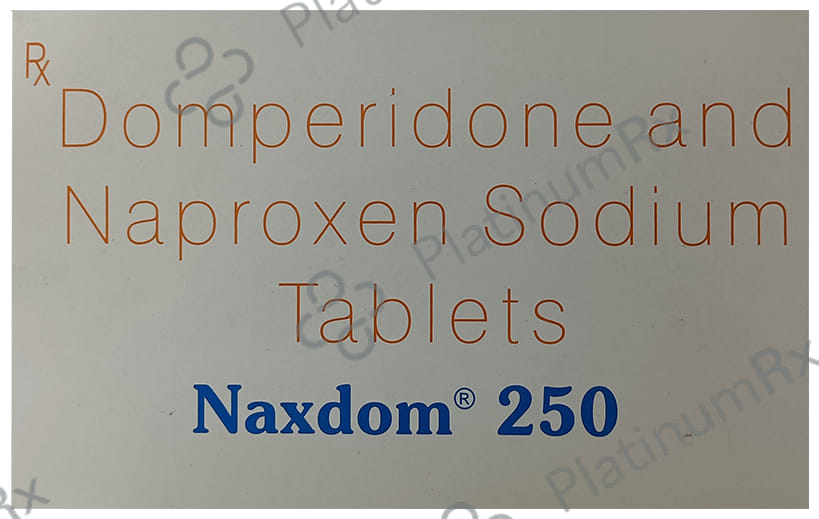







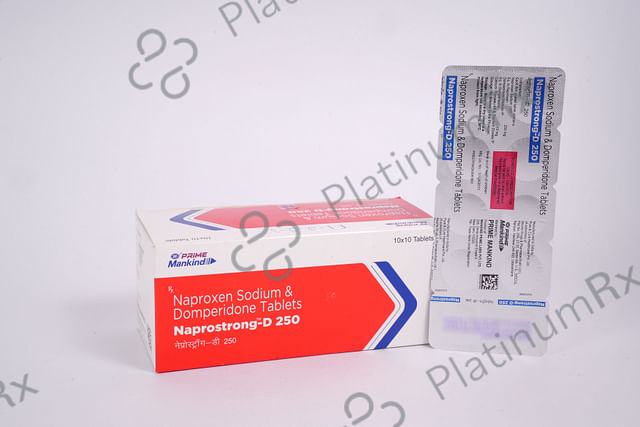
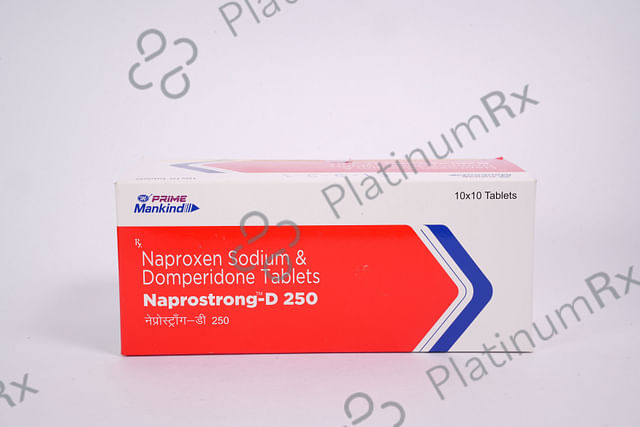
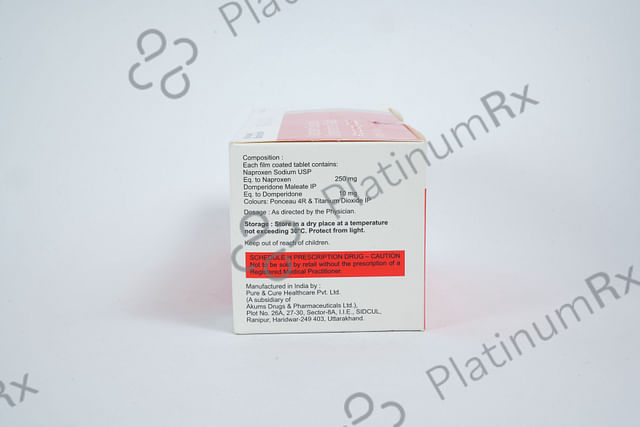
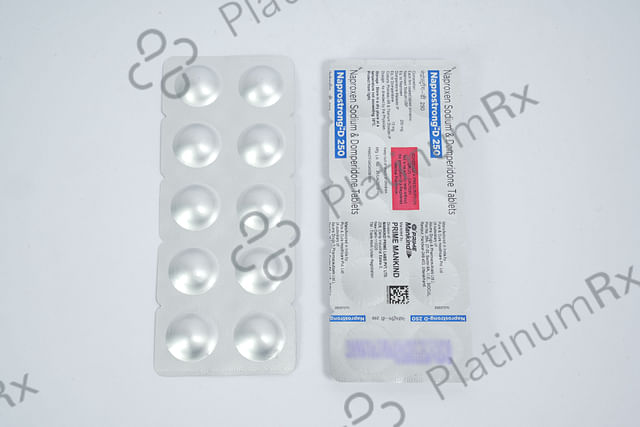
Naxdom 10/250mg Tablet 15s
Sun Pharmaceutical Industries Ltd.
Strip of 15 tablets
₹104.96
₹128.00
18% Off
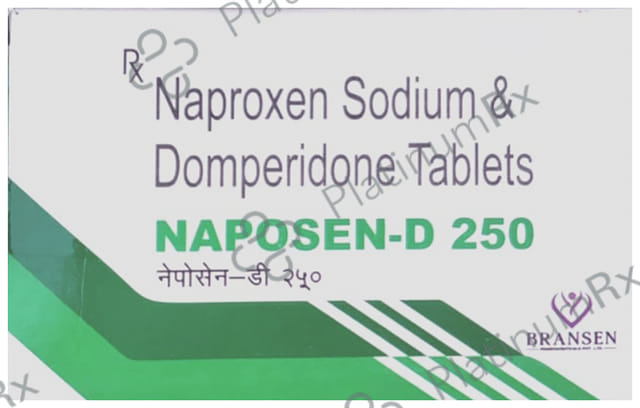
Naposen-D 250 Tablet is a combination medicine of Domperidone and Naproxen used to treat migraine attacks and associated symptoms such as nausea and vomiting. It combines a pain-relieving anti-inflammatory agent with an antiemetic, providing effective relief from headache pain while preventing gastric discomfort and nausea commonly associated with migraines.
Delivery by
...
FDA & GMP Certified
Long Expiry (>8 Months)
15 Days Easy Returns
Have a question?

Genuine Medicine
Pay On Delivery
Secure Payment

LegitScript Certified Online Pharmacy
View content in
 English
Naposen-D 250 Tablet is a combination medicine of Domperidone and Naproxen used to treat migraine attacks and associated symptoms such as nausea and vomiting. It combines a pain-relieving anti-inflammatory agent with an antiemetic, providing effective relief from headache pain while preventing gastric discomfort and nausea commonly associated with migraines.
Naposen-D 250 Tablet is a fixed-dose combination of Naproxen, a non-steroidal anti-inflammatory drug (NSAID), and Domperidone, a dopamine antagonist with antiemetic and prokinetic properties. This combination is primarily used in the management of acute migraine attacks, where both pain and gastrointestinal symptoms need to be controlled simultaneously.
Naproxen works by inhibiting cyclooxygenase (COX-1 and COX-2) enzymes, which are responsible for the synthesis of prostaglandins. Prostaglandins are chemical mediators that cause inflammation, pain, and fever. By reducing their production, Naproxen effectively decreases inflammation and relieves headache pain associated with migraines.
Domperidone, on the other hand, acts by blocking dopamine (D2) receptors in the chemoreceptor trigger zone (CTZ) of the brain. This prevents the sensation of nausea and vomiting. Additionally, it enhances gastrointestinal motility by increasing the movement of the stomach and intestines, which helps improve gastric emptying and reduces the likelihood of drug-induced nausea.
The combination is particularly beneficial in migraine management because delayed gastric emptying during migraine attacks can reduce the absorption of pain medications. Domperidone improves gastric motility, thereby enhancing the absorption and effectiveness of Naproxen.
Pharmacokinetically, Naproxen is well absorbed after oral administration, with peak plasma levels reached within 2–4 hours and a relatively long half-life of approximately 12–17 hours, allowing sustained pain relief. It is extensively bound to plasma proteins and metabolized in the liver, with excretion primarily via the kidneys. Domperidone has moderate oral bioavailability due to first-pass metabolism, reaches peak levels within 30–60 minutes, and is metabolized in the liver, with elimination through feces and urine.
Overall, Naposen-D 250 Tablet offers a dual-action approach by addressing both the pain and gastrointestinal symptoms of migraines, improving patient comfort and treatment outcomes.
This combination is commonly used in migraine attacks. Naproxen relieves headache pain and inflammation, while domperidone controls associated nausea and vomiting. It also helps improve the absorption of naproxen for better relief.
Useful in treating moderate to severe headaches, especially when accompanied by gastric discomfort. Domperidone helps reduce nausea, allowing patients to tolerate pain medication more effectively.
Naproxen reduces uterine inflammation and pain during menstruation. Domperidone helps manage nausea or gastric upset that may occur along with menstrual pain or due to NSAID use.
In conditions where pain is associated with nausea (e.g., gastritis-related headache or medication-induced nausea), domperidone improves gastric motility and reduces vomiting, while naproxen addresses pain.
Domperidone is included to counteract nausea and vomiting that may be caused by naproxen. This improves patient comfort and adherence to treatment.
Naposen-D 250 Tablet should be taken as prescribed by your doctor, usually at the onset of a migraine attack. It is recommended to take the tablet with food or after meals to reduce stomach irritation. Swallow it with a glass of water and avoid crushing or chewing. Do not exceed the prescribed dose, and avoid prolonged use without medical supervision.
Naposen-D 250 Tablet works through a dual mechanism by combining the effects of Naproxen and Domperidone. Naproxen inhibits cyclooxygenase (COX) enzymes, thereby reducing the production of prostaglandins responsible for inflammation and pain. This results in effective relief from migraine headaches.
Domperidone blocks dopamine (D2) receptors in the brain’s chemoreceptor trigger zone, preventing nausea and vomiting. It also enhances gastrointestinal motility, allowing faster gastric emptying and improved absorption of Naproxen.
Together, these actions provide comprehensive relief by targeting both headache pain and associated gastrointestinal symptoms, making the treatment more effective.

Warning. Do not use if you are allergic to Domperidone, Naproxen, or other NSAIDs. Seek immediate medical help if you develop rash, swelling, or breathing difficulty.

Warning. This combination is not recommended during pregnancy, especially in later stages, as Naproxen may harm the unborn baby and affect amniotic fluid levels. Use only if prescribed by a doctor.

Both medicines may pass into breast milk in small amounts. Consult your doctor before use, especially for prolonged treatment.

Warning. Avoid alcohol while taking this medicine. Alcohol can increase the risk of stomach irritation, ulcers, and bleeding due to Naproxen, and may worsen dizziness.

This medicine may cause dizziness or drowsiness in some individuals. Avoid driving or operating machinery if affected.

Inform your doctor if you have liver disease. Both drugs are metabolized in the liver and may require dose adjustment or monitoring.

Caution. Use carefully in patients with kidney disease. Naproxen may reduce kidney function, especially with long-term use.

Use in children should be under strict medical supervision. This combination is not commonly recommended unless prescribed.

Older adults are at higher risk of stomach bleeding, kidney problems, and heart-related side effects. Careful monitoring and dose adjustment are advised.
Since Naposen-D 250 Tablet is usually taken as needed for migraine attacks, missing a dose is uncommon. However, if prescribed regularly and a dose is missed, take it as soon as you remember. If it is close to the next dose, skip the missed one and continue as scheduled. Do not double the dose.
Therapeutic Class
COX Inhibitor + Antiemetic
Action Class
COX Inhibitor + Antiemetic
Chemical Class
NSAID + Dopamine Antagonist
Habit Forming
No
PlatinumRx is committed to providing reliable and accurate information to support informed customer decisions. However, all information made available on the Platform, including product descriptions, comparisons, and other content, is provided solely for general informational purposes. Such information is not intended to diagnose, prevent, treat, or cure any medical condition, nor should it be relied upon as a substitute for professional medical advice, diagnosis, or treatment.

More Medicines By Bransen Pharmaceuticals Pvt. Ltd.
More Medicines With Domperidone 10mg + Naproxen 250mg
Top Selling Medicines
Top Selling Devices
Top Selling Health Products