
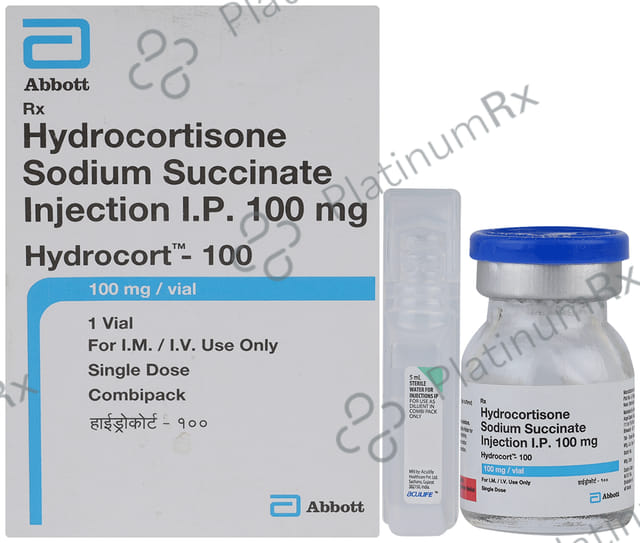
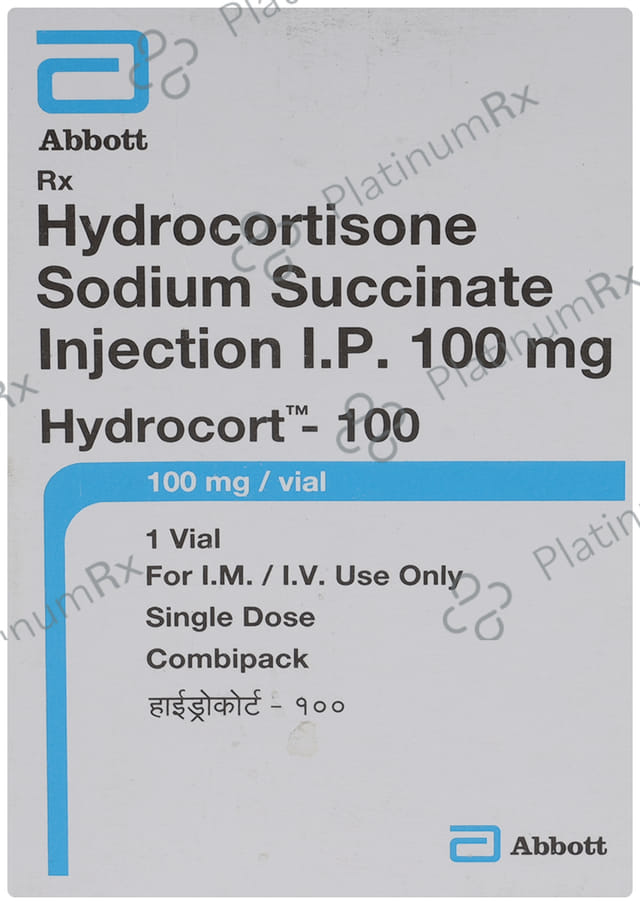
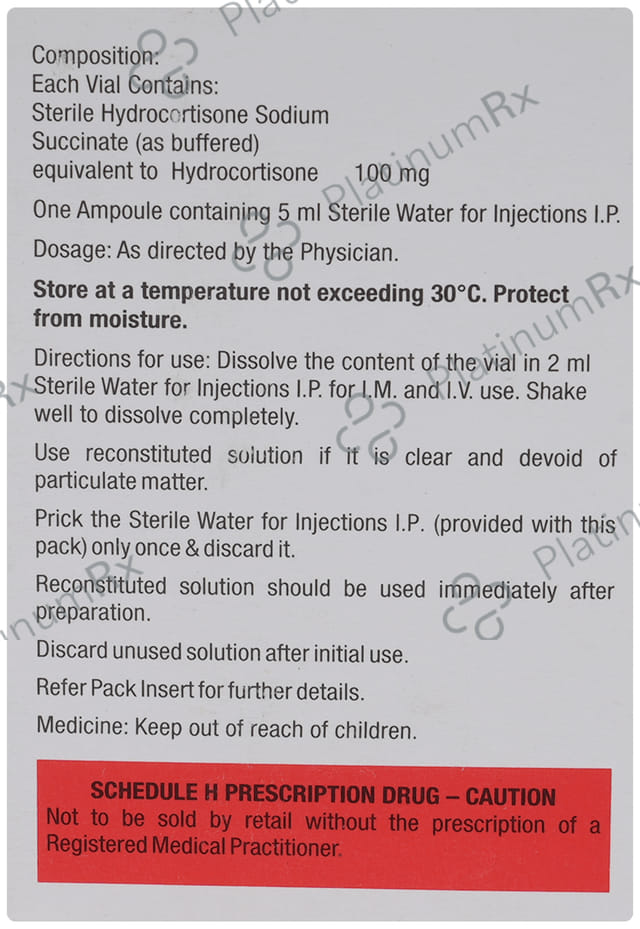
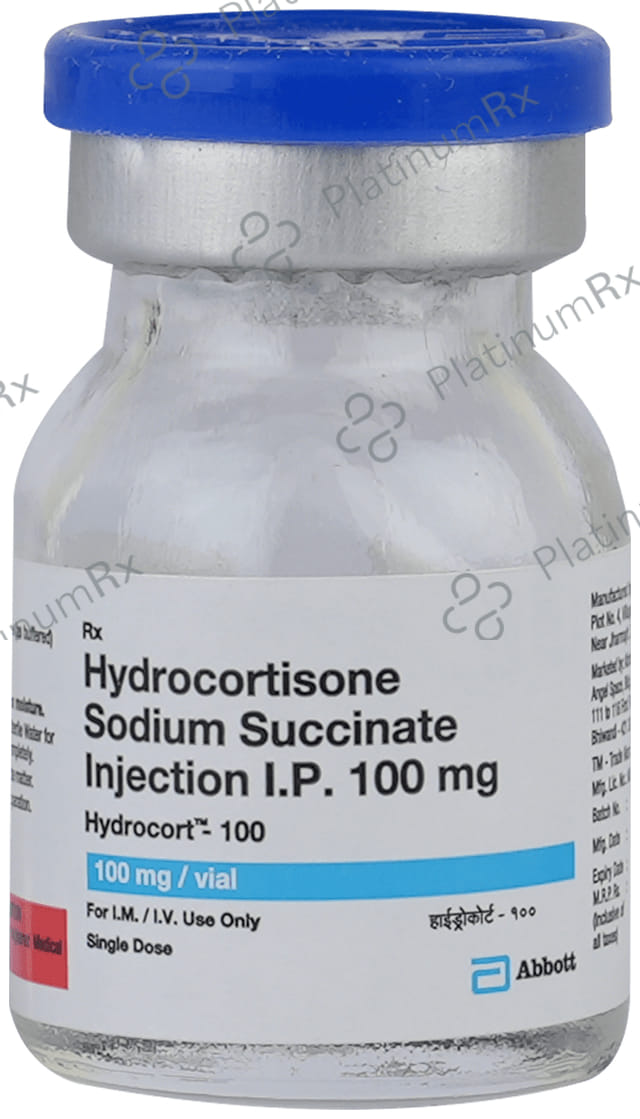
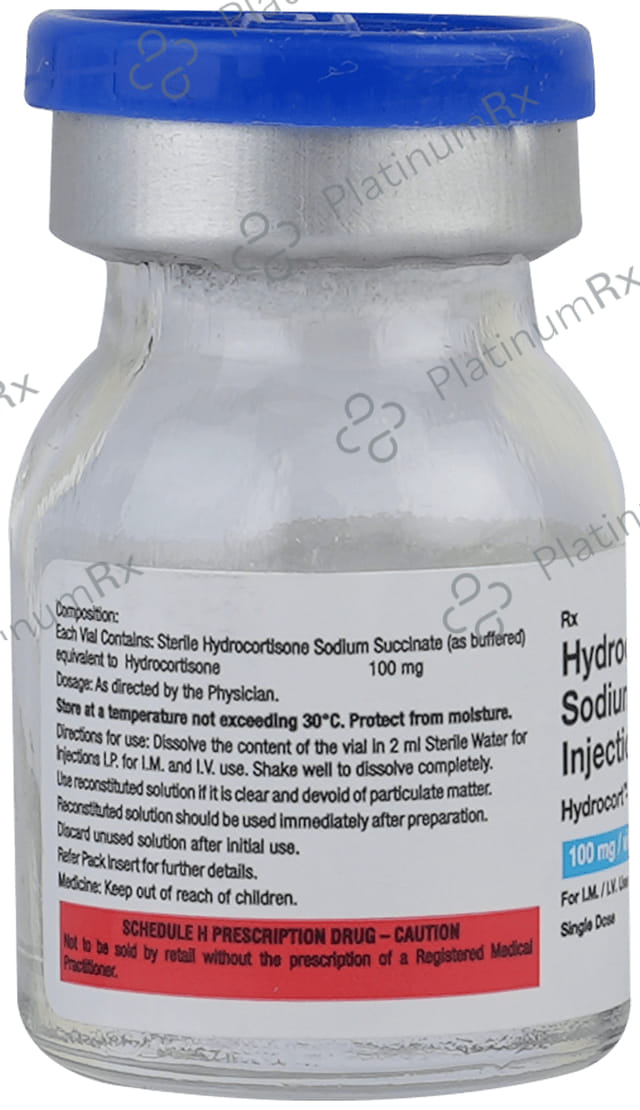
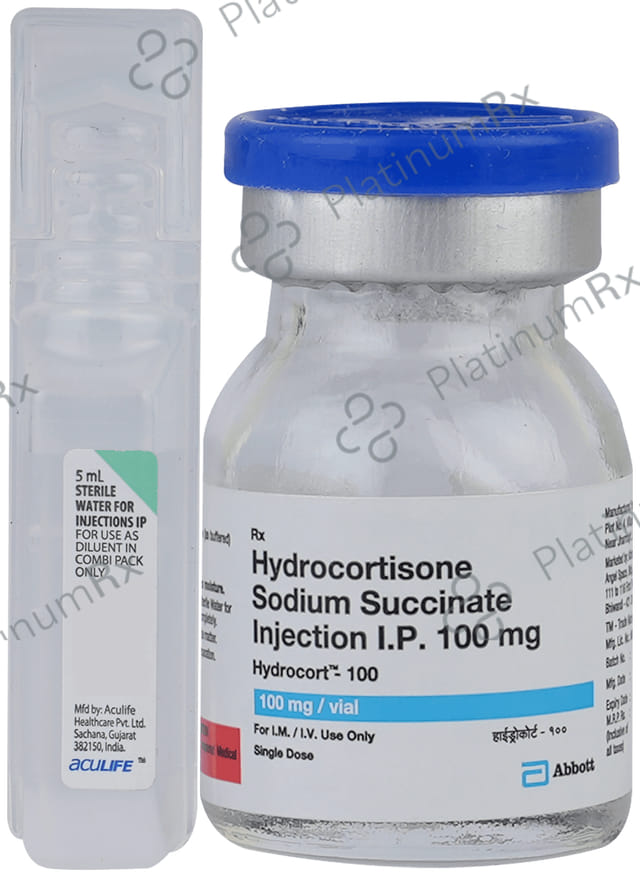





Acucort 100mg Injection 5ml
Macleods Pharmaceuticals Pvt. Ltd.
Vial of 5 ml
₹39.70
₹47.83
17% Off
Hydrocortisone is the synthetic form of cortisol, which is the body's endogenous glucocorticoid steroid hormone. It is used across multiple routes of administration (oral, intravenous, topical, rectal) for a wide range of conditions, such as hormone replacement in adrenal insufficiency (Addison's disease), as an anti-inflammatory and immunosuppressant for conditions such as severe allergic reactions, inflammatory bowel disease, and rheumatic disorders, and topically for mild-to-moderate inflammatory skin conditions. It contains both glucocorticoid (anti-inflammatory, metabolic) and mild mineralocorticoid (sodium/water retention) effects.
See affordable match
Delivery by
...
FDA & GMP Certified
Long Expiry (>8 Months)
15 Days Easy Returns
Have a question?

Genuine Medicine
Pay On Delivery
Secure Payment

LegitScript Certified Online Pharmacy
View content in
 English
Hydrocortisone is the synthetic form of cortisol, which is the body's endogenous glucocorticoid steroid hormone. It is used across multiple routes of administration (oral, intravenous, topical, rectal) for a wide range of conditions, such as hormone replacement in adrenal insufficiency (Addison's disease), as an anti-inflammatory and immunosuppressant for conditions such as severe allergic reactions, inflammatory bowel disease, and rheumatic disorders, and topically for mild-to-moderate inflammatory skin conditions. It contains both glucocorticoid (anti-inflammatory, metabolic) and mild mineralocorticoid (sodium/water retention) effects.
Hydrocortisone Sodium 100mg Injection 1s is a naturally occurring steroid hormone produced by the adrenal cortex under stimulation from ACTH (adrenocorticotropic hormone) released by the pituitary. As a glucocorticoid, it helps maintain glucose metabolism, immune function, inflammation, and the stress response.
Synthetic hydrocortisone is identical to the one released by the body. It is used for physiological replacement (low doses mimicking normal cortisol output) and pharmacological anti-inflammatory/immunosuppressant therapy (higher doses).
In people suffering from adrenal insufficiency, hydrocortisone is observed as the primary replacement agent. In acute adrenal crisis, high-dose hydrocortisone given intravenously is life-saving.
As an anti-inflammatory agent, hydrocortisone is less potent than synthetic glucocorticoids (prednisolone, dexamethasone) and is sometimes preferred with a mineralocorticoid or for a shorter duration. Topically, it is classified as a mild (Class VI/VII) corticosteroid, safe for use on the face and in skin fold areas and for shorter durations in children.
Physiological glucocorticoid replacement therapy.
High-dose intravenous (IV) hydrocortisone as emergency life-saving treatment.
Suppresses excess adrenal androgen production.
IV Hydrocortisone as adjunctive treatment.
Inflammatory bowel disease, rheumatoid arthritis, asthma, and others.
Mild eczema, contact dermatitis, insect bite reactions, and nappy rash.
Proctitis and distal ulcerative colitis.
Cortisol is the body's primary stress hormone, produced by the adrenal cortex and released in response to physical or psychological stress. Hydrocortisone is chemically identical to cortisol and works the same way.
After entering the cell, hydrocortisone binds to glucocorticoid receptors (GRs) in the cytoplasm. This complex travels to the nucleus and switches genes on or off in two ways.
It switches on production of anti-inflammatory proteins, most importantly lipocortin-1, which blocks the enzyme phospholipase A2, cutting off the supply of arachidonic acid and stopping the production of prostaglandins, leukotrienes, and thromboxanes.
It switches off the genes responsible for producing pro-inflammatory cytokines (IL-1, IL-2, IL-6, TNF-alpha, IFN-gamma) by blocking the transcription factors NF-kB and AP-1 that normally activate them.
At the immune cell level, hydrocortisone triggers the death of lymphocytes and eosinophils, reduces mast cell activity, prevents neutrophils and macrophages from migrating into inflamed tissue, and blocks the immune system's ability to recognise and respond to inflammatory triggers.
In adrenal insufficiency, the absence of cortisol causes low blood sugar, dangerously low blood pressure (as blood vessels stop responding to adrenaline), and sodium loss with potassium retention. Hydrocortisone replacement corrects all of these. Its mild salt-retaining effect also partially restores sodium balance, though fludrocortisone is usually added alongside it for complete correction in Addison's disease.

For adrenal replacement during pregnancy, hydrocortisone is the preferred glucocorticoid after consulting a doctor.

Hydrocortisone passes into breast milk. Consult with your doctor to weigh the benefits & risks.

Mood changes and visual disturbances may occur with systemic use. Assess individual response.

Increases risk of gastrointestinal bleeding and may add to fluid retention.
Additional risk of gastrointestinal bleeding in those with ulceration. Use a proton pump inhibitor if the combination is necessary.
Hydrocortisone raises blood glucose.
Hydrocortisone may cause immunosuppression; hence, live vaccines (MMR, varicella, BCG) must be avoided
Accelerate hydrocortisone metabolism, reducing its efficacy.
Inhibit CYP3A4, increasing hydrocortisone levels in plasma and risk of systemic corticosteroid side effects.
Acute overdose of a single large dose is rarely dangerous in adults but may cause gastrointestinal discomfort, hyperglycaemia, and fluid retention. Prolonged high-dose use may cause iatrogenic Cushing's syndrome characterised by central obesity, moon face, buffalo hump, skin striae, hypertension, diabetes, osteoporosis, and severe immunosuppression. Abrupt discontinuation after prolonged use causes adrenal crisis, which may require immediate IV hydrocortisone. If systemic corticosteroid overdose is suspected, seek medical attention promptly.
For adrenal replacement therapy, never skip your doses. Take the missed dose as soon as you remember. If it is close to the next dose time, take the missed dose anyway and then resume your regular schedule. During illness, injury, or surgery, you may increase your dose after consulting a doctor. Contact your endocrinologist immediately if you are unwell and unable to take oral hydrocortisone. For topical use, apply the missed dose as soon as you remember. If it is near the next application time, skip and resume normally.
Therapeutic Class
Corticosteroid — adrenal hormone replacement and anti-inflammatory
Action Class
Glucocorticoid / Mild mineralocorticoid — anti-inflammatory and immunosuppressant
Chemical Class
Glucocorticoid (pregnane steroid)
Habit Forming
No
PlatinumRx is committed to providing reliable and accurate information to support informed customer decisions. However, all information made available on the Platform, including product descriptions, comparisons, and other content, is provided solely for general informational purposes. Such information is not intended to diagnose, prevent, treat, or cure any medical condition, nor should it be relied upon as a substitute for professional medical advice, diagnosis, or treatment.

More Medicines By Troikaa Pharmaceuticals Ltd.
More Medicines With Hydrocortisone 100mg
Top Selling Medicines
Top Selling Devices
Top Selling Health Products


