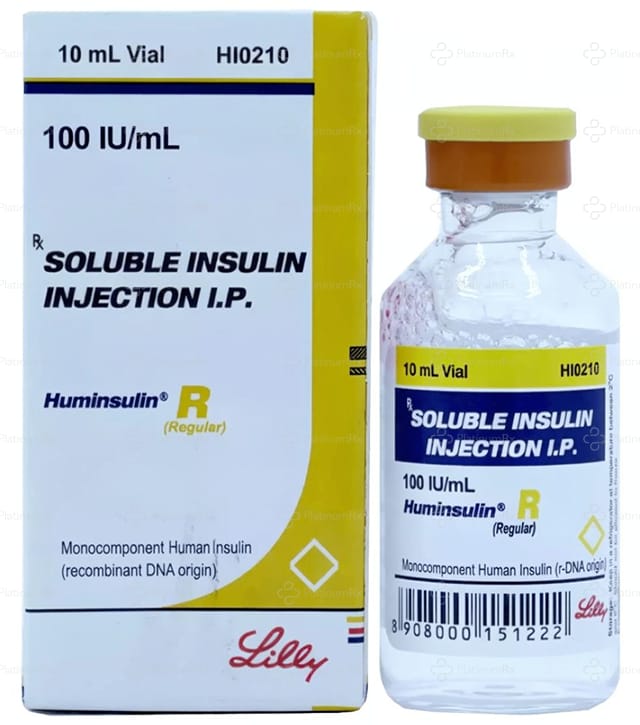
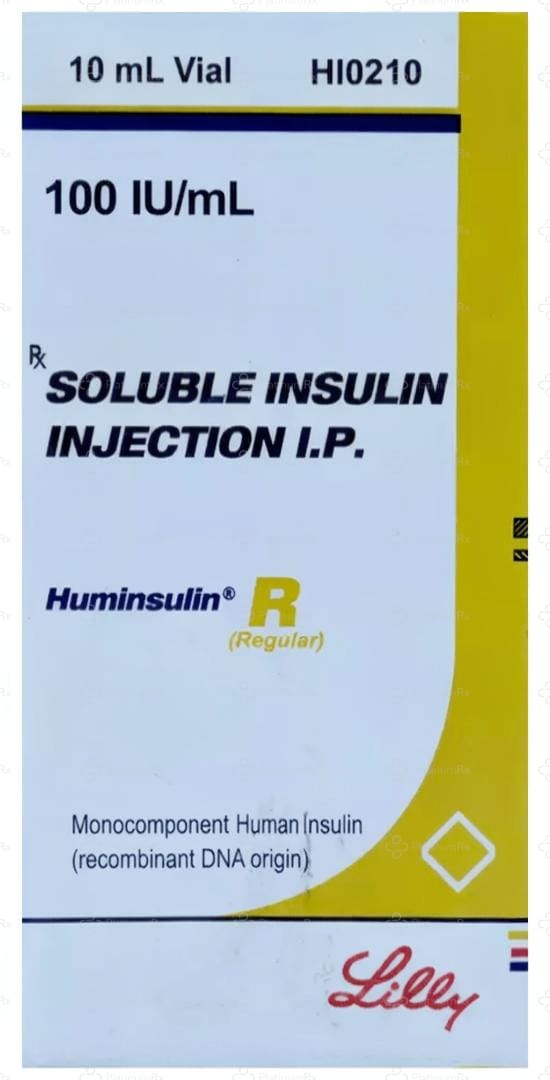
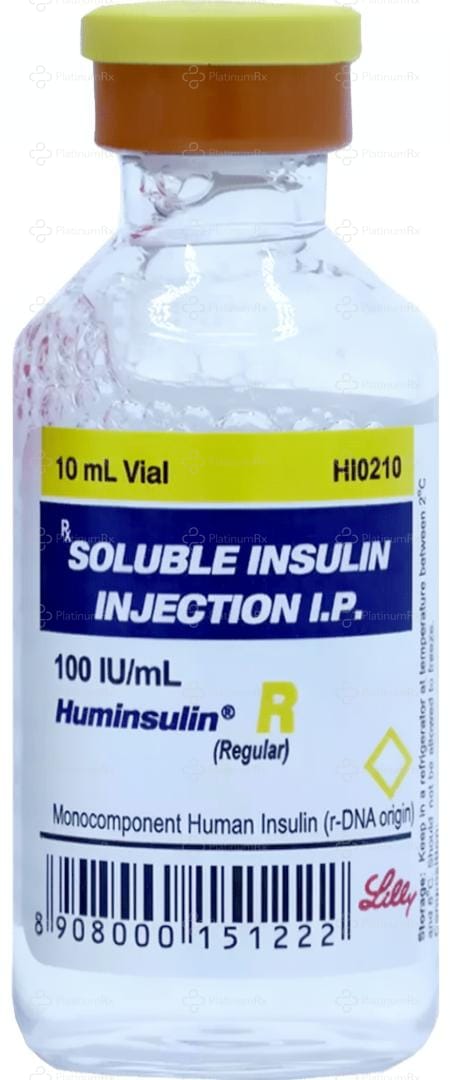
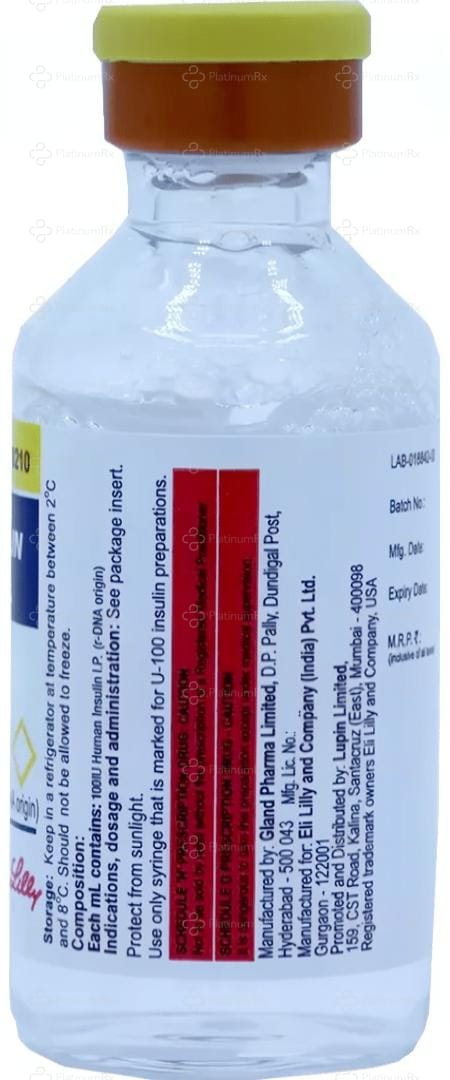
Huminsulin R (100 IU/ml) (1*10ml Vial)

Huminsulin R (100 IU/ml) (1*10ml Vial) is a short-acting insulin used to control blood glucose levels in patients with type 1 and type 2 diabetes mellitus. It is structurally similar to the insulin created by the pancreas. It works by enabling glucose uptake in peripheral tissues, inhibiting hepatic glucose production, and promoting energy storage. It can be administered subcutaneously (for routine glycaemic control or intravenously in clinical settings for diabetic emergencies, including diabetic ketoacidosis (DKA) and hyperosmolar hyperglycaemic state (HHS).
Written by: Syed Jommy Abbas, B. Pharma
Reviewed by: Dr. Devika Rani, MBBS
Last updated on: 20-05-2026
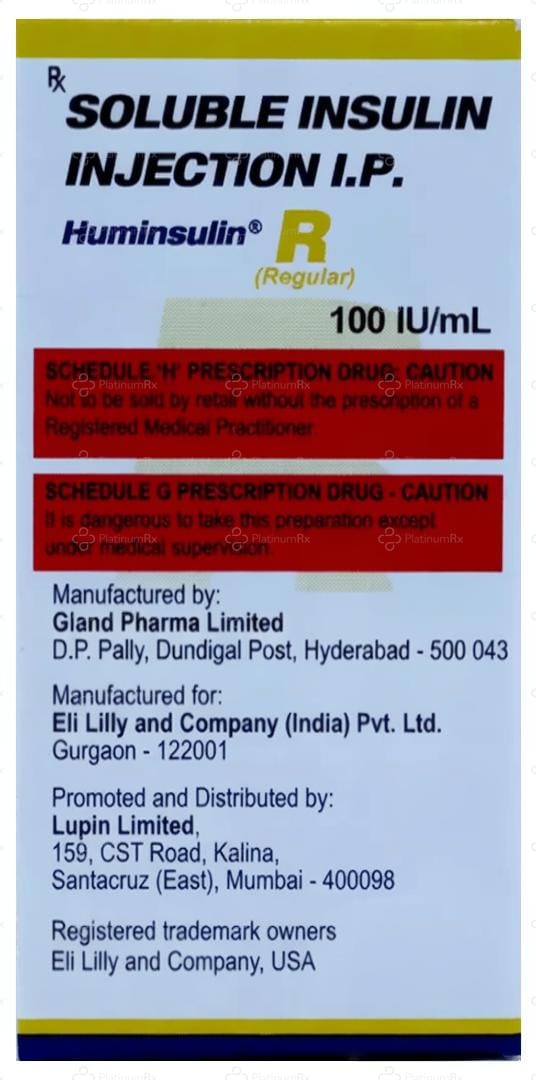
Eli Lilly and Company India Pvt. Ltd.
Delivery by
...
FDA & GMP Certified
Long Expiry (>8 Months)
Non-Returnable
General Information
Have a question?

Genuine Medicine
Pay On Delivery
Secure Payment

LegitScript Certified Online Pharmacy


More About Huminsulin R (100 IU/ml) (1*10ml Vial)
Quick Summary
Huminsulin R (100 IU/ml) (1*10ml Vial) is a short-acting insulin used to control blood glucose levels in patients with type 1 and type 2 diabetes mellitus. It is structurally similar to the insulin created by the pancreas. It works by enabling glucose uptake in peripheral tissues, inhibiting hepatic glucose production, and promoting energy storage. It can be administered subcutaneously (for routine glycaemic control or intravenously in clinical settings for diabetic emergencies, including diabetic ketoacidosis (DKA) and hyperosmolar hyperglycaemic state (HHS).
Detailed Description
Huminsulin R (100 IU/ml) (1*10ml Vial) is a biosynthetic human insulin produced using recombinant DNA technology and is structurally identical to human insulin. It is classified as a short-acting (regular) insulin.
After subcutaneous injection, soluble insulin self-associates into hexamers at the injection site, which must first dissociate into dimers and then monomers before absorption into the bloodstream, explaining the 30-minute lag before onset. Peak action occurs at 2 to 4 hours, with a total duration of 6 to 8 hours. This pharmacokinetic profile means it must be injected 30 minutes before meals to align the insulin peak with post-meal glucose absorption.
Human insulin can also be administered intravenously (IV) in hospital settings for rapid blood glucose control in emergencies. Unlike subcutaneous injection, IV administration produces an immediate effect. It is the insulin of choice for DKA management protocols, insulin infusion during surgery, and critical care settings.
Uses of Huminsulin R (100 IU/ml) (1*10ml Vial)
Type 1 Diabetes Mellitus
Provides complete prandial insulin replacement.
Type 2 Diabetes Mellitus
Used when oral antidiabetic agents are insufficient to provide the desired glycaemic control.
Diabetic Ketoacidosis (DKA)
Intravenous (IV) infusion used for DKA management.
Hyperosmolar Hyperglycaemic State (HHS)
IV insulin to lower dangerously high blood glucose.
Gestational Diabetes
Preferred insulin for use in pregnancy when insulin therapy is required.
Perioperative glucose management
IV insulin infusions to maintain blood sugar levels during major surgery.
Benefits of Huminsulin R (100 IU/ml) (1*10ml Vial)
- Similar structure to natural human insulin, hence, immunogenicity (ability to trigger an immune response against the medication) is lower as compared to animal-derived insulins.
- Short-acting profile provides targeted post-meal glucose control.
- Can be used intravenously — unique among insulin preparations for emergency settings.
- Highly flexible: can be used as monotherapy or combined with intermediate/long-acting insulin.
- Well-established safety and efficacy profile over decades of clinical use.
- Cost-effective compared to newer rapid-acting analogues.
Side Effects of Huminsulin R (100 IU/ml) (1*10ml Vial)
Common
- Hypoglycaemia (low blood sugar), which may present as tremors, sweating, hunger, and
- palpitations (pounding of the heart)
- Redness, swelling, and lipodystrophy (loss of fat) on the injection site due to repeated injections at the same site
- Weight gain
Uncommon
- Peripheral oedema (swelling due to fluid buildup), especially in the beginning or after a
significant dose increase
- Temporary change in vision due to rapid changes in blood glucose
- Localised allergic skin reactions
Serious side effects requiring immediate attention
- Severe hypoglycaemia, which may present as confusion, seizure, or loss of consciousness
- Systemic allergic reaction, which may present as a generalised rash, angioedema (swelling in deep tissues), and anaphylaxis
- Hypokalaemia (low potassium), especially in patients on diuretics
Directions for Use
- Subcutaneous (between the fatty tissue and muscle): Inject the dose recommended by the doctor, 30 minutes before a meal, into the abdomen, thigh, or upper arm. Rotate injection sites. Never share needles or insulin pens. Inspect insulin before use, as soluble insulin should be clear and colourless. Discard if cloudy or discoloured.
- Intravenous: Administered as a continuous IV infusion by a doctor only while closely monitoring blood glucose and potassium.
How it works
Human insulin binds to insulin receptors on the surface of muscle, fat, and liver cells.
This triggers a chain reaction inside the cell (IRS-1 → PI3K → Akt pathway) that produces different effects depending on the tissue.
In muscle and fat cells, Akt activates a series of steps that move glucose transporter proteins from inside the cell to the cell surface. Once on the surface, these transporters act as doorways that allow glucose to flow from the bloodstream into the cell. This is the primary way insulin lowers blood glucose. In the liver, Akt promotes glycogen synthesis, blocks the production of new glucose from amino acids and other sources (gluconeogenesis), and reduces the breakdown of fats into free fatty acids and ketones.
Inside the vial, insulin molecules cluster together in groups of six called hexamers. After injection under the skin, these hexamers must first break apart into smaller units (dimers, then monomers) before they are small enough to enter the bloodstream. This breakdown process takes approximately 30 minutes, which is why soluble insulin must be injected 30 minutes before a meal.
Safety Advice for Huminsulin R (100 IU/ml) (1*10ml Vial)

Pregnancy
Caution
Insulin is the preferred treatment for diabetes in pregnancy. Dose requirements change significantly by trimester.

Breastfeeding
Safe
Insulin does not pass significantly into breast milk. Dose adjustments may be required post-delivery.

Driving
Caution
Hypoglycaemia impairs alertness. Monitor blood glucose before driving and carry fast-acting glucose at all times.

Kidney
Caution
Insulin clearance is reduced in such patients; hence, dose reduction is typically required to prevent hypoglycaemia.

Liver
Caution
Insulin clearance is reduced in such patients; hence, dose reduction is typically required to prevent hypoglycaemia.

Alcohol
Unsafe
Alcohol can mask hypoglycaemia warning signs and worsen the glucose-lowering effect.
Drug-Food Interaction
- Alcohol (SEVERE): Inhibits hepatic gluconeogenesis (crucial for blood sugar maintenance), masking early hypoglycaemia symptoms (tachycardia, sweating) and prolonging or worsening hypoglycaemic episodes.
- High-glycaemic meals: Consuming unexpectedly large amounts of carbohydrates relative to the insulin dose can cause post-meal hyperglycaemia.
Interactions with Other Drugs
Oral antidiabetics (sulfonylureas, GLP-1 agonists)
CAUTION
Increases the risk of hypoglycaemia
Beta-blockers
CAUTION
Masks tachycardia (high BP), which is a key warning sign of hypoglycaemia
Corticosteroids / Thiazides
CAUTION
Works opposite to insulin, raising blood glucose
ACE inhibitors
CAUTION
May enhance insulin sensitivity
MAO inhibitors
CAUTION
May add on to insulin's glucose-lowering effect, increasing hypoglycaemia risk
Drug-Disease Interactions
- Renal impairment: Insulin is cleared by the kidneys. If the renal function is impaired, insulin action gets prolonged, increasing the risk of hypoglycaemia.
- Hepatic impairment: Low hepatic glucose production and impaired insulin metabolism increase hypoglycaemia risk.
- Hypokalaemia: Insulin drives potassium into cells. This increases the risk of hypokalemia in patients with already-low potassium.
- Heart failure: Insulin-induced fluid retention may worsen fluid overload in heart failure patients.
- Hypothyroidism / Adrenal insufficiency: Both conditions increase insulin sensitivity and hypoglycaemia risk.
Overdose
An insulin overdose can result in hypoglycaemia. Mild hypoglycaemia can result in tremors, sweating, hunger, or palpitations and can be treated with fast-acting carbohydrates (glucose tablets or fruit juice). Severe hypoglycaemia can cause confusion, seizures, loss of consciousness, or even coma; therefore requires intravenous glucose (50% dextrose) or intramuscular glucagon injection. Seek emergency medical attention immediately. Do not wait for symptoms to worsen.
What If You Forget to take Huminsulin R (100 IU/ml) (1*10ml Vial)?
Human insulin is typically taken immediately before a meal. If you have not yet eaten, take your dose as prescribed. If you have already eaten or significant time has passed, check your blood glucose and consult your doctor or diabetes care team for guidance on whether and how much insulin to administer. Do not double the dose at the next injection. Closely monitor blood glucose after any missed dose.
FAQ
References
- https://www.accessdata.fda.gov/drugsatfda_docs/label/2019/018780s148lbl.pdf
- https://diabetesjournals.org/care/issue/47/Supplement_1
- https://www.who.int/publications/i/item/WHO-MHP-HPS-EML-2023.02
- https://pubmed.ncbi.nlm.nih.gov/11742412/
- https://pubmed.ncbi.nlm.nih.gov/19564476/
- https://www.ncbi.nlm.nih.gov/books/NBK378978/
- https://pubmed.ncbi.nlm.nih.gov/37364967/
- https://www.ncbi.nlm.nih.gov/books/NBK553094/
- https://www.sciencedirect.com/topics/medicine-and-dentistry/short-acting-insulin
- https://dtc.ucsf.edu/types-of-diabetes/type2/treatment-of-type-2-diabetes/medications-and-therapies/type-2-insulin-rx/types-of-insulin/
Fact Box
Therapeutic Class
Antidiabetic
Action Class
Short-acting insulin
Chemical Class
Polypeptide hormone (biosynthetic human insulin)
Habit Forming
No
Disclaimer
PlatinumRx is committed to providing reliable and accurate information to support informed customer decisions. However, all information made available on the Platform, including product descriptions, comparisons, and other content, is provided solely for general informational purposes. Such information is not intended to diagnose, prevent, treat, or cure any medical condition, nor should it be relied upon as a substitute for professional medical advice, diagnosis, or treatment.

Customers also bought

More Medicines By Eli Lilly and Company India Pvt. Ltd.
More Medicines With Human insulin 100IU
Top Selling Medicines
Top Selling Devices
Top Selling Health Products