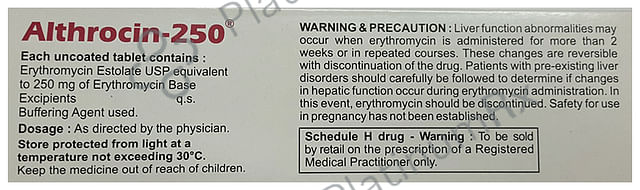
100% Same
Salt CompositionEffectivenessStrength
 5%
5%with Substitute Medicine
 Salt Composition in both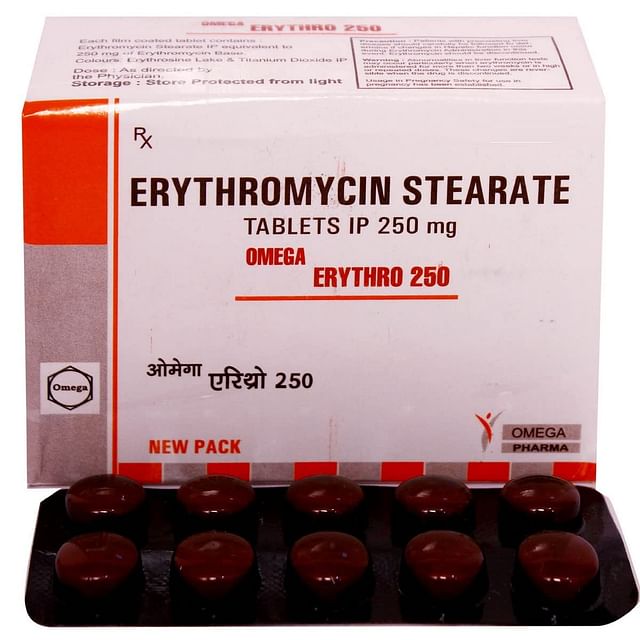




WHO GMP
Certified

15 Days Easy
Returns

Long Expiry
(>8 Months)

WHO GMP
Certified

15 Days Easy
Returns

Long Expiry
(>8 Months)

Delivery by
Uses of Erythro 250mg Tablet 10s

Treatment of Bacterial infections
Customers also bought

More About Erythro 250mg Tablet 10s
Quick Summary
Erythro 250mg Tablet 10s contains Erythromycin, a macrolide antibiotic used to treat a wide range of bacterial infections. It works by inhibiting bacterial protein synthesis, thereby stopping the growth of harmful bacteria. Erythromycin is commonly prescribed for respiratory tract infections, skin infections, ear infections, and certain sexually transmitted diseases, and may also be used in patients allergic to penicillin. Erythro 250mg Tablet 10s will not work for viral infections such as the common cold or flu.
Detailed Description
Erythro 250mg Tablet 10s is a broad-spectrum prescription antibiotic used to treat infections caused by susceptible bacteria. It is a macrolide antibiotic that is active against many different types of bacteria, including those that cause respiratory, skin, and soft tissue infections, as well as certain sexually transmitted diseases.
This medicine works by binding to the 50S ribosomal subunit of susceptible bacteria, thereby suppressing protein synthesis. This action effectively stops the growth and multiplication of the bacteria.
Because this medication is available in various formats, including oral tablets, capsules, oral suspensions, intravenous injections, and topical gels or solutions, it provides adaptable management for localised conditions like acne or systemic bacterial infections.
You should not use Erythro 250mg Tablet 10s if you have a known severe allergy to erythromycin or other macrolide antibiotics (such as azithromycin or clarithromycin), or if you are taking certain medications that can interact with it. To ensure this medicine is safe for you, follow your doctor's dosing instructions precisely and complete the full course of therapy.
Uses of Erythro 250mg Tablet 10s
This medicine is typically prescribed under medical supervision for the following conditions:
Respiratory Tract Infections
Such as streptococcal pharyngitis, tonsillitis, and pneumonia caused by susceptible organisms.
Bacterial Skin Infections
To treat mild to moderate infections of the skin caused by susceptible bacteria.
Pertussis (Whooping Cough)
Used to treat the condition and to prevent its spread to close contacts.
Intestinal Amebiasis
To treat acute intestinal infections caused by Entamoeba histolytica.
Syphilis and Chlamydia
Can be used as an alternative treatment for certain sexually transmitted infections in patients allergic to penicillin.
Acne Vulgaris
Topical formulations are frequently used to treat acne.
Benefits of Erythro 250mg Tablet 10s
- Broad Spectrum: Effective against a wide variety of both gram-positive and some gram-negative bacteria.
- Penicillin Alternative: Serves as a reliable alternative for patients allergic to penicillin.
- Versatile Applications: Treats conditions affecting the respiratory system, skin, and gastrointestinal tract.
Side Effects of Erythro 250mg Tablet 10s
Erythro 250mg Tablet 10s may cause side effects.
Common side effects may include
- Nausea or vomiting
- Stomach cramps or abdominal pain
- Diarrhea
- Loss of appetite
Uncommon side effects may include
- Mild skin rash or itching
- Dizziness or headache
- Stop using Erythro 250mg Tablet 10s and call your doctor at once if you have:
- Severe stomach pain, diarrhoea that is watery or bloody (even if it occurs months after your last dose).
- Jaundice (yellowing of the skin or eyes), dark urine, or pale stools.
- A fast or pounding heart rhythm, or a fluttering feeling in your chest.
- Hearing loss or ringing in your ears (tinnitus), especially with high doses.
- Signs of an allergic reaction: hives; difficulty breathing; swelling of your face, lips, tongue, or throat.
This is not a complete list of side effects, and others may occur. Call your doctor for medical advice about side effects.
Directions for Use
- Take this medicine exactly as prescribed by your doctor. Follow all directions on your prescription label.
- Erythromycin is usually taken on an empty stomach, at least 30 minutes to 1 hour before a meal. However, if stomach upset occurs, some forms may be taken with food.
- Do not crush, chew, or break an enteric-coated erythromycin tablet. Swallow it whole.
- If you are using the oral suspension (liquid), shake the bottle well before each dose. Measure the dose with the provided measuring device.
- Complete the full course of this medicine even if your symptoms improve before you finish it.
How it Works
Erythro 250mg Tablet 10s is a bacteriostatic agent. It acts by binding reversibly to the 50S ribosomal subunit of susceptible microorganisms. This binding blocks the transpeptidation and translocation steps of protein synthesis, effectively stopping bacterial growth. At high concentrations or against highly susceptible organisms, it can be bactericidal.
Safety Advice for Erythro 250mg Tablet 10s

Pregnancy
Caution
Erythromycin has been used for many years during pregnancy and is generally considered one of the safer antibiotics. However, it should be used only if clearly needed and prescribed by your doctor.

Breastfeeding
Caution
Erythromycin passes into breast milk. It is generally considered compatible with breastfeeding, but consult your doctor if you notice diarrhoea or diaper rash in your baby.

Alcohol
Safe
There is no known direct interaction between alcohol and erythromycin. However, avoiding alcohol is recommended to help your body fight the infection and recover faster.

Driving
Safe
This medication does not usually affect your ability to drive. However, if you feel dizzy, do not drive or operate machinery.

Liver
Caution
Tell your doctor if you have liver disease. Erythromycin is primarily processed by the liver, and your doctor may need to monitor your liver function.

Kidney
Safe
No special dosage adjustments are usually required for patients with kidney disease, although high doses require caution.
Diet & Lifestyle
Recommended
Drink plenty of fluids while taking this medication. You may also consider taking a probiotic supplement after finishing the course to restore healthy gut bacteria.
Quick Tips for Erythro 250mg Tablet 10s
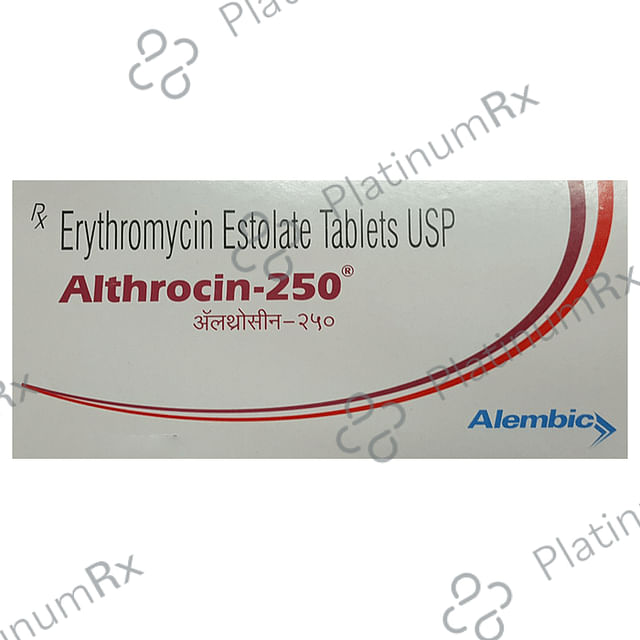
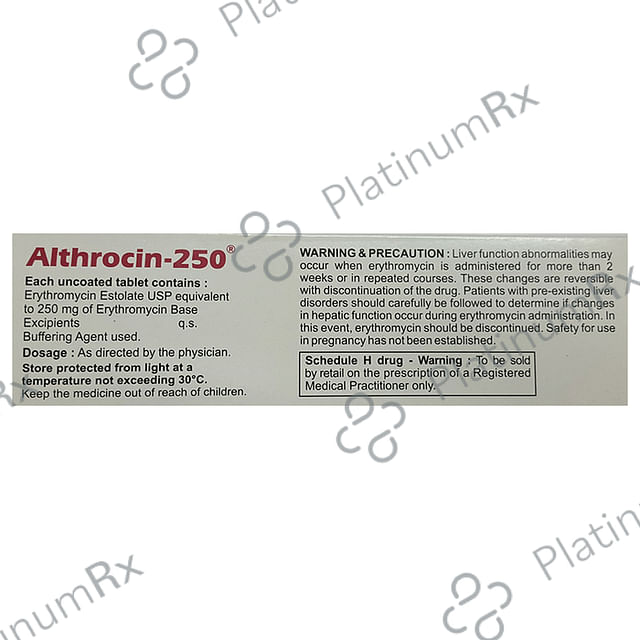
- Different formulations of erythromycin (such as stearate, ethylsuccinate, or estolate) are absorbed differently by the body. Follow the specific instructions provided for your prescription.
- Using this medicine when it is not needed or not finishing the full course can lead to antibiotic resistance.
- Inform any doctor, dentist, or surgeon treating you that you are taking this medication.
Storage Advice
Store tablets at room temperature away from moisture and heat. Keep the bottle tightly closed. The oral suspension should be stored in the refrigerator or at room temperature as directed on the label and any unused portion must be thrown away after the specified time (usually 10 to 35 days). Keep all drugs out of the reach of children and pets.
Drug-Food Interaction
- Food: For many forms of erythromycin, taking it on an empty stomach improves absorption. However, some forms are not affected by food or are taken with food to reduce stomach upset. Follow the specific instructions for your formulation.
Interactions with Other Drugs
Tell your doctor about all your other medicines, especially:
- Ergot medicines: Such as ergotamine or dihydroergotamine. Taking these with erythromycin can cause serious circulatory problems.
- Cholesterol medicines (Statins): Such as simvastatin or lovastatin. Using them together can increase the risk of muscle breakdown.
- Blood thinners: Such as warfarin. Erythromycin can increase the effects of blood thinners, increasing the risk of bleeding.
- Digoxin or Theophylline: Erythromycin can cause these medications to build up to toxic levels in the body.
Drug-Disease Interactions
Tell your doctor if you have ever had:
- Liver disease.
- Myasthenia gravis (erythromycin can worsen muscle weakness).
- A history of a heart rhythm disorder, such as long QT syndrome.
- An electrolyte imbalance (such as low potassium or magnesium in your blood).
Daily Dose
The dose of Erythro 250mg Tablet 10s depends on the type and location of the infection being treated, as well as the specific formulation prescribed. For adults, a common oral dose is 250mg taken every 6 hours or 500mg taken every 12 hours. Your doctor will determine the exact dose and duration appropriate for your specific condition.
Overdose
An overdose of erythromycin can cause severe nausea, vomiting, abdominal pain, and diarrhoea. Hearing loss can also occur with high doses. If an overdose is suspected, seek medical advice or contact the Poison Help line right away.
What If You Forget to take Erythro 250mg Tablet 10s?
If you miss a dose, take it as soon as you remember. If it is almost time for your next dose, skip the missed dose. Do not take extra medicine or use a double dose to make up for a missed one.
Fact Box
Therapeutic Class
Antibiotic
Action Class
Protein synthesis inhibitor (50S subunit)
Chemical Class
Macrolide antibiotic
Habit Forming
No


Disclaimer
PlatinumRx is dedicated to delivering dependable and trustworthy information to empower our customers. However, the information presented here is solely for general informational purposes and should not be utilized for diagnosing, preventing, or treating health issues. It is not intended to establish a doctor-patient relationship or serve as a substitute for professional medical advice.
Health Articles








More Medicines By Manufacturer
More Medicines With Salt
Top Selling Medicines
Top Selling Devices
Flat ₹100 off on first app order | Use Code: APP100 |
Flat ₹100 off on first app order
USE CODE: APP100

Download Now


