
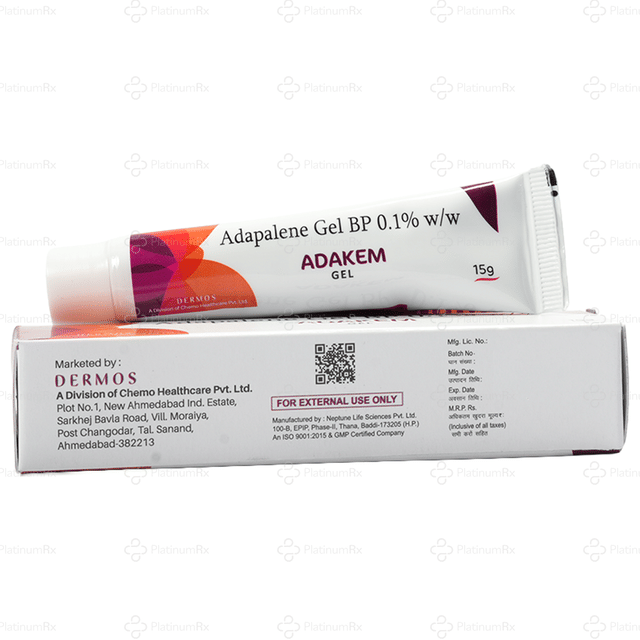
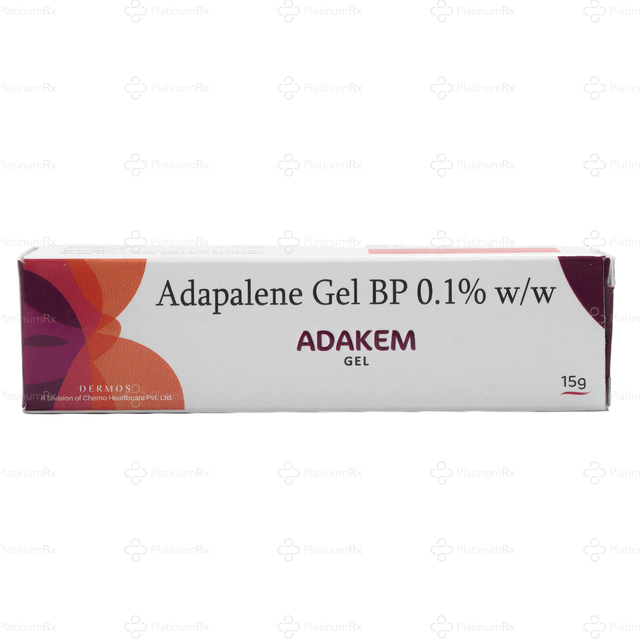
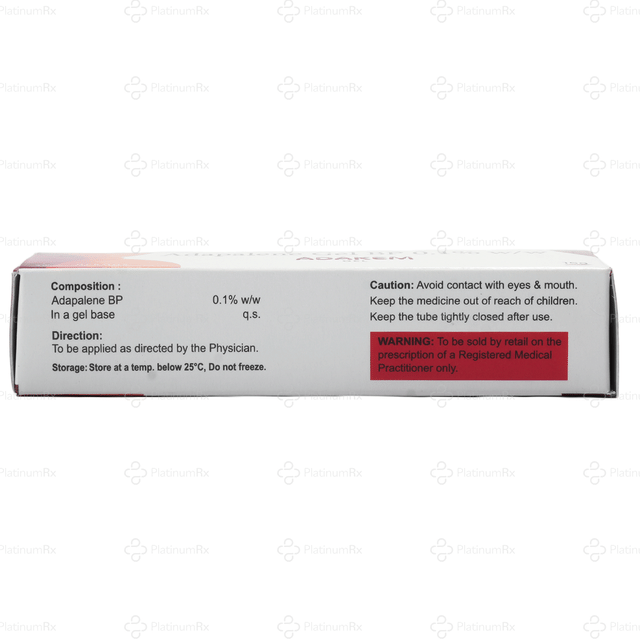
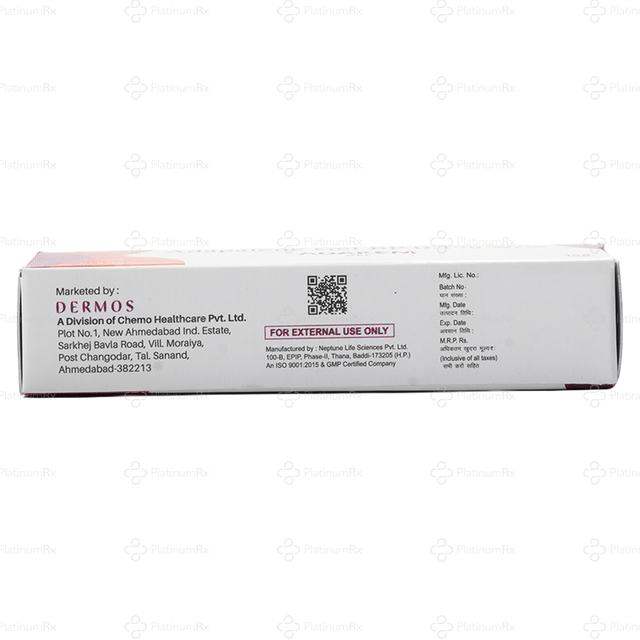



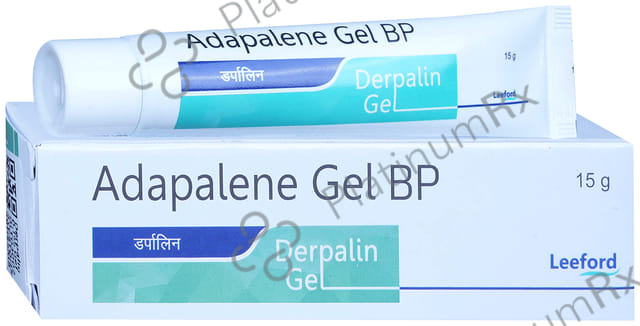
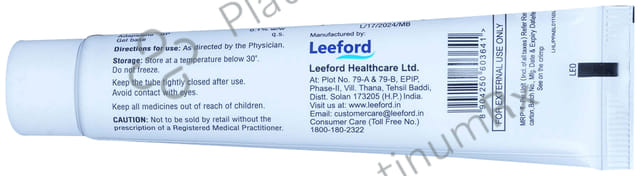
Adapnil 0.1% Gel 15gm
Wallace Pharmaceuticals Pvt. Ltd.
Tube of 15 gm
₹117.02
₹142.71
18% Off
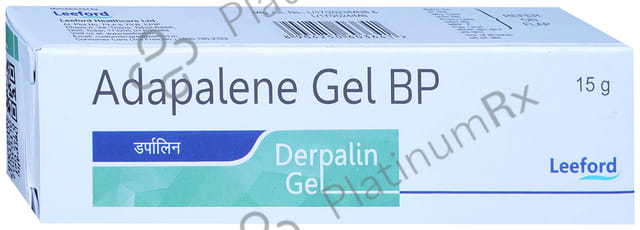
Derpalin 0.1% Gel 15gm (Adapalene) is a third-generation synthetic retinoid primarily used in the topical treatment of acne vulgaris. It is a naphthoic acid derivative that possesses potent comedolytic and anti-inflammatory properties. By modulating cellular differentiation and keratinisation, Derpalin 0.1% Gel 15gm prevents the formation of microcomedones (clogged pores) and aids in the clearing of existing acne lesions. It is specifically designed to be more chemically stable and less irritating than traditional retinoids like tretinoin. It is available in multiple formulations, including topical gels, creams, and lotions, allowing for tailored application based on the patient's skin type and the severity of the condition.
Written by: Syed Jommy Abbas, B. Pharma
Reviewed by: Dr. Devika Rani, MBBS
Last updated on: 12-05-2026
Delivery by
...
FDA & GMP Certified
Long Expiry (>8 Months)
15 Days Easy Returns
Have a question?

Genuine Medicine
Pay On Delivery
Secure Payment

LegitScript Certified Online Pharmacy
View content in
 English
Derpalin 0.1% Gel 15gm (Adapalene) is a third-generation synthetic retinoid primarily used in the topical treatment of acne vulgaris. It is a naphthoic acid derivative that possesses potent comedolytic and anti-inflammatory properties. By modulating cellular differentiation and keratinisation, Derpalin 0.1% Gel 15gm prevents the formation of microcomedones (clogged pores) and aids in the clearing of existing acne lesions. It is specifically designed to be more chemically stable and less irritating than traditional retinoids like tretinoin. It is available in multiple formulations, including topical gels, creams, and lotions, allowing for tailored application based on the patient's skin type and the severity of the condition.
Derpalin 0.1% Gel 15gm is a retinoid-like compound that belongs to the naphthoic acid class. It is used to help reduce the formation of acne and manage skin inflammation associated with acne vulgaris.
After topical application, adapalene binds to specific retinoic acid nuclear receptors (RAR-beta and RAR-gamma) but, unlike earlier retinoids, it does not bind to the cytosolic receptor proteins. This selective binding influences the way certain genes are expressed in the skin cells. As a result, the differentiation of follicular epithelial cells is normalised, which prevents the buildup of dead skin cells that plug the pores. By reducing the formation of these microcomedones, Derpalin 0.1% Gel 15gm addresses acne at its earliest stage of development.
In addition to its pore-clearing effects, adapalene possesses significant anti-inflammatory properties. It inhibits the chemotactic and chemokinetic responses of polymorphonuclear leukocytes and suppresses the metabolism of arachidonic acid to inflammatory mediators. This helps lower the redness, swelling, and irritation associated with inflammatory acne lesions.
Adapalene is designed to act locally within the skin. It is highly lipophilic, allowing it to penetrate the hair follicles and sebaceous glands effectively, yet only negligible amounts usually enter the bloodstream when used as directed. This localised action reduces the risk of systemic side effects compared with oral retinoids. However, during the first few weeks of use, patients may experience "retinization," a period where the skin adjusts to the medication and may appear temporarily more irritated or dry.
This medicine should be used under medical supervision or according to the instructions on the label for over-the-counter formulations. The frequency and duration of use depend on the skin's response and the severity of the acne. It is not intended for immediate results, as its effects develop gradually with regular use over 8 to 12 weeks.
Derpalin 0.1% Gel 15gm may be indicated by your doctor for:
For the topical treatment of mild to moderate acne, including both comedonal (blackheads and whiteheads) and inflammatory acne.
Sometimes used off-label to help smooth the "chicken skin" bumps on the arms and legs by exfoliating dead skin cells.
Occasionally utilised under medical guidance to improve the appearance of fine lines and skin texture, though acne remains its primary indication.
Derpalin 0.1% Gel 15gm may provide benefits such as:
Derpalin 0.1% Gel 15gm may cause side effects in some people, although many tolerate it well when used as prescribed. Side effects are usually localised to the area of application.
Adapalene is a retinoid that works by regulating the life cycle of skin cells.
After application, it penetrates the hair follicles and binds to nuclear retinoic acid receptors (RARs). This binding process normalises the differentiation of follicular epithelial cells. In simpler terms, it ensures that skin cells are produced and shed correctly, preventing them from sticking together and clogging the pores. This action stops the formation of the microcomedone, which is the precursor to all acne lesions.
Furthermore, it interferes with inflammatory pathways by inhibiting the oxidative metabolism of arachidonic acid and the movement of inflammatory cells (leukocytes) to the site of the acne. This results in a visible reduction of the redness and swelling that characterise inflammatory acne.

Caution. While systemic absorption is low, topical retinoids are generally not recommended during pregnancy as a precautionary measure. Consult your doctor.

Consult your doctor. It is unknown if adapalene is excreted in human milk. Use with caution and avoid application to the chest area to prevent infant contact.

Safe. Adapalene does not affect the ability to drive or operate machinery.

Safe. Due to negligible systemic absorption, no dose adjustments are required for patients with liver disease.

Safe. No dose adjustments are required for patients with kidney disease.

Caution. Alcohol can dehydrate the skin, potentially worsening the dryness and irritation caused by the medication.
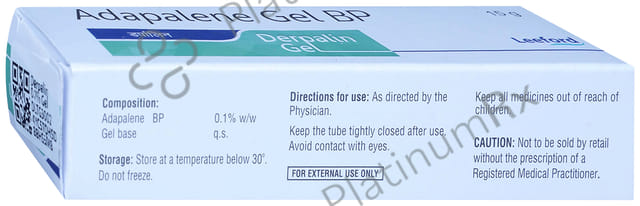
Store Derpalin 0.1% Gel 15gm at room temperature in a dry place away from direct sunlight and heat.
Topical overdose is unlikely to cause systemic problems but will lead to severe redness, peeling, and skin discomfort. If the medication is accidentally swallowed, contact your doctor immediately.
If you miss an application, skip the missed dose and continue with your regular schedule the following evening. Do not apply a double amount to make up for the missed application, as this will only increase skin irritation.
Therapeutic Class
Anti-acne agent
Action Class
Topical Retinoid
Chemical Class
Naphthoic acid derivative (Retinoid)
Habit Forming
No
PlatinumRx is committed to providing reliable and accurate information to support informed customer decisions. However, all information made available on the Platform, including product descriptions, comparisons, and other content, is provided solely for general informational purposes. Such information is not intended to diagnose, prevent, treat, or cure any medical condition, nor should it be relied upon as a substitute for professional medical advice, diagnosis, or treatment.

More Medicines By Leeford Healthcare Ltd.
More Medicines With Adapalene 0.1% w/w
Top Selling Medicines
Top Selling Devices
Top Selling Health Products