






Brivizac Eye Drop

Brivizac Eye Drop is a prescription eye drop that combines two pressure-lowering medicines in one bottle: brimonidine tartrate 0.2% and brinzolamide 1%. It is used to reduce raised pressure inside the eye (intraocular pressure) in adults who have open-angle glaucoma or ocular hypertension, two conditions in which high eye pressure can damage the optic nerve over time. Brinzolamide belongs to the carbonic anhydrase inhibitor group, while brimonidine belongs to the alpha-2 adrenergic agonist group. Because the two ingredients lower eye pressure in different ways, the fixed combination is used when one medicine alone is not enough. It is a sterile suspension that has to be shaken before each use.

Read more

Written by: Syed Jommy Abbas, B. Pharma

Reviewed by: Dr. Devika Rani, MBBS

Last updated on: 28-09-2026
Same Composition
Same Strength
FDA Approved
Same Composition
Currently Viewing
Brivizac Eye Drop
Brivizac Eye Drop

Ajanta Pharma Ltd.

Bottle of 5 ml

See affordable match

Top Substitute
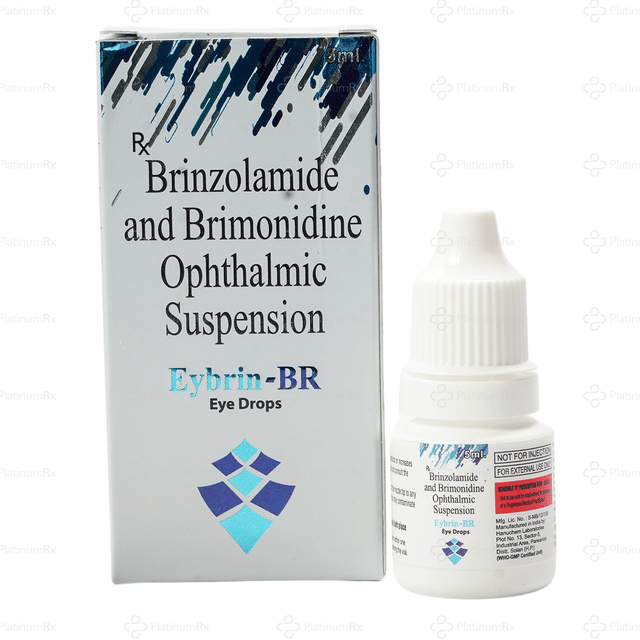
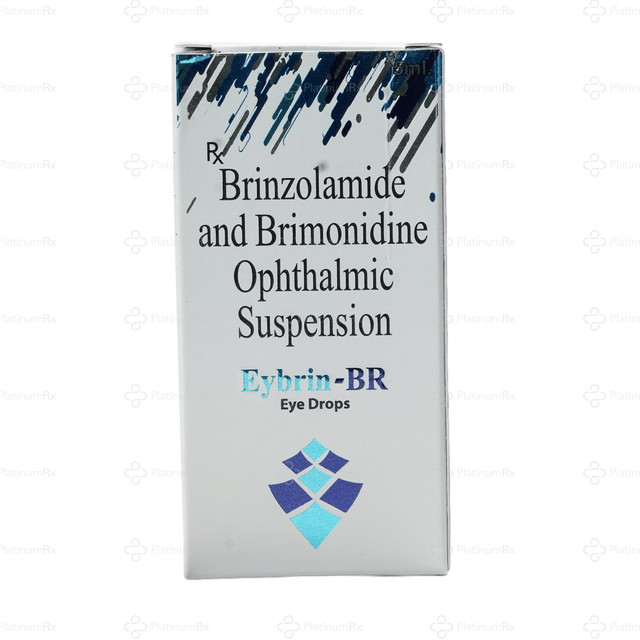
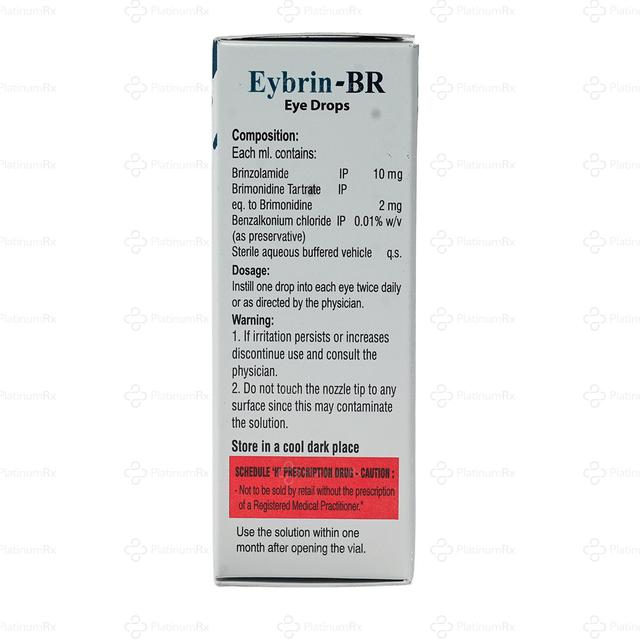
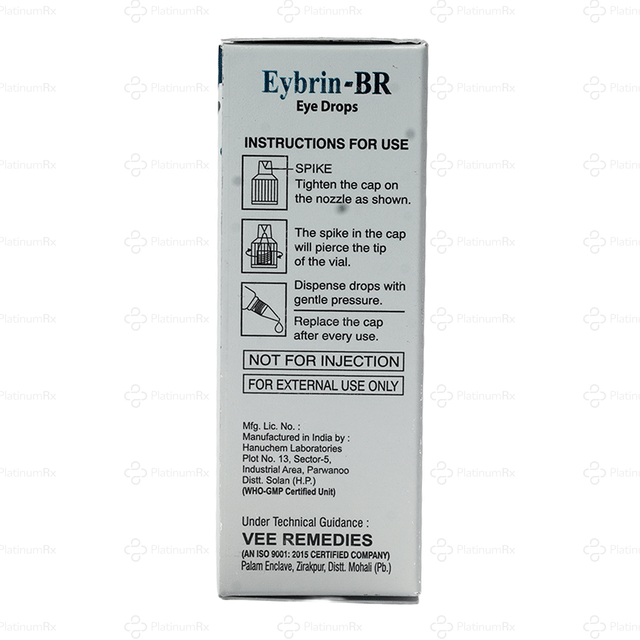
Eybrin BR Eye Drops 5ml

Vee Remedies

Bottle of 5 ml
2.3K Bought this instead

Delivery by

...

FDA & GMP Certified

Long Expiry (>8 Months)

15 Days Easy Returns

Medicine Comparison

100% Exact Salt Match
Brivizac Eye Drop
Eybrin BR Eye Drops 5ml
FDA Approved
FDA Approved
₹73.1 / Unit
₹55.2 / Unit

Have a question?

Doctor Approved & Trusted
thumbnail

Genuine Medicine

Pay On Delivery

Secure Payment

LegitScript Certified

LegitScript Certified Online Pharmacy

More About Brivizac Eye Drop

Detailed Description

Glaucoma is a group of eye conditions in which the optic nerve, the bundle of nerve fibres that carries what you see to the brain, becomes damaged. Raised pressure inside the eye is the main risk factor for that damage, and it happens quietly: glaucoma does not usually cause symptoms, and most people do not realise they have it until it is picked up during a routine eye test. Worldwide, glaucoma is one of the leading causes of vision impairment and blindness, and the sight it takes away cannot be brought back.

Brivizac Eye Drop is prescribed for adults with open-angle glaucoma, the commonest form, or with ocular hypertension, which means eye pressure that is higher than normal before any nerve damage has appeared. It is a fixed-dose combination, so both active ingredients come in one bottle: brinzolamide 1%, a carbonic anhydrase inhibitor, and brimonidine tartrate 0.2%, an alpha-2 adrenergic agonist. Carbonic anhydrase inhibitors and alpha-2 agonists are two well-established families of eye pressure medicine, and pairing them means pressure is lowered in two different ways at once.

The bottle holds a sterile suspension, not a clear solution, so it has to be shaken before each use to mix the medicine evenly. The usual schedule is one drop in each affected eye three times a day. In two three-month studies, using the two ingredients together lowered pressure by about 1 to 3 mmHg (millimetres of mercury, the units used to measure eye pressure) more than using either brinzolamide 1% or brimonidine 0.2% on its own.

Because this is a prescription medicine, it needs medical supervision, and your eye doctor will check your eye pressure and look at the optic nerve regularly. The drops are not suitable for everyone: they must not be used by babies and children under two years, they are not recommended if your kidneys are severely impaired, and they need caution in severe heart or liver disease. Brivizac Eye Drop lowers eye pressure but does not repair vision that has already been lost, which is why keeping to the schedule and keeping every follow-up appointment matters.

Uses of Brivizac Eye Drop

  • Open-angle glaucoma - the commonest form of glaucoma, in which the drainage channels inside the eye gradually stop working well and pressure builds up. The label approves Brivizac Eye Drop for this condition.
  • Ocular hypertension - eye pressure that is higher than normal before any damage to the optic nerve has appeared. Treatment aims to stop that pressure from turning into glaucoma.
  • Pressure that is not controlled by one medicine - the combination is used when a single eye pressure medicine has not brought the pressure down enough, because the two ingredients work in different ways.
  • Long-term pressure control in adults - the label's studies followed adults for three months, and the drops are intended for regular, continuing use under an eye doctor's care.

Benefits of Brivizac Eye Drop

  1. Two pressure-lowering actions in one bottle - brimonidine reduces how much fluid the eye makes and helps fluid leave through the tissues at the base of the eye, while brinzolamide slows fluid production by blocking an enzyme called carbonic anhydrase.
  2. Better pressure control than either ingredient alone - in two three-month studies, the combination lowered eye pressure about 1 to 3 mmHg more than brinzolamide 1% or brimonidine 0.2% used on their own.
  3. One bottle and one routine - the two medicines come together, so there is one bottle to shake, one dropper to keep clean and one set of reminder times instead of two.
  4. A simple three-times-a-day schedule - the dose the label describes fits around meals and bedtime, which makes it easier to keep to.
  5. It starts working the same day - brimonidine reaches its peak effect about two hours after a dose and brinzolamide two to three hours after a dose.
  6. Studied in older adults - the label reports no overall difference in safety or effectiveness between older and younger adults taking this combination.

Side Effects of Brivizac Eye Drop

Common Side Effects (Usually Mild and may lessen with continued use)

  • Blurred vision, which usually clears within minutes of the dose
  • Eye irritation, burning, stinging, redness or a gritty, foreign body sensation
  • A bitter, sour or unusual taste in the mouth (dysgeusia), caused by drops draining into the throat
  • Dry mouth, dry eyes, watery eyes or a runny nose
  • Eye allergy, itchy or swollen eyelids
  • Headache, tiredness or drowsiness

In the label's two three-month studies, 435 people received this combination. The most frequent reactions, seen in about 3% to 5% of them, were blurred vision, eye irritation, a bitter taste, dry mouth and eye allergy, and 11% of people stopped treatment, mostly because of side effects. Used on its own, brimonidine 0.2% caused dry mouth, eye redness, burning and stinging, headache and drowsiness in roughly 10% to 30% of people, while brinzolamide 1% caused blurred vision and a bitter or sour taste in roughly 5% to 10%.

Serious Side Effects (Seek Urgent Medical Attention)

  • Stevens-Johnson syndrome and toxic epidermal necrolysis. These are rare but life-threatening reactions in which the skin and the moist linings of the mouth, eyes and other openings blister and peel. Brinzolamide belongs to the sulfonamide family of medicines, and the label warns that deaths have occurred from severe sulfonamide reactions, including these two syndromes. Stop the drops and get medical help the same day if a rash, blistering, peeling skin or sores in the mouth or eyes appear. The same reaction can return if the medicine is used again by any route.
  • Blood disorders, including aplastic anaemia and agranulocytosis, in which the bone marrow stops making enough blood cells. Warning signs are unusual tiredness, fever, sore throat or bruising and bleeding that you cannot explain.
  • Fulminant hepatic necrosis, a sudden and severe form of liver damage.
  • Corneal oedema, or swelling of the clear front surface of the eye. The risk is higher in people who already have a low count of the cells that line the inside of the cornea.
  • Severe allergic reactions, with swelling of the eyes, lips, tongue or face, difficulty breathing or swallowing, or a widespread rash.
  • Slow or irregular heartbeat, fainting or dizziness on standing, because brimonidine can lower blood pressure.
  • In babies and young children, brimonidine has caused serious sleepiness, slow heartbeat, low blood pressure, low body temperature, weak muscle tone, paleness, breathing difficulty and coma. This is why the combination must not be used in children under two years.
  • Bacterial infection of the cornea (keratitis) has been reported with bottles of eye drops that are used repeatedly, most often in people with corneal disease or a damaged eye surface.

Directions for Use

These drops go into the eye only. Nothing is swallowed, crushed or chewed, so the usual tablet rules do not apply.

  1. Wash your hands with soap and water.
  2. Shake the bottle well. This medicine is a suspension, so the particles settle and have to be mixed back in.
  3. If you wear soft contact lenses, take them out first. They can go back in at least 15 minutes after the dose.
  4. Tilt your head back, pull the lower eyelid down with one finger to make a small pocket, and look up.
  5. Bring the bottle tip close to the eye without letting it touch the eye, the eyelid, your fingers or any surface.
  6. Squeeze one drop into the pocket. Close the eye gently for two to three minutes with your head tilted down, and try not to blink or squeeze the eyelid.
  7. Press a finger gently on the tear duct, at the inner corner of the eye near the nose, for a minute. This reduces how much of the medicine drains into your throat.
  8. Wipe away any excess with a clean tissue, put the cap back on without rinsing the tip, and wash your hands.

The label asks for this routine three times a day, at about the same times each day, roughly eight hours apart. Keep to those times rather than fitting doses around how your eyes feel. If you need more than one drop in the same eye, wait at least five minutes before the next drop. If you also use any other eye medicine, leave at least 10 minutes between it and these drops. Keep using Brivizac Eye Drop even when your eyes feel completely normal, and do not change the number of doses on your own.

How it works

Inside the front part of the eye there is a clear fluid called aqueous humour, which is not the same as tears. It keeps the eye firm and nourished. It is made by a ring of tissue called the ciliary body and drains away through channels at the edge of the iris. If the eye makes too much of this fluid, or if the drainage is poor, the pressure inside the eye rises, and over years that pressure damages the optic nerve.

Both ingredients in Brivizac Eye Drop lower that pressure, but they act on different targets.

Brinzolamide is a carbonic anhydrase inhibitor. Carbonic anhydrase is an enzyme, a protein that speeds up a chemical reaction in the body. It sits in the ciliary processes, the fluid-making part of the eye. Brinzolamide blocks this enzyme, which slows the formation of bicarbonate ions and in turn reduces the movement of sodium and water. The result is that the eye makes less aqueous humour. Its peak effect on pressure is two to three hours after a dose.

Brimonidine tartrate is an alpha-2 adrenergic receptor agonist. It attaches to alpha-2 receptors in the eye and has two effects at once: it reduces how much aqueous humour is produced, and it increases uveoscleral outflow, which means fluid leaves through the tissues at the base of the eye rather than only through the main drainage channel. Its peak effect is about two hours after a dose.

Because one ingredient blocks an enzyme and the other switches on a receptor, the two work on separate pathways. That is why the combination lowers pressure further than either ingredient alone, and why it is used when a single medicine has not been enough.

Safety Advice for Brivizac Eye Drop

icon
Pregnancy
Limited information

The label states that there are no adequate, well-controlled studies of Brivizac Eye Drop in pregnant women, so it is used only if the possible benefit justifies the possible risk to the baby. In animal studies, brinzolamide given by mouth to rabbits and rats at many times the human eye dose caused reduced fetal body weight and minor fetal variations but no malformations linked to the treatment, and brimonidine tested in rats did not harm the fetus. Tell your eye doctor if you are pregnant, think you may be pregnant or are planning a pregnancy.

icon
Breastfeeding
Limited information

After eye drops it is not known whether brinzolamide or brimonidine passes into human milk. In animals, brinzolamide appeared in milk at levels below those in blood, and brimonidine was found in breast milk. The label advises weighing the benefit of the treatment against the risk to the baby, which may include stopping nursing, while the brimonidine patient leaflet advises not to breast-feed while using brimonidine eye drops. Talk to your doctor before using Brivizac Eye Drop if you are breast-feeding.

icon
Alcohol
Limited information

Alcohol can add to the drowsiness and light-headedness that brimonidine may cause. The label lists alcohol among the central nervous system depressants that can have an additive effect with this medicine. Ask your doctor whether drinking alcohol is safe for you while you use these drops.

icon
Driving
Limited information

Your vision may be blurred for a short time after each dose, and brimonidine can make some people sleepy or dizzy. Do not drive, cycle or use machines until you know how Brivizac Eye Drop affects you.

icon
Kidney
Limited information

The combination has not been studied in people with severe kidney impairment, described in the label as a creatinine clearance below 30 mL/min, a measure of how well the kidneys filter. Because brinzolamide and its breakdown products leave the body mainly through the kidneys, the label does not recommend Brivizac Eye Drop in this group. Tell your doctor if you have kidney disease so your treatment can be reviewed.

icon
Liver
Limited information

Brimonidine has not been studied in people with liver impairment, and the label advises caution in severe liver disease. Tell your eye doctor about any liver condition before you start these drops.

icon
Children
Limited information

Brivizac Eye Drop is not for children. It must not be used in newborns and infants under two years of age, because brimonidine has caused serious effects in that age group, including extreme sleepiness, slow heartbeat, low blood pressure and breathing difficulty. In studies of related eye drops, 50% to 83% of children aged two to six years became very sleepy. The combination has not been shown to be safe and effective in children.

icon
Elderly patients
Limited information

The label reports no overall difference in safety or effectiveness between older adults and younger adults, so age alone does not call for a change in dose. Older adults are more likely to have other health conditions and to take other medicines, so their doctor may review everything together.

Quick Tips for Brivizac Eye Drop

  • Wash your hands before and after each dose.
  • Shake the bottle well every time. It is a suspension, so the medicine settles between doses.
  • Do not let the dropper tip touch your eye, your eyelid, your fingers or any surface.
  • Close your eye for two to three minutes after each drop and press gently on the tear duct, which cuts down the bitter taste and the amount of medicine that reaches the rest of the body.
  • Leave at least 10 minutes between these drops and any other eye medicine.
  • Take out soft contact lenses before each dose and put them back at least 15 minutes later.
  • Keep the three doses about eight hours apart, at the same times each day.
  • Do not stop the drops because your eyes feel fine. The pressure is still there, and it causes no pain.
  • A bitter taste after a dose is normal and fades on its own.
  • Do not drive until you know whether the drops blur your vision or make you drowsy.
  • Keep the bottle tightly closed and out of the reach and sight of children and pets.
  • Take the bottle with you to every eye appointment, so your doctor can see how much is left.

Storage Advice

  • Store the bottle at 2°C to 25°C (36°F to 77°F), as stated on the label.
  • Keep it in the original bottle with the cap tightly closed, upright, away from heat, direct sunlight and moisture. Do not keep it in the bathroom.
  • Keep it out of the reach and sight of children and pets.
  • Do not use the drops after the expiry date on the bottle. Once the bottle has been opened, the label allows you to use it until that expiry date.
  • Do not flush unused eye drops down the toilet or pour them into a sink. Return them to a pharmacy take-back point, or dispose of them so that children and pets cannot reach them.
  • Never share your eye drops with another person, even if they have the same eye condition.
  • Check the liquid before each dose. If it looks discoloured or contains particles that do not mix back in when you shake it, ask a pharmacist before using it.

Drug-Food Interaction

  • The label does not list any food or drink that has to be avoided with Brivizac Eye Drop. Because the drops go into the eye rather than the stomach, food does not change the way the medicine is absorbed as it can with tablets.
  • Alcohol is the one drink that matters. It can add to the drowsiness and light-headedness caused by brimonidine, and the label lists alcohol among the substances that can have an additive effect with this medicine.
  • If you are on a special diet for another condition, such as a low-salt or diabetic diet, these eye drops do not change it. Keep following the diet your doctor has set.
  • Do not take any extra vitamins, supplements or herbal medicines for your eyes without asking your doctor, since some of them can affect blood pressure.

Interactions with Other Drugs

  • Other eye drops that lower eye pressure - these can be used with Brivizac Eye Drop, but not at the same moment. Leave at least 10 minutes between these drops and any other eye medicine.
  • Oral carbonic anhydrase inhibitors, such as acetazolamide tablets - brinzolamide works by the same mechanism, so the effects can add up. The label does not recommend using oral carbonic anhydrase inhibitors together with Brivizac Eye Drop.
  • High-dose salicylate medicines, including high-dose aspirin - the label advises considering the potential for changes in the body's acid balance and electrolyte levels, because oral carbonic anhydrase inhibitors can cause these.
  • Alcohol, opioid painkillers, barbiturates, sleeping tablets and general anaesthetics - these central nervous system depressants can add to the drowsiness, low blood pressure and slow heartbeat caused by brimonidine.
  • Blood pressure medicines and heart medicines, including digoxin - brimonidine can lower blood pressure, so caution is needed when it is used with medicines that have the same effect.
  • Tricyclic antidepressants, such as amitriptyline and imipramine - these are reported to blunt the blood pressure lowering effect of clonidine, a closely related medicine. The effect on eye pressure is unknown, so the label advises caution.
  • Monoamine oxidase inhibitors (MAOIs), used for depression and Parkinson's disease - these may interfere with the way brimonidine is broken down in the body and increase its systemic effects, such as low blood pressure.
  • Other sulfonamide medicines - because brinzolamide is a sulfonamide, tell your doctor if you have ever reacted to a sulfonamide antibiotic or any other sulfonamide medicine. The label warns that sensitivity can return if the medicine is used again by any route.

Drug-Disease Interactions

  • Severe kidney impairment (creatinine clearance below 30 mL/min) - the label does not recommend Brivizac Eye Drop because the combination has not been studied in this group and brinzolamide leaves the body mainly through the kidneys.
  • Severe liver disease - brimonidine has not been studied in liver impairment, and the label advises caution.
  • Low corneal endothelial cell count or corneal disease - carbonic anhydrase is present in the cells lining the inside of the cornea, so there is a greater chance of corneal swelling. Repeated use of a multi-dose eye bottle has also been linked to bacterial infection of the cornea, particularly in people with corneal disease or a damaged eye surface.
  • Severe cardiovascular disease - use with caution. In studies, brimonidine produced an average fall in blood pressure of less than 5% two hours after a dose.
  • Depression and poor circulation - This group includes depression, reduced blood flow to the heart or brain (cerebral or coronary insufficiency), poor circulation in the fingers and toes (Raynaud's phenomenon), dizziness on standing (orthostatic hypotension) and a rare blood-vessel condition called thromboangiitis obliterans. Brimonidine can worsen conditions where blood flow is already poor, so the label advises caution in these people.
  • Acute angle-closure glaucoma - this is a sudden attack with pain, redness, blurred vision, nausea and headache that needs urgent treatment. Brivizac Eye Drop has not been studied in that situation and is not a treatment for an acute attack.
  • Known allergy to any ingredient or to sulfonamides - the combination must not be used by anyone hypersensitive to its ingredients, and serious sulfonamide reactions have been reported.
  • Babies and children under two years of age - the combination is contraindicated in this group.
  • Pregnancy and breast-feeding - the risks and the need for medical advice are described in the safety advice section above.

Daily Dose

  • The label states that the dose is one drop in each affected eye three times a day, after shaking the bottle well.
  • That is three doses in 24 hours for every eye being treated, spaced about eight hours apart.
  • The label does not describe a higher daily frequency for this combination, and using extra drops will not lower the pressure further. It may increase the side effects instead.
  • Follow exactly the schedule your eye doctor prescribes. Do not increase the number of doses because you think the pressure is high, and do not reduce them because your eyes feel comfortable.
  • Brivizac Eye Drop is a prescription-only medicine, so repeat supplies and any change in dose need your doctor's instruction.
  • If you use other eye drops as well, leave at least 10 minutes between them.
  • Keep using the drops on days when your eyes feel perfectly normal. Glaucoma causes no pain, and the pressure rises again if the drops are stopped.

Overdose

  • Taking too much of this medicine from the eye is unlikely during normal use. The eye does absorb some of the medicine, which is why the sulfonamide and heart-related warnings on this page still matter.
  • If the bottle is swallowed, particularly by a child, get emergency medical help straight away and take the bottle with you. Brimonidine has caused serious effects in infants, including breathing difficulty, slow heartbeat, low blood pressure, extreme sleepiness, low body temperature, weak muscle tone, paleness and coma.
  • Signs that too much of this type of medicine has been absorbed include a slow heartbeat, low blood pressure, dizziness or fainting, and unusual sleepiness or difficulty waking.
  • If drops are placed in the eye far more often than prescribed, rinse the eye with clean water and contact your doctor or the nearest emergency department.
  • Keep your doctor's number and the number of your local emergency service where you can find them quickly, and do not wait for symptoms to become severe before asking for help.

What If You Forget to take Brivizac Eye Drop?

  • If you remember a missed dose and the next one is not due yet, use it as soon as you remember, then go back to your usual times.
  • If the next dose is nearly due, skip the missed dose and continue with the normal schedule.
  • Never use a double dose to make up for a missed one.
  • If you miss doses often, set an alarm on your phone or ask someone at home to remind you, and mark the times on a calendar. The drops only keep the pressure down while they are used regularly.
  • Do not stop the drops because you missed one. If you keep missing doses, tell your eye doctor, who can suggest a simpler plan.

When to contact doctor

  • A rash, blistering or peeling skin, or sores in the mouth or eyes. Stop the drops and get medical help the same day, because this can be the start of a severe sulfonamide reaction.
  • Swelling or itching of the eyes, lips, tongue, face or throat, difficulty breathing or swallowing, or a rash spreading over the body. Treat this as an emergency.
  • Eye pain, eye discharge, sudden worsening redness, or a marked change in vision. Contact your eye doctor the same day.
  • Seeing specks or flashes of light, or new blind spots.
  • A slow or irregular heartbeat, fainting, or dizziness when you stand up.
  • Unusual sleepiness, confusion or difficulty waking, especially in a child or an older adult.
  • Sore throat, fever, or bruising and bleeding that you cannot explain, which can be signs of a blood problem.
  • You become pregnant, are planning a pregnancy, or are breast-feeding.
  • You are about to start any new medicine, including another eye drop or a herbal product.

FAQ

Fact Box

Therapeutic Class

Antiglaucoma medicine (eye pressure lowering agent)

Action Class

Alpha-2 adrenergic receptor agonist plus carbonic anhydrase inhibitor

Chemical Class

Brimonidine tartrate is a quinoxaline derivative; brinzolamide is a thienothiazine sulfonamide

Habit Forming

No

Disclaimer

PlatinumRx is committed to providing reliable and accurate information to support informed customer decisions. However, all information made available on the Platform, including product descriptions, comparisons, and other content, is provided solely for general informational purposes. Such information is not intended to diagnose, prevent, treat, or cure any medical condition, nor should it be relied upon as a substitute for professional medical advice, diagnosis, or treatment.

View More
editorial-png
Authentic & trustworthy information
Having issues with the content?
Report Error

Customers also bought

More Medicines By Ajanta Pharma Ltd.

More Medicines With Brimonidine 0.2% w/v + Brinzolamide 1% w/v

Top Selling Medicines

Top Selling Devices

Top Selling Health Products