Norflox TZ for Stomach Infection: Uses, Safety & Risks
Last Updated: September 29, 2026

What is Norflox TZ?
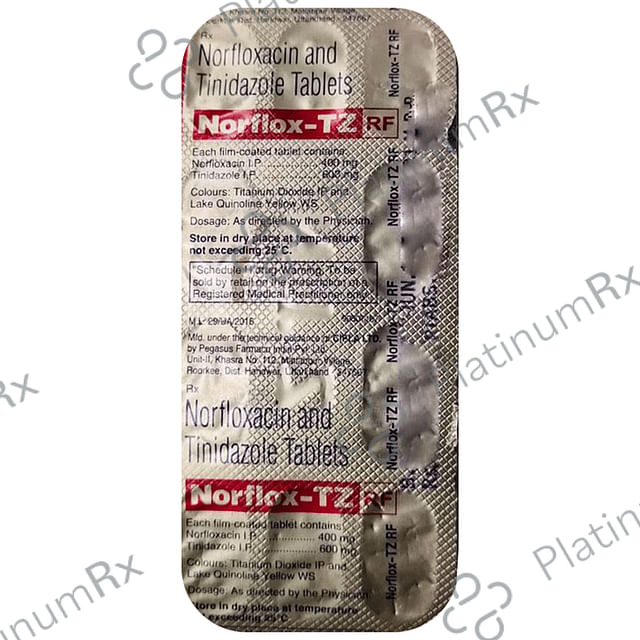
Norflox TZ is a prescription tablet that combines two antimicrobial medicines in one dose. It is used for some infections of the stomach and intestine, and only when a doctor has prescribed it for you.
- Ingredient: Norfloxacin 400 mg; Group: Fluoroquinolone antibiotic; What it acts against: Several Gram-negative bacteria
- Ingredient: Tinidazole 600 mg; Group: Nitroimidazole antimicrobial; What it acts against: Gut parasites such as Entamoeba and Giardia, and bacteria that live without oxygen
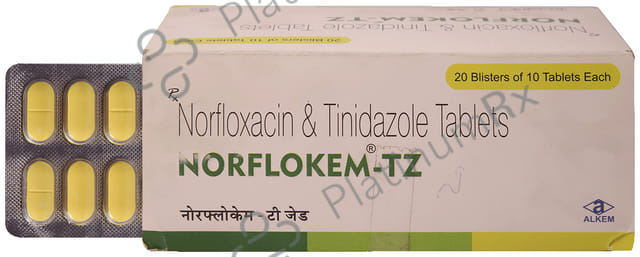
Before you take it, check the exact name and the list of ingredients printed on your pack. Never take a tablet on the strength of a similar-sounding name alone.
Key takeaways
- Norflox TZ is not a medicine to keep at home for ordinary loose motions. Most diarrhoea clears up on its own with fluids and rest.
- No antibiotic, including this one, works on a virus — and viruses such as rotavirus and norovirus are a common cause of diarrhoea in children.
- Do not drink alcohol while taking it, or for 3 days after your last dose.
- Keep milk, dairy products, antacids, iron or zinc tablets, multivitamins and sucralfate at least 2 hours away from your dose.
- It is not for anyone under 18, and it is not used in pregnancy.
- Stop the medicine and get medical help straight away if you get tendon pain, numbness or tingling in your hands or feet, or a severe skin reaction.
What Norflox TZ is used for — and what it is not for
Norflox TZ is used for certain infections of the stomach and intestine — mainly when a doctor suspects that bacteria, gut parasites, or both may be involved. It is not a treatment for every kind of stomach problem.
The tinidazole in this tablet is active against gut parasites. Two of them cause infections that look like ordinary diarrhoea:
- Amoebiasis — an infection of the large intestine caused by Entamoeba histolytica, a parasite spread through food and water contaminated with faeces. In places where sanitation is poor, up to 40 in 100 people with diarrhoea may have amoebic dysentery. It can cause bloody, mucus-filled stools, belly pain and fever.
- Giardiasis — an infection caused by Giardia duodenalis, which also spreads through contaminated water and food.
The norfloxacin in the tablet covers several bacteria, including common gut bacteria such as Escherichia coli.
Tinidazole is one of the established treatments for amoebic colitis. A review of 41 trials found that, compared with metronidazole, it may relieve symptoms more reliably and probably causes fewer side effects, although most of those trials were small and fairly old, and it is still not certain which of the two clears the parasite from the stools more effectively.
Norflox TZ is not for:
- Diarrhoea caused by a virus, which is a common cause in children and usually settles on its own within a few days.
- Food poisoning that is improving with fluids and rest.
- Acidity, gastritis, a peptic ulcer or irritable bowel syndrome. These are not infections and antibiotics do not help.
- Urinary or genital infections. Norfloxacin on its own is approved in the United States for urinary tract infections and prostate infection — not for gut infections. Ask your doctor which medicine suits your infection.
- Any infection in someone who has not been prescribed this tablet.
How Norflox TZ works
Norfloxacin stops bacteria from making new DNA. It blocks an enzyme called DNA gyrase that bacteria need to coil and copy their DNA, and it also causes breaks in bacterial DNA. Unable to copy themselves, the bacteria cannot multiply and the infection stops spreading.
Tinidazole works differently. Inside gut parasites and bacteria that live without oxygen, the medicine's nitro group is broken down and releases a reactive particle that damages the organism's DNA. Interestingly, exactly how tinidazole acts against Giardia and Entamoeba is not fully understood even today.
Neither ingredient has any effect on viruses.
How to take Norflox TZ
Take it exactly as your doctor prescribes. The number of tablets a day, and the number of days you take them, depends on the infection being treated - so there is no single dose that suits everyone. The norfloxacin in this tablet is usually taken twice a day, about 12 hours apart, by adults whose kidneys work normally. How many days you take it for is decided by your doctor.
A few practical points help the medicine work properly:
- Space your doses evenly through the day, at roughly the same times each day.
- Swallow the tablet whole with water. Do not crush, chew or split it unless your doctor or pharmacist tells you to.
- Keep milk, curd, buttermilk and other dairy products at least 2 hours away from your dose. Food and dairy reduce how much norfloxacin the body absorbs.
- Keep antacids, iron or zinc tablets, multivitamins, sucralfate and didanosine at least 2 hours away as well. They interfere with norfloxacin absorption.
- Tinidazole is normally taken with food to reduce stomach upset, while norfloxacin is best taken at least an hour before or 2 hours after a meal. Because both are in the same tablet, follow the instruction on your pack or your doctor's advice - and in any case keep dairy and antacids 2 hours away.
- Keep drinking fluids. Loose motions drain water and salts from the body, and replacing them matters as much as the tablets. An oral rehydration solution (ORS) from any pharmacy is the best choice, because it replaces both the water and the salts you are losing. Sip it steadily through the day; plain water is better than nothing until you can get some. See a doctor if you cannot keep fluids down, or if there is blood in your stool.
- Do not drink alcohol during the course or for 3 days after it ends.
- Finish the whole course. Stopping early can allow the infection to come back and can make the bacteria harder to treat later.
- Do not share this medicine with anyone else, even if their symptoms look the same.
- If the loose motions come back after you finish, speak to your doctor before starting the tablets again.
If you forget a dose, take it as soon as you remember. If it is almost time for the next dose, skip the missed one and carry on as usual. Never take two tablets to make up for a missed dose.
Who should not take Norflox TZ
Do not take Norflox TZ if any of these apply to you. Tell your doctor, who will prescribe a different medicine.
- You have had an allergic reaction to norfloxacin, to any other quinolone antibiotic, or to tinidazole or another nitroimidazole medicine.
- You have ever had tendon inflammation (tendinitis) or a torn tendon while taking norfloxacin or any other quinolone antibiotic.
- You have myasthenia gravis. Fluoroquinolones can make muscle weakness and breathing problems worse, so norfloxacin is avoided in this condition.
- You have Cockayne syndrome, a rare inherited condition. Tinidazole can cause severe, irreversible liver damage in people with it.
- You are under 18 years of age. The safety of norfloxacin has not been established in children and teenagers, and quinolone antibiotics cause joint damage in young animals.
Who needs to be careful with Norflox TZ
Other situations are not absolute barriers, but they need a conversation with your doctor first.
- Older adults. Tendon problems are more likely in people over 60.
- Steroid medicines. Taking corticosteroids alongside a quinolone raises the risk of tendon injury.
- Organ transplant. People who have had a kidney, heart or lung transplant are also at higher tendon risk.
- Kidney problems. Norfloxacin is cleared by the kidneys, so your doctor may change how often you take it. Tell your doctor if you are on dialysis, as the timing of your dose may need adjusting.
- Liver problems. Tinidazole is broken down in the liver, and there is little information on its use in liver disease, so it is used cautiously.
- Epilepsy or other brain and nerve conditions. Quinolones can cause confusion, tremors and, rarely, fits, and are used cautiously in people with a seizure history.
- Heart rhythm problems. Norfloxacin can lengthen the QT interval on an ECG. It is avoided with medicines such as quinidine, procainamide, amiodarone and sotalol.
- Diabetes. Rarely, quinolones taken with some diabetes tablets, such as glyburide, have caused severe low blood sugar. Your doctor may ask you to monitor your sugar more closely.
- Blood disorders. Tinidazole is used cautiously in people with a history of low blood counts, because it can occasionally lower white cell counts.
- Driving and alertness. Norfloxacin can make you dizzy, light-headed or drowsy. Do not drive, operate machinery, or do anything else that needs full alertness or coordination until you know how the tablet affects you.
Pregnancy and breastfeeding
Norflox TZ is not used in pregnancy. The safety of norfloxacin in pregnancy has not been established, and information on tinidazole in pregnancy is limited. Tell your doctor if you are pregnant, think you may be, or are planning a pregnancy.
Breastfeeding is not recommended while you are taking this medicine and for 72 hours after the last dose, because tinidazole passes into breast milk and could harm the baby. If you are nursing, you can pump and discard your milk during that time to keep your supply going.
Fertility
Tinidazole may reduce fertility in men. This finding comes from animal studies, and it is not known whether the effect is reversible. If you and your partner are trying to conceive, mention the course to your doctor.
Side effects of Norflox TZ
Most people get mild stomach-related effects, if anything at all. The ones people report most often are:
- Nausea, vomiting
- Stomach pain, cramps, indigestion
- Loose stools, constipation
- Metallic or bitter taste
- Headache, dizziness, trouble sleeping
- Tiredness, loss of appetite
- Awareness of your heartbeat, dry mouth
- A coated tongue, mild joint or muscle aches
Warning signs that need urgent medical help
Serious reactions are uncommon, but some need urgent attention. Stop the medicine and contact a doctor immediately if you notice any of these:
- Pain, swelling or a snapping sensation in a tendon, especially the back of the ankle or the shoulder.
- Tingling, numbness, burning or weakness in your feet or hands.
- A severe rash, blisters, peeling skin, or swelling of your face, lips or tongue; difficulty breathing or swallowing.
- A severe sunburn-like reaction after sun or UV exposure.
- A fit, confusion, hallucinations, or a severe headache that will not settle.
- Very severe diarrhoea with fever, blood or mucus, or diarrhoea that begins after the course ends.
- Yellow eyes or skin, dark urine, or pain in the upper right side of the abdomen.
- A racing, fluttering or irregular heartbeat, or fainting.
Interactions: other medicines, alcohol and food
Some medicines and drinks interact with the ingredients in Norflox TZ. Tell your doctor and pharmacist about everything you take, including over-the-counter and Ayurvedic or herbal products.
- Alcohol. Avoid it during the course and for 3 days afterwards. It can cause abdominal cramps, nausea, vomiting, headache and flushing. Also avoid any medicine or syrup that contains alcohol or propylene glycol.
- Disulfiram. Do not take tinidazole if you have taken disulfiram in the last two weeks.
- Warfarin and other blood thinners. Norfloxacin and tinidazole can both strengthen their effect. Your doctor may need to check your clotting and adjust the dose during treatment and for up to 8 days after.
- Antacids, sucralfate, iron or zinc tablets, multivitamins and didanosine. Keep them at least 2 hours away from your dose. They reduce how much norfloxacin is absorbed.
- Milk and dairy products. Separate them from your dose by at least 2 hours for the same reason.
- Painkillers of the NSAID group, such as ibuprofen, diclofenac and naproxen. Taken with norfloxacin, they may increase the risk of nervous system stimulation and fits.
- Theophylline, caffeine, clozapine, ropinirole, tacrine and tizanidine. Norfloxacin can raise their levels in the body, so your doctor may monitor you.
- Cyclosporine, lithium, tacrolimus, fluorouracil and phenytoin. Levels may change and need monitoring. Tinidazole may also raise cyclosporine and tacrolimus toxicity.
- Rifampicin, phenobarbital and phenytoin can lower tinidazole levels. Cimetidine and ketoconazole can raise them.
- Nitrofurantoin. Not recommended together with norfloxacin, as it can work against it.
- Cholestyramine. Separate the timings, as it reduces absorption of nitroimidazoles.
Overdose and storage
There is no specific antidote for tinidazole overdose. Treatment is supportive and may include gastric lavage or dialysis, so a suspected overdose needs hospital assessment. Take the pack with you so the treating team knows exactly what was taken.
Store the tablets at room temperature, around 25 °C, away from direct light, heat and damp. Keep them in the original strip and pack, closed properly, and out of reach of children. Check the expiry date before each dose and return expired tablets to a pharmacy rather than throwing them in the bin.
Prescription status in India
Norflox TZ is a prescription-only medicine in India. Both norfloxacin and tinidazole are listed in Schedule H of the Drugs and Cosmetics Rules, 1945, which means the tablet cannot be sold by retail without a valid prescription from a registered medical practitioner.
The norfloxacin 400 mg plus tinidazole 600 mg tablet has been an approved fixed-dose combination in India since 1995.
In 2024, India's drug regulator prohibited 156 fixed-dose combinations as irrational. The only norfloxacin-and-tinidazole product on that list was an eye ointment, not this oral tablet.
Antibiotics work only against the organisms they are meant for. Using them for a viral illness does not help the patient and makes bacteria more resistant to treatment later.
This article is general health information, not personal medical advice. Norflox TZ is a prescription medicine, and it should be taken only on a doctor's advice, in the dose and for the length of time your doctor prescribes. Follow your own doctor's instructions, which may differ from the general points above.
FAQs
References