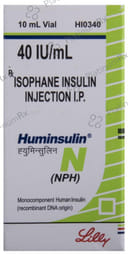
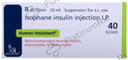
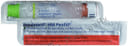
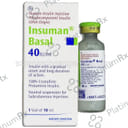
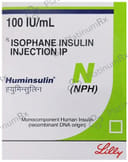
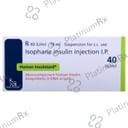
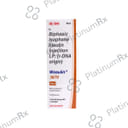
Insulin Isophane

Uses

Insulin Isophane is used in the treatment of diabetes mellitus (Type 1 and Type 2).

How it Works

How Insulin Isophane works Insulin Isophane is an intermediate-acting insulin that begins to take effect 1-2 hours after injection. It functions similarly to the insulin produced by the body. Insulin facilitates the uptake of sugar in muscle and fat cells and also suppresses the production of sugar in the liver. This helps to lower blood sugar levels in diabetes mellitus.

Side Effects

Common side effects of Insulin Isophane include hypoglycemia (low blood glucose level).

Expert Advice

  • Hypoglycemia (low blood sugar level) is a common side effect.
  • Regular monitoring of blood sugar levels is required while taking this medication.
  • Injection into the subcutaneous tissue of the abdomen results in faster absorption compared to other injection sites.
  • Injection sites must be rotated to prevent the formation of hard lumps at a single site.
  • Opened vials/cartridges are stable at room temperature for up to 4 weeks.
  • Unopened vials must be stored in the refrigerator (2°C–8°C).

Related Medications

hero_image
of
18% OFF

MRP 252.8

hero_image
of
MRP

424.6

hero_image
of

MRP 469

5% OFF
hero_image
of
14% OFF

MRP 469

hero_image
of
MRP

149.4

hero_image
of

MRP 181.4

hero_image
of
MRP

152.3

hero_image
of

MRP 181.4

hero_image
of
MRP

140.7

hero_image
of

MRP 181.4

hero_image
of
MRP

178.3

hero_image
of

MRP 181.4

12% OFF
hero_image
of
MRP

192.1

hero_image
of

MRP 181.4

19% OFF
hero_image
of
MRP

140.1

hero_image
of

MRP 181.4

hero_image
of
MRP

177

hero_image
of

MRP 181.4

12% OFF
hero_image
of
MRP

72.8

hero_image
of

MRP 181.4

hero_image
of
MRP

143.4

hero_image
of

MRP 181.4

hero_image
of
MRP

181.1

hero_image
of

MRP 181.4

14% OFF
hero_image
of
MRP

153

hero_image
of

MRP 181.4

hero_image
of
MRP

144.3

hero_image
of

MRP 181.4

hero_image
of
MRP

196.7

hero_image
of

MRP 181.4

hero_image
of
14% OFF

MRP 181.4

hero_image
of
18% OFF

MRP 352

hero_image
of
14% OFF

MRP 235.6

hero_image
of
MRP

390

hero_image
of

MRP 469

hero_image
of
MRP

401

hero_image
of

MRP 569

hero_image
of
MRP

218.5

hero_image
of

MRP 569

hero_image
of
14% OFF

MRP 569

hero_image
of
MRP

287.3

No Substitute
Sorry, Substitute Medicine is Unavailable
hero_image
of
MRP

626.8

No Substitute
Sorry, Substitute Medicine is Unavailable

Frequently asked questions

Yes, Insulin Isophane may be administered intravenously in specific situations such as diabetic ketoacidosis or severe hyperglycemia, but this must be done by a doctor in a hospital setting with continuous blood sugar monitoring.
Insulin Isophane is a synthetic form of human insulin created using recombinant DNA technology. It is available as a sterile, clear, and colorless aqueous solution containing insulin aspart, glycerin, phenol, metacresol, zinc, sodium chloride, and other ingredients.
Yes, Insulin Isophane is considered safe during pregnancy when prescribed by a doctor. Inform your doctor if you are pregnant, planning to conceive, or breastfeeding, as dose adjustments and regular blood sugar monitoring may be necessary to ensure optimal management.
Consult your doctor for dosage adjustments if you experience weight changes, increased stress, illness, dietary changes, or alcohol consumption. Changes in exercise routines or new medications may also necessitate a dose review. Be attentive to any side effects when starting Insulin Isophane, and report any severe reactions to your doctor for potential dose modifications.
Biphasic isophane insulin is a recombinant human insulin analogue that serves as an intermediate-acting insulin. It replaces the body's normal insulin production, facilitating the transfer of glucose from the bloodstream into body tissues for energy generation, while also inhibiting the liver's glucose production. Its effects begin within 1 to 2 hours post-injection, peak for up to 7 hours, and last for 18 to 24 hours.
Insulin Isophane should be injected subcutaneously. Your doctor will guide you on the appropriate injection sites, which should be rotated among areas like the abdomen, buttocks, upper legs, and upper arms. Avoid injecting into muscles or veins, and change injection sites every week or two to maintain stable blood sugar levels.
Yes, hypoglycemia is a common side effect of Insulin Isophane, particularly if meals are missed, alcohol is consumed, exercise is excessive, or other antidiabetic medications are taken concurrently. To prevent it, maintain consistent meal timing and portions, carry snacks for extra energy during exercise, regularly monitor blood sugar levels, and always have glucose tablets or juice on hand. Follow your doctor's prescribed medication schedule and report any blood sugar fluctuations.
Other side effects include injection site reactions like redness, itching, pain, and swelling, which are typically temporary. Rarely, it can cause lipodystrophy, characterized by abnormal fat tissue changes. To minimize this risk, rotate injection sites within the same area and avoid repeated injections in the same spot.
;

Flat ₹100 off on first app order   |    Use Code:  APP100   | 

Flat ₹100 off on first app order

USE CODE: APP100

PlatinumRx

Download Now

AppleIconPlayStoreIcon