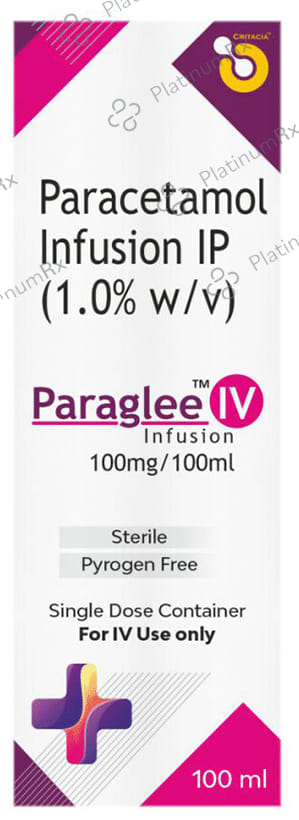
Paraglee 1% Infusion 100ml

Paraglee 1% Infusion 100ml contains Paracetamol, also known as Acetaminophen, in an Extended Release (ER) formulation. It is commonly used to relieve mild to moderate pain such as headaches, muscle aches, and joint pain, and to reduce fever. The ER formulation allows the medicine to be released slowly over time, providing longer-lasting relief for approximately 6 to 8 hours. This helps reduce the need for frequent dosing throughout the day. Although generally safe when used as directed, taking more than the recommended dose can cause serious liver damage.
Written by: Syed Jommy Abbas, B. Pharma
Reviewed by: Dr. Sarabjeet Kaur, MBBS
Last updated on: 28-01-2026
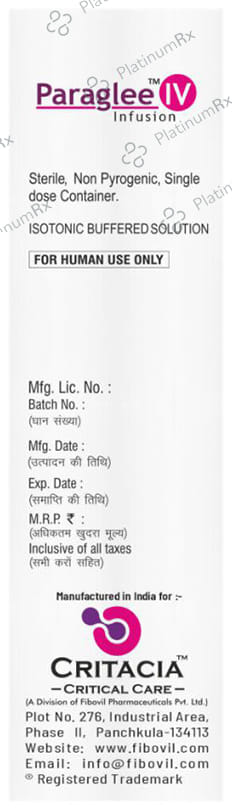
Fibovil Pharmaceuticals Pvt. Ltd.
FDA & GMP Certified
Long Expiry (>8 Months)
15 Days Easy Returns
General Information
Have a question?
Genuine Medicine
Pay On Delivery
Secure Payment

LegitScript Certified Online Pharmacy


View content in
 English
Quick Summary
Paraglee 1% Infusion 100ml contains Paracetamol, also known as Acetaminophen, in an Extended Release (ER) formulation. It is commonly used to relieve mild to moderate pain such as headaches, muscle aches, and joint pain, and to reduce fever. The ER formulation allows the medicine to be released slowly over time, providing longer-lasting relief for approximately 6 to 8 hours. This helps reduce the need for frequent dosing throughout the day. Although generally safe when used as directed, taking more than the recommended dose can cause serious liver damage.
Detailed Description
Paraglee 1% Infusion 100ml contains Paracetamol (Acetaminophen) in an Extended Release (ER) dosage form. Paracetamol is classified as an analgesic (pain reliever) and antipyretic (fever reducer).
This specific ER formulation is designed with a special coating or matrix that controls the rate at which the active ingredient is dissolved and absorbed into the bloodstream. Instead of being rapidly absorbed, the medication is released gradually over several hours. This sustained action provides longer-lasting relief than standard paracetamol tablets, which usually last 4 to 6 hours.
The primary role of Paraglee 1% Infusion 100ml is to manage common painful conditions like headaches, toothaches, muscle aches, and discomfort associated with the common cold or flu. It works by targeting specific chemical messengers in the brain and spinal cord that are responsible for pain and temperature regulation.
Due to the higher strength and the prolonged release mechanism, it is absolutely essential to follow the prescribed dosing schedule strictly and never exceed the maximum daily limit, as Paracetamol overdose can lead to severe, irreversible liver damage.
Uses of Paraglee 1% Infusion 100ml
Paraglee 1% Infusion 100ml is used for the symptomatic relief of:
Mild to Moderate Pain:
Including headaches, migraines, muscle aches, backaches, joint pain, menstrual cramps, and pain after dental procedures.
Fever (Pyrexia):
To reduce elevated body temperature associated with colds, flu, and other illnesses.
Sustained Relief:
Due to its Extended Release formulation, it is particularly suitable for conditions requiring relief that lasts for several hours.
Benefits of Paraglee 1% Infusion 100ml
Longer Duration of Action: The primary benefit of the ER formulation is that it allows for less frequent dosing (typically every 6 to 8 hours) compared to standard paracetamol, offering sustained pain relief and better sleep quality.
Effective Pain Relief:
Provides reliable relief for a wide range of common aches and pains.
Fever Reduction:
Highly effective in quickly and safely reducing high body temperatures.
Well-Tolerated:
When taken correctly, Paracetamol has a low incidence of gastrointestinal side effects compared to non-steroidal anti-inflammatory drugs (NSAIDs) like ibuprofen.
Side Effects of Paraglee 1% Infusion 100ml
When taken as directed, Paraglee 1% Infusion 100ml is generally safe. Side effects are usually rare, mild, and temporary.
Common Side Effects (Rare):
- Nausea and Vomiting
- Constipation
- Stomach upset
- Slight drowsiness
Serious Side Effects (Stop taking the medicine and seek urgent medical attention if you experience):
- Severe Allergic Reaction (Anaphylaxis): Rash, swelling of the face, throat, or tongue, difficulty breathing, or dizziness.
- Serious Skin Reactions (Very Rare): Redness, blistering, peeling of the skin (e.g., Stevens-Johnson Syndrome).
- Signs of Liver Damage (Overdose Risk): Yellowing of the skin or eyes (jaundice), persistent nausea, unexplained fatigue, or pain in the upper right abdomen.
Directions for Use
Always take Paraglee 1% Infusion 100ml exactly as prescribed by your doctor.
- Swallow the tablet whole. Do not crush, chew, or dissolve the Extended Release tablet. Breaking the tablet destroys the special release mechanism and could lead to rapid, significant drug absorption.
- Take the medicine with a glass of water, with or without food.
- The dose is usually one tablet taken every 6 to 8 hours as needed.
- Do not exceed (6 tablets) in a 24-hour period. Never take more than four doses in 24 hours without medical advice.
- Be aware of the total Paracetamol intake from all sources (other cold/flu medicines, etc.).
How it works
Paracetamol's mechanism of action is primarily central, meaning it works mainly in the Central Nervous System (CNS), which includes the brain and spinal cord.
- Analgesic Action: Paracetamol is thought to inhibit the synthesis of prostaglandins (chemicals that promote pain and inflammation) specifically within the CNS. This inhibition reduces the body’s perception of pain signals.
- Antipyretic Action: It acts on the hypothalamus, the part of the brain that regulates body temperature. It helps reset the elevated temperature set point, promoting heat loss through processes like sweating and vasodilation (widening of blood vessels), thereby lowering fever.
- Extended Release: The unique feature of Paraglee 1% Infusion 100ml is its tablet design, which gradually releases the 650mg dose. This ensures a more consistent level of the drug in the bloodstream over a 6 to 8-hour window, providing prolonged and steady relief.
Safety Advice for Paraglee 1% Infusion 100ml

Pregnancy
CONSULT DOCTOR.
Paracetamol is generally considered safe for occasional use during pregnancy at the lowest effective dose, but always consult your doctor first. Prolonged or frequent use should be avoided unless medically necessary.

Breastfeeding
GENERALLY SAFE.
Paracetamol passes into breast milk in small amounts but is generally considered safe for use by breastfeeding mothers. Use the lowest dose for the shortest time needed.

Alcohol
CRITICAL WARNING!
Avoid or strictly limit alcohol while taking Paraglee 1% Infusion 100ml. Alcohol significantly increases the risk of severe liver damage (hepatotoxicity) associated with Paracetamol, even at therapeutic doses.

Driving
SAFE.
Paracetamol is not known to affect alertness or the ability to drive. However, if you experience rare side effects like dizziness, avoid driving or operating machinery.

Diet & Lifestyle
SAFE.
No specific dietary restrictions are required. Maintaining adequate hydration is important, especially when treating a fever.
Quick Tips for Paraglee 1% Infusion 100ml
- Read All Labels: Before taking Paraglee 1% Infusion 100ml, read the labels of any other medicines you are using, including those for colds, coughs, or flu. Many of these products also contain Paracetamol (Acetaminophen). Taking more than one product with Paracetamol can lead to an accidental overdose, which may cause serious liver damage.
- Do Not Break the ER Tablet: The Extended Release mechanism depends on the tablet being swallowed whole. Breaking it can lead to immediate, uncontrolled release of the dose, which increases toxicity risk.
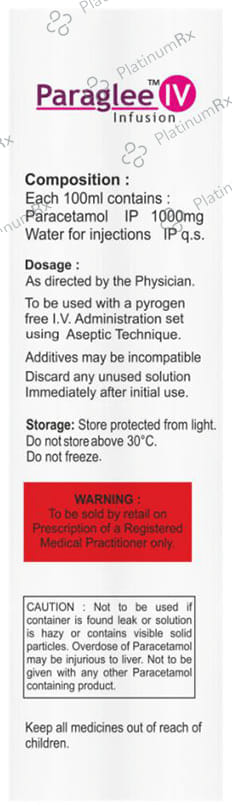
- Know the Limit: Never exceed 3900 mg (6 tablets of 650mg) in a 24-hour period. For chronic users or those with liver issues, the doctor may recommend a lower maximum dose.
- Pain vs. Fever: If you are treating a fever, ensure you also focus on hydration and resting.
Storage Advice
- Store the tablets at room temperature, ideally between 20°C to 25°C (68°F to 77°F).
- Keep the medicine in the original packaging, away from excessive moisture, heat, and direct light.
- Keep the tablets out of the reach of children and pets.
- Do not use the medication past the expiry date printed on the packaging.
Drug-Food Interaction
- There are no significant drug–food interactions with Paraglee 1% Infusion 100ml. It can be taken with or without food.
Interactions with Other Drugs
The following drugs may interact with Paraglee 1% Infusion 100ml and require caution:
- Warfarin (Blood Thinner): Regular or excessive use of Paracetamol can increase the effect of Warfarin, raising the risk of bleeding. INR (International Normalised Ratio) levels should be closely monitored.
- Other Paracetamol/Acetaminophen Products: This is the most critical interaction. Never combine Paraglee 1% Infusion 100ml with cold/flu tablets, combination pain relievers, or prescription narcotics that already contain Paracetamol.
- Drugs that Induce Liver Enzymes (e.g., Carbamazepine, Phenytoin): These medications can speed up the breakdown of Paracetamol into toxic metabolites, increasing the risk of liver damage.
- Isoniazid (Anti-TB drug): Increases the potential for Paracetamol-induced liver toxicity.
Drug-Disease Interactions
Caution is required for patients with:
- Liver Disease (Hepatotoxicity): Patients with pre-existing liver impairment (e.g., cirrhosis, chronic hepatitis) should use Paracetamol cautiously and often require a reduced maximum daily dose, determined by a physician.
- Kidney Disease (Renal Impairment): Dose adjustment may be necessary in patients with severe kidney problems, as the drug metabolites are cleared through the kidneys.
- Alcoholism: Chronic, heavy alcohol users are at a significantly increased risk of liver damage from Paracetamol and must adhere strictly to the doctor’s prescribed dose.
Daily Dose
The standard recommended dose for adults is one 650mg tablet taken every 6 to 8 hours as needed for pain or fever.
Crucial Dosing Rule:
- Maximum Daily Dose: Do not take more than 3900 mg (6 tablets) in a 24-hour period unless specifically directed by a healthcare professional.
- Minimum Time Between Doses: Ensure at least 6 hours pass between each dose of the 650mg ER tablet.
Overdose
Taking too much Paraglee 1% Infusion 100ml (Paracetamol) is dangerous. It can cause serious liver damage. If you think you or someone else has taken too much, get emergency medical help immediately. Do not wait for symptoms to appear. Early signs of overdose may include nausea, vomiting, stomach pain, or loss of appetite. These symptoms may not show up for 24 to 48 hours. Later signs can include yellowing of the skin or eyes (jaundice), confusion, or extreme tiredness. These may be signs of liver failure. Treatment works best when started early. Always follow the recommended dose. Never take more than prescribed.
What If You Forget to take Paraglee 1% Infusion 100ml?
If you miss a scheduled dose of Paraglee 1% Infusion 100ml, take it as soon as you remember. However, if it is almost time for your next dose, skip the missed dose. Do not double the dose to make up for a missed one. Simply take the next dose at your regularly scheduled time, ensuring that the necessary 6 to 8 hours have passed since your last tablet.
FAQ
Fact Box
Therapeutic Class
Analgesic and Antipyretic
Action Class
Non-opioid, Centrally Acting Prostaglandin Synthesis Inhibitor
Chemical Class
Anilide (Para-aminophenol derivative)
Habit Forming
No
Disclaimer
PlatinumRx is committed to providing reliable and accurate information to support informed customer decisions. However, all information made available on the Platform, including product descriptions, comparisons, and other content, is provided solely for general informational purposes. Such information is not intended to diagnose, prevent, treat, or cure any medical condition, nor should it be relied upon as a substitute for professional medical advice, diagnosis, or treatment.

Customers also bought

More Medicines By Fibovil Pharmaceuticals Pvt. Ltd.
More Medicines With Paracetamol (Acetaminophen) 1% w/v
Top Selling Medicines
Top Selling Devices
Top Selling Health Products