














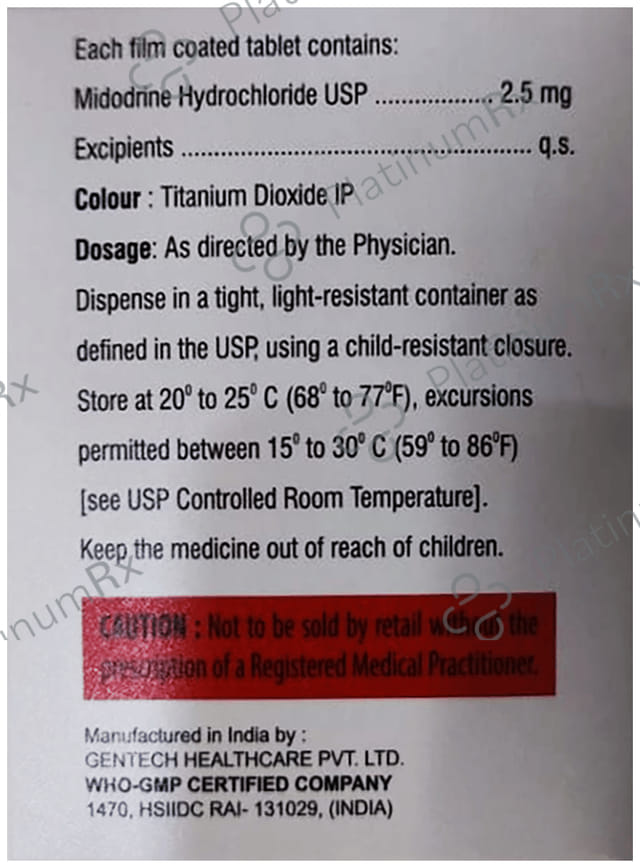
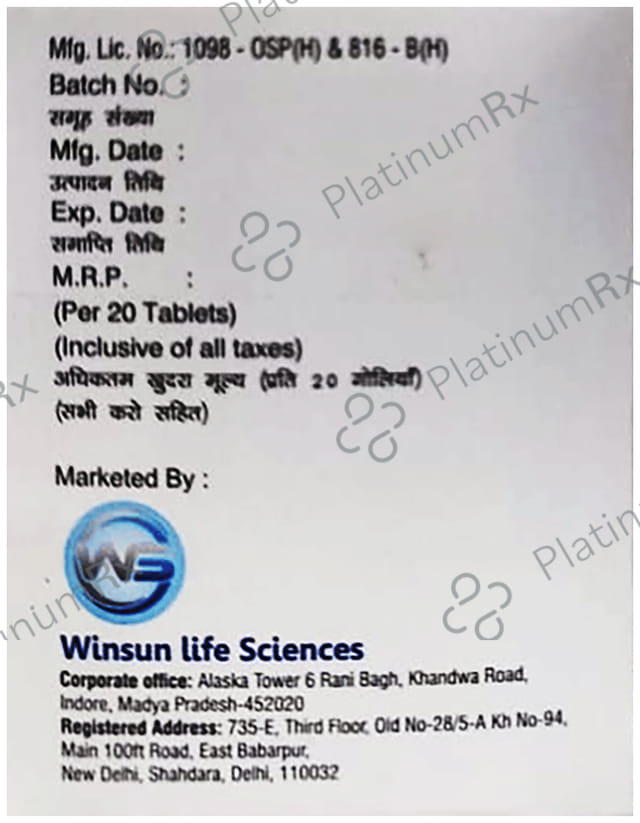
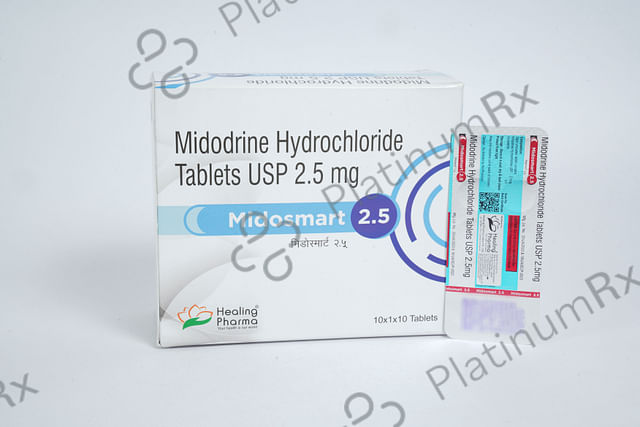
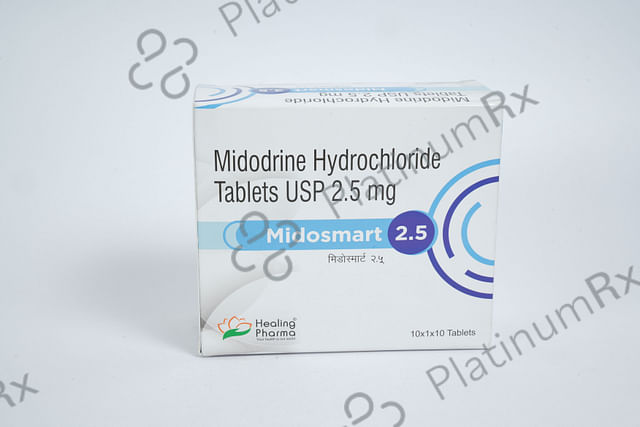
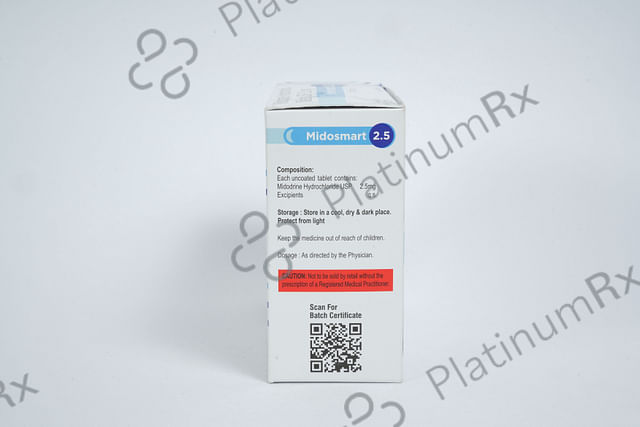
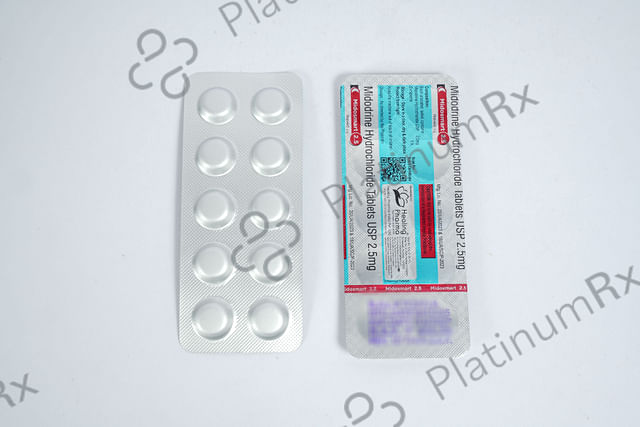
Midorise 2.5mg Tablet 20s
Torrent Pharmaceuticals Ltd.
Strip of 20 tablets
₹964.32
₹1176.00
18% Off
Midowin 2.5mg Tablet is a specialised cardiovascular medication containing of Midodrine Hydrochloride. It is primarily used to treat symptomatic orthostatic hypotension, a condition where blood pressure drops significantly when a person stands up, leading to severe dizziness or fainting. Midodrine belongs to a class of drugs known as alpha-1 adrenergic agonists. It works by stimulating receptors in blood vessels, causing them to constrict. This action increases blood pressure and ensures that an adequate blood supply reaches the brain and heart when the patient is upright, significantly improving their ability to perform daily activities.


Delivery by
...
FDA & GMP Certified
Long Expiry (>8 Months)
15 Days Easy Returns
Have a question?

Genuine Medicine
Pay On Delivery
Secure Payment

LegitScript Certified Online Pharmacy
View content in
 English
Midowin 2.5mg Tablet is a specialised cardiovascular medication containing of Midodrine Hydrochloride. It is primarily used to treat symptomatic orthostatic hypotension, a condition where blood pressure drops significantly when a person stands up, leading to severe dizziness or fainting. Midodrine belongs to a class of drugs known as alpha-1 adrenergic agonists. It works by stimulating receptors in blood vessels, causing them to constrict. This action increases blood pressure and ensures that an adequate blood supply reaches the brain and heart when the patient is upright, significantly improving their ability to perform daily activities.
Midowin 2.5mg Tablet is a prodrug, meaning it is converted into its active form, desglymidodrine, after it enters the body. This formulation is essential for patients whose lives are restricted by chronic low blood pressure that does not respond to standard lifestyle changes.
Composition and Mechanism: Each tablet contains of Midodrine Hydrochloride. Once metabolised, the active ingredient targets alpha-1 receptors on the smooth muscle of arteries and veins. This triggers a process called vasoconstriction, where the blood vessels narrow. Unlike many other blood pressure medications that affect heart rate, Midodrine primarily focuses on the "peripheral" vessels. By narrowing these vessels, it prevents blood from "pooling" in the legs when a person stands, thereby maintaining a steady upward pressure toward the vital organs.
Major Therapeutic Uses: Midowin 2.5mg Tablet is indicated for the treatment of symptomatic orthostatic hypotension in patients whose lives are considerably impaired despite intensive standard care. This includes patients with autonomic nervous system disorders (like Parkinson’s disease or Shy-Drager syndrome) that prevent the body from naturally regulating blood pressure. It is specifically used to manage "dizziness" and "blackouts" that occur upon standing. Because of its potent effect, it is reserved for patients whose condition is severe enough to limit their mobility and independence.
Benefits and Precautions: The primary benefit of Midowin 2.5mg Tablet is the restoration of mobility and the reduction of fall risks. Stabilising blood pressure allows patients to stand, walk, and engage in social life without the fear of fainting. However, a critical precaution is the risk of "supine hypertension", high blood pressure that occurs when the patient lies down. Because the drug keeps vessels constricted, blood pressure can rise to dangerous levels if the patient is horizontal. Therefore, Midodrine should only be taken during the day, when the patient is upright.
Medical Supervision and Risks: Use of Midowin 2.5mg Tablet requires frequent blood pressure monitoring, both while standing and lying down. Major risks include slowed heart rate (bradycardia) and urinary retention, as the drug can also constrict the muscles at the base of the bladder. Patients with severe heart disease, acute kidney disease, or persistent high blood pressure while lying down should not use this medication. It is essential for the medical team to evaluate the "risk-to-benefit" ratio, as this drug is specifically for those with significantly impaired daily lives.
Midowin 2.5mg Tablet (Midodrine ) is indicated for:
Managing severe drops in blood pressure upon standing.
Supporting patients with nerve damage that affects blood pressure control.
Reducing episodes of fainting and near-fainting.
Increasing the "upright time" for patients with chronic low blood pressure.
Midowin 2.5mg Tablet offers a "pressor" approach to cardiovascular stability. Its primary medicinal benefit is the artificial support of vascular tone. For patients with a failing autonomic nervous system, the body forgets how to "squeeze" the blood vessels to push blood against gravity. Midodrine acts as the chemical signal the body is missing, providing the necessary tension in the veins to keep blood circulating toward the head.
One of the significant advantages of the dose is its rapid onset and short duration. It typically starts working within 45 to 90 minutes. This allows for a "strategic" dosing schedule. Since patients do not need high blood pressure while they are sleeping, the short-acting nature of the 5mg tablet ensures the drug is mostly out of the system by bedtime. This helps prevent the long-term cardiovascular strain that constant high blood pressure would cause.
Furthermore, Midowin 2.5mg Tablet is highly effective at improving "brain perfusion." When blood pressure stays stable, patients report less "brain fog," better concentration, and significantly less fatigue. By eliminating the constant physical stress of staying upright while conscious, the medication allows the body to focus its energy on recovery and daily tasks. For many, it represents the difference between being bedridden and being able to walk around their home or community.
Confusion: Sudden changes in mental state or vision.
Midodrine works through a "Peripheral Vasoconstriction" pathway:

Usually safe, but be careful as the condition (low blood pressure) may cause more dizziness than the drug.

Not recommended. Consult your doctor about the risks to the fetus.

Alcohol can lower blood pressure and may cancel out the effects of the medication.
Store Midowin 2.5mg Tablet at room temperature (below 25°C). Keep the tablets in their original light-resistant container, as the drug is sensitive to light. Keep out of reach of children.
May further slow the heart rate (bradycardia) when combined with Midodrine.
Increases the risk of dangerous heart rhythm changes and slowed heart rate.
Often used together, but significantly increases the risk of high blood pressure when lying down.
Many contain "phenylephrine," which can cause blood pressure to skyrocket if taken with Midodrine.
The dosage of Midowin 2.5mg Tablet is highly individualised. Most patients begin with an Initial Dose of 2.5mg to 5mg three times daily. This is usually done during daytime hours with approximately 3-4 hours between doses.
Your doctor may increase this to a Maintenance Dose of 10mg three times daily, depending on your standing blood pressure response. The Maximum Dose is 30mg per day (10mg per dose). To prevent "supine hypertension," the last dose should be taken no later than 6:00 PM, or at least 4 hours before going to bed.
If you miss a dose, take it as soon as you remember, provided you will be upright for several hours. If it is close to your sleep time, skip the dose. Do not take two tablets at once to catch up, as this can cause dangerously high blood pressure.
Therapeutic Class
Vasopressor / Antihypotensive
Action Class
Peripheral Vasoconstrictor
Chemical Class
Alpha-1 Adrenergic Agonist
Habit Forming
No
PlatinumRx is committed to providing reliable and accurate information to support informed customer decisions. However, all information made available on the Platform, including product descriptions, comparisons, and other content, is provided solely for general informational purposes. Such information is not intended to diagnose, prevent, treat, or cure any medical condition, nor should it be relied upon as a substitute for professional medical advice, diagnosis, or treatment.

More Medicines By Winsun Life Sciences Pvt. Ltd.
More Medicines With Midodrine 2.5mg
Top Selling Medicines
Top Selling Devices
Top Selling Health Products