
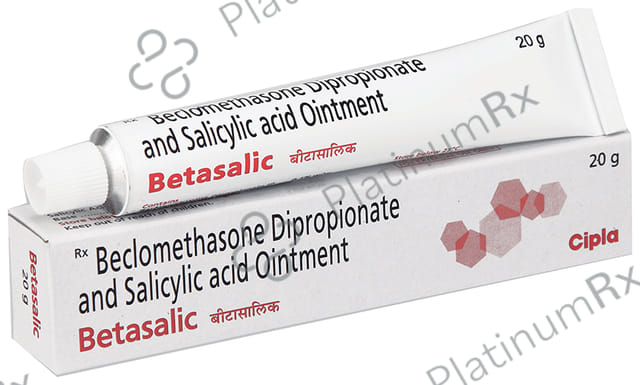






Saltopic Ointment 30gm
Systopic Laboratories Pvt. Ltd.
Tube of 30 gm
₹85.28
₹104.00
18% Off
Dipsalic 3% Ointment 20gm is a topical skin medication used to treat inflammatory skin conditions associated with thick, dry, and scaly skin. Betamethasone is a corticosteroid that helps reduce redness, swelling, itching, and irritation, while Salicylic Acid acts as a keratolytic agent that softens and removes excess dead skin cells. This combination helps improve penetration of the medicine into affected skin and provides relief from scaling (dry, peeling skin) and inflammation. It is available in various topical forms such as creams, ointments, lotions, and scalp applications for use on different parts of the body.
Written by: Syed Jommy Abbas, B. Pharma
Reviewed by: Dr. Devika Rani, MBBS
Last updated on: 27-05-2026
Delivery by
...
FDA & GMP Certified
Long Expiry (>8 Months)
15 Days Easy Returns
Have a question?
Genuine Medicine
Pay On Delivery
Secure Payment

LegitScript Certified Online Pharmacy
Dipsalic 3% Ointment 20gm is a topical skin medication used to treat inflammatory skin conditions associated with thick, dry, and scaly skin. Betamethasone is a corticosteroid that helps reduce redness, swelling, itching, and irritation, while Salicylic Acid acts as a keratolytic agent that softens and removes excess dead skin cells. This combination helps improve penetration of the medicine into affected skin and provides relief from scaling (dry, peeling skin) and inflammation. It is available in various topical forms such as creams, ointments, lotions, and scalp applications for use on different parts of the body.
Dipsalic 3% Ointment 20gm is a topical medicine used to manage long-lasting inflammatory skin conditions associated with thick, dry, rough, or flaky skin. It contains Betamethasone, which suppresses inflammatory reactions in the skin and helps relieve symptoms such as itching, redness, and irritation. Salicylic acid, a keratolytic agent, works by softening and breaking down keratin, a protein that forms part of the skin structure. This helps loosen the outer layer of skin, allowing dead skin cells to shed more easily and helping remove thick, rough, and flaky skin buildup.
This combination is commonly prescribed for psoriasis, eczema, seborrheic dermatitis, and other skin conditions with scaling and inflammation. By reducing inflammation and helping remove flaky skin, it may improve skin texture and provide relief from discomfort.
The medicine should be applied exactly as directed by your healthcare provider. It is for external use only. Avoid contact with the eyes, mouth, and broken skin. Do not use it on large areas of the body or for prolonged periods unless advised by your doctor, as long-term corticosteroid use may lead to thinning of the skin and other side effects. Regular follow-up may be needed to monitor the skin’s response to treatment and adjust therapy if required.
The uses of Dipsalic 3% Ointment 20gm are as follows:
Commonly used to help reduce thick scaling, redness, itching, and inflammation associated with psoriasis.
It helps relieve itching, irritation, dryness, and inflammation in certain types of eczema with rough or flaky skin.
This medicine may help control redness, thickened skin, and flaking associated with seborrheic dermatitis, including dandruff-like scalp conditions.
Long-standing inflammatory skin conditions with thickened or flaky skin may respond well to this combination.
It is useful in skin disorders with excessive buildup of dead skin cells causing thick, rough, or hardened patches.
Here are the benefits of Dipsalic 3% Ointment 20gm:
Dipsalic 3% Ointment 20gm is generally well tolerated when used as directed, most side effects are mild and occur at the application site.
Dipsalic 3% Ointment 20gm is available in different topical forms such as creams, ointments, lotions, and scalp lotions. Your doctor may prescribe the most suitable form depending on the affected area and type of skin condition.
Betamethasone is a corticosteroid that suppresses inflammatory reactions in the skin. It reduces the production of inflammatory substances, such as prostaglandins, leukotrienes, and cytokines, and decreases blood vessel permeability and inflammatory cell infiltration. This helps provide rapid relief from redness, swelling, itching, irritation, and discomfort associated with inflammatory skin conditions.
Salicylic Acid acts as a keratolytic agent that softens and removes thick, dry, and flaky skin by breaking down excess keratin in the outer layer of the skin. This descaling action helps clear accumulated dead skin. It allows Betamethasone to penetrate deeper into the affected area, improving treatment effectiveness and providing faster relief than using a corticosteroid alone.

Do not use if you are allergic to Betamethasone, Salicylic Acid, or other corticosteroids/salicylates. Seek medical help if rash, swelling, or breathing difficulty occurs.

Use only if advised by your doctor. Avoid applying near the breast area before breastfeeding.

Not routinely recommended. Use only if clearly advised by a specialist, as corticosteroids may pose risks with prolonged use.

No known effect on alertness or ability to drive.

No direct interaction. Normal alcohol intake does not affect topical use.

Topical use is unlikely to affect liver function.

Topical use is unlikely to affect kidney function.

Use with care. Children’s skin absorbs steroids more easily, increasing the risk of side effects. Only under medical supervision.

Older adults may have thinner skin, increasing the risk of irritation or steroid‑related side effects. Use with monitoring.
A few practical measures can help improve treatment outcomes and ensure safe use of Dipsalic 3% Ointment 20gm:
No significant food interactions are known with topical use. Since the medicine is applied on the skin, food and beverages generally do not affect its action. Use the medicine exactly as advised by your healthcare provider.
If you miss an application, use it as soon as you remember. If it is almost time for your next scheduled application, skip the missed one. Do not apply extra cream or lotion to make up for a missed dose.
Therapeutic Class
Topical medicine for inflammatory and scaly skin conditions
Action Class
Topical anti-inflammatory and keratolytic medicine
Chemical Class
Corticosteroid + Keratolytic agent
Habit Forming
No
PlatinumRx is committed to providing reliable and accurate information to support informed customer decisions. However, all information made available on the Platform, including product descriptions, comparisons, and other content, is provided solely for general informational purposes. Such information is not intended to diagnose, prevent, treat, or cure any medical condition, nor should it be relied upon as a substitute for professional medical advice, diagnosis, or treatment.

More Medicines By Fulford India Ltd.
More Medicines With Betamethasone 0.1% w/w + Salicylic Acid 3% w/w
Top Selling Medicines
Top Selling Devices
Top Selling Health Products