
Top Brand
 18%
18% Salt Composition
Lidocaine (Lignocaine) 5% w/w
Our Recommendation
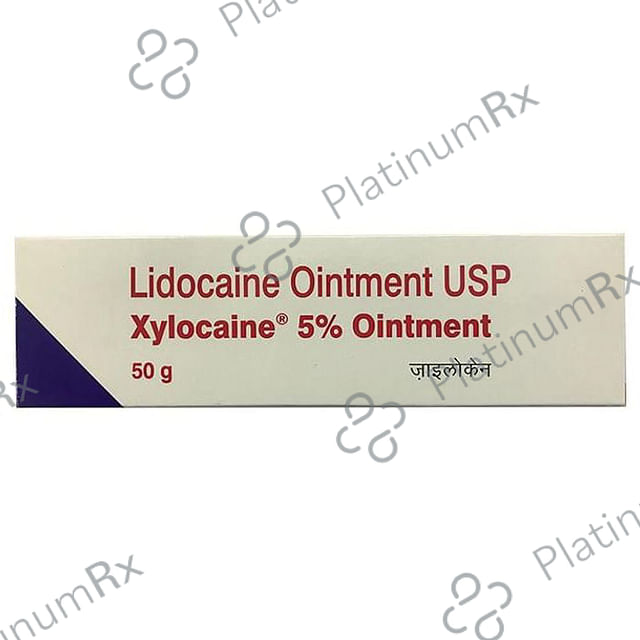
Xylocaine 5% Ointment 50gm

1,212+ trust this

WHO GMP Certified
1,212+ trust this
WHO GMP Certified


WHO GMP
Certified

15 Days Easy
Returns

Long Expiry
(>8 Months)

WHO GMP
Certified

15 Days Easy
Returns

Long Expiry
(>8 Months)

Delivery by
Uses of Xylocaine 5% Ointment 50gm

Local anesthesia (Numb tissues in a specific area)
Customers also bought
More About Xylocaine 5% Ointment 50gm
 Benefits
In Local anesthesia (Numb tissues in a specific area) Xylocaine 5% Ointment is a local anesthetic. It makes your skin numb. As a gel or cream, it can be used to relieve pain, irritation, or itching caused by a wide variety of conditions. It is generally very safe, works quite quickly, and will reduce the discomfort that might be caused by an injection, having a drip (cannula) put into your skin or a small cosmetic or other surgical procedure. It is also used in procedures requiring the insertion of a tube into your mouth, nose, anus (proctoscopy) or bladder (cystoscopy) can be uncomfortable and even painful. Lidocaine can be applied to the surface of the tube before it is inserted. This will both lubricate the tube and give an anesthetic effect, making the procedure more comfortable.
 Side Effects
The majority of side effects typically do not necessitate medical intervention. and disappear as your body adjusts to the medicine. Doctor consultation is advised if they persist or if you're worried about them.
 How to use
This medication is designated for external application solely. Utilize it according to the dosage and duration instructed by your doctor. Check the label for directions before use. Ensure that the affected area is clean and dry and gently massage the ointment.
 How it works
Xylocaine 5% Ointment is a local anesthetic. It works on the skin by blocking pain signals from the nerves to brain. This numbs the area and decreases pain sensation.

No interaction has been found or established.

Safe when prescribed by an expert: Xylocaine 5% Ointment is generally considered safe to use during pregnancy. Animal studies have shown low or no adverse effects to the developing baby; however, there are limited human studies.

Safe when prescribed by an expert: Xylocaine 5% Ointment is probably safe to use during breastfeeding. Limited human data suggests that the drug does not represent any significant risk to the baby.

No interaction found/established

No interaction found/established

No interaction found/established
 Manufacturer Address
Zydus Tower, Satellite Cross Roads,Ahmedabad ‚ 380015 Gujarat, India.


References
Disclaimer
PlatinumRx is committed to providing reliable and accurate information to support informed customer decisions. However, all information made available on the Platform, including product descriptions, comparisons, and other content, is provided solely for general informational purposes. Such information is not intended to diagnose, prevent, treat, or cure any medical condition, nor should it be relied upon as a substitute for professional medical advice, diagnosis, or treatment.
More Medicines By Manufacturer
Top Selling Medicines
Top Selling Devices
Flat ₹100 off on first app order | Use Code: APP100 |
Flat ₹100 off on first app order
USE CODE: APP100

Download Now


