Disprin Tablet: Uses, Composition, Side Effects & FAQs
Last Updated: November 24, 2026


Written by:
Muskan Gurung, Diploma in Pharmacy
Reviewed by:
Dr. Sekh Addil, MBBSPublished date: 24-Nov-2026
Summary
Disprin tablet is a soluble painkiller for short-term pain and fever, such as headache, toothache and period pain. Its only active ingredient is aspirin, which eases pain, lowers fever and reduces swelling. You can buy it without a prescription in India, but it is not suitable for everyone, including children under 16. Do not use it for a sudden high fever until a doctor checks you, as it could be dengue.
Key Takeaways
- What it is: A soluble anti-inflammatory painkiller (NSAID) and fever reducer.
- Active ingredients: Aspirin (acetylsalicylic acid).
- Used for: Short-term headache, toothache, period pain, muscle pain, mild arthritis pain and mild fever with a known cause.
- Not meant for: Children under 16, dengue, stomach ulcers, bleeding disorders, pregnancy, or aspirin or NSAID allergy.
- Prescription: Not needed in India. Ask a pharmacist or doctor first if you have a health condition.
- How to take: Dissolve in a glass of water and drink, ideally with or after food.
- Common side effects: Indigestion, stomach ache, nausea and bleeding more easily than usual.
What Is Disprin?
Disprin is a single-medicine tablet that contains aspirin, a type of non-steroidal anti-inflammatory drug (NSAID). It is made to dissolve in water before you drink it. This article covers the plain soluble tablet sold in India, often labelled Disprin Regular.
Disprin products differ between countries, and some with a similar name contain low-dose aspirin for long-term heart protection. Check the name and ingredients on your own pack, and do not swap one for the other.
Buy Disprin Tablet online at Best Price
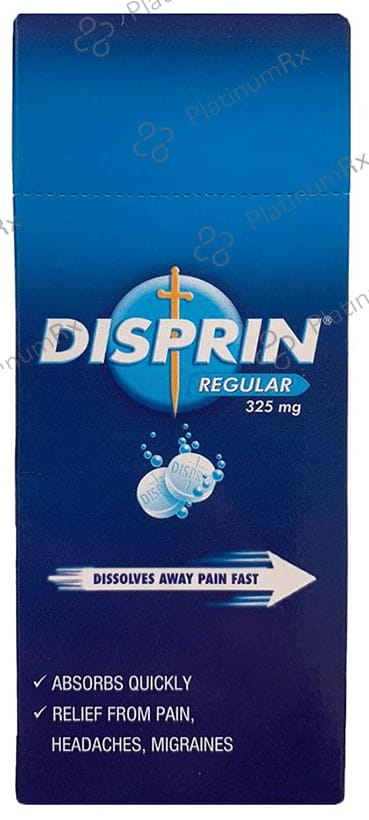
Disprin Composition (Per Tablet)
| Ingredient | Type | What it does (in simple words) |
|---|---|---|
| Aspirin (acetylsalicylic acid) | Anti-inflammatory painkiller (NSAID) | Eases pain, lowers fever and reduces swelling |
Check the exact strength printed on your pack; it may vary between variants, and some versions contain soya, which matters if you have a peanut or soya allergy.
How Does Disprin Work?
Aspirin permanently blocks an enzyme called COX. Your body uses this enzyme to make prostaglandins, the chemicals that drive pain, fever and swelling. It also stops platelets, the blood cells that form clots, from sticking together, so you may bleed more easily.
Uses of Disprin
Disprin is used for short-term relief of:
- Headache, including mild to moderate migraine
- Toothache until you can see a dentist
- Period pain, the monthly cramps in your lower tummy
- Muscle pain and lower back pain, the everyday aches and strains
- Mild arthritis pain, the ache in sore joints
- Fever with a known, mild cause such as a common cold
Do not use Disprin for a sudden high fever with body aches, severe headache or rash. See a doctor first, especially in dengue season. Dengue can start this way, and aspirin can make its bleeding worse.
It only eases symptoms and does not treat the cause of your pain or fever. It does not kill bacteria or viruses, so an infection may need separate treatment.
Everyday Pain vs Possible Dengue Fever: Is Disprin Right for You?
| Everyday pain | Possible dengue fever | |
|---|---|---|
| What it feels like | Dull headache, toothache or period pain | Sudden high fever, severe headache, body aches |
| Sign or pattern | Mild, with a known cause | Pain behind the eyes, rash |
| Is Disprin suitable? | Yes, if none of the warnings apply | No, not until a doctor has checked you |
| What usually helps | A short course of a painkiller | See a doctor; paracetamol for pain |
Using a painkiller-strength tablet every day without advice can raise your risk of stomach bleeding.
How to Take Disprin Tablet
- Put the tablet in a glass of water and let it dissolve fully before you drink it. Do not swallow it whole.
- Have it with or just after food, as this is the ideal way to take it.
- Leave the gap between doses that is printed on your pack.
- Avoid other medicines that contain aspirin while you are using Disprin.
- Use it for the shortest time you can. Ask for advice if you need it for more than 3 days.
How Much to Take
Your doctor decides how much and how often based on your age, weight, symptoms and other health conditions. If you bought Disprin without a prescription, follow the directions printed on your pack. Tablet strength can differ between packs, so do not copy a dose from another pack or a website.
Never increase the dose on your own. A higher dose raises the risk of stomach bleeding, ringing in the ears and aspirin poisoning.
Do not give Disprin to a child or teenager under 16 unless a doctor has advised it. Aspirin is linked to a rare but serious illness in children that harms the brain and liver. It often comes during or after a viral infection such as flu or chickenpox.
If you have taken too much, go to the nearest hospital emergency department immediately with the strip or pack. Warning signs include ringing in the ears, vomiting, fast breathing, dizziness and confusion. For an emergency call 112, or 108 for an ambulance.
If you took too much on purpose, or you are having thoughts of harming yourself, please also call Tele-MANAS. The number is 14416 or 1800-891-4416. This Government of India helpline is open 24×7.
What If You Miss a Dose?
Most people use Disprin only when they need it, so there is usually no dose to miss. If your doctor set regular doses, take a missed one when you remember, unless the next is nearly due. Never double up to make up for a missed dose.
How Long Does It Take to Work?
Aspirin gets into your blood quickly, reaching its peak in about 20 minutes to 2 hours. A dissolved tablet is absorbed faster than a solid one. See a doctor if your pain or fever has not improved after 3 days.
Storage
Store it in its original pack in a cool, dry place, away from heat and light. Follow the temperature printed on your pack, and avoid the bathroom, where moisture can spoil it. Keep it out of children's reach, and throw away expired tablets or any that smell strongly of vinegar.
Side Effects of Disprin
Like all medicines, Disprin can cause side effects, but not everyone gets them. Tell a pharmacist or doctor if any side effect bothers you or does not go away.
Common and mild:
- Indigestion or heartburn
- Stomach ache
- Nausea or vomiting
- Bleeding more easily than usual, such as from a small cut
Rare but serious (stop the medicine and see a doctor right away):
- Vomiting blood or coffee-ground vomit, black sticky stools, or bright red blood in stools
- Severe stomach pain, pale skin or feeling faint
- Swollen face, lips, tongue or throat, a raised itchy rash, wheezing or trouble breathing
- Ringing in the ears or loss of hearing
- Chest pain with a rash or breathlessness, a severe or blistering rash, a sudden severe headache, or new swelling of the feet or legs (call 112 or 108)
The stomach problems happen because aspirin irritates the stomach and slows clotting. They are more likely if you are 60 or older, drink regularly or take it for too long. Using other NSAIDs, steroids or blood thinners also raises the risk.
Explore: - Stomach Pain Medicines
Who Should Not Take Disprin
- Anyone allergic to aspirin, ibuprofen or other NSAIDs
- Children and teenagers under 16, unless a doctor advises it
- People with a stomach ulcer or stomach bleeding, now or before
- People with haemophilia, another bleeding disorder, or dengue
- People with severe liver or kidney problems, or severe heart failure
- Women breastfeeding or in the last 3 months of pregnancy
Precautions
Tell your doctor before taking Disprin if you have:
- Asthma, nasal polyps or hay fever (aspirin can trigger wheezing or an allergic reaction)
- Frequent heartburn, a past stomach problem, or bowel disease such as ulcerative colitis (bleeding is more likely)
- Gout, or taking probenecid (aspirin can trigger a flare and weaken probenecid)
- Liver, kidney or heart disease, or high blood pressure (aspirin can build up, reduce kidney blood flow or affect treatment)
- Pregnancy in the first 6 months, or trying to conceive (use only on a doctor's advice; it can harm the baby from 20 weeks)
- G6PD deficiency, an inherited red blood cell problem (aspirin can trigger sudden anaemia)
- Surgery or dental work planned (you may bleed for longer)
- Reached age 60 or above (stomach bleeding is more likely)
Drug Interactions
| Medicine | What can happen |
|---|---|
| Blood thinners (warfarin, heparin, rivaroxaban, clopidogrel) | Higher risk of bleeding |
| Other NSAIDs (ibuprofen, naproxen, diclofenac) | Higher risk of serious stomach bleeding |
| Steroid medicines | Higher risk of stomach ulcers and bleeding |
| Some antidepressants (SSRIs) | Higher risk of stomach bleeding |
| Methotrexate | Builds up in the body and can become harmful |
| Blood pressure medicines (ACE inhibitors, water tablets) | May work less well, with possible strain on the kidneys |
| Diabetes tablets and insulin | Blood sugar may drop lower than expected |
| Epilepsy medicines (phenytoin, sodium valproate) | May act more strongly |
Always tell your doctor about every medicine, supplement or home remedy you are using. Limit alcohol as well, because it raises the risk of stomach bleeding.
Frequently Asked Questions About Disprin
When to See a Doctor
See a doctor quickly if you have:
- Pain or fever lasting more than 3 days or getting worse, or redness or swelling in the painful area
- High fever with severe headache or rash (if your gums or nose bleed, call 112 or 108)
- Vomiting blood, black sticky stools or severe stomach pain (call 112 or 108)
- Ringing in the ears or new hearing loss
- Swelling of the face or throat, or trouble breathing (call 112 or 108)
- A child or teenager who has had aspirin and has a change in behaviour with nausea and vomiting (go to the emergency department)
The Bottom Line
Disprin tablet is a soluble aspirin painkiller for short-term pain and fever in adults and children aged 16 or over. Follow the directions on your pack. Indigestion, stomach ache and easier bleeding are the most common side effects. Speak to a pharmacist or doctor if they bother you or do not go away.
References

Add PlatinumRx as a preferred source on Google