Clobeta-GM Cream: Uses, Composition, Side Effects & FAQs
Last Updated: November 3, 2026


Written by:
Srishti Bhukta, B. Pharma
Reviewed by:
Dr. Jay Faldu, MBBSLast updated on:03-Nov-2026
Summary
Clobeta-GM is a cream for inflamed skin that has also become infected, such as the red, crusty patches of eczema or dermatitis that have started to ooze. It is a prescription-only medicine in India, so you cannot buy it without a valid doctor's prescription. It mixes a very strong steroid (clobetasol propionate), an antifungal (miconazole nitrate) and an antibiotic, which may be neomycin or gentamicin. Together they calm the swelling and itching while the infection underneath is treated.
Key Takeaways
- What it is: A prescription cream that combines a strong steroid, an antifungal and an antibiotic.
- Active ingredients: Clobetasol propionate, miconazole nitrate and neomycin (or gentamicin).
- Used for: Inflamed skin with a bacterial or fungal infection, such as infected eczema.
- Not meant for: Acne, plain uninfected rashes, the face, groin or armpits, or young children.
- Prescription: Needed in India; use it only after a doctor has examined the rash.
- How to take: Apply a thin film to clean, dry skin, exactly as your doctor advises.
- Common side effects: Burning, itching, dryness, redness and thin skin; most settle with short use.
What Is Clobeta-GM?
Clobeta-GM is a fixed-dose combination cream, which means three medicines are already mixed together in one tube. It is made for skin that is both inflamed and infected at the same time, not for a rash that has only one of those problems. The letters GM are part of the brand name. They do not tell you the strength, so read the pack label.
Buy Clobeta-GM Cream at Best Price
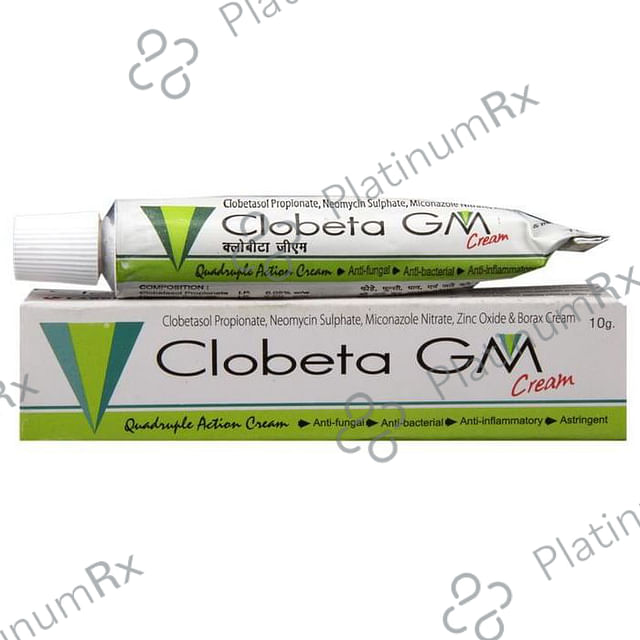
Clobeta-GM Composition (Per Gram)
The cream's name comes from three medicines:
| Ingredient | Type | What it does (in simple words) |
|---|---|---|
| Clobetasol propionate | Strong corticosteroid | Calms redness, swelling and itching |
| Miconazole nitrate | Antifungal | Stops fungi from growing |
| Neomycin sulphate or gentamicin | Aminoglycoside antibiotic | Kills bacteria on the skin |
Check the exact strength and the full ingredient list printed on your pack, because packs sold under this name are not all identical.
The antibiotic may be neomycin or gentamicin. Both are aminoglycoside antibiotics, and the advice on this page applies to either. Tell your doctor if you have ever reacted to one of them.
How Does Clobeta-GM Work?
Think of it as a three-part clean-up on the same patch of skin:
- Calm the fire: Clobetasol propionate is a super-potent steroid. It switches down the inflammation that makes skin red, swollen and intensely itchy.
- Stop the fungus: Miconazole nitrate stops the fungus making the fatty substance in its outer skin, so the cell leaks and the fungus cannot keep growing.
- Clear the bacteria: Neomycin sulphate kills bacteria by stopping them making the proteins they need to survive, which eases the crusting and oozing. If your tube lists gentamicin, it works the same way.
Uses of Clobeta-GM
Doctors usually prescribe Clobeta-GM for:
- Infected eczema (atopic dermatitis), where dry, itchy patches have become crusted, weepy or sore.
- Infected contact dermatitis, a rash caused by something touching the skin, once it starts to ooze.
- Ringworm with a secondary bacterial infection, an itchy ring-shaped patch that has turned raw or pus-filled.
- Infected skin folds (intertrigo), where rubbing skin under the breasts or in the groin has become inflamed and infected.
- Infected insect bites or small scrapes, but only after a doctor has looked at them.
In India, creams like this are often bought straight from a chemist for ordinary ringworm or as a fairness cream. That is one reason fungal infections here have become harder to treat. A steroid hides ringworm and lets it spread, so the patch can end up looking like eczema instead of a ring.
Plain ringworm needs an antifungal cream on its own, with no steroid in it.
It does not treat acne, rosacea or viral rashes, and it does not get rid of the eczema itself. Once the infection and the flare settle, your doctor will usually move you to a plain moisturiser and, if needed, a milder steroid.
Infected Eczema vs Plain Eczema: Is Clobeta-GM Right for You?
| Infected eczema | Plain eczema | |
|---|---|---|
| What it feels like | Sore, hot, sometimes painful | Dry, tight and itchy |
| What you see | Yellow crust, oozing, pus, spreading redness | Dry scaly patches, cracks, no pus |
| Is Clobeta-GM suitable? | Only if a doctor prescribes it | No |
| What usually helps | A doctor's review plus the prescribed cream | Moisturiser and a milder steroid if needed |
Using a steroid-antibiotic cream on uninfected skin adds medicines you do not need, and it can thin the skin over time.
How to Take Clobeta-GM Cream
- Wash the area gently and pat it dry. Do not scrub.
- Squeeze out a small amount, enough for a thin film over the rash.
- Rub it in gently until it disappears, on the affected skin only.
- Do not cover the area with a plaster, plastic wrap or tight dressing unless your doctor says so.
- Wash your hands afterwards, unless your hands are the area being treated.
- Keep it away from your eyes, mouth, nostrils, broken skin and the nappy area.
How Much to Take
Your doctor decides how much and how often, based on your age, how much skin is affected and how inflamed it is. Use the thin film they advised and no more.
Never increase the amount or the number of applications on your own. A thicker layer does not clear the infection faster, but it does raise the risk of skin thinning and of the steroid being absorbed into the body.
Most doctors stop this cream after about two weeks. Do not carry on longer unless your doctor tells you to, and keep the total to no more than 50 g a week.
Children need a dermatologist's advice, and strong steroid creams are usually avoided in infants. Never use an adult tube on a child's rash without asking a doctor.
If someone swallows the cream, go to the nearest hospital emergency department and take the tube with you. You can call 112 for an ambulance.
What If You Miss a Dose?
Apply it as soon as you remember. If your next application is almost due, skip the missed one and carry on as usual. Never apply a double layer to make up for it.
How Long Does It Take to Work?
Most people notice less itching and soreness within a few days, and the redness fades after that. If the rash is no better after about two weeks, or it is spreading, see your doctor again.
Storage
Store the tube at room temperature, away from direct sunlight and away from the damp of a bathroom. Keep it out of children's reach, do not freeze it, and do not use it after the expiry date on the crimp.
Side Effects of Clobeta-GM
Most people use Clobeta-GM for a short course without any trouble. When side effects happen, they are usually mild and settle once the cream is stopped.
Common and mild:
- Burning or stinging when you apply it
- Itching, dryness or peeling
- Redness at the treated area
- Thin, fragile skin if it is used for too long
- Acne-like bumps or tiny visible blood vessels on thin skin
- A red, itchy rash where the cream touches the skin
- Darkening or lightening of the treated skin
Rare but serious (stop the medicine and see a doctor right away):
- Swelling of the face, lips or throat, or trouble breathing
- A rash that spreads quickly, blisters or peels
- Pus, spreading warmth or fever, which can mean the infection is getting worse
- Sudden weight gain, a round face, unusual tiredness or muscle weakness, which can mean the steroid has been absorbed
- Hearing trouble or passing much less urine, if the cream has been used on broken skin
An itchy, red rash at the treated area may be a reaction to the antibiotic in the cream. Stop and see your doctor if it spreads or does not settle. Clobetasol thins the skin and can be absorbed into the body, especially with thick layers, large areas, long use or a dressing over the cream.
Who Should Not Take Clobeta-GM
- Anyone allergic to any ingredient in the cream
- Anyone allergic to neomycin, gentamicin or similar antibiotics
- Acne, rosacea or redness around the mouth
- The face, armpits or groin
- Children under 12, unless a dermatologist prescribes it
- Inside the eyes, mouth or nose
Precautions
Tell your doctor before using Clobeta-GM about any of these:
- Diabetes, because absorbed steroid can raise blood sugar
- Liver disease or Cushing's syndrome, where steroid effects build up faster
- Thin or fragile skin, easy bruising, or age over 65
- Kidney disease, because the antibiotic can affect the kidneys
- Pregnancy, or are planning a pregnancy
- Breastfeeding, in which case do not apply it to the breast or nipple area
- A large area of skin to treat, or skin that is broken or raw
- A child who needs treatment, since children absorb more steroid for their size
Drug Interactions
| Medicine | What can happen |
|---|---|
| Other steroid medicines (prednisolone tablets, other steroid creams) | More skin thinning and more steroid absorbed |
| Other aminoglycoside antibiotics (gentamicin, streptomycin) | Higher chance of an allergic skin reaction |
| Warfarin and other blood thinners | Miconazole can strengthen them; your doctor may check your clotting |
| Salicylic acid, urea or alcohol-based skin products | More stinging, dryness and absorption |
| Diabetes medicines | Blood sugar may run higher while you use the cream |
Always tell your doctor about every medicine, supplement or home remedy you are using. Alcohol does not affect this cream, because very little of it reaches the blood.
Frequently Asked Questions About Clobeta-GM
When to See a Doctor
A cream like this only treats the surface. Get medical help quickly if:
- The redness spreads fast, or the area becomes hot, swollen and very painful
- Pus, yellow crust or a foul smell appears
- You have a fever along with the rash
- Your face, lips or throat swell, or you have trouble breathing
- You notice hearing trouble or pass much less urine than usual
- The rash is no better after about two weeks, or keeps coming back
The Bottom Line
Clobeta-GM is a short-course cream for skin that is inflamed and infected at once, and it works best when a doctor has confirmed both problems. Apply a thin film, keep it off the face and skin folds, and stop when your doctor says. Most side effects are mild and settle, but skin thinning and absorbed-steroid effects are real risks if it is used for too long or in thick layers.
References