Benadryl Cough Syrup: Uses, Composition, Side Effects & FAQs
Last Updated: November 27, 2026


Written by:
Umme Hani P, B.Pharma
Reviewed by:
Dr. Sarabjeet Kaur, MBBSPublished date: 27-Nov-2026
Summary
Benadryl Cough Syrup is a cough medicine for a cough that comes with cold symptoms, such as a runny nose, sneezing and a sore throat. In India the pack is labelled Schedule G, which means it should be used only under medical supervision. It combines diphenhydramine, an antihistamine, with ammonium chloride, an expectorant, and sodium citrate, which soothes the throat. Together they ease the cough and make a chesty cough easier to clear.
Key Takeaways
- What it is: A cough syrup for coughs that come with cold symptoms.
- Active ingredients: Diphenhydramine, ammonium chloride and sodium citrate.
- Used for: Cough with mucus, runny nose, sneezing and sore throat.
- Not meant for: Dry coughs, children under 6, or anyone allergic to an ingredient.
- Prescription: Labelled Schedule G in India — use only under medical supervision.
- How to take: Measure with the pack's cup or spoon, every 4 hours as the label says.
- Common side effects: Sleepiness, dry mouth and dizziness; tell your doctor if they do not settle.
What Is Benadryl Cough Syrup?
Benadryl Cough Syrup is a combination cough medicine, sold in India as Benadryl Cough Formula. It is the classic amber syrup, and each 5 ml contains three medicines plus a small amount of alcohol. It is not the same as Benadryl DR, which is a separate product for dry cough.
Cough syrups sold as Benadryl in other countries have different ingredients. Read the pack in front of you before you use it.
Buy Benadryl Cough Syrup and Its Best Alternative
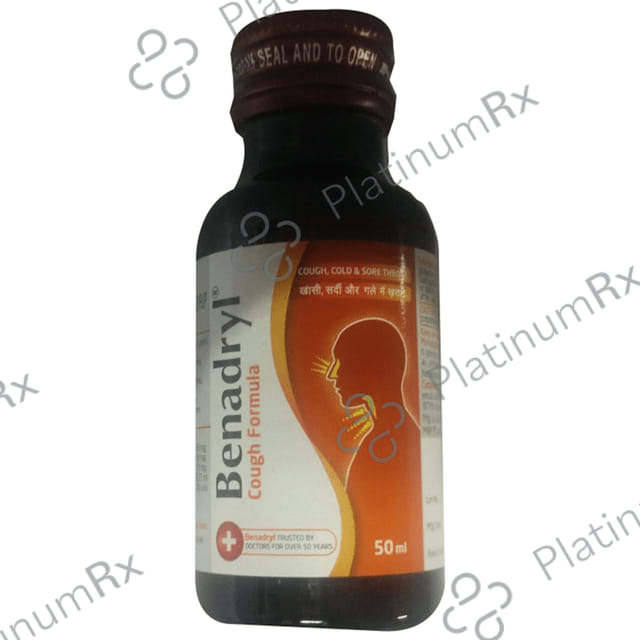
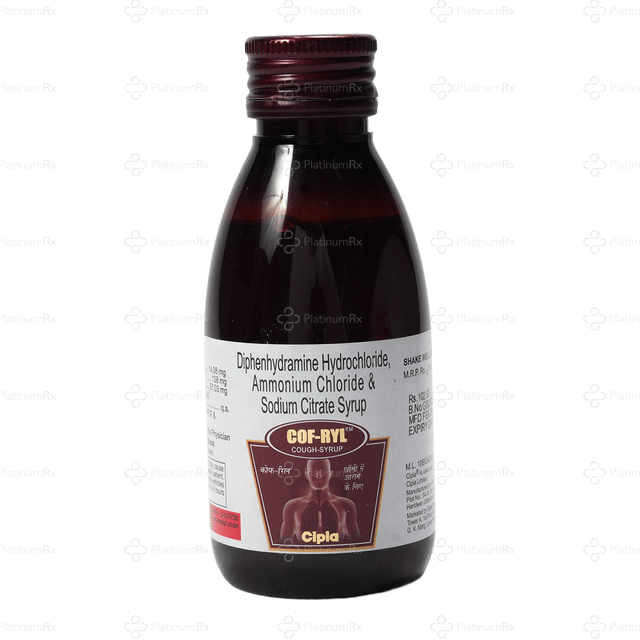
Benadryl Cough Syrup Composition (Per 5 ml)
| Ingredient | Amount | Type | What it does (in simple words) |
|---|---|---|---|
| Diphenhydramine hydrochloride | 14.08 mg | Antihistamine | Blocks the action of histamine; dries a runny nose and eases coughing |
| Ammonium chloride | 138 mg | Expectorant | Helps loosen mucus so it is easier to cough up |
| Sodium citrate | 57.03 mg | Soothing agent | Helps calm a sore throat |
| Ethanol (95%) | 0.2625 ml (about 5% alcohol) | Alcohol | Carries the ingredients; the syrup is not alcohol-free |
Check the label on your bottle, because other Benadryl products are different and strengths vary between variants. Never swap one for another without checking.
How Does Benadryl Cough Syrup Work?
Think of it as a small clean-up crew for your nose and chest:
- Calm the alarm: Diphenhydramine blocks the receptors that histamine acts on. Histamine is a chemical your body releases during a cold or allergy, and it switches on sneezing and a runny nose.
- Loosen the mucus: Ammonium chloride is classed as an expectorant. It is thought to make the airways produce more fluid mucus. That makes what you cough up thinner, though doctors are not certain how much this helps.
- Soothe the throat: Sodium citrate coats and calms a sore throat.
Together they make the cough less tiring and the chest easier to clear.
Uses of Benadryl Cough Syrup
Your doctor may advise Benadryl Cough Syrup for:
- Chesty cough with mucus, where you bring up phlegm
- A cough with a runny nose, sneezing or watery eyes, the kind you get with a cold
- A sore throat that comes with the cough
- Cold symptoms together, when several of these problems appear at once
Benadryl Cough Syrup does not kill bacteria or viruses, and it does not treat the cause of your cough. If you have an infection, your doctor will decide whether you need a separate medicine.
Cough medicines will not stop the cough, but they may help you cough less. Most coughs settle on their own within 3 to 4 weeks.
Cough With Mucus vs Dry Cough: Is Benadryl Cough Syrup Right for You?
| Cough with mucus | Dry cough | |
|---|---|---|
| What it feels like | You cough up mucus or phlegm | A tickly cough with nothing coming up |
| Sign / sound / pattern | A wet, rattling cough | A dry, hacking cough |
| Is Benadryl Cough Syrup suitable? | Yes, if your doctor advises it | Usually no |
| What usually helps | A cough medicine with an expectorant, if your doctor advises it | Benadryl DR, which is made for dry cough |
Using this syrup for a dry cough will not help much, and it may make you sleepy for no reason.
How to Take Benadryl Cough Syrup
- Measure the dose with the cup or spoon that came in the pack. Do not use a kitchen spoon.
- Use the mark for your age: 5 ml for ages 6 to 11, and 10 ml for 12 and over.
- Leave 4 hours between doses, and never take more than the label allows in 24 hours.
- Do not take any other product that contains diphenhydramine, even one used on the skin.
- Do not take it for longer than your doctor advises.
Dosage of Benadryl Cough Syrup
The label directions depend on age. For children aged 6 to under 12 years, the label says 5 ml every 4 hours. The most allowed in 24 hours is 30 ml. For adults and children aged 12 and over, it says 10 ml every 4 hours. The most allowed in 24 hours is 60 ml.
Never increase the dose on your own. A higher dose does not quiet the cough faster. It only raises the risk of sleepiness, a dry mouth and a fast heartbeat.
This syrup is not for children under 6 years. Give a child only the dose for their age group, and never give an adult dose to a child. Ask a paediatrician before you give any cough syrup to a young child.
What If You Miss a Dose?
Take the dose when you remember, if the next one is still a few hours away. If the next dose is close, skip the missed one. Never take two doses together to catch up.
How Long Does It Take to Work?
Most people notice the cough easing within a short time of a dose, and the effect lasts a few hours. If your cough is no better after a few days, or it lasts more than 3 weeks, see a doctor.
Storage
Keep the bottle closed and store it away from strong heat and direct sunlight. Do not refrigerate it, keep it out of reach of children, and check the expiry date before each use.
Side Effects of Benadryl Cough Syrup
Most people take Benadryl Cough Syrup without trouble, but sleepiness is common.
Common and mild:
Rare but serious (stop the medicine and see a doctor right away):
- A fast, pounding or fluttering heartbeat, chest discomfort or feeling faint
- A severe rash, hives or itching
- Restlessness or excitement, especially in children
- Trouble passing urine, pain when you pass urine, or blurred vision or other vision changes
- Stomach upset, loose motions or constipation that continues
The sleepiness and the dry mouth come from diphenhydramine, the antihistamine. They are more likely if you take more than the label allows. They also get worse with alcohol or another medicine that makes you sleepy.
Who Should Not Take Benadryl Cough Syrup
- Anyone allergic to any ingredient in the syrup
- Children under 6 years of age
- People with liver or kidney problems
- Anyone already using another diphenhydramine product
Precautions
Tell your doctor before taking Benadryl Cough Syrup if you:
- Have glaucoma (the medicine can raise pressure in the eye)
- Have an enlarged prostate, or trouble passing urine
- Have asthma, emphysema or chronic bronchitis
- Have a chest condition with a lot of mucus
- Are pregnant, planning a pregnancy, or breastfeeding
- Are 65 or older (it may not be the safest choice at this age)
- Drive or operate machines (the label says not to drive for 4 to 6 hours after a dose)
Drug Interactions
| Medicine | What can happen |
|---|---|
| Other cough, cold or allergy products with diphenhydramine or another antihistamine | You may double the dose without knowing, so sleepiness and dry mouth get worse |
| Alcohol | Much stronger sleepiness and poor coordination; the label says to avoid it |
| Sleeping pills, sedatives and tranquillisers | Stronger drowsiness and poorer coordination |
| Antidepressants and some stomach medicines | They can add to drowsiness or a dry mouth; check with your pharmacist first |
| Any cream, gel or tablet that also contains diphenhydramine | The label says never to use two diphenhydramine products together |
Always tell your doctor about every medicine, supplement or home remedy you are using. Do not drink alcohol while you take this syrup, because it adds to the sleepiness.
Frequently Asked Questions About Benadryl Cough Syrup
When to See a Doctor
A cough syrup only helps with symptoms. See a doctor quickly if you have:
- A cough that lasts more than 3 weeks
- Trouble breathing, or a cough that gets much worse quickly
- Chest pain
- Coughing up blood
- A swollen, painful gland in your neck
- Weight loss for no clear reason
- A weakened immune system, for example from chemotherapy or diabetes
If you think you or a child has taken too much, get help at once. Call 112, or 108 for an ambulance, and carry the bottle with you to the hospital.
The Bottom Line
Benadryl Cough Syrup is for a cough that comes with cold symptoms, and it also helps loosen mucus and calm a sore throat. Measure it with the cup or spoon in the pack, keep 4 hours between doses, and stay inside the daily limit. Most people only feel sleepy or get a dry mouth, and these usually pass. It is not for children under 6, and the pack should be used under medical supervision.
Medical Disclaimer
This article is for general information only and is not a substitute for advice from a qualified doctor or pharmacist. Always consult a healthcare professional before starting, stopping or changing any medicine.
References

Add PlatinumRx as a preferred source on Google