


More About Thalidomide
Quick Summary
Thalidomide is a prescription medicine taken by mouth as a capsule. It changes how the immune system works. It is used together with a steroid medicine called dexamethasone to treat newly diagnosed multiple myeloma, a cancer of the plasma cells in the bone marrow. It is also used for erythema nodosum leprosum (ENL), a painful skin reaction that can happen in people with leprosy. Thalidomide calms harmful inflammation and slows the growth of new blood vessels that some cancers depend on. It can cause severe birth defects, so it is given only under strict medical supervision with pregnancy-prevention rules.
Detailed Description
Thalidomide belongs to a group of medicines called immunomodulators. These medicines adjust the body's immune response instead of simply switching it off. Thalidomide binds to a protein inside cells called cereblon, which changes how certain proteins are handled inside the cell. It also lowers the amount of tumor necrosis factor-alpha (TNF-alpha), a chemical messenger that drives inflammation. It also reduces the formation of new blood vessels.
Conditions treated:
- Multiple myeloma: Multiple myeloma is a cancer that starts in plasma cells, a type of white blood cell found in the bone marrow. Thalidomide is used with dexamethasone in adults who have just been diagnosed. It is usually given in 28-day treatment cycles. In Europe, it is also approved with the cancer medicines melphalan and prednisone for untreated myeloma. That use is for people aged 65 or over, or for younger people who cannot have high-dose chemotherapy.
- Erythema nodosum leprosum (ENL): It treats the skin signs of moderate to severe ENL. It should not be used on its own when ENL also causes moderate to severe nerve inflammation (neuritis).
- Prevention of ENL flare-ups: It can be used as long-term (maintenance) treatment to prevent and control ENL skin flare-ups that keep coming back.
Why it needs close supervision: Thalidomide is one of the best-known causes of birth defects. Even a single capsule taken during pregnancy can cause severe birth defects or the death of the unborn baby. For this reason, the official prescribing label carries a boxed warning, which is the strongest warning a medicine can have. Because of this risk, Thalidomide is prescribed and dispensed only under strict pregnancy-prevention rules. In the United States, this is done through a restricted safety program called the Thalidomide REMS. In the European Union, a special programme is also in place to prevent unborn babies from being exposed to the medicine. Your doctor and pharmacist will explain the rules you must follow.
Women who can become pregnant need regular pregnancy tests. They must use two effective methods of birth control at the same time, and at least one of them must be highly effective. Examples of highly effective methods are an intrauterine device (IUD), hormonal birth control, tubal ligation, or a partner's vasectomy. Your doctor will help you choose methods that are safe for you. Men must use condoms, because the medicine passes into semen.
The same boxed warning covers blood clots. Thalidomide raises the risk of clots in the legs and lungs, especially when it is used with dexamethasone for myeloma. It can also cause:
- Nerve damage that may be permanent
- Drowsiness
- A slow heartbeat
- Low blood counts
- Rare but serious skin reactions
Your doctor will check on you regularly and order blood tests throughout treatment.
Benefits of Thalidomide
- Treats newly diagnosed multiple myeloma: When used with dexamethasone, Thalidomide is an approved option for people starting myeloma treatment.
- Controls painful ENL skin flare-ups: It treats the skin lesions of moderate to severe erythema nodosum leprosum.
- Helps prevent ENL from coming back: It can be used as maintenance treatment to keep ENL skin flare-ups under control.
- Works in more than one way: A single medicine calms inflammation, adjusts the immune system, and slows the growth of new blood vessels.
- Once-daily bedtime dosing: One dose at night fits easily into a daily routine. It also means you sleep through much of the drowsiness it causes.
Side Effects of Thalidomide
Common Side Effects (Usually Mild and may lessen with continued use)
- Drowsiness or sleepiness
- Constipation
- Dizziness or light-headedness, especially when standing up quickly
- Tiredness and weakness
- Confusion, anxiety, or mood changes
- Trouble sleeping
- Bone, muscle, joint, or back pain
- Headache
- Nausea, changes in appetite, or changes in weight
- Dry mouth and dry skin
- Shaking (tremor)
- Swelling of the hands, feet, ankles, or lower legs
- Trouble getting or keeping an erection
Serious Side Effects (Seek Urgent Medical Attention)
- Severe birth defects or loss of the unborn baby: This can happen if the medicine is taken during pregnancy, even after one dose.
- Venous thromboembolism (blood clots): This means clots in the deep veins of the legs (deep vein thrombosis) or in the lungs (pulmonary embolism). Warning signs include shortness of breath, chest pain, or swelling in an arm or leg. Heart attack and stroke have also happened in people taking Thalidomide with dexamethasone for myeloma.
- Peripheral neuropathy (nerve damage): This causes numbness, tingling, pain, or burning in the hands and feet, and the damage may be permanent. It usually appears after months of use. It can also start after a short course, or even after treatment has stopped.
- Stevens-Johnson syndrome (SJS) and toxic epidermal necrolysis (TEN): These are rare but life-threatening skin reactions that cause blistering and peeling of the skin and sores in the mouth.
- DRESS (drug reaction with eosinophilia and systemic symptoms): Eosinophilia means a rise in one type of white blood cell. DRESS is a severe allergic reaction that can cause a rash, fever, and swollen glands. It can also harm organs such as the liver, kidneys, lungs, or heart.
- Severe allergic reactions (angioedema, anaphylaxis): Signs include swelling of the face, lips, tongue, or throat, hives, hoarseness, or trouble breathing or swallowing.
- Slow heartbeat (bradycardia) and fainting.
- Low white blood cell count (neutropenia): Signs include fever, chills, sore throat, cough, or other signs of infection.
- Low platelet count (thrombocytopenia): Signs include unusual bruising or bleeding.
- Seizures (fits).
- Tumor lysis syndrome: This can happen when cancer cells break down quickly and release their contents into the blood. It can strain the kidneys and upset the body's salt balance. People with a large amount of cancer are at higher risk.
Directions for Use
- Take Thalidomide exactly as your doctor prescribes. Do not change the dose or stop on your own.
- Take it once a day with water, preferably at bedtime and at least 1 hour after your evening meal. Taking it at bedtime also helps with the drowsiness it often causes.
- Swallow the capsule whole. Do not open, crush, or chew it.
- Keep the capsules in their blister pack until it is time to take one. Women who are or could become pregnant should avoid touching the capsules. If the powder from a broken capsule gets on your skin, wash it off right away with soap and water. If it gets in your eyes or mouth, rinse with plenty of water.
- Take it at about the same time every night.
- To lower the risk of dizziness, sit up for a few minutes before you stand up from lying down.
- Keep all monthly appointments and blood tests. Women who can become pregnant will also have pregnancy tests as part of the treatment schedule.
- Never share Thalidomide with anyone, even if they have similar symptoms.
How it works
Scientists do not yet fully understand how Thalidomide works, but several of its actions are known:
- Targets cereblon: Thalidomide attaches to a protein inside cells called cereblon. Cereblon is part of the cell's system for tagging proteins to be broken down. When Thalidomide binds to it, this system starts removing a different set of proteins. This is believed to explain much of its effect on immune cells and cancer cells.
- Reduces inflammation: It lowers the excess production of TNF-alpha, a chemical messenger that drives inflammation. It also reduces certain "sticky" molecules on cell surfaces that help white blood cells move into inflamed tissue. This helps calm the painful skin lesions of ENL.
- Adjusts the immune system (immunomodulation): It changes how immune cells behave, rather than simply suppressing them. It is thought to stimulate some immune cells to attack cancer cells.
- Blocks new blood vessel growth (antiangiogenic effect): Tumors need new blood vessels to grow. By slowing the formation of these vessels, Thalidomide can help hold back myeloma. Slowing blood vessel growth in developing tissue is thought to be one reason it can harm an unborn baby, but the exact cause of its birth defects is not fully understood.
Safety Advice for Thalidomide

Pregnancy
Limited information
Never take it during pregnancy. The label carries a boxed warning: even one capsule can cause severe birth defects or the death of the unborn baby. Women who can become pregnant must avoid pregnancy for at least 4 weeks before starting, during treatment, during any breaks in treatment, and for at least 4 weeks after the last dose. To do this, they must either avoid sex with men completely or use two effective methods of birth control at the same time throughout this whole period. At least one of the two methods must be highly effective, such as an intrauterine device (IUD), hormonal birth control, tubal ligation, or a partner's vasectomy. Your doctor will help you choose methods that are safe for you. Women also need two negative pregnancy tests before starting and regular pregnancy tests during treatment. Men must always use a latex or synthetic condom during any sexual contact with a woman who could become pregnant. This applies while taking Thalidomide and for up to 4 weeks after stopping, even if they have had a vasectomy. Men must not donate sperm. No one taking it should donate blood during treatment or for 4 weeks after stopping. If you think you or your partner might be pregnant, stop taking the medicine and call your doctor right away.

Breastfeeding
Limited information
Do not breastfeed while taking Thalidomide, because it may harm a breastfed baby.

Alcohol
Limited information
Avoid alcohol. It adds to the drowsiness caused by Thalidomide, and it can also add to nerve damage.

Driving
Limited information
Thalidomide often causes drowsiness and dizziness. Do not drive or operate machinery until you know how it affects you.

Kidney
Limited information
Kidney problems are not expected to change how much medicine stays in the body, because very little of it leaves the body unchanged in the urine. Tell your doctor about any kidney condition.

Liver
Limited information
It has not been studied in people with liver disease. Your doctor will decide whether it is suitable for you.

Children
Limited information
It has not been studied enough in children under 12 years of age.

Elderly patients
Limited information
In studies, people aged 65 and over had more irregular heartbeat (atrial fibrillation), constipation, tiredness, nausea, low potassium, high blood sugar, and blood clots in the legs and lungs. Closer monitoring may be needed.
Quick Tips for Thalidomide
- Take your dose at bedtime with a glass of water, at least 1 hour after dinner. Otherwise, eat your normal diet unless your doctor advises a change.
- Keep the capsules in the blister pack until you take them, and never open a capsule.
- If you can become pregnant, use two effective methods of birth control at the same time. At least one must be highly effective, such as an IUD, hormonal birth control, tubal ligation, or a partner's vasectomy. Your doctor will help you choose methods that are safe for you. Go to every pregnancy test, even during breaks in treatment.
- Men should use condoms during treatment and for up to 4 weeks afterward.
- Do not donate blood or sperm during treatment or for 4 weeks after stopping.
- Anyone who comes into contact with your body fluids should wear gloves or wash exposed skin with soap and water.
- Stand up slowly from lying or sitting to avoid dizziness.
- Tell your doctor right away about numbness, tingling, or burning in your hands or feet.
- Get medical help at once for chest pain, shortness of breath, or a swollen arm or leg.
- Eat fibre-rich foods and drink enough water to help with constipation. Tell your doctor if it continues.
- Ask your doctor before starting any new medicine, including allergy tablets and acidity medicines.
Storage Advice
- Store at 20°C to 25°C (68°F to 77°F). Short periods between 15°C and 30°C (59°F and 86°F) are acceptable.
- Protect from light, heat, and moisture. Do not store it in the bathroom.
- Keep the capsules in their original blister pack until it is time to take one.
- Keep it locked away and out of reach of children and pets. Keep it especially away from anyone who is or could become pregnant.
- Do not flush unused capsules down the toilet. Return them to your pharmacy or a medicine take-back program.
Drug-Food Interaction
- Timing with meals: Take Thalidomide with water at least 1 hour after your evening meal. There are no other special diet rules unless your doctor gives you some.
- Alcohol: Alcohol increases the drowsiness from Thalidomide and can add to nerve damage, so it is best avoided.
- St. John's Wort: This herbal supplement can make hormonal birth control less effective. Avoid it unless your doctor approves, because birth control must work reliably while you take Thalidomide.
Interactions with Other Drugs
- Sedating medicines (opioid painkillers, antipsychotics, anti-anxiety medicines, sleeping pills, and sedating antihistamines): These add to the drowsiness caused by Thalidomide and should be avoided. Older allergy medicines such as diphenhydramine and chlorpheniramine can cause marked drowsiness and should be avoided. Do not start even newer allergy tablets (cetirizine, loratadine, fexofenadine) without asking your doctor first.
- Medicines that slow the heart (beta blockers, calcium channel blockers, digoxin, lithium, tricyclic antidepressants, and acid reducers such as famotidine and cimetidine): These can slow the heartbeat even further when taken with Thalidomide.
- Medicines that can damage nerves (bortezomib, vincristine, cisplatin, paclitaxel, docetaxel, amiodarone, phenytoin, metronidazole, disulfiram): These can add to the risk of nerve damage.
- Medicines that may raise the risk of blood clots (erythropoietin-type medicines that boost red blood cells, and estrogen-containing medicines, including some birth control pills): Your doctor will weigh the clot risk when choosing these. Do not stop your birth control on your own. Talk to your doctor, who will choose methods that are safe for you.
- Medicines that weaken hormonal birth control (rifampicin, rifabutin, carbamazepine, phenytoin, griseofulvin, modafinil, penicillins, HIV protease inhibitors): These can make hormonal birth control less effective. The effect can last up to one month after you stop them, which could lead to pregnancy while you are on Thalidomide. Women who need these medicines must use two other effective birth control methods instead.
- Pembrolizumab and similar immune therapies (PD-1 or PD-L1 blockers): In studies, adding these to a thalidomide-type medicine plus dexamethasone for myeloma led to more deaths. This combination is not recommended outside clinical trials.
Drug-Disease Interactions
- Pregnancy or the possibility of pregnancy: Thalidomide must not be used.
- Allergy to thalidomide: Do not take Thalidomide if you have ever had an allergic reaction to it or to any ingredient in the capsule. You may have had severe swelling of the face or throat (angioedema) or a severe allergic reaction (anaphylaxis) while taking it. If so, it must not be restarted.
- Past blood clots, heart disease, or stroke: The risk of clots, heart attack, and stroke rises, especially when it is used with dexamethasone. Your doctor may prescribe a blood thinner.
- Existing nerve damage (peripheral neuropathy): Thalidomide can make it worse.
- Low white blood cell or platelet counts: Thalidomide can lower these counts further. It should not be started if white cell (neutrophil) counts are too low.
- HIV infection: In a study, Thalidomide increased the amount of HIV in the blood, so this may need to be checked.
- Seizure disorders: Seizures have been reported with Thalidomide.
- Slow heart rate or fainting spells: Thalidomide can slow the heart further.
- Large tumor burden (a large amount of cancer in the body): There is a higher risk of tumor lysis syndrome. In this condition, the fast breakdown of cancer cells strains the kidneys and upsets the body's salt balance.
Daily Dose
Your dose is set by your doctor based on your condition and how you respond. Always take exactly the dose prescribed.
- Multiple myeloma: The usual dose is 200 mg once daily at bedtime, given with dexamethasone in 28-day cycles.
- ENL skin flare-ups: The usual range is 100 mg to 300 mg once daily at bedtime. Severe cases may need up to 400 mg a day. People who weigh less than 50 kg usually start at the lower end of the range.
Your doctor may pause treatment or lower the dose if you develop constipation, drowsiness, nerve symptoms, or other side effects. Do not change your dose yourself.
Overdose
An overdose of Thalidomide is likely to cause stronger versions of its known side effects, such as heavy drowsiness, dizziness, fainting, or a slow heartbeat. There is no specific antidote. In hospital, staff will watch the person's vital signs (heart rate, blood pressure, breathing) and support their blood pressure and breathing. Call emergency services or go to the nearest hospital right away if someone has taken too much. Do the same if they collapse, have a seizure, have trouble breathing, or cannot be woken. Take the medicine pack with you. You can also contact a poison control centre for advice.
What If You Forget to take Thalidomide?
Take the missed dose as soon as you remember. If your next dose is due in less than 12 hours, skip the missed dose and take the next one at the usual time. Never take two doses to make up for a missed one.
When to contact doctor
Seek medical help right away if you notice:
- A missed period, unusual menstrual bleeding, or any chance that you or your partner could be pregnant
- Chest pain, shortness of breath, or swelling, pain, or warmth in an arm or leg
- Numbness, tingling, pain, or burning in the hands or feet
- Rash, blistering, or peeling skin, or sores in the mouth
- Swelling of the face, lips, tongue, or throat, or trouble breathing or swallowing
- Fever, chills, sore throat, or other signs of infection
- Unusual bruising or bleeding
- A very slow or very fast heartbeat, fainting, or seizures
- Sudden weakness, trouble speaking, or a drooping face
References
Fact Box
Therapeutic Class
Immunomodulator / Anticancer (antineoplastic) and anti-leprosy reaction agent
Action Class
Immunomodulatory drug (IMiD) - cereblon-binding agent; reduces TNF-alpha production; antiangiogenic
Chemical Class
Glutarimide derivative (alpha-(N-phthalimido) glutarimide)
Habit Forming
No
Checkout Editorial Policy
Top Selling Medicines
Top Health Products
Top Selling Devices
Related Medications

Thalidomide 100mg
₹828.5
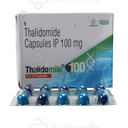
₹280.8
MRP ₹561.6
Thalidomide 50mg
₹300
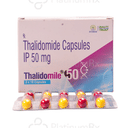
₹184.7
MRP ₹369.4
Thalidomide 100mg
₹525
₹280.8
MRP ₹561.6
Thalidomide 100mg

₹689
₹280.8
MRP ₹561.6
Thalidomide 100mg
₹651.1
₹280.8
MRP ₹561.6
Thalidomide 50mg
₹358
₹184.7
MRP ₹369.4
Thalidomide 50mg
₹414
₹184.7
MRP ₹369.4
Thalidomide 50mg

₹326.2
₹184.7
MRP ₹369.4
Thalidomide 50mg
₹394.5
₹184.7
MRP ₹369.4
Thalidomide 100mg
₹515.6
₹280.8
MRP ₹561.6
Thalidomide 100mg

₹639.4
₹280.8
MRP ₹561.6
Thalidomide 100mg

₹662.1
₹280.8
MRP ₹561.6
Thalidomide 50mg

₹395.3
₹184.7
MRP ₹369.4
Thalidomide 100mg
₹722.3
₹280.8
MRP ₹561.6
Thalidomide 100mg
₹1,594.1
₹280.8
MRP ₹561.6
Thalidomide 100mg
₹651.1
₹280.8
MRP ₹561.6
Thalidomide 100mg
₹171.4
₹280.8
MRP ₹561.6
Thalidomide 100mg
₹642.2
₹280.8
MRP ₹561.6
Thalidomide 100mg
₹515.6
₹280.8
MRP ₹561.6
Thalidomide 50mg
₹182.8
₹184.7
MRP ₹369.4
Thalidomide 100mg
₹1,986
₹280.8
MRP ₹561.6
Thalidomide 100mg
₹649
₹280.8
MRP ₹561.6
Thalidomide 100mg
₹645

Thalidomide 100mg
₹676
Thalidomide 50mg
₹336.5