


Streptomycin
Uses
Streptomycin is used in the treatment of tuberculosis.
How it Works
How Streptomycin works: Streptomycin is an antibiotic that inhibits bacterial growth by preventing the synthesis of essential proteins required for bacteria to perform vital functions.
Side Effects
Common side effects of Streptomycin include vomiting, nausea, vertigo, fever, facial paresthesia, rash, urticaria, and an increased white blood cell count (eosinophils).
Expert Advice
- Streptomycin is used for the treatment of tuberculosis, in combination with other medications.
- Do not skip any doses and complete the full course of treatment, even if you feel better.
- Stopping treatment early may cause the infection to return and become harder to treat.
- It is administered via injection into a muscle.
- Exercise caution while driving or engaging in activities that require concentration, as Streptomycin may cause dizziness.
- Your doctor may conduct regular blood, urine, and hearing tests while you are on this medication.
- Your doctor will ensure that you are well-hydrated before and during treatment with this medicine.
- Inform your doctor if you are pregnant, planning to conceive, or breastfeeding.
- Discontinue Streptomycin and notify your doctor immediately if you experience a rash, itchy skin, swelling of the face and mouth, or difficulty breathing.
Top Selling Medicines
Top Health Products
Top Selling Devices
Dr. Morepen Gluco One BG-03 Test StripsAccu-Chek Instant Test StripsAccu-Chek Active Test StripsDr. Morepen BP-14 Blood Pressure MonitorAccu-Chek Active Test Strips 100sOneTouch Select Plus Test StripsDr. Morepen BG-03 GlucometerOneTouch Verio Test StripsAccu-Chek Instant S GlucometerAccu-Chek Active Test Strips 25sView More
Related Medications

Salt Composition
Streptomycin 1gm
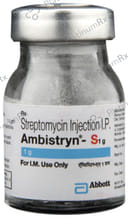
Ambistryn S 1gm Injection 1s
Abbott Healthcare Pvt. Ltd.
Vial of 5 ml
₹14.3
18% OFF
MRP ₹17.4
Salt Composition
Streptomycin 0.75gm
Ambistryn S 0.75gm Injection 1gm
Abbott Healthcare Pvt. Ltd.
Vial of 1 gm
₹13.3
18% OFF
MRP ₹16.2
Salt Composition in both
Streptomycin 1gm
MERSTREP 1GM INJECTION
Wockhardt Ltd.
Vial of 5 ml
MRP
₹4
Ambistryn S 1gm Injection 1s
Abbott Healthcare Pvt. Ltd.
Vial of 5 ml
₹14.3
MRP ₹17.4
Salt Composition
Streptomycin 200mg
Genpod 200mg Tablet 10s
Genecia Healthcare
Strip of 10 tablets
MRP ₹200