


More About Ripasudil
Quick Summary
Ripasudil contains ripasudil, a Rho-associated protein kinase (ROCK) inhibitor used as an ophthalmic solution for the reduction of intraocular pressure in patients with glaucoma and ocular hypertension. It works by relaxing the trabecular meshwork and improving aqueous humour outflow, thereby reducing intraocular pressure. Always use Ripasudil exactly as directed by your doctor.
Detailed Description
Ripasudil contains ripasudil, a selective ROCK1 and ROCK2 inhibitor formulated as an ophthalmic solution for topical ocular use.
Intraocular pressure is primarily determined by the balance between aqueous humour production by the ciliary body and its outflow through the trabecular meshwork into Schlemm's canal. In glaucoma, increased resistance to outflow through the trabecular meshwork raises intraocular pressure, progressively damaging the optic nerve.
Ripasudil inhibits ROCK enzymes, reducing actomyosin-driven contraction of trabecular meshwork cells. This relaxation increases the permeability of the meshwork and Schlemm's canal, enhancing the conventional aqueous outflow pathway and reducing intraocular pressure. Unlike prostaglandin analogues, ripasudil acts on the conventional rather than uveoscleral outflow pathway, providing a complementary mechanism suitable for combination therapy.
Ripasudil is the first clinically approved ROCK inhibitor for glaucoma and has demonstrated effectiveness both as monotherapy and in combination with other intraocular pressure-lowering agents.
Uses of Ripasudil
The uses of Ripasudil are as follows:
Glaucoma
Ripasudil is used to reduce elevated intraocular pressure in patients with open-angle glaucoma where existing therapy is insufficient.
Ocular Hypertension
It is used to lower intraocular pressure in patients with raised ocular pressure without optic nerve damage.
Combination Intraocular Pressure Lowering
It is used alongside prostaglandin analogues, beta blockers, or carbonic anhydrase inhibitors for additive pressure reduction.
Benefits of Ripasudil
Here are the benefits of Ripasudil:
- Novel Mechanism of Action: As a ROCK inhibitor, ripasudil targets the conventional trabecular outflow pathway, complementing the mechanisms of other glaucoma medicines.
- Effective Intraocular Pressure Reduction: Provides clinically meaningful reduction in intraocular pressure both as monotherapy and in combination therapy.
- Complementary to Existing Therapy: Its distinct mechanism makes it suitable for add-on use when monotherapy or dual therapy is insufficient.
- Topical Ocular Formulation: Localised ocular application minimises systemic exposure and associated systemic side effects.
Side Effects of Ripasudil
Like all medicines, Ripasudil may cause side effects in some individuals.
Common Side Effects
- Conjunctival Hyperaemia: Redness of the eye is the most frequently reported side effect and is usually transient.
- Eye Discharge: Mild ocular discharge may occur following instillation.
- Eyelid Swelling: Mild periorbital swelling has been reported with regular use.
- Eye Irritation or Discomfort: Transient stinging or discomfort at the time of instillation may occur.
Uncommon Side Effects
- Blepharitis: Inflammation of the eyelid margins may occur with prolonged use.
- Punctate Keratitis: Superficial corneal epithelial changes have been reported in some patients.
- Blurred Vision: Temporary blurring immediately following instillation may occur.
Serious Side Effects (Require Immediate Medical Attention)
- Severe Ocular Allergic Reaction: Significant worsening of eye redness, pain, or vision changes requires prompt medical review.
- Corneal Toxicity: Persistent corneal changes or significant visual disturbance should be evaluated by an ophthalmologist.
Always consult your doctor if side effects persist or worsen.
Directions for Use
To ensure safe use:
- Use exactly as prescribed by your doctor.
- Instil the prescribed number of drops into the affected eye, usually twice daily.
- Wash hands thoroughly before instillation and avoid touching the dropper tip to the eye or any surface.
- If using other eye drops, separate instillation by at least five minutes.
- Remove contact lenses before instillation and wait at least fifteen minutes before reinserting.
How it works
Ripasudil selectively inhibits ROCK1 and ROCK2 kinases, which regulate actomyosin contractility in trabecular meshwork cells. By inhibiting ROCK, ripasudil reduces the phosphorylation of myosin light chain, causing relaxation of trabecular meshwork cells and reducing their contractile tone.
This cellular relaxation increases the permeability and distensibility of the trabecular meshwork and Schlemm's canal, enhancing conventional aqueous humour outflow and reducing intraocular pressure. The mechanism is distinct from and complementary to prostaglandin analogues, which act on the uveoscleral pathway, and beta blockers, which reduce aqueous humour production.
Safety Advice for Ripasudil

Allergy
Caution
Inform your doctor of any known allergy to ripasudil or any component of the ophthalmic formulation before use.

Breastfeeding
Limited information
Consult your doctor before use during breastfeeding. Systemic absorption from ophthalmic use is low but not fully characterised.

Pregnancy
Limited information
Safety during pregnancy has not been fully established. Use only if specifically advised by a doctor.

Driving
Caution
Transient blurred vision after instillation may impair driving ability. Wait until vision clears before driving.

Alcohol
Safe
No significant interaction expected with ophthalmic use at recommended doses

Liver
Safe
Systemic absorption from ophthalmic use is minimal. No significant hepatic concerns at recommended doses.

Kidney
Safe
No significant renal concerns expected with ophthalmic use at recommended doses.

Children
Limited information
Safety and dosing in children has not been fully established. Use only if advised by a specialist.

Elderly patients
Safe
Generally well tolerated in elderly patients. Instillation technique should be confirmed to ensure adequate dosing.
Quick Tips for Ripasudil
A few practical measures can help improve outcomes and ensure safe use of Ripasudil:
- Apply nasolacrimal occlusion after instillation: Gently pressing the inner corner of the eye after instillation reduces drainage into the nasolacrimal duct and minimises any systemic absorption.
- Wait between eye drops: If using multiple eye drops, wait at least five minutes between each to prevent dilution and washout of the active ingredient.
- Remove contact lenses before use: Contact lenses should be removed prior to instillation and not reinserted for at least fifteen minutes.
- Monitor for conjunctival redness: Hyperaemia is common and usually transient, but persistent or worsening redness should be reviewed by your doctor.
Storage Advice
Proper storage is important to maintain the stability and effectiveness of Ripasudil:
- Store at room temperature: Keep away from heat and direct sunlight.
- Observe the discard period: Discard the bottle within four weeks of opening as directed on the label.
- Keep out of reach of children: Store safely to prevent accidental ingestion or misuse.
- Check expiry before use: Do not use after the expiry date printed on the packaging.
Drug-Food Interaction
Ripasudil is an ophthalmic formulation and is not affected by dietary intake. No dietary restrictions are required during use.
Interactions with Other Drugs
Ripasudil may interact with the following medicines:
- Other Intraocular Pressure-Lowering Agents: Additive pressure-lowering effects are expected and are clinically utilised in combination therapy. Timing of instillation should be separated by at least five minutes.
- Systemic ROCK Inhibitors: Concurrent systemic use of ROCK inhibitors is not established in clinical practice; inform your doctor of all medicines being taken.
Drug-Disease Interactions
Ripasudil should be used carefully in the following conditions:
- Severe Ocular Surface Disease: Pre-existing corneal epithelial disease may be worsened by ripasudil-associated keratitis.
- Active Ocular Infection or Inflammation: Use during active ocular infection or inflammation should be guided by an ophthalmologist.
Daily Dose
Usually instilled as one drop into the affected eye twice daily or as directed by your doctor.
What If You Forget to take Ripasudil?
If a dose is missed, instil it as soon as remembered. Do not double the dose to make up for a missed one.
Fact Box
Therapeutic Class
Ophthalmic / Antiglaucoma Agent
Action Class
ROCK1 and ROCK2 Inhibitor / Trabecular Outflow Enhancer
Chemical Class
Rho-Associated Protein Kinase (ROCK) Inhibitor
Habit Forming
No
Checkout Editorial Policy
Related Medications

Ripasudil 0.4% w/v + Timolol 0.5% w/v
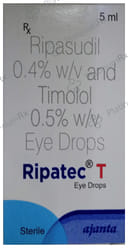
₹333.8
MRP ₹417.2
Ripasudil 0.4% w/v
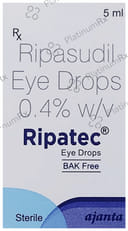
₹383.4
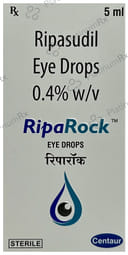
₹269.9
MRP ₹337.4
Ripasudil 0.4% w/v
₹269.9
MRP ₹337.4
Ripasudil 0.4% w/v
₹350
₹269.9
MRP ₹337.4
Ripasudil 0.4% w/v
₹383.4
₹269.9
MRP ₹337.4