


Insulin Glulisine
Uses
Insulin Glulisine is used in the treatment of diabetes.
How it Works
How Insulin Glulisine Works Insulin Glulisine is a fast-acting insulin that begins to take effect within 10 to 20 minutes after injection. It functions similarly to the insulin produced by the body. Insulin facilitates the uptake of glucose in muscle and fat cells and also inhibits the release of glucose from the liver.
Side Effects
Common side effects of Insulin Glulisine include severe hypoglycemia, nasopharyngitis (inflammation of the throat and nasal passages), and upper respiratory tract infection.
Expert Advice
- Take it 15 minutes before a meal or within 20 minutes after starting a meal.
- Rotate injection sites to prevent hard lumps from developing at one location.
- Injecting below the skin of the abdomen results in faster absorption compared to other injection sites.
- Do not use it if the preparation is no longer clear and colorless or if it contains particles.
- Hypoglycemia (low blood sugar level) is a common side effect; monitor your blood sugar level regularly.
- Always carry some sugary food or fruit juice with you in case you experience hypoglycemia symptoms, such as:
- Cold sweats
- Cool, pale skin
- Tremors
- Weakness
- Anxiety
- Opened vials/cartridges remain stable at room temperature for up to 4 weeks.
- Unopened vials must be stored in the refrigerator (2°C–8°C).
- Insulin Glulisine helps control blood sugar levels and avoid long-term complications.
- Continue to exercise regularly, eat a healthy diet, and take your other diabetes medications along with Insulin Glulisine.
Top Selling Medicines
Top Health Products
Top Selling Devices
Dr. Morepen Gluco One BG-03 Test StripsAccu-Chek Instant Test StripsAccu-Chek Active Test StripsDr. Morepen BP-14 Blood Pressure MonitorAccu-Chek Active Test Strips 100sOneTouch Select Plus Test StripsDr. Morepen BG-03 GlucometerOneTouch Verio Test StripsAccu-Chek Instant S GlucometerAccu-Chek Active Test Strips 25sView More
Related Medications

Salt Composition
Insulin Glulisine 100IU
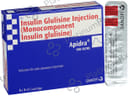
Apidra (100 IU/ml) Refill Cartridge / Injection 1X3ml
Sanofi India Ltd.
Cartridge of 3 ml
₹810.2
12% OFF
MRP ₹920.7
Salt Composition in both
Insulin Glulisine 100IU

Apidra Solostar (100 IU/ml) (1*3ml Pen)
Sanofi India Ltd.
Pre-filled Pen of 3 ml
MRP
₹1,170
Apidra (100 IU/ml) Refill Cartridge / Injection 1X3ml
Sanofi India Ltd.
Cartridge of 3 ml
₹810.2
MRP ₹920.7
31% OFF
Salt Composition
Insulin Glulisine 300IU
Apidra Solostar (300 IU/ml) (1*3ml Refill Cartridge / Injection)
Sanofi India Ltd.
Vial of 3 ml
MRP
₹661.5

Sorry, Substitute Medicine is Unavailable