


More About Glacial Acetic Acid + Lidocaine (Lignocaine) + Ofloxacin
Quick Summary
Glacial Acetic Acid + Lidocaine (Lignocaine) + Ofloxacin is an ear drop combination used for outer ear infections (otitis externa), which is accompanied by pain. It contains glacial acetic acid, which acidifies the ear canal and helps prevent bacterial and fungal overgrowth, lidocaine (lignocaine), a local anaesthetic that quickly relieves ear pain and itch, and ofloxacin, a broad-spectrum fluoroquinolone antibiotic that targets common ear pathogens including Pseudomonas aeruginosa and Staphylococcus aureus. The combination provides simultaneous antimicrobial action, pH normalisation, and symptomatic relief in painful infective otitis externa.
Detailed Description
The external ear canal has a slightly acidic, lipid-rich environment that resists colonisation. When this environment is disturbed by water, trauma, eczema, or excess wax, bacteria and fungi can proliferate and cause otitis externa, which is often acutely painful.
Glacial acetic acid is highly concentrated acetic acid; when diluted within an ear drop formulation, it lowers the pH of the ear canal back towards its natural acidic state. This pH change is unfavourable for many bacteria and fungi, and helps slow their growth. Lidocaine blocks voltage-gated sodium channels in sensory nerve endings, preventing transmission of pain signals from the inflamed canal lining, thereby reducing pain and itch within minutes. Ofloxacin is a fluoroquinolone that inhibits bacterial DNA gyrase and topoisomerase IV, enzymes essential for bacterial DNA replication. It has broad activity against organisms commonly implicated in otitis externa, including Pseudomonas aeruginosa and Staphylococcus aureus. Together, the three components address infection, environment, and symptoms in a single preparation.
Uses of Glacial Acetic Acid + Lidocaine (Lignocaine) + Ofloxacin
- To treat acute bacterial otitis externa (outer ear canal infection) with associated pain.
- To provide relief for ear pain and itch during topical antibacterial treatment.
- As prescribed by a healthcare professional after examination of the ear.
Benefits of Glacial Acetic Acid + Lidocaine (Lignocaine) + Ofloxacin
- Rapid pain relief due to lidocaine's local anaesthetic action.
- Targeted topical antibacterial activity against common ear canal pathogens with ofloxacin.
- Restoration of the natural acidic pH of the ear canal by acetic acid.
- A single multipurpose drop simplifies the treatment regimen.
Side Effects of Glacial Acetic Acid + Lidocaine (Lignocaine) + Ofloxacin
Common
- Mild stinging or burning in the ear on instillation
- Itching or temporary numbness of the ear canal
- Unpleasant taste at the back of the throat
Uncommon
- Local rash or contact dermatitis
- Headache or dizziness
- Worsening of ear discharge (in some cases)
Serious side effects requiring immediate attention
- Severe allergic reaction, which may manifest as swelling of the face or throat and difficulty breathing
- Hearing loss, severe dizziness, or persistent ringing in the ear
- New or worsening ear discharge after a few days of use
Directions for Use
Warm the bottle of Glacial Acetic Acid + Lidocaine (Lignocaine) + Ofloxacin briefly between your palms to bring the drops to body temperature, as cold drops can cause dizziness. Tilt your head so the affected ear faces upwards. Gently pull the ear upwards and backwards (downwards and backwards in young children) to straighten the canal. Instill the prescribed number of drops, then keep the head tilted for a few minutes so the medicine spreads through the canal. Do not insert cotton plugs unless your doctor advises you to. Wipe excess from the outer ear. Wash your hands after use. Use for the duration prescribed, usually a short course.
How it works
A healthy ear canal is slightly acidic, and this natural acidity helps limit the growth of bacteria and fungi. When the canal becomes inflamed or infected, its pH often rises towards neutral, which is more favourable for many of the organisms involved in otitis externa. Acetic acid restores the canal's acidic pH. In this acidic environment, the growth and metabolism of many bacteria and fungi are disrupted, helping reduce microbial load alongside the antibiotic.
When the lining of the ear canal is inflamed, the endings of the sensory nerve fibres fire and send signals to the brain, which is perceived as pain or itching. For a nerve to fire, sodium must flow into the cell through tiny channels called voltage-gated sodium channels. Lidocaine binds to the inside of these channels and blocks them. Without sodium entry, the nerve cannot fire, the signal does not reach the brain, and the area feels numb. Because the drops are applied directly to the inflamed canal, relief begins within minutes and is limited to that local area.
Bacterial DNA is normally tightly coiled, and the cell relies on two enzymes to uncoil and re-coil it during replication: DNA gyrase (the main target in gram-negative bacteria such as Pseudomonas) and topoisomerase IV (the main target in gram-positive bacteria such as Staphylococcus). Ofloxacin enters the bacterial cell and inhibits both enzymes, leaving the DNA stuck mid-process. The bacterium can no longer replicate or repair its DNA and dies. Because the drops act directly on the infected canal, ofloxacin reaches high concentrations at the site of infection with minimal absorption into the rest of the body.
Together, the three components address different aspects of an infected, painful ear canal: acetic acid restores an unfavourable environment for the organisms, ofloxacin kills the bacteria, and lidocaine relieves the associated pain.
Safety Advice for Glacial Acetic Acid + Lidocaine (Lignocaine) + Ofloxacin

Allergy
Unsafe
Avoid in known hypersensitivity to lidocaine, fluoroquinolones, acetic acid, or any excipient.

Breastfeeding
Safe
Systemic absorption from ear drops is minimal; use as prescribed.

Pregnancy
Caution
Use only if clearly needed and as directed.

Driving
Safe
Brief dizziness possible after instillation; wait until it settles.

Alcohol
Safe
No specific interaction at recommended use.

Liver
Safe
Negligible systemic absorption from topical otic use.

Kidney
Safe
Negligible systemic absorption from topical otic use.

Children
Caution
Use only as advised. Some otic formulations are not approved for very young children.

Elderly patients
Safe
Generally well tolerated with standard precautions.
Drug-Food Interaction
No clinically significant food interactions are reported for topical otic use.
Interactions with Other Drugs
- Other ototopical preparations (CAUTION): Avoid combining without medical advice.
- Systemic fluoroquinolones (CAUTION): When already on oral or IV fluoroquinolones, inform your doctor. While systemic absorption is minimal, it should be noted.
- Class I antiarrhythmics or other local anaesthetics (CAUTION): Additive effects are not significant with topical otic use but should be disclosed.
Drug-Disease Interactions
- Perforated tympanic membrane or ear tubes (CAUTION): Acetic acid can be irritating to middle ear structures. Many otic acidic preparations are not recommended when the eardrum is not intact.
- Otomycosis (fungal ear infection) (CAUTION): Fluoroquinolone use without antifungal cover may not adequately treat a primarily fungal infection.
- Recurrent or chronic otitis externa (CAUTION): Requires medical review to exclude diabetes, immunocompromise, or malignant otitis externa.
- Diabetes (CAUTION): Increased risk of severe or malignant otitis externa, which involves infection of the bones of the ear canal and at the base of the skull. Hence, medical follow-up is important.
Overdose
Overdosing on topical ear drops is rare. However, accidental ingestion of large amounts of Glacial Acetic Acid + Lidocaine (Lignocaine) + Ofloxacin can cause systemic effects from lidocaine, which often include dizziness, drowsiness, tremor, and irregular heartbeat and gastrointestinal irritation from acetic acid. Seek medical advice if accidental ingestion occurs.
What If You Forget to take Glacial Acetic Acid + Lidocaine (Lignocaine) + Ofloxacin?
If you miss a dose, instil it as soon as you remember. If it is close to the next scheduled dose, skip the missed dose and continue. Do not double the dose.
References
Fact Box
Therapeutic Class
Action Class
Otic antibacterial, local anaesthetic, and acidifying agent combination
Chemical Class
Carboxylic acid; amide-type local anaesthetic; fluoroquinolone antibiotic
Habit Forming
No
Checkout Editorial Policy
Top Selling Medicines
Top Health Products
Top Selling Devices
Related Medications

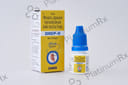
Glacial Acetic Acid 0.66% w/v + Lidocaine (Lignocaine) 2% w/v + Ofloxacin 0.3% w/v
₹62.3
MRP ₹75.9