


Equine Rabies Immunoglobulin
Uses
Equine Rabies Immunoglobulin is used for the prevention of rabies.
How it Works
How Equine Rabies Immunoglobulin Works Equine Rabies Immunoglobulin is an inactivated vaccine made from a dead virus. It helps develop immunity by forming antibodies, which are proteins that protect against infections caused by the viruses present in the vaccine.
Top Selling Medicines
Top Health Products
Top Selling Devices
Dr. Morepen Gluco One BG-03 Test StripsAccu-Chek Instant Test StripsAccu-Chek Active Test StripsDr. Morepen BP-14 Blood Pressure MonitorAccu-Chek Active Test Strips 100sOneTouch Select Plus Test StripsDr. Morepen BG-03 GlucometerOneTouch Verio Test StripsAccu-Chek Instant S GlucometerAccu-Chek Active Test Strips 25sView More
Related Medications

Salt Composition
Equine Rabies Immunoglobulin 1500IU
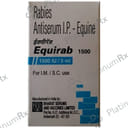
Equirab 1500IU Injection 5ml
Bharat Serums & Vaccines Ltd.
Vial of 5 ml
₹506.5
14% OFF
MRP ₹589
Salt Composition
Equine Rabies Immunoglobulin 300IU
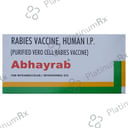
Abhay RIG 300IU Injection 5ml
Indian Immunologicals Ltd.
Vial of 5 ml
MRP
₹635

Sorry, Substitute Medicine is Unavailable
Salt Composition
Equine Rabies Immunoglobulin 1000IU
Zyrig 1000IU Injection
Zydus Cadila
Vial of 5 ml
MRP
₹405
Sorry, Substitute Medicine is Unavailable
Salt Composition
Equine Rabies Immunoglobulin 1000IU
Imorab 1000IU Injection 5ml
Sanofi India Ltd.
Vial of 5 ml
MRP
₹625
Sorry, Substitute Medicine is Unavailable
Salt Composition
Equine Rabies Immunoglobulin 1200IU
Carig 1200IU Injection
Cadila Healthcare Ltd.
Vial of 1 ml
MRP
₹350
Sorry, Substitute Medicine is Unavailable