


More About Desmopressin
Quick Summary
Desmopressin is a man-made version of vasopressin, a natural hormone also called antidiuretic hormone (ADH). Its chemical name is 1-deamino-8-D-arginine vasopressin. Desmopressin tells the kidneys to keep more water, so the body makes less urine. Doctors use it for central diabetes insipidus, a condition that causes heavy urination and strong thirst. It is also used for bedwetting in children and for waking up often at night to pass urine in some adults. Some forms are given for certain bleeding disorders, such as mild haemophilia A and von Willebrand disease. These are inherited conditions in which the blood does not clot properly, so bleeding lasts longer. Desmopressin comes as tablets, melt-in-the-mouth tablets, nasal spray and injection.
Detailed Description
Your body makes a hormone called vasopressin to control how much water your kidneys keep. When there is too little of this hormone, the kidneys let large amounts of water pass out as urine. This is what happens in central diabetes insipidus. Desmopressin is a lab-made copy of this hormone. It has been changed so that it mainly works on the kidneys and lasts longer than the natural hormone. It has very little effect on blood pressure.
Doctors prescribe Desmopressin for several conditions:
- Central diabetes insipidus - it controls heavy urination and constant thirst caused by a lack of the natural hormone. Tablets, nasal spray and injection can all be used.
- Bedwetting at night (primary nocturnal enuresis) - a bedtime dose lowers how much urine the body makes overnight. Only tablets or melt-in-the-mouth tablets are used, usually in children from about 5 to 6 years of age.
- Night-time urination in adults (nocturia due to nocturnal polyuria) - special low-dose melt-in-the-mouth products are used for adults who wake up often because their bodies make too much urine at night.
- Bleeding disorders - the injection and some high-strength nasal sprays raise blood levels of clotting factor VIII and von Willebrand factor for a short time. This can help people with mild haemophilia A or type 1 von Willebrand disease before surgery or to control bleeding. This is done under a specialist's care.
Because Desmopressin makes the body hold on to water, the main risk is that too much water builds up and thins the salt (sodium) in the blood. This is called hyponatraemia. It can become dangerous and cause fits (seizures). Some Desmopressin products carry a boxed warning about this, which is the strongest warning a drug label can have. Your doctor may check your blood sodium before you start, within the first week, and again after about a month. They may also ask you to limit how much you drink.
The different forms give your doctor options. The melt-in-the-mouth tablet dissolves under the tongue without water. The nasal spray is an option for people who cannot swallow tablets, but it is not used for bedwetting. Only take Desmopressin under a doctor's care, and follow your fluid instructions closely.
Benefits of Desmopressin
- Fewer trips to the toilet in diabetes insipidus: It replaces the missing hormone, so urine output and thirst go down.
- Drier nights for children who wet the bed: A bedtime dose of tablets or melts lowers how much urine the body makes overnight.
- Better sleep for some adults with night urination: Certain low-dose products cut down the number of times a person wakes up to urinate.
- Short-term help with bleeding in some clotting disorders: It raises factor VIII and von Willebrand factor levels in suitable patients, which can reduce bleeding around surgery or dental work.
- Choice of forms: Tablets, melts, nasal spray and injection let the doctor choose what suits the patient.
- Little effect on blood pressure: It acts mainly on the kidneys, unlike the body's natural hormone.
Side Effects of Desmopressin
Common Side Effects (Usually Mild and may lessen with continued use)
- Headache
- Nausea or stomach cramps
- Feeling dizzy
- Flushing of the face
- Stuffy or runny nose, nose irritation or nosebleeds (with the nasal spray)
- Pain, redness, burning or swelling at the injection site (with the injection)
Serious Side Effects (Seek Urgent Medical Attention)
- Hyponatraemia (low blood sodium) or water intoxication: This is the most important risk of Desmopressin. It happens when the body holds too much water and the salt in the blood becomes too diluted. Early signs are headache that will not go away, nausea or vomiting, sudden weight gain and swelling. Later signs are confusion, restlessness, unusual tiredness, muscle cramps or weakness. Severe cases can cause seizures (fits), fainting, coma or death.
- Serious allergic reaction: Rash, hives, swelling of the face, lips or throat, or trouble breathing.
- Chest pain, a fast heartbeat, or changes in blood pressure (high or low), mostly reported with the injection.
- Signs of a blood clot (rare, mainly with the injection): sudden chest pain, sudden weakness or numbness on one side of the body, trouble speaking, sudden severe headache, or painful swelling in one leg. Call emergency services immediately.
Directions for Use
- Follow your prescription: Take Desmopressin exactly as your doctor has told you. The timing depends on why you are taking it.
- Bedtime dosing for bedwetting or night urination: Take it at bedtime if that is what you have been told. Limit fluids from about 1 hour before the dose until the next morning, about 8 hours later.
- Regular tablets: Swallow whole with a small sip of plain water. Do not crush, chew or break them unless your doctor or pharmacist says you can.
- Melt-in-the-mouth (sublingual) tablets: Place the tablet under your tongue and let it dissolve. Do not chew it and do not swallow it with water.
- Nasal spray: Blow your nose gently first. Prime the pump as the leaflet explains, then spray into the nostril as directed. Do not use extra sprays. A blocked or runny nose from a cold can change how much medicine you absorb, so tell your doctor if you have one. The nasal spray must not be used to treat bedwetting. For bedwetting, only tablets or melt-in-the-mouth tablets are used, because the spray has a higher risk of dangerously low blood sodium.
- Injection: This is usually given by a nurse or doctor in a clinic or hospital.
- Keep a steady routine: Take your doses at the same times each day.
- Keep taking it as prescribed: Do not stop or change the dose yourself. Talk to your doctor first.
How it works
Your kidneys have tiny filtering tubes. The last part of each tube, called the collecting duct, decides how much water goes back into your blood and how much leaves as urine. The natural hormone vasopressin controls this.
Desmopressin attaches to vasopressin "V2 receptors". These are docking sites on the cells lining the collecting ducts. Binding to the V2 receptor switches on a messenger chemical inside the cell called cyclic AMP (cAMP). This signal tells the cell to move water channels, called aquaporin-2, to the surface facing the urine. Water then flows back into the blood through these channels instead of leaving as urine. The result is less urine that is more concentrated.
Two small changes to the hormone's structure make Desmopressin act mainly on V2 receptors and last much longer than natural vasopressin. Because of this, Desmopressin has very little effect on the "V1 receptors" found in blood vessel walls. These receptors tighten blood vessels and raise blood pressure. This is why Desmopressin mostly affects water balance and not blood pressure.
The same V2 action, outside the kidney, causes the lining of blood vessels to release stored von Willebrand factor and clotting factor VIII into the blood. These proteins help blood clot. This is why some forms of Desmopressin can reduce bleeding in mild haemophilia A and type 1 von Willebrand disease.
Safety Advice for Desmopressin

Pregnancy
Limited information
Desmopressin has been used in pregnancy for several decades, for example for diabetes insipidus, and this has not shown a higher risk of birth defects or miscarriage. It is used only when the doctor thinks it is needed. Tell your doctor if you are pregnant or planning a pregnancy.

Breastfeeding
Limited information
Only very small amounts pass into breast milk, and it is unlikely to harm the baby. Check with your doctor before using it while breastfeeding.

Alcohol
Limited information
Avoid alcohol, especially around bedtime doses. Drinking adds fluid and can make it harder to keep your fluid intake down.

Driving
Limited information
Desmopressin does not usually affect driving. Do not drive if you feel dizzy, confused or have a bad headache, as these may be signs of low sodium.

Kidney
Limited information
Desmopressin should not be used if you have moderate to severe kidney disease (creatinine clearance or eGFR below 50 mL/min). Your doctor may check your kidney function before you start. Tell your doctor about any kidney problems.

Liver
Limited information
Liver problems are not known to change the dose. Tell your doctor about any liver disease.

Children
Limited information
Tablets or melts are used for bedwetting in children, usually from about 5 to 6 years of age. The nasal spray is not used for bedwetting. A parent should make sure the child follows the fluid limits and should watch for headache, vomiting or unusual drowsiness.

Elderly patients
Limited information
Older adults have a higher risk of low blood sodium and are more likely to have reduced kidney function. Some products are not recommended for them. Doctors usually check sodium levels and kidney function more closely in this age group.
Quick Tips for Desmopressin
- Drink only as much as your doctor allows, especially in the evening if you take a bedtime dose.
- Keep the blood sodium test appointments your doctor arranges, especially in the first weeks of treatment.
- Pause your doses and call your doctor if you have vomiting, diarrhoea, fever or a bad cold that affects your nose (for the spray).
- Tell your doctor right away if you have a headache that will not go away, nausea, confusion or sudden weight gain.
- Before starting any new medicine, including pain relievers, tell your doctor or pharmacist that you use Desmopressin.
- Let melts dissolve under the tongue. Do not swallow them with water.
- Children taking Desmopressin for bedwetting should pass urine before going to bed.
- Never use the nasal spray to treat bedwetting.
Storage Advice
- Tablets and melts: Store at room temperature, 20°C to 25°C (68°F to 77°F). Keep them in the original pack to protect them from moisture.
- Nasal spray: Store as the label of your product says. Many nasal sprays are kept at about 25°C (77°F), with short periods between 15°C and 30°C (59°F and 86°F) allowed. Once assembled, store the bottle standing upright.
- Injection and some nasal products: Keep refrigerated at 2°C to 8°C (36°F to 46°F). Do not freeze.
- Keep away from direct sunlight and heat.
- Keep out of the reach and sight of children and pets. Swallowing extra Desmopressin by accident can cause dangerous water build-up.
Drug-Food Interaction
- Fluids: Fluid intake matters most with Desmopressin. Drinking too much water, tea, juice or other drinks while it is working can lead to low blood sodium.
- Meals: Food can lower how much of the tablet your body absorbs. Take it the same way each time, as your doctor advises.
- Alcohol: Alcohol adds to your fluid intake and is best avoided, especially in the evening.
Interactions with Other Drugs
- Loop diuretics (water pills such as Furosemide): Desmopressin should not be used with these because the risk of low sodium goes up.
- Steroid medicines taken by mouth or inhaled (glucocorticoids): Desmopressin should not be used with these because the risk of low sodium goes up.
- Thiazide diuretics (water pills such as Hydrochlorothiazide): These can lower blood sodium and raise the risk when used with Desmopressin.
- Antidepressants (tricyclics such as Amitriptyline, and SSRIs such as Fluoxetine or Sertraline): These can also make the body hold water. Together with Desmopressin, they raise the risk of low sodium.
- Some antipsychotics such as Chlorpromazine: These raise the risk of water retention and low sodium.
- Carbamazepine and similar seizure medicines: These can lower blood sodium and add to the effect of Desmopressin.
- Pain relievers (NSAIDs such as Ibuprofen or Indomethacin): These can make Desmopressin work more strongly and raise the risk of water build-up.
- Opioid pain medicines: These can raise the risk of low sodium.
- Other medicines that tighten blood vessels: With the injection, the doctor may need to lower the dose of Desmopressin.
- Loperamide: This can raise the amount of Desmopressin in the blood.
Tell your doctor about all the medicines, supplements and herbal products you use.
Drug-Disease Interactions
- Low blood sodium now or in the past: Desmopressin should not be used.
- Drinking too much fluid by habit (polydipsia), including psychogenic polydipsia: Desmopressin should not be used because water can build up dangerously.
- Syndrome of inappropriate antidiuretic hormone (SIADH): In this condition the body already holds too much water, so Desmopressin should not be used.
- Moderate to severe kidney disease (creatinine clearance or eGFR below 50 mL/min): Desmopressin should not be used, because the medicine builds up and the risk of low sodium rises. Your doctor may check your kidney function first.
- Heart failure, other conditions needing water pills (diuretics), or uncontrolled high blood pressure (hypertension): Desmopressin is generally not used, because holding extra fluid can strain the heart and lower blood sodium.
- Heart disease (coronary artery disease) or a history of blood clots: Use with caution, especially with the injection, which can change blood pressure. Tell your doctor before treatment.
- Illnesses that upset fluid or salt balance (vomiting, diarrhoea, fever, infections): Stop Desmopressin until you recover, if your doctor agrees.
- Cystic fibrosis (an inherited condition affecting the lungs and digestion, which also causes extra salt loss in sweat): People with this condition have a higher risk of low sodium.
- Raised pressure inside the head or a history of seizures: Low sodium could make these worse.
- Trouble passing urine (urinary retention): Extra fluid can make this worse, so Desmopressin is not recommended.
- Von Willebrand disease type 2B: Desmopressin can lower the platelet count (the number of blood-clotting cells) in this subtype and may cause blood clots, so it is usually avoided.
- Blocked or irritated nose: This can change how much medicine you get from the nasal spray.
Daily Dose
The dose of Desmopressin depends on the condition, the form (tablet, melt, nasal spray or injection), age, kidney function and how you respond. Different forms use very different strengths, so a dose of one form cannot be swapped for another. The ranges below are general information only. Your doctor sets your dose.
- Central diabetes insipidus - tablets (adults): usually started low, at 0.05 mg two times a day, then adjusted. The usual total is 0.1 mg to 1.2 mg per day, divided into two or three doses.
- Central diabetes insipidus - nasal spray (adults): usually 10 to 40 micrograms per day, as one dose or divided into two or three doses.
- Central diabetes insipidus - injection (adults): usually 2 to 4 micrograms per day, as one dose or two divided doses, given under the skin or into a vein.
- Bedwetting (tablets or melts only, in children usually 6 years and older): with tablets, usually 0.2 mg at bedtime. The doctor may increase it if needed, up to 0.6 mg. Melts are used at their own matching strengths.
- Night-time urination in adults (special low-dose melt-in-the-mouth products): one dose about 1 hour before bedtime. Women and men may be prescribed different strengths.
- Bleeding disorders (injection): usually 0.3 micrograms per kg of body weight, up to 20 micrograms, diluted and given slowly into a vein over 15 to 30 minutes, about 30 minutes before a procedure, in hospital.
Never take more than prescribed, and do not take extra doses to control symptoms. Your doctor will set your dose and check your sodium levels.
Overdose
Too much Desmopressin causes the body to hold too much water, which leads to low blood sodium. Signs include:
- Severe or lasting headache
- Nausea and vomiting
- Sudden weight gain or swelling
- Confusion, drowsiness or unusual behaviour
- Muscle cramps
- Seizures (fits) or loss of consciousness
If you think someone has taken too much, go to the nearest emergency department right away. Take the medicine pack with you. Hospital treatment usually means stopping the medicine, limiting fluids and checking blood sodium closely.
What If You Forget to take Desmopressin?
- Bedtime dose: If you forget it at bedtime, skip it and take the next dose the following night. Do not take it in the middle of the night or the next morning.
- Daytime doses (for diabetes insipidus): Take the missed dose when you remember, unless it is nearly time for your next dose. If it is, skip the missed dose.
- Never take two doses at once to make up for a missed one. This raises the risk of low sodium.
When to contact doctor
Get medical help right away if you have:
- A headache that will not go away, with nausea or vomiting
- Confusion, unusual tiredness, restlessness or irritability
- Muscle cramps, weakness or spasms
- Sudden weight gain or swelling
- A seizure (fit) or fainting
- Signs of a serious allergic reaction: rash, swelling of the face or throat, or trouble breathing
- Sudden chest pain, weakness or numbness on one side of the body, trouble speaking, or painful swelling in one leg
- Vomiting, diarrhoea or fever while taking Desmopressin
- Heavy urination or strong thirst returning even though you take your doses as prescribed
Fact Box
Therapeutic Class
Hormones (antidiuretic agents)
Action Class
Vasopressin V2 receptor agonist
Chemical Class
Synthetic peptide analogue of vasopressin
Habit Forming
No
Checkout Editorial Policy
Top Selling Medicines
Top Health Products
Top Selling Devices
Related Medications

Desmopressin 0.1mg
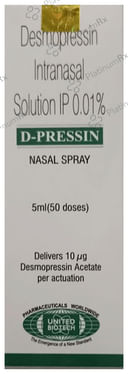
₹1,457.7
MRP ₹1,695
Desmopressin 0.06mg
₹450.8
MRP ₹549.8
Desmopressin 0.1mg
₹533.4
₹399.7
MRP ₹506
Desmopressin 0.2mg
₹1,080
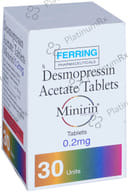
₹1,329.3
MRP ₹1,582.5
Desmopressin 0.1mg
₹420.4
₹399.7
MRP ₹506
Desmopressin 0.2mg
₹1,329.3
MRP ₹1,582.5
Desmopressin 0.1mg
₹229.3
₹399.7
MRP ₹506
Desmopressin 0.12mg
₹840.9
MRP ₹924.1
Desmopressin 0.1mg
₹399.7
MRP ₹506
Desmopressin 0.2mg
₹414.6
MRP ₹753.8
Desmopressin 0.12mg
₹1,221
₹840.9
MRP ₹924.1
Desmopressin 0.1mg
₹1,038.5

Desmopressin 0.1mg
₹663.1
Desmopressin 0.1mg
₹1,350
Desmopressin 0.01% w/v
₹1,209.4