


Clofazimine
Uses
Clofazimine is used in the treatment of leprosy.
How it Works
How Clofazimine Works: Clofazimine inhibits the growth of bacteria in the body.
Side Effects
Common side effects of Clofazimine include skin discoloration, ichthyosis, xeroderma, and gastrointestinal disorders.
Expert Advice
- Clofazimine is used in combination with other medicines for the treatment of leprosy.
- Complete the prescribed course, even if you start to feel better.
- Stopping treatment early may cause the infection to return and become harder to treat.
- Take it with or just after a meal.
- Follow the dosage and duration prescribed by your doctor.
- It may cause discoloration of your skin, urine, saliva, tears, and other body fluids.
- This discoloration is normal and not harmful.
Top Selling Medicines
Top Health Products
Top Selling Devices
Dr. Morepen Gluco One BG-03 Test StripsAccu-Chek Instant Test StripsAccu-Chek Active Test StripsDr. Morepen BP-14 Blood Pressure MonitorAccu-Chek Active Test Strips 100sOneTouch Select Plus Test StripsDr. Morepen BG-03 GlucometerOneTouch Verio Test StripsAccu-Chek Instant S GlucometerAccu-Chek Active Test Strips 25sView More
Related Medications

Salt Composition
Clofazimine 50mg
Clofozine 50mg Capsule
AstraZeneca
Box of 100 capsules
MRP ₹124.3
Salt Composition
Clofazimine 100mg
Lapron 100mg Soft Gelatin Capsule
Asoj Soft Caps Pvt. Ltd.
Strip of 10 capsules
MRP ₹55
Salt Composition
Clofazimine 50mg
Clofros 50mg Capsule 10s
Sangrose Laboratories Pvt. Ltd.
Strip of 10 capsules
MRP ₹25.3
Salt Composition
Clofazimine 100mg
Clofozine 100mg Capsule
AstraZeneca
Box of 100 capsules
MRP ₹204.3
Salt Composition
Clofazimine 50mg
Fazim 50mg Capsule
Lark Laboratories Ltd.
Strip of 10 capsules
MRP ₹14.4
Salt Composition
Clofazimine 50mg
Lapron 50mg Soft Gelatin Capsule
Asoj Soft Caps Pvt. Ltd.
Strip of 10 capsules
MRP ₹31.9
Salt Composition
Clofazimine 100mg
Clofaz 100mg Soft Gelatin Capsule 10s
Genetiac Pharma
Strip of 10 capsules
MRP ₹24.6
Salt Composition
Clofazimine 50mg
Lepromine 50mg Capsule 10s
P & B Pharmaceuticals Ltd.
Strip of 10 capsules
MRP ₹13.6
Salt Composition
Clofazimine 50mg
Feza 50mg Capsule 10s
Gary Pharmaceuticals Pvt. Ltd.
Strip of 10 capsules
MRP ₹13.1
Salt Composition
Clofazimine 50mg
Clofaz 50mg Capsule 10s
Genetiac Pharma
Strip of 10 capsules
MRP ₹23
Salt Composition
Clofazimine 100mg
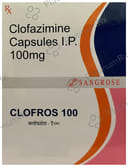
Clofros 100mg Capsule 10s
Sangrose Laboratories Pvt. Ltd.
Strip of 10 capsules
MRP ₹40.6
Salt Composition
Clofazimine 100mg
Lepromine 100mg Capsule 10s
P & B Pharmaceuticals Ltd.
Strip of 10 capsules
MRP ₹21.6
Salt Composition
Clofazimine 50mg
Hansepran 50mg Capsule 10s
Abbott Healthcare Pvt. Ltd.
Strip of 10 capsules
MRP ₹22.2
Salt Composition
Clofazimine 100mg
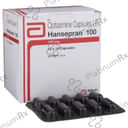
Hansepran 100mg Capsule 10s
Abbott Healthcare Pvt. Ltd.
Strip of 10 capsules
MRP ₹41.8