


Bivalirudin
Uses
Bivalirudin is used to prevent heart attacks and unstable angina. It is also utilized in patients undergoing surgery to treat blockages in their blood vessels, such as during angioplasty.
How it Works
How Bivalirudin works Bivalirudin is an anticoagulant that prevents the formation of harmful blood clots.
Side Effects
Common side effects of Bivalirudin include anemia (low red blood cell count), bleeding, and bruising.
Expert Advice
- This medication is administered exclusively in a hospital setting.
- It is given by your nurse or doctor as an infusion (drip) into a vein.
- This medication increases your risk of bleeding.
- Exercise caution while:
- Shaving
- Cutting fingernails or toenails
- Using sharp objects
- Notify your doctor if you observe:
- Blood in your vomit
- Blood in your urine
- Stools that are black and tarry or contain bright red blood
- Inform your doctor if you are taking other blood thinners or medications to prevent blood clots.
Top Selling Medicines
Top Health Products
Top Selling Devices
Dr. Morepen Gluco One BG-03 Test StripsAccu-Chek Instant Test StripsAccu-Chek Active Test StripsDr. Morepen BP-14 Blood Pressure MonitorAccu-Chek Active Test Strips 100sOneTouch Select Plus Test StripsDr. Morepen BG-03 GlucometerOneTouch Verio Test StripsAccu-Chek Instant S GlucometerAccu-Chek Active Test Strips 25sView More
Related Medications

Salt Composition
Bivalirudin 250mg
Bivaflo 250mg Injection 1ml
Sun Pharmaceutical Industries Ltd.
Vial of 1 ml
MRP
₹6,290

Sorry, Substitute Medicine is Unavailable
Salt Composition
Bivalirudin 250mg
Bivamax 250mg Injection 1s
Lupin Ltd.
Vial of 1 ml
MRP
₹5,089.6
Sorry, Substitute Medicine is Unavailable
Salt Composition
Bivalirudin 250mg
Gennomax 250mg Injection
Emcure Pharmaceuticals Ltd.
Vial of 1 ml
MRP
₹5,493.8
Sorry, Substitute Medicine is Unavailable
Salt Composition
Bivalirudin 250mg
Nubimax 250mg Injection
Emcure Pharmaceuticals Ltd.
Vial of 1 ml
MRP
₹8,437.5
Sorry, Substitute Medicine is Unavailable
Salt Composition
Bivalirudin 250mg
Bivastat 250mg Injection
Cipla Ltd.
Vial of 5 ml
MRP
₹6,496.9
Sorry, Substitute Medicine is Unavailable
Salt Composition
Bivalirudin 250mg
Bivacard 250mg Injection
Biocon
Vial of 1 ml
MRP
₹8,571.4
Sorry, Substitute Medicine is Unavailable
Salt Composition
Bivalirudin 250mg
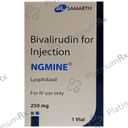
Ngmine Injection
Samarth Life Sciences Pvt. Ltd.
Vial of 1 ml
MRP
₹8,766.2
Sorry, Substitute Medicine is Unavailable
Salt Composition
Bivalirudin 250mg
Flopace 250mg Injection 1s
Sun Pharmaceutical Industries Ltd.
Vial of 1 ml
MRP
₹7,581.7
Sorry, Substitute Medicine is Unavailable
Salt Composition
Bivalirudin 250mg
Bivacs 250mg Injection 1s
Intas Pharmaceuticals Ltd.
Vial of 1 ml
MRP
₹8,623.3
Sorry, Substitute Medicine is Unavailable
Salt Composition
Bivalirudin 250mg
Bivasave 250mg Injection 1s
Abbott Healthcare Pvt. Ltd.
Vial of 1 ml
MRP
₹8,494.6
Sorry, Substitute Medicine is Unavailable