


More About Arformoterol + Glycopyrrolate
Quick Summary
Arformoterol + Glycopyrrolate contains arformoterol and glycopyrrolate, a dual bronchodilator combination used in the management of chronic obstructive pulmonary disease (COPD). Arformoterol is a long-acting beta-2 adrenergic agonist (LABA) that relaxes airway smooth muscle, and glycopyrrolate is a long-acting muscarinic antagonist (LAMA) that blocks bronchoconstrictor cholinergic tone. Together they provide complementary and additive bronchodilation through two distinct autonomic mechanisms. Always use Arformoterol + Glycopyrrolate exactly as directed by your doctor.
Detailed Description
Arformoterol + Glycopyrrolate is a fixed-dose dual bronchodilator combination targeting airflow obstruction in COPD through simultaneous beta-2 adrenergic stimulation and muscarinic receptor blockade.
Arformoterol is the active (R,R)-enantiomer of formoterol, a long-acting beta-2 adrenergic agonist. It selectively binds to beta-2 adrenoceptors on airway smooth muscle cells, activating adenylate cyclase and increasing intracellular cyclic AMP. Elevated cAMP activates protein kinase A, which phosphorylates myosin light-chain kinase and reduces intracellular calcium availability, causing smooth muscle relaxation and sustained bronchodilation. As the active enantiomer of formoterol, arformoterol provides equivalent bronchodilation at lower molar doses, with a rapid onset and prolonged duration of action of up to twelve hours. It also has mild mast cell stabilising properties that may reduce airway inflammatory mediator release.
Glycopyrrolate is a quaternary ammonium compound and selective long-acting muscarinic antagonist. It competitively blocks muscarinic acetylcholine receptors, particularly M3 receptors on airway smooth muscle and submucosal glands, preventing acetylcholine-mediated bronchoconstriction and excessive mucus secretion. Its quaternary ammonium structure limits systemic absorption and central nervous system penetration, providing predominantly local airway effects with a favourable tolerability profile. Glycopyrrolate has a prolonged duration of action, supporting once or twice daily dosing.
Together, these two mechanisms address the dual pathophysiology of COPD, excess cholinergic bronchoconstrictor tone and impaired adrenergic bronchodilatory response, providing additive airflow improvement beyond what either agent achieves alone.
Uses of Arformoterol + Glycopyrrolate
The uses of Arformoterol + Glycopyrrolate are as follows:
Chronic Obstructive Pulmonary Disease (COPD)
Arformoterol + Glycopyrrolate is used for the long-term maintenance bronchodilator treatment of airflow obstruction in patients with COPD, including chronic bronchitis and emphysema.
COPD with Persistent Dyspnoea
It is used in patients who remain symptomatic despite monotherapy with a single bronchodilator, providing additive bronchodilation through dual autonomic mechanisms.
Reduction of COPD Exacerbations
Sustained bronchodilation from the LABA and LAMA combination reduces the frequency and severity of acute exacerbations in patients with moderate to severe COPD.
Exercise Limitation in COPD
Improved airflow and reduced dynamic hyperinflation with dual bronchodilation helps reduce exercise-induced dyspnoea and improve functional capacity.
Stable COPD Maintenance Therapy
It is used as a regular maintenance treatment to sustain airflow improvement and symptom control in stable COPD.
Benefits of Arformoterol + Glycopyrrolate
Here are the benefits of Arformoterol + Glycopyrrolate:
- Dual Mechanism Bronchodilation: Simultaneous beta-2 agonism and muscarinic antagonism provide additive airway smooth muscle relaxation beyond what monotherapy with either class achieves alone.
- Sustained Airflow Improvement: The prolonged duration of action of both components supports consistent bronchodilation throughout the dosing interval, reducing diurnal symptom variability.
- Reduced COPD Exacerbation Risk: LABA and LAMA combination therapy reduces exacerbation frequency compared to monotherapy in patients with moderate to severe COPD.
- Improved Exercise Tolerance: Reduced dynamic hyperinflation and improved resting lung function translate to better exercise capacity and reduced breathlessness on exertion.
- Convenient Fixed-Dose Combination: A single inhaler delivering both bronchodilators improves adherence and simplifies the treatment regimen for patients requiring dual bronchodilation.
Side Effects of Arformoterol + Glycopyrrolate
Like all medicines, Arformoterol + Glycopyrrolate may cause side effects in some individuals.
Common Side Effects
- Dry Mouth: Anticholinergic effect of glycopyrrolate on salivary glands is a frequently reported side effect, particularly during early treatment.
- Headache: Mild to moderate headache may occur, particularly during initiation of treatment.
- Nasopharyngitis: Upper respiratory tract symptoms including nasal congestion and throat irritation may develop with inhaled use.
Uncommon Side Effects
- Urinary Retention: Glycopyrrolate's anticholinergic action may impair bladder detrusor function, particularly in patients with benign prostatic hyperplasia.
- Constipation: Reduced gastrointestinal smooth muscle motility due to muscarinic blockade may cause constipation in susceptible individuals.
- Palpitations or Tachycardia: Beta-2 agonist stimulation from arformoterol may cause heart rate increases, particularly at higher doses.
Serious Side Effects (Require Immediate Medical Attention)
- Paradoxical Bronchospasm: Inhaled bronchodilators may rarely trigger acute bronchospasm immediately after inhalation; discontinue and seek urgent medical attention.
- Acute Angle-Closure Glaucoma: Inadvertent ocular deposition of inhaled glycopyrrolate may precipitate acute angle-closure glaucoma in predisposed patients. Symptoms include sudden eye pain and visual disturbance.
- Severe Cardiovascular Effects: Arformoterol may cause significant tachycardia, QTc prolongation, or hypokalaemia-related arrhythmias in susceptible patients, requiring urgent review.
- Severe Allergic Reaction: Swelling of the face, lips, or throat with difficulty breathing requires urgent medical care.
Always consult your doctor if side effects persist or worsen.
Directions for Use
To ensure safe use:
- Use exactly as prescribed by your doctor.
- Administer by inhalation using the prescribed inhaler device as directed.
- Inhale the dose slowly and deeply to ensure adequate lung deposition.
- Rinse the mouth with water after inhalation to reduce local side effects.
- Do not exceed the prescribed dose; this is a maintenance bronchodilator and is not intended for acute rescue use.
- Keep a short-acting rescue bronchodilator available at all times for acute breathlessness.
- Do not discontinue without consulting your doctor.
How it works
Arformoterol + Glycopyrrolate lowers airway resistance and improves airflow through two complementary autonomic bronchodilator mechanisms.
Arformoterol binds selectively to beta-2 adrenoceptors on bronchial smooth muscle, activating the Gs protein-adenylate cyclase pathway. This increases intracellular cyclic AMP, activating protein kinase A, which phosphorylates and inactivates myosin light-chain kinase, reduces cytosolic calcium, and promotes smooth muscle relaxation. The resulting bronchodilation is sustained for up to twelve hours due to the high beta-2 receptor affinity and lipophilicity of arformoterol, which allows prolonged receptor interaction.
Glycopyrrolate competitively and reversibly blocks M1 and M3 muscarinic receptors in airway smooth muscle and submucosal glands. Blockade of M3 receptors prevents acetylcholine from activating the Gq protein-phospholipase C pathway, reducing inositol trisphosphate-mediated calcium release and maintaining smooth muscle in a relaxed state. It also reduces mucus hypersecretion by blocking M3 receptors on bronchial glands. Its quaternary structure prevents significant systemic absorption from the lung, minimising systemic anticholinergic effects.
Safety Advice for Arformoterol + Glycopyrrolate

Allergy
Caution
Caution Inform your doctor of any known allergy to beta-2 agonists, anticholinergic agents, or any component of the inhaler formulation before use.

Breastfeeding
Caution
Limited data are available on the excretion of arformoterol and glycopyrrolate into breast milk. Use only if the benefit to the mother outweighs the potential risk to the infant.

Pregnancy
Caution
Use only if specifically advised by a doctor. Beta-2 agonists may inhibit uterine contractions; use near term should be reviewed carefully.

Driving
Safe
This combination is not expected to impair driving ability at recommended inhaled doses under normal circumstances.

Alcohol
Safe
No significant interaction expected with inhaled use at recommended doses.

Liver
Caution
Arformoterol is hepatically metabolised; use with caution in significant hepatic impairment and consult your doctor.

Kidney
Safe
No significant renal dose adjustment required at recommended inhaled doses.

Children
Unsafe
This combination is not indicated for use in children. Safety and efficacy in paediatric patients have not been established.

Elderly patients
Caution
Elderly patients are at increased risk of anticholinergic side effects including urinary retention, constipation, and dry mouth. Cardiovascular monitoring is advisable due to arformoterol's cardiac effects.
Quick Tips for Arformoterol + Glycopyrrolate
A few practical measures can help improve treatment outcomes and ensure safe use of Arformoterol + Glycopyrrolate:
- Use correct inhalation technique: Slow, deep inhalation followed by breath-holding for up to ten seconds maximises drug deposition in the lower airways. Ask your doctor or pharmacist to demonstrate correct technique.
- Keep a rescue inhaler available: Arformoterol + Glycopyrrolate is a maintenance bronchodilator and must not be used for acute breathlessness. Always have a short-acting beta-2 agonist such as salbutamol available for rescue use.
- Rinse mouth after use: Rinsing and spitting after inhalation reduces the risk of local throat irritation and minimises systemic absorption of glycopyrrolate from the oropharynx.
- Do not exceed the prescribed dose: Overuse of beta-2 agonists is associated with tachycardia, hypokalaemia, and increased cardiovascular risk. Never use more than the prescribed number of doses.
- Monitor for eye symptoms: If inhaled medication accidentally contacts the eyes, acute angle-closure glaucoma may be precipitated in susceptible individuals. Use the inhaler correctly and avoid spraying toward the face or eyes.
Storage Advice
Proper storage is important to maintain the stability and effectiveness of Arformoterol + Glycopyrrolate:
- Store at room temperature: Keep away from heat, direct sunlight, and open flames.
- Keep inhaler dry: Moisture may damage the inhaler device and affect drug delivery.
- Keep out of reach of children: Store safely to prevent accidental use or ingestion.
- Check expiry before use: Do not use after the expiry date printed on the packaging or inhaler.
Drug-Food Interaction
Arformoterol + Glycopyrrolate is an inhaled formulation and is not significantly affected by dietary intake. However:
- Avoid excessive caffeine intake: Caffeine has mild bronchodilator and sympathomimetic properties; excessive intake alongside arformoterol may compound cardiovascular effects such as palpitations and tachycardia.
- No dietary restrictions required: Inhaled use at recommended doses does not necessitate changes to eating habits or fluid intake.
Interactions with Other Drugs
Arformoterol + Glycopyrrolate may interact with the following medicines:
- Other Beta-2 Agonists: Concurrent use of additional long-acting or short-acting beta-2 agonists increases the risk of cardiovascular side effects including tachycardia and hypokalaemia; avoid unless specifically directed.
- Other Anticholinergic Agents: Concurrent use of systemic or inhaled anticholinergics compounds the risk of urinary retention, constipation, dry mouth, and other anticholinergic effects.
- Non-Selective Beta-Blockers: Agents such as propranolol antagonise the bronchodilatory effect of arformoterol and may precipitate severe bronchospasm in COPD patients; avoid concurrent use. Cardioselective beta-blockers should be used with caution.
- QTc-Prolonging Medicines: Arformoterol may prolong the QTc interval; concurrent use with other QTc-prolonging agents including certain antiarrhythmics, antipsychotics, and antibiotics requires careful cardiac monitoring.
- Diuretics: Non-potassium-sparing diuretics may compound arformoterol-induced hypokalaemia, increasing arrhythmia risk; electrolyte monitoring is advisable.
- MAO Inhibitors and Tricyclic Antidepressants: These agents may potentiate the cardiovascular effects of arformoterol; concurrent use requires medical review and close monitoring.
Drug-Disease Interactions
Arformoterol + Glycopyrrolate should be used carefully in the following conditions:
- Cardiovascular Disease: Arformoterol may cause tachycardia, QTc prolongation, and increased myocardial oxygen demand; use with caution in patients with ischaemic heart disease, arrhythmias, or heart failure.
- Benign Prostatic Hyperplasia: Glycopyrrolate's anticholinergic action on the bladder may worsen urinary outflow obstruction and precipitate acute urinary retention in susceptible patients.
- Narrow-Angle Glaucoma: Anticholinergic agents may raise intraocular pressure and precipitate acute angle-closure glaucoma; use with caution and monitor ocular symptoms.
- Diabetes Mellitus: Beta-2 agonists may cause hyperglycaemia through glycogenolysis and gluconeogenesis; blood glucose should be monitored in diabetic patients during treatment.
- Hypokalaemia: Arformoterol may lower serum potassium, which can potentiate the risk of cardiac arrhythmias, particularly in patients on diuretics or with pre-existing electrolyte disturbances.
- Seizure Disorders: Beta-2 agonists have been associated with lowering of the seizure threshold; use with caution in patients with epilepsy.
Daily Dose
Administered by inhalation once or twice daily as directed by your doctor, depending on the specific formulation strength and severity of airflow obstruction. The dose should not be exceeded. Always follow the prescribed regimen and do not use additional doses for acute breathlessness.
What If You Forget to take Arformoterol + Glycopyrrolate?
If a dose is missed, take it as soon as remembered. However, if it is close to the time of the next scheduled dose, skip the missed dose and resume the regular schedule. Do not double the dose to make up for a missed one.
References
Fact Box
Therapeutic Class
Dual Bronchodilator / COPD Maintenance Agent
Action Class
Bronchodilator (Beta-2 Agonist + Anticholinergic)
Chemical Class
Long-Acting Beta-2 Adrenergic Agonist (LABA) + Long-Acting Muscarinic Antagonist (LAMA)
Habit Forming
No
Checkout Editorial Policy
Top Selling Medicines
Top Health Products
Top Selling Devices
Related Medications

Arformoterol 15mcg + Glycopyrrolate 0.025mg
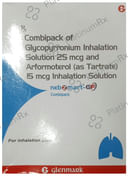
₹418.2
MRP ₹510