


More About Anastrozole
Quick Summary
Anastrozole is a prescription tablet used to treat breast cancer in women who have been through menopause. Each tablet contains 1 mg of the active ingredient. Anastrozole belongs to a group of medicines called non-steroidal aromatase inhibitors. It lowers the amount of oestrogen (also spelled estrogen), a female hormone that many breast cancers need in order to grow. Doctors use it after surgery for early hormone receptor-positive breast cancer, as a first treatment for breast cancer that has spread, and for advanced breast cancer that has grown after tamoxifen treatment. It is usually taken once a day for several years.
Detailed Description
Anastrozole is a hormone-lowering medicine for breast cancer in women past menopause. Many breast cancers are "hormone receptor-positive". This means the cancer cells carry docking points (receptors) for oestrogen, and oestrogen helps them grow. After menopause, the ovaries stop making oestrogen. The body still makes a small amount in other tissues, using an enzyme called aromatase. Anastrozole blocks this enzyme, so oestrogen levels fall sharply. With less oestrogen, hormone-sensitive cancer cells can slow down or stop growing.
Most women who take Anastrozole have already had surgery, radiotherapy or sometimes chemotherapy. In this setting it is an add-on (adjuvant) treatment that helps stop the cancer from coming back. It is also used as a first treatment for breast cancer that has spread to nearby tissue or to other parts of the body, and for advanced breast cancer that has grown after tamoxifen. Women whose cancer is oestrogen receptor-negative rarely respond to it.
Anastrozole comes as a small film-coated tablet taken by mouth once a day, with or without food. It stays in the body for a long time, with an average half-life of about 50 hours, so one tablet a day keeps oestrogen levels low around the clock. Treatment for early breast cancer often lasts 5 years, and sometimes longer if your specialist advises it.
The US label says Anastrozole does not work in women with breast cancer who have not yet gone through menopause, because their ovaries are still the main source of oestrogen. NHS says it is mainly prescribed after menopause, but a specialist may also use it to treat breast cancer in younger women before menopause, or in men. If your specialist has prescribed it for you in one of these situations, keep taking it as directed and ask them any questions you have. Tell your doctor if you are still having periods or are not sure whether you have been through menopause.
Because lower oestrogen affects the whole body, Anastrozole needs regular medical follow-up. It can thin the bones and raise cholesterol, and in women who already have heart disease it has been linked to more heart problems than tamoxifen. Your doctor will usually check your bone density and cholesterol during treatment. Do not stop taking it without talking to your doctor first, unless you have signs of a serious skin or liver reaction (see Side Effects).
Composition
- Active ingredient: Anastrozole 1 mg per tablet.
- Tablet type: white, film-coated tablet, curved on both sides (biconvex), taken by mouth.
- Inactive ingredients (as listed in the US prescribing information): lactose, magnesium stearate, hypromellose, polyethylene glycol, povidone, sodium starch glycolate and titanium dioxide. Other brands may use different inactive ingredients, so check the pack leaflet if you have an allergy or a problem with lactose.
Uses of Anastrozole
Anastrozole is approved for the following uses in women who have been through menopause:
- Early breast cancer (adjuvant treatment): as an add-on treatment after surgery, in women whose breast cancer is hormone receptor-positive, to help stop the cancer coming back.
- Locally advanced or metastatic breast cancer (first treatment): as the first treatment for breast cancer that has spread to nearby tissue or lymph nodes, or to other parts of the body, when the cancer is hormone receptor-positive or its hormone receptor status is unknown.
- Advanced breast cancer after tamoxifen: for breast cancer that has grown or spread after treatment with tamoxifen.
Other uses: NHS and MedlinePlus note that specialists sometimes prescribe Anastrozole to lower the chance of breast cancer in women past menopause who have a medium or high risk, for example because of their family history. This is not one of the uses listed on the US label. NHS also says it can be used to treat breast cancer in men and in younger women before menopause.
Benefits of Anastrozole
- Cuts off the hormone that feeds the cancer: Anastrozole lowers oestrogen levels in women past menopause, which slows or stops the growth of breast cancer cells that need oestrogen to grow.
- Helps stop breast cancer coming back: after surgery and other treatment, Anastrozole is used to lower the chance of hormone-sensitive breast cancer returning. The World Health Organization notes that hormone therapies for hormone-positive breast cancer, a group that includes aromatase inhibitors, reduce the chance of the cancer coming back by nearly half.
- Starts working on hormone levels quickly: the usual daily dose lowered the main form of oestrogen (oestradiol) by about 70% within 24 hours and by about 80% after 14 days in studies.
- Fewer of some problems seen with tamoxifen: in a large study comparing the two medicines after surgery, women taking Anastrozole had fewer hot flushes, less vaginal bleeding and discharge, less womb (endometrial) cancer, fewer blood clots in the veins and fewer strokes caused by blocked blood flow than women taking tamoxifen.
- Useful at more than one stage of cancer: it is used for early breast cancer and also for breast cancer that has spread or has grown after tamoxifen.
- Leaves other important hormones alone: Anastrozole does not affect the body's stress hormone (cortisol) or the salt-balancing hormone (aldosterone), so no extra steroid tablets are needed with it.
- Simple once-daily routine: it is one tablet a day, and it can be taken with or without food.
Side Effects of Anastrozole
Common Side Effects (Usually Mild and may lessen with continued use)
Many of these feel like menopause symptoms, and NHS guidance says they usually improve during the first months of treatment.
- Hot flushes and sweating
- Weakness or feeling very tired
- Joint pain, stiffness or swelling (arthritis)
- Bone pain, back pain and general aches
- Headache
- Feeling sick (nausea) or being sick (vomiting)
- Sore throat and increased cough
- High blood pressure (hypertension)
- Low mood or depression
- Trouble falling asleep or staying asleep
- Mild rash
- Swelling of the legs, ankles or feet
- Build-up of fluid in the arm on the side of the breast cancer (lymphoedema)
- Vaginal dryness or irritation, and vaginal bleeding in the first few weeks
- Hair thinning
- Tickling, tingling or numbness in the hands. This can be a sign of carpal tunnel syndrome, where a nerve in the wrist gets squeezed. It was reported more often with Anastrozole than with tamoxifen. Tell your doctor if you notice it.
Serious Side Effects (Seek Urgent Medical Attention)
- Heart problems: new or worsening chest pain, or shortness of breath. Women who already have blocked heart arteries (ischaemic heart disease) had more heart events on Anastrozole than on tamoxifen.
- Severe allergic reaction (anaphylaxis or angioedema): swelling of the face, lips, tongue or throat, trouble breathing or swallowing, hives and itching.
- Severe skin reactions, including Stevens-Johnson syndrome: Stevens-Johnson syndrome is a rare but serious reaction in which the skin and the lining of the mouth, eyes or genitals blister and peel. If you get any skin lesions, ulcers or blisters, or a target-shaped rash (erythema multiforme), stop taking Anastrozole and contact your doctor straight away.
- Liver problems (hepatitis): Anastrozole can cause inflammation of the liver and changes in liver blood tests. Signs include a general feeling of not being well, yellowing of the skin or the whites of the eyes, or pain on the right side of the tummy (abdomen). If you have any of these signs, stop taking Anastrozole and contact your doctor straight away.
- Weak bones and fractures (osteoporosis): Anastrozole lowers oestrogen, which can thin the bones and raise the risk of breaks, especially in the spine, hip and wrist. A sudden attack of pain in a joint needs urgent advice.
- High calcium in the blood (hypercalcaemia): feeling very thirsty, peeing a lot, feeling sick and losing your appetite.
- Tendon problems: weak, painful or swollen tendons or joints in the ankles, legs, shoulders or arms. Rarely, a tendon can tear (tendon rupture), and some people get trigger finger, where a finger locks in a bent position.
- Henoch-Schönlein purpura: a condition where small blood vessels become inflamed. Signs include red, purple or dark spots on the skin, painful joints, stomach ache, or pain in the side, lower back or around the genitals.
- Signs of a stroke: sudden weakness or loss of feeling in any part of the body, a face that drops on one side, or difficulty speaking.
- Infection or arm swelling: sore throat, cough, fever, chills or swollen glands, or swelling, redness or warmth in a hand or arm.
Directions for Use
- Take Anastrozole exactly as your doctor has prescribed.
- Swallow the tablet whole with a drink of water. Do not crush or chew it.
- You can take it with or without food. If it makes you feel sick or lowers your appetite, taking it after a meal may help.
- Try to take it at the same time each day. Choose a time that fits your routine, as this makes it easier to remember.
- Keep taking it even if you feel well. Treatment usually lasts for years, and early breast cancer treatment commonly runs for 5 years.
- Do not stop taking it, or take a break from it, unless your specialist has agreed to this. The only exception is a serious skin reaction (lesions, ulcers or blisters) or signs of a liver problem: then stop taking it and contact your doctor straight away.
- Do not take it at the same time as tamoxifen or with medicines that contain oestrogen.
How it works
Many breast cancers use oestrogen as a growth signal. The cancer cells have receptors, which work like locks, and oestrogen acts like the key that switches on their growth.
After menopause, the ovaries no longer make oestrogen. The body still makes some, though. An enzyme called aromatase (an enzyme is a protein that speeds up a chemical change in the body) turns hormones called androgens, mainly androstenedione and testosterone, into the oestrogens oestrone and oestradiol. This happens in tissues around the body and in the cancer tissue itself.
Anastrozole is a selective, non-steroidal aromatase inhibitor. "Inhibitor" means it blocks the enzyme. "Selective" means it targets aromatase without switching off the other hormone-making steps in the adrenal glands, so levels of cortisol and aldosterone stay normal. "Non-steroidal" means its chemical structure is not built like a steroid hormone.
With aromatase blocked, much less oestrogen is made, and hormone-sensitive cancer cells lose their main growth signal. In studies, the usual daily dose lowered oestradiol by about 70% within 24 hours and by about 80% after 14 days. Oestrogen stayed low for up to 6 days after the last dose.
Anastrozole is absorbed well from the gut. With daily use, blood levels settle at a steady level after about 7 days. The liver breaks down about 85% of it, and only about 10% leaves the body unchanged in the urine. Its main breakdown product (triazole) has no effect of its own.
In women who have not reached menopause, the ovaries make most of the oestrogen, and aromatase in other tissues is only a small source. That is why Anastrozole is not expected to lower oestrogen in these women.
Safety Advice for Anastrozole

Pregnancy
Limited information
Anastrozole can harm an unborn baby, based on animal studies and the way it works, and it should not be used during pregnancy. If you are able to become pregnant, the US label advises a pregnancy test before starting, and effective birth control during treatment and for at least 3 weeks after the last dose. Some women find their periods come back while taking it; if this happens, use reliable contraception and tell your doctor. Tell your doctor straight away if you become pregnant or think you might be.

Breastfeeding
Limited information
Do not breastfeed while taking Anastrozole and for at least 2 weeks after the last dose. It is not known if it passes into breast milk, and it affects hormones that may affect how a baby develops.

Alcohol
Limited information
There is no evidence that drinking alcohol causes problems with Anastrozole. Some people get hot flushes or redness of the skin when they drink alcohol, and cutting down may help.

Driving
Limited information
Anastrozole can make some people feel very tired or dizzy. If this happens, do not drive, ride a bike or use tools or machines until you feel better.

Kidney
Limited information
Only about 10% of Anastrozole leaves the body through the kidneys, and the US label says no dose change is needed for kidney problems. Tell your doctor before starting if you have severe kidney disease.

Liver
Limited information
No dose change is recommended for mild to moderate liver problems. Anastrozole has not been studied in severe liver disease, so tell your doctor if you have serious liver problems. Rarely, it can cause liver inflammation.

Children
Limited information
Anastrozole is not meant for children. In studies in teenage boys with breast enlargement (gynaecomastia) and young girls with a rare condition called McCune-Albright syndrome who had started puberty too early (precocious puberty), it did not show a benefit.

Elderly patients
Limited information
Age does not change how the body handles Anastrozole, and no dose change is needed for older women. In the main early breast cancer study, the extra benefit over tamoxifen appeared smaller in women aged 65 and over than in younger women, so your doctor will consider your age when choosing treatment.

Allergy
Limited information
Do not take Anastrozole if you have ever had an allergic reaction to it or to any of its ingredients. Some brands contain lactose, so tell your doctor if you cannot have lactose. Swelling of the face, lips, tongue or throat, trouble breathing, hives or itching need emergency help.
Quick Tips for Anastrozole
- Take your tablet at the same time every day. Setting a phone alarm can help you remember.
- Swallow it whole with water, with or without food.
- If you feel sick or lose your appetite, try taking it after a meal and eating smaller meals more often.
- For hot flushes, try cutting down on spicy food, caffeine, smoking and alcohol. Keeping the room cool, using a fan or sipping a cold drink may help.
- For sleep problems, avoid tea, coffee, cola, energy drinks and chocolate in the afternoon and evening.
- Gentle exercise and healthy eating can help with tiredness.
- Ask your doctor about bone density (DEXA) scans and about exercise and diet to keep your bones strong.
- Go to your regular check-ups so your doctor can monitor your cholesterol and bones.
- Do not use hormone replacement therapy (HRT) or herbal remedies for menopause symptoms while on Anastrozole.
- If your periods come back, use reliable contraception and tell your doctor.
- Tell your doctor about tingling or numbness in your hands.
- Carry a list of all your medicines, vitamins and supplements to every appointment.
navigation_tabs.precautions_for
- Mainly for women after menopause: Anastrozole is approved for women who have been through menopause, and the US label says it does not work in women with breast cancer who have not. NHS says a specialist may sometimes use it in younger women before menopause or in men. If this applies to you, keep taking it as directed.
- Pregnancy and birth control: it can harm an unborn baby. The US label advises a pregnancy test before starting for anyone who could become pregnant, and effective birth control during treatment and for at least 3 weeks after the last dose.
- Breastfeeding: do not breastfeed during treatment and for at least 2 weeks after the last dose.
- Heart health: women with existing heart disease should know about the higher rate of heart events compared with tamoxifen. Get help right away for new or worsening chest pain or shortness of breath.
- Bone health: bone density may fall. Bone density (DEXA) scans are commonly done before treatment, 1 or 2 years into treatment, and after it ends. Your doctor may suggest a bone-strengthening medicine called a bisphosphonate.
- Cholesterol: cholesterol levels may rise, so your doctor will monitor them at check-ups.
- Allergy: do not take it if you have had an allergic reaction to Anastrozole or any of its ingredients.
- Tamoxifen and oestrogen: do not take it with tamoxifen or with oestrogen-containing medicines.
- Skin and liver reactions: stop taking Anastrozole and contact your doctor straight away if you get any skin lesions, ulcers or blisters, or signs of a liver problem such as a general feeling of not being well, yellowing of the skin or the whites of the eyes, or pain on the right side of the tummy.
- Stopping treatment: apart from the serious skin or liver signs above, do not stop or take a break without your specialist's agreement.
Storage Advice
- Store at room temperature, as shown on your pack label. For example, the US prescribing information says 20°C to 25°C (68°F to 77°F).
- Keep the tablets in the container they came in, tightly closed.
- Keep away from excess heat and moisture. Do not store in the bathroom.
- Keep out of the sight and reach of children, in a place that is up high and away.
- Get rid of unwanted tablets so that children, pets and other people cannot take them. Do not flush them down the toilet. Ask your pharmacist about a medicine take-back option.
Drug-Food Interaction
- Meals: food slows how fast Anastrozole is absorbed, but not the total amount the body takes in. In a study, taking it 30 minutes after food moved the peak blood level from about 2 hours to about 5 hours after the dose. Because of this, it can be taken with or without food.
- Normal diet: there are no special diet rules for Anastrozole. Most people can eat and drink normally.
- Spicy food and caffeine: these do not change how Anastrozole works, but they may make hot flushes worse. Caffeine later in the day can also make sleep problems worse.
- Alcohol: there is no evidence of a harmful interaction, but alcohol can trigger hot flushes or redness in some people.
- Herbal products and supplements for menopause: do not take these while on Anastrozole, as they may stop it working as well as it should.
Interactions with Other Drugs
- Tamoxifen: do not take together. Taking both lowered the level of Anastrozole in the blood by 27%, and the combination gave no extra benefit over tamoxifen alone in a large study.
- Medicines that contain oestrogen: these can weaken the effect of Anastrozole. They include hormone replacement therapy (HRT), birth control pills, patches, rings and injections, oestrogen creams, vaginal rings and vaginal suppositories.
- Other medicines for menopause symptoms: these may contain ingredients similar to oestrogen and could stop Anastrozole working as well as it should.
- Herbal remedies and supplements for menopause: avoid these, as they may reduce the effect of Anastrozole.
- Raloxifene: tell your doctor if you take raloxifene, as your doctor may need to adjust your treatment or monitor you more closely.
- Warfarin (a blood thinner): in a study in healthy volunteers, Anastrozole did not change warfarin levels or its blood-thinning effect. Still tell your doctor if you take it.
- Other medicines broken down by the liver: at the usual dose, Anastrozole is unlikely to affect other medicines through the liver enzymes known as cytochrome P450.
Always tell your doctor or pharmacist about every medicine, vitamin, herbal remedy and supplement you take.
Drug-Disease Interactions
- Heart disease: in women with existing ischaemic heart disease (narrowed heart arteries), heart events such as angina happened in 17% of those taking Anastrozole compared with 10% of those taking tamoxifen. Your doctor will weigh the risks and benefits.
- Osteoporosis (weak or brittle bones): Anastrozole lowers oestrogen, which can reduce bone density and raise the risk of fractures. Your doctor may check your bones before and during treatment.
- High cholesterol: more women had raised cholesterol on Anastrozole than on tamoxifen (9% compared with 3.5%). Your doctor may check your cholesterol with blood tests.
- Still having periods (before menopause): the US label says Anastrozole does not work in women with breast cancer who have not gone through menopause, although NHS says a specialist may sometimes use it before menopause. Tell your doctor if you are still having periods or are not sure.
- Liver disease: it has not been studied in severe liver disease, and it can rarely cause liver inflammation. Tell your doctor about any liver problems.
- Severe kidney disease: tell your doctor before starting.
- Lactose problems: some brands contain lactose. Tell your doctor if you cannot have lactose.
Daily Dose
- The US prescribing label and NHS guidance both describe the usual dose as one 1 mg tablet once a day.
- It is taken only once in 24 hours.
- The label says no dose change is needed for kidney problems, for mild to moderate liver problems, or for older women.
- For early breast cancer, treatment usually lasts 5 years, and your doctor may advise longer. For advanced breast cancer, the label says treatment continues until the cancer grows.
- Always follow the exact dose and length of treatment your doctor prescribes. Do not change the dose or stop on your own, unless you have signs of a serious skin or liver reaction (see Side Effects).
Overdose
- Taking too many tablets may cause feeling sick, vomiting or diarrhoea.
- If you have taken more than your prescribed dose, contact your doctor or go to the nearest hospital emergency department right away, even if you feel well.
- Do not drive yourself to hospital. Ask someone to take you or call for an ambulance.
- Take the medicine pack, the leaflet, any remaining tablets and your other medicines with you.
- There is no specific antidote. Hospital staff treat the symptoms, watch vital signs such as heart rate and blood pressure closely, and may use dialysis (a treatment where a machine filters the blood) because Anastrozole is not strongly bound to proteins in the blood.
What If You Forget to take Anastrozole?
- Take the missed dose as soon as you remember.
- If it is almost time for your next dose, skip the missed dose and take the next one at your usual time.
- Never take two doses at the same time to make up for a missed one.
- If you often forget, set a daily alarm or ask your pharmacist for other ways to remember.
When to contact doctor
Get emergency help or contact your doctor straight away if you have:
- New or worsening chest pain, or shortness of breath
- Very sudden chest pain, which can be a sign of a heart attack
- Sudden weakness or numbness in any part of the body, a face that drops on one side, or difficulty speaking
- Swelling of the face, lips, tongue or throat, or trouble breathing or swallowing
- Skin lesions, ulcers, blisters, or a peeling rash - stop taking Anastrozole and contact your doctor straight away
- Signs of a liver problem, such as a general feeling of not being well, yellowing of the skin or the whites of the eyes, or pain on the right side of the tummy - stop taking Anastrozole and contact your doctor straight away
- A sudden attack of joint pain, or weak, painful or swollen tendons or joints
- Feeling very thirsty, peeing a lot, feeling sick and losing your appetite
- Red, purple or dark spots on the skin with joint pain or stomach ache
- Signs of infection such as fever, chills, sore throat or swollen glands
- Swelling, redness or warmth in a hand or arm
- Vaginal bleeding that lasts longer than a few days, or starts more than a few weeks into treatment
- Any chance that you could be pregnant, or periods that start again
- Tingling or numbness in your hands
- Low mood that does not improve
References
Fact Box
Therapeutic Class
Anticancer (hormonal therapy for breast cancer)
Action Class
Non-steroidal aromatase inhibitor
Chemical Class
Triazole derivative
Habit Forming
No
Checkout Editorial Policy
Top Selling Medicines
Top Health Products
Top Selling Devices
Related Medications

Anastrozole 1mg
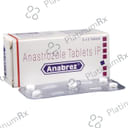
₹270.9
₹380
MRP ₹760
Anastrozole 1mg

₹346
₹380
MRP ₹760
Anastrozole 1mg
₹459.4
₹380
MRP ₹760
Anastrozole 1mg
₹3,541
₹380
MRP ₹760
Anastrozole 1mg
₹1,125
₹380
MRP ₹760
Anastrozole 1mg
₹318.8
₹380
MRP ₹760
Anastrozole 1mg
₹1,387.5
₹380
MRP ₹760
Anastrozole 1mg
₹714.4
₹380
MRP ₹760
Anastrozole 1mg
₹810
₹380
MRP ₹760
Anastrozole 1mg
₹421.9
₹380
MRP ₹760
Anastrozole 1mg
₹243.8
₹380
MRP ₹760
Anastrozole 1mg
₹277.5
₹380
MRP ₹760
Anastrozole 1mg
₹403.1
₹380
MRP ₹760
Anastrozole 1mg
₹60.9
₹380
MRP ₹760
Anastrozole 1mg
₹510
₹380
MRP ₹760
Anastrozole 1mg
₹421.9
₹380
MRP ₹760
Anastrozole 1mg
₹356.3
₹380
MRP ₹760
Anastrozole 1mg
₹826.9
₹380
MRP ₹760
Anastrozole 1mg
₹402.2
₹380
MRP ₹760
Anastrozole 1mg
₹620
₹380
MRP ₹760
Anastrozole 1mg
₹393.8
₹380
MRP ₹760
Anastrozole 1mg
₹450
₹380
MRP ₹760
Anastrozole 1mg
₹79.5
₹380
MRP ₹760
Anastrozole 1mg
₹649.7
₹380
MRP ₹760
Anastrozole 1mg
₹325.3
₹380
MRP ₹760