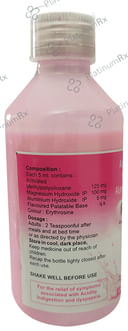
Aluminium Hydroxide + Magnesium Hydroxide (Milk Of Magnesia) + Methylpolysiloxane
Uses
Methylpolysiloxane, Aluminium Hydroxide, and Magnesium Hydroxide are used in the treatment of acidity.
How it Works
How Methylpolysiloxane, Aluminium Hydroxide, and Magnesium Hydroxide work Each component in Methylpolysiloxane, Aluminium Hydroxide, and Magnesium Hydroxide serves a specific purpose in relieving symptoms related to excess stomach acid and gas. Methylpolysiloxane is an antiflatulent agent. It works by reducing the surface tension of gas bubbles in the stomach, allowing them to combine and form larger bubbles. This facilitates the expulsion of gas from the digestive system, providing relief from bloating and gas discomfort. Aluminium Hydroxide is an antacid that neutralizes excess stomach acid. It reacts with stomach acid to form aluminium chloride and water. Magnesium Hydroxide is another antacid that functions similarly to Aluminium Hydroxide, reacting with stomach acid to form magnesium chloride and water. Additionally, Magnesium Hydroxide can have a laxative effect, helping to relieve constipation that may be associated with antacid use.
Side Effects
Common side effects of Methylpolysiloxane, Aluminium Hydroxide, and Magnesium Hydroxide include diarrhea, constipation, headache, and fatigue.
Expert Advice
- Adhere to the recommended dosage provided by your doctor.
- Use Methylpolysiloxane + Aluminium Hydroxide + Magnesium Hydroxide as needed for relief of symptoms such as:
- Heartburn
- Indigestion
- Gas
- If symptoms persist or worsen, consult with a doctor.
- If you are taking other medications, take Methylpolysiloxane + Aluminium Hydroxide + Magnesium Hydroxide at least two hours before or after other medications to avoid potential interactions.
- Prolonged or frequent use of Methylpolysiloxane + Aluminium Hydroxide + Magnesium Hydroxide may have implications for your overall health.
- It is advisable not to use them for an extended period without consulting with a doctor.
Top Selling Medicines
Top Health Products
Top Selling Devices
Related Medications

Aluminium Hydroxide 5mg + Magnesium Hydroxide (Milk Of Magnesia) 100mg + Methylpolysiloxane 125mg
₹84