More About Abemaciclib
Quick Summary
Abemaciclib is an oral targeted cancer medicine used for hormone receptor (HR)-positive, HER2-negative breast cancer. It belongs to a group of medicines called CDK4/6 inhibitors, which slow down the growth of cancer cells by blocking specific proteins these cells need to divide. Abemaciclib is prescribed together with hormone therapy, such as an aromatase inhibitor (a type of hormone therapy that lowers estrogen levels), tamoxifen, or fulvestrant (another hormone-blocking medicine used in breast cancer treatment), for early-stage breast cancer with a high chance of recurrence, and for advanced or metastatic breast cancer. It can also be used alone in adults whose disease has already been treated with hormone therapy and chemotherapy. It comes as a film-coated tablet taken by mouth, available in four strengths - 50 mg, 100 mg, 150 mg, and 200 mg.
Detailed Description
Abemaciclib works by blocking two enzymes, cyclin-dependent kinase 4 and kinase 6 (CDK4 and CDK6), that breast cancer cells rely on to keep dividing and multiplying. In hormone receptor-positive breast cancer, these enzymes are often overactive, letting the cancer grow quickly. By slowing them down, Abemaciclib helps hold back the growth and spread of the cancer, though it does not permanently resolve the underlying disease and is usually given for as long as it continues to help or until side effects become too difficult to manage.
Abemaciclib is approved for use in a few different clinical situations:
- Early breast cancer, after surgery - For adults with HR-positive, HER2-negative early breast cancer that has spread to the lymph nodes and carries a high risk of the cancer returning, Abemaciclib is combined with hormone therapy for a defined treatment period.
- Advanced or metastatic breast cancer, as initial hormone-based treatment - Combined with an aromatase inhibitor for HR-positive, HER2-negative disease that is advanced or has spread to other parts of the body.
- Advanced or metastatic breast cancer, after prior hormone therapy - Combined with fulvestrant if the disease has progressed on earlier hormone therapy.
- Alone, after hormone therapy and chemotherapy - Used by itself in adults whose HR-positive, HER2-negative breast cancer has already been treated with both hormone therapy and chemotherapy.
Because Abemaciclib affects rapidly dividing cells throughout the body, not only cancer cells, it can also lower blood cell counts, irritate the gut lining, and stress the liver and lungs. This is why treatment with Abemaciclib always requires close medical supervision, with regular blood tests and check-ins scheduled by the treating oncologist. It is not a medicine to start, stop, or adjust without that supervision.
Benefits of Abemaciclib
- Targets a specific growth pathway - By blocking CDK4 and CDK6, Abemaciclib interferes directly with a pathway that hormone receptor-positive breast cancer cells use to keep multiplying.
- Works alongside hormone therapy - Combining Abemaciclib with hormone-blocking treatment addresses the cancer's growth signals from more than one direction.
- Continuous dosing schedule - Unlike some other CDK4/6 inhibitors that need scheduled treatment breaks, Abemaciclib is generally taken on a continuous twice-daily schedule without a planned drug-free week.
- Option for use after other treatments - It offers a further treatment path for adults whose HR-positive, HER2-negative breast cancer has already progressed on hormone therapy and chemotherapy.
- Oral tablet form - Being a tablet taken at home, it avoids the need for hospital visits for intravenous infusions on every treatment cycle.
Side Effects of Abemaciclib
Common Side Effects (Usually Mild and May Lessen With Continued Use)
- Diarrhea (very common, and can range from mild to severe)
- Nausea and vomiting
- Reduced appetite
- Tiredness (fatigue)
- Abdominal pain
- Headache
- Hair thinning
Serious Side Effects (Seek Urgent Medical Attention)
- Signs of a very low white blood cell count or infection, such as fever, chills, or a sore throat that will not go away
- Signs of anemia or low platelets, such as unusual tiredness, breathlessness, easy bruising, or unusual bleeding
- Signs of liver problems, such as yellowing of the skin or eyes, dark urine, or pain in the upper right side of the abdomen
- Signs of a blood clot, such as swelling, redness, warmth or pain in a leg, sudden breathlessness, or chest pain
- Signs of lung inflammation, such as new or worsening cough, breathlessness, or fever, which can occasionally become severe or life-threatening
- Severe or persistent diarrhea that leads to dehydration, dizziness, or very reduced urination
Directions for Use
- Take Abemaciclib tablets by mouth, with or without food, as directed by the treating doctor.
- Swallow each tablet whole with a glass of plain water. Do not crush, chew, split, or dissolve the tablet, and do not swallow a tablet that is broken or cracked.
- Try to take each dose at around the same times every day, since Abemaciclib is generally taken twice daily, roughly 12 hours apart, to keep drug levels steady in the body.
- Continue the medicine for the full length of time the oncologist has planned, even during weeks when no other treatment is being given, unless told otherwise.
- Do not stop taking Abemaciclib or change the dose on your own because of side effects; contact the treating doctor first, since the dose or schedule may need to be adjusted under medical supervision instead.
How it works
To understand how Abemaciclib works, it helps to know that healthy cells divide in an orderly, controlled way, guided by "checkpoint" proteins that decide when a cell is ready to copy itself. In many hormone receptor-positive breast cancers, two of these checkpoint proteins, called CDK4 and CDK6 (cyclin-dependent kinases 4 and 6), are switched on too often, pushing cancer cells to divide again and again.
Abemaciclib blocks CDK4 and CDK6 directly. With these proteins inhibited, a protein called retinoblastoma protein (Rb) stays in a form that keeps the cell cycle paused, so the cancer cell cannot move forward into the phase where it copies its DNA and divides. In effect, Abemaciclib acts like a brake placed on the cancer cell's growth machinery, slowing the pace at which the tumor can grow and spread. Because this brake also affects some healthy, fast-dividing cells in the body, such as those in the bone marrow and gut lining, it also explains why Abemaciclib can lower blood counts and cause diarrhea.
Safety Advice for Abemaciclib

Pregnancy
Limited information
Abemaciclib can cause fetal harm and is not recommended during pregnancy. Women who can become pregnant are advised to use effective contraception during treatment and for at least 3 weeks after the last dose, and to have a pregnancy test before starting treatment. Based on animal studies, abemaciclib may also affect fertility in men; male patients should discuss contraception and family planning with the treating doctor.

Breastfeeding
Limited information
Breastfeeding is not recommended during treatment with abemaciclib and for at least 3 weeks after the last dose, since it is not known whether the drug passes into breast milk and it could seriously harm a nursing infant.

Alcohol
Limited information
There is no specific abemaciclib-alcohol interaction described in prescribing information, but alcohol can add extra strain on the liver at a time when liver function is already being monitored closely, so it is best discussed with the treating doctor.

Driving
Limited information
Abemaciclib can cause tiredness and, less often, dizziness related to low blood counts or dehydration from diarrhea; avoid driving or operating machinery if these symptoms occur.

Kidney
Limited information
Abemaciclib should be used with caution in people with kidney problems, and the treating doctor will decide if any dose change is needed based on the degree of impairment.

Liver
Limited information
Liver function is checked with blood tests before starting abemaciclib, then every 2 weeks for the first two months, monthly for the next two months, and periodically after that, because abemaciclib can raise liver enzymes; dose changes or pauses may be needed if liver tests become abnormal, and caution is advised in people with existing liver disease.

Children
Limited information
Abemaciclib's safety and effectiveness in children have not been demonstrated, and it is used in adult patients.

Elderly patients
Limited information
Abemaciclib can be used in older adults, but they may be more likely to experience side effects such as diarrhea, infections, and low blood counts, so closer monitoring is often advised.
Quick Tips for Abemaciclib
- Keep antidiarrheal medicine such as loperamide on hand, and start it at the very first loose stool, along with drinking more fluids, as advised by the treating doctor.
- Keep every scheduled blood test appointment; blood counts and liver tests are usually checked every 2 weeks for the first two months, then monthly for the next two months, and periodically after that.
- Swallow tablets whole with plain water; do not chew, crush, or split them.
- Avoid grapefruit and grapefruit juice while on treatment.
- Tell every doctor, dentist, or pharmacist involved in your care that you are taking Abemaciclib, since it interacts with several common medicines.
- Use reliable contraception during treatment if you are able to become pregnant, and continue it for at least 3 weeks after the last dose.
- Male patients should discuss contraception and family planning with the treating doctor, since Abemaciclib may affect male fertility.
Storage Advice
Store Abemaciclib tablets at 20 to 25 degrees Celsius (68 to 77 degrees Fahrenheit), with brief excursions permitted between 15 and 30 degrees Celsius (59 to 86 degrees Fahrenheit). Keep the tablets in their original container, away from excess moisture and direct light, and out of the sight and reach of children and pets.
Drug-Food Interaction
Grapefruit and grapefruit juice should be avoided during treatment with Abemaciclib, since compounds in grapefruit can interfere with the liver enzyme that breaks the drug down, raising the amount of Abemaciclib in the blood and increasing the risk of side effects. Abemaciclib can otherwise be taken with or without food, but it helps to be consistent with whichever pattern is chosen from day to day.
Interactions with Other Drugs
- Strong CYP3A4 inhibitors (such as ketoconazole and certain other antifungal or antiviral medicines) can raise Abemaciclib levels substantially; combined use with ketoconazole is generally avoided, and with other strong inhibitors, the treating doctor may reduce the Abemaciclib dose.
- Moderate CYP3A4 inhibitors may also raise Abemaciclib levels; the doctor will monitor for side effects and may adjust the dose if needed.
- Strong or moderate CYP3A4 inducers (such as rifampin) can lower Abemaciclib levels enough to reduce how well it works, so combined use is generally avoided.
- Always share a full list of prescription medicines, over-the-counter products, and herbal or dietary supplements with the treating doctor and pharmacist before starting Abemaciclib, since many common medicines affect this pathway.
Drug-Disease Interactions
- Existing liver disease - Because Abemaciclib can raise liver enzymes and cause liver injury, it needs cautious use and closer monitoring in people who already have liver problems.
- Existing lung disease - Since Abemaciclib can rarely cause serious inflammation of the lungs (interstitial lung disease or pneumonitis), any pre-existing lung condition should be discussed with the treating doctor, and new breathing symptoms should be reported without delay.
- History of blood clots - Abemaciclib carries a risk of blood clots (venous thromboembolism), so a personal history of clots should be discussed with the treating doctor before starting treatment.
- Low blood counts or bone marrow problems - Because Abemaciclib can further lower white blood cells, red blood cells, and platelets, it needs careful blood count monitoring in anyone who already has reduced blood counts or bone marrow disorders.
- Active or recurrent infections - Because Abemaciclib can lower infection-fighting white blood cells, active infections should be treated and discussed with the treating doctor before starting or continuing treatment.
Daily Dose
The dose and schedule of Abemaciclib are decided by the treating oncologist based on the type of cancer, the other medicines being combined with it, and how well the patient tolerates treatment. According to the approved prescribing information, Abemaciclib is generally taken twice daily, about 12 hours apart, on a continuous schedule with no planned treatment-free days. When combined with hormone therapy such as an aromatase inhibitor, tamoxifen, or fulvestrant, the labeled starting dose is 150 mg twice daily; when used alone, the labeled starting dose is 200 mg twice daily. These figures describe what the approved label states and are not instructions for self-dosing. Only the treating doctor should decide the dose, and it should never be changed or restarted after a pause without medical guidance, since doses are often reduced step by step if side effects occur.
Overdose
There is no specific antidote for an Abemaciclib overdose. Taking more than the prescribed amount can be expected to worsen the medicine's known side effects, such as severe diarrhea, dehydration, and a greater drop in blood cell counts. If an overdose is suspected, contact a doctor or emergency medical services right away; treatment generally involves supportive care and close monitoring in a medical setting.
What If You Forget to take Abemaciclib?
If a dose of Abemaciclib is missed or vomited after taking it, do not take an extra dose to make up for it. Simply take the next dose at its regular scheduled time. Doubling up on doses can increase the risk of side effects without adding any extra benefit.
When to contact doctor
Contact the treating doctor promptly, or seek emergency care, if any of the following occur:
- Severe or persistent diarrhea, especially with signs of dehydration such as dizziness, reduced urination, or extreme thirst
- Fever, chills, or other signs of infection
- New or worsening cough, breathlessness, or chest tightness
- Yellowing of the skin or eyes, dark-colored urine, or unusual tiredness that could suggest liver problems
- Swelling, redness, warmth, or pain in an arm or leg, or sudden chest pain and breathlessness, which can be signs of a blood clot
- Unusual bruising, bleeding that will not stop, or blood in the urine or stool
- Any symptoms that feel severe, sudden, or different from what the treating doctor described as expected
Fact Box
Therapeutic Class
Antineoplastic agent (targeted anticancer therapy) used in breast cancer
Action Class
CDK4/6 (cyclin-dependent kinase 4 and 6) inhibitor
Chemical Class
Benzimidazole-pyrimidine hybrid derivative
Habit Forming
No
Checkout Editorial Policy
Top Selling Medicines
Top Health Products
Top Selling Devices
Related Medications

Abemaciclib 200mg
₹11,191.9
₹19,473.2
MRP ₹22,383
Abemaciclib 100mg
₹11,938
₹19,026.2
MRP ₹22,383.8
Abemaciclib 200mg
₹19,473.2
MRP ₹22,383
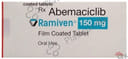
Abemaciclib 150mg
₹11,191.9

₹19,250.9
MRP ₹22,384.8
Abemaciclib 150mg
₹19,250.9
MRP ₹22,384.8
Abemaciclib 100mg
₹19,026.2
MRP ₹22,383.8
Abemaciclib 50mg
₹11,191.9